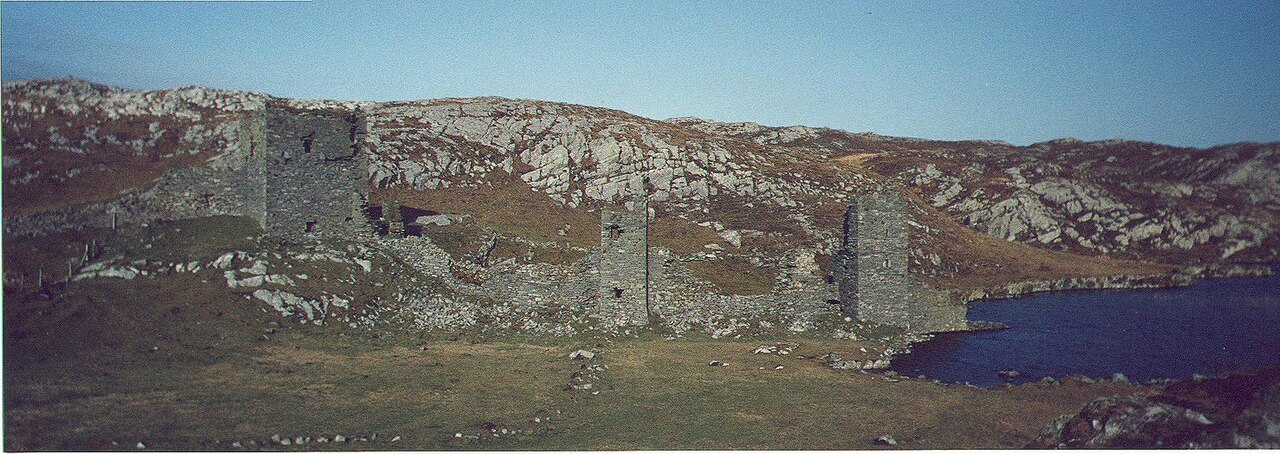
Brow Head Signal Tower
Brow Head Signal Tower is a coastal defense structure located on a prominent mound just south of the hamlet of Barleycove in County Cork, Ireland. Constructed in the early 19th century, this tower was part of a network of signal towers built during a period of heightened military tension in Ireland, specifically designed to provide early warnings of potential invasions by sea.
Historical context and strategic purpose
At the dawn of the 19th century, the threat of a French invasion loomed large over Ireland, then part of the United Kingdom of Great Britain and Ireland. In response, the British government initiated a comprehensive coastal defense strategy. In 1803, plans were drawn to erect a series of signal towers along Ireland's coastline to serve as an early warning system. These towers were intended to detect and relay information about incoming enemy fleets, enabling rapid communication with government authorities in Dublin.
Between 1804 and 1805, a total of 81 such towers were constructed at carefully selected locations. Each tower was sited on elevated, exposed coastal points to maximize visibility. The towers were positioned within line of sight of one another, enabling signals to be passed swiftly along the coast. The signaling methods employed included the use of flags and balls hoisted on masts, which conveyed messages about the presence and movement of hostile ships.
Architectural features and construction details
The Brow Head Signal Tower exemplifies the typical design characteristics common to these early 19th-century coastal signal towers. The structure is generally square in plan, rising two stories high, sometimes three in other examples. It features a flat roof with a parapet, providing a vantage point for observing the sea and signaling to neighboring towers.
Access to the tower is through an entrance door located at the first-floor level on the seaward side, a defensive measure that made direct assault more difficult. The towers include machicolations—openings in the parapet walls—positioned above the entrance and on the landward side, allowing defenders to repel attackers. Inside, the towers were equipped with fireplaces to provide warmth for the signaling crew during their watch.
The exterior surfaces of these towers were often rendered or covered with weather-slates to protect against the harsh coastal climate. Some towers had associated ancillary buildings or enclosures, sometimes including small gardens or areas for growing food, reflecting the need for the signaling crew to be self-sufficient during extended periods of duty. Defensive walls or sloping banks frequently surrounded the tower complex for additional protection.
The signaling crew and operational use
The towers were staffed by a signaling crew typically numbering between eight and twelve men. Their role was to maintain constant vigilance over the sea, ready to identify any signs of enemy approach. The crew operated the signaling equipment, maintained the tower, and ensured the structure was defensible against small-scale attacks.
The Brow Head Signal Tower, like many others, was designed not only as a lookout post but also as a small fortress capable of withstanding limited assaults. This dual function was crucial given the isolated and exposed locations of the towers.
Decline and current condition
Following the defeat of Napoleon at Waterloo in 1815, the perceived threat of a French invasion diminished significantly. Consequently, the strategic importance of the signal towers waned. Coupled with the high costs of maintaining these remote and weather-exposed structures, many towers were abandoned or fell into disrepair.
Despite this, the Brow Head Signal Tower remains in fair condition today. The site includes the ruins of several ancillary buildings, such as former crew houses, which offer visitors a glimpse into the operational life of the tower. The area is freely accessible to the public and provides an interesting location for exploration and study of early 19th-century coastal defenses.
Significance and heritage value
The Brow Head Signal Tower is an important example of early 19th-century military architecture in Ireland. It reflects the geopolitical anxieties of the Napoleonic era and the practical measures taken to safeguard the Irish coastline. The tower is part of a broader network that illustrates the evolution of coastal defense and communication technologies prior to the advent of modern electronic systems.
Visitors to the site can appreciate the tower's robust construction, strategic siting, and its role in a nationwide defensive scheme. The ruins of the ancillary buildings add historical depth, highlighting the self-sustaining nature of the signaling crews and the challenges of maintaining such outposts in remote coastal environments.
Frequently asked questions (FAQ)
- How do I get to Brow Head Signal Tower?
- Brow Head Signal Tower is located near the R591 road in County Cork, Ireland, south of Barleycove. It is accessible by car, with parking available nearby, followed by a short walk to the tower site.
- What is the historical significance of Brow Head Signal Tower?
- Built in the early 19th century, Brow Head Signal Tower was part of a network designed to warn of potential French invasions during the Napoleonic Wars. It served as a coastal lookout and communication point using flag signals.
- Can I explore the ruins around Brow Head Signal Tower?
- Yes, the site includes ruins of ancillary buildings such as crew houses. These remain accessible and provide insight into the daily life of the signaling crew stationed there.
- Is Brow Head Signal Tower open to the public?
- The tower and surrounding ruins are freely accessible to visitors year-round, with no admission fee. Visitors should wear appropriate footwear for uneven terrain.
- When was Brow Head Signal Tower built?
- The tower was constructed between 1804 and 1805 as part of a coastal defense strategy against possible French invasion.
Information
Loading map...
Visitor reviews
No reviews yet. Been here? Write the first review and help other travelers!
Write the first reviewVisited this castle? Share your experience
Your review helps other travelers and adds first-hand knowledge to our encyclopedia.