Broniszów Castle
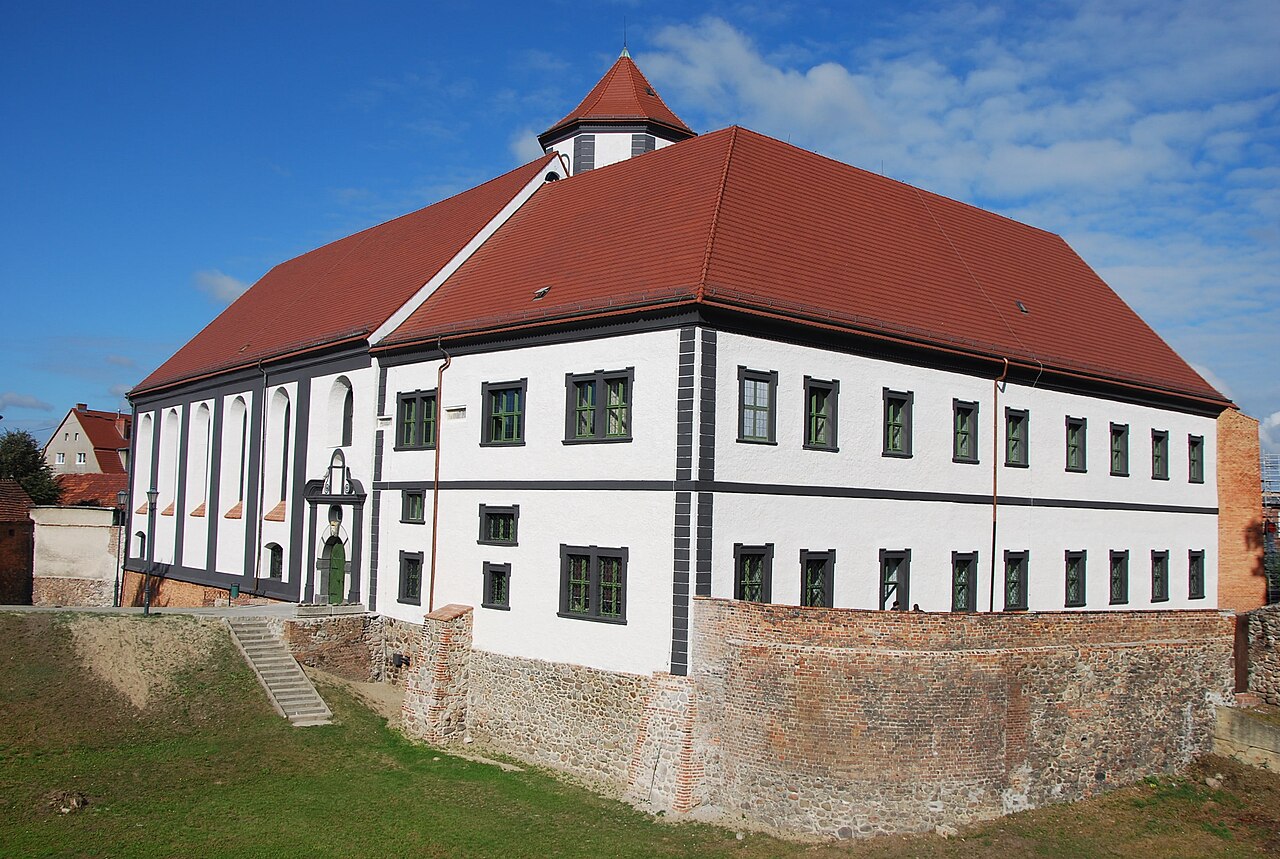
Broniszów Castle stands as a remarkable example of architectural evolution from a medieval fortress to a refined Renaissance manor, located in the municipality of Broniszów in Poland. Its origins trace back to the 12th century, when a knight’s stronghold was established by Bronisław, the count (comes) of Bytom Odrzański within the Duchy of Głogów, a significant domain in the historical region of Lower Silesia. This early fortress served both defensive and residential functions during a period dominated by feudal territorial control and regional conflicts.
By the early 17th century, specifically in 1608, the original military castle underwent a comprehensive transformation. The fortress was remodeled into an L-shaped Renaissance manor house, reflecting a broader shift in castle architecture from purely defensive strongholds to comfortable noble residences. This transition embodied the Renaissance ideals of harmony, proportion, and ornamental elegance, moving away from austere fortifications to spaces designed for social and cultural life.
Architectural transformation and renaissance features
The Renaissance remodeling introduced a three-story structure with a distinctive L-shaped footprint. The manor’s exterior was once richly decorated with sgraffito plasterwork, a technique involving contrasting layers of plaster to create intricate plant motifs. Although some of this decorative facade has suffered damage over time, remnants still reveal the artistic sensibilities of the period.
Inside, the manor boasts two expansive halls on the ground floor, showcasing exquisite late Renaissance interior decoration. One hall features a barrel vault ceiling with lunettes adorned with stucco embellishments. The lunettes—semi-circular wall segments beneath the vault—are ornamented with delicate plasterwork that enhances the spatial rhythm and light play within the room.
The adjacent hall contains a timber beam ceiling lavishly decorated with stucco designs dating from the late 16th century. These decorations include plant-inspired grotesques, stars, floral rosettes, angelic faces, and profile busts, illustrating the rich iconography and craftsmanship prevalent in Renaissance noble residences. Such ornamental details highlight the manor’s function as a ceremonial and social hub for its aristocratic inhabitants.
The main entrance is situated on the northern facade and is marked by a late Renaissance stone portal richly carved with plant motifs. An inscription in Latin, "ANNO MISSERIMA FORTUNA QUAE INIMICIS CARET 1608", adorns the portal. This phrase can be interpreted as "In the year of pitiable fortune which lacks enemies," possibly reflecting historical sentiments or commemorative intentions of the manor’s transformation.
19th-century neo-gothic additions and landscape features
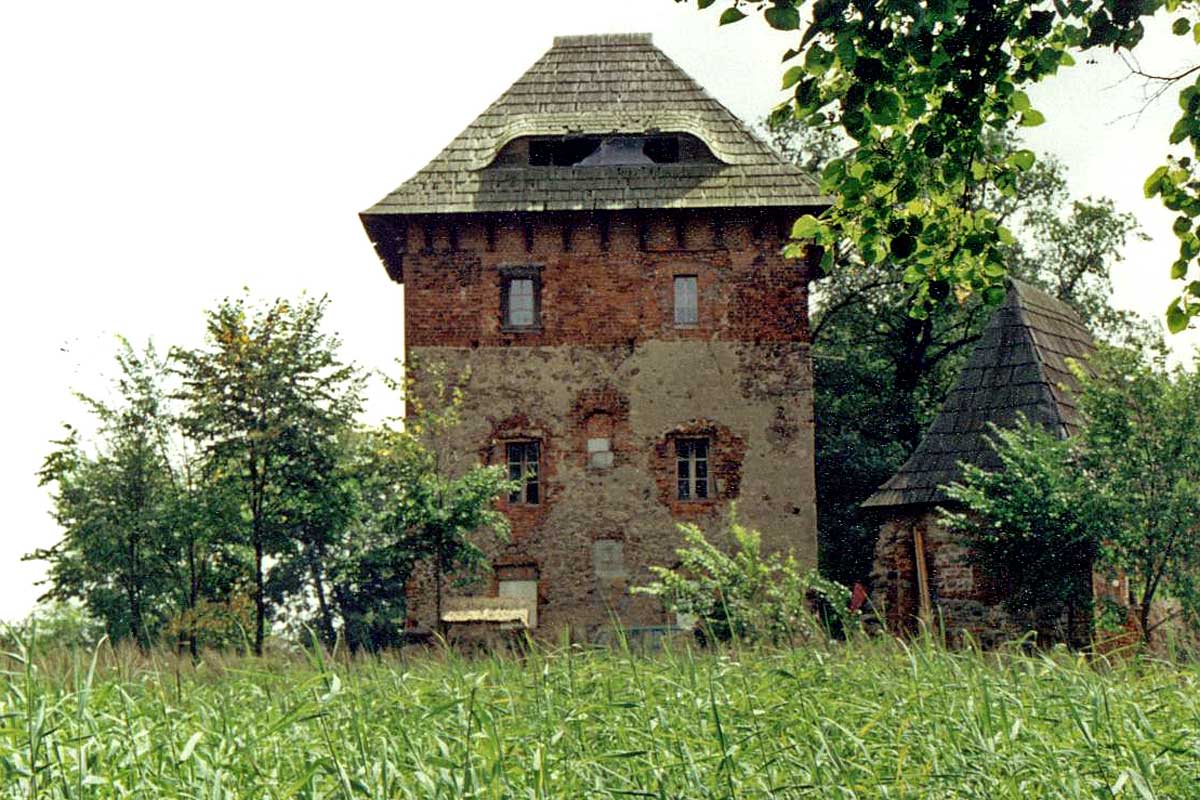
In the 19th century, the manor passed to the von Tschamer and Quaritz families, who introduced significant enhancements that reflected the era's romantic fascination with medieval architecture. They constructed a brick perimeter wall enclosing a small inner courtyard and added a neo-Gothic viewing tower, which enhanced the manor’s fortress-like appearance. These additions were more aesthetic than defensive, aligning with the 19th-century Gothic Revival movement that idealized medieval forms.
Surrounding the manor was a water-filled moat connected to a nearby pond, serving both as a defensive element and a picturesque landscape feature. To the east, a meadow walk lay between the park’s alleys, integrating natural and designed outdoor spaces to complement the residence’s grandeur.
Historical context and ownership transitions
Broniszów Castle’s history reflects the broader socio-political changes in the region. Initially a feudal stronghold under the Duchy of Głogów, the site evolved alongside shifting power dynamics in Lower Silesia. The transformation into a Renaissance manor in 1608 marked a period of relative stability and cultural flourishing.
Following the 19th-century modifications, the estate experienced significant upheaval after World War II. In 1945, the Polish government nationalized the property, assigning it to a local state agricultural enterprise known as a PGR (Państwowe Gospodarstwo Rolne). This transition from noble residence to state agricultural use during the communist era led to changes in the castle’s function and maintenance.
Starting in 1986, Broniszów Castle gained cultural significance as the venue for national photographic workshops, highlighting its role in the arts despite a gradual decline in physical condition. In 2010, the castle entered private ownership, initiating a comprehensive conservation and restoration program aimed at preserving its historical and architectural heritage.
Restoration efforts and current condition
Recent restoration campaigns between 2011 and 2017 have focused on stabilizing and revitalizing both the interior and exterior of the manor. The vaulted hall with its Renaissance ceiling and oak flooring was carefully conserved, while damaged sgraffito plaster was meticulously repaired to restore the facade’s decorative integrity.
The southern residential wing underwent restoration, including reinforcement and revitalization of the ceremonial hall’s original Renaissance polychrome stucco decorations—painted in multiple colors to enhance ornamental details. Windows were replaced, roofing and gutters repaired, and interiors furnished to reflect the manor’s historical character. These efforts have ensured the building’s well-preserved state and reinforced its significance as a cultural landmark.
Architectural significance and cultural heritage
Broniszów Castle exemplifies the architectural and historical layers common to many European castles that transitioned from medieval fortresses to Renaissance noble residences and later romanticized historic estates. Its Renaissance architectural style combined with neo-Gothic 19th-century additions offers insight into changing tastes and functions over centuries.
The castle’s integration of artistic plasterwork, vaulted halls, and decorative ceilings highlights the craftsmanship of the Renaissance period, while the later romantic modifications reflect 19th-century historicism and cultural nostalgia. Today, Broniszów Castle stands as a testament to Poland’s rich cultural heritage and the ongoing efforts to preserve historic monuments for future generations.
Frequently asked questions (FAQ)
- When was Broniszów Castle originally built?
- Broniszów Castle was originally established in the 12th century as a knight’s stronghold by Bronisław, count of Bytom Odrzański, within the Duchy of Głogów.
- What architectural styles are present at Broniszów Castle?
- The castle features a Renaissance manor house core from 1608 with 19th-century neo-Gothic additions, including a viewing tower and brick perimeter wall.
- Is Broniszów Castle open to visitors?
- Broniszów Castle is privately owned, so public visiting hours may be limited or by appointment. It is advisable to check locally for access information.
- What restoration efforts have been made at Broniszów Castle?
- Between 2011 and 2017, extensive restoration preserved the Renaissance vaulted halls, repaired sgraffito plaster, restored the southern wing, and reinforced decorative stucco ceilings.
- What is the significance of the Latin inscription on the castle's main portal?
- The inscription "ANNO MISSERIMA FORTUNA QUAE INIMICIS CARET 1608" translates roughly to "In the year of pitiable fortune which lacks enemies," reflecting historical sentiments during the manor's transformation.
Information
Sources & official resources
Verify the information above using these authoritative references.
Loading map...
Visitor reviews
No reviews yet. Been here? Write the first review and help other travelers!
Write the first reviewVisited this castle? Share your experience
Your review helps other travelers and adds first-hand knowledge to our encyclopedia.