Bristol Castle
Bristol Castle stands as a significant example of Norman military architecture in England, originally constructed in the late 11th century shortly after the Norman Conquest. Situated strategically on the north bank of the River Avon, the castle was a vital royal stronghold controlling access to the important port city of Bristol. Its location between the River Avon and River Frome, with a moat fed by a connecting canal, provided formidable natural defenses that were enhanced by extensive stone fortifications over the centuries.
Norman foundation and early history
The castle was initially built as a timber motte-and-bailey fortress under the direction of the Normans, likely commissioned by William the Conqueror to secure his new territory. Early stewardship was provided by Geoffrey de Montbray, Bishop of Coutances, who used the castle as a base during his 1088 rebellion against King William II. After the rebellion's failure, ownership transitioned to Robert FitzHamon, who established the feudal barony of Gloucester. Through marriage alliances, control passed to Robert, 1st Earl of Gloucester, who played a central role during the civil war period known as The Anarchy. The castle notably served as a rebel fortress and was the site where King Stephen was held prisoner in 1141.
Medieval expansions and royal significance
Following the 12th century, Bristol Castle remained a key royal asset. After the rebellion of Earl William in 1174, King Henry II seized the castle, reinforcing its status as a crown possession. The castle underwent significant enhancements during the reign of King Henry III, who invested in strengthening its defenses and residential facilities. Additions included a barbican protecting the western gate, a gate tower, and a large great hall for administrative and ceremonial functions. The castle also served as a prison for high-profile detainees such as Eleanor of Brittany, held there from 1224 until her death in 1241 under comfortable conditions reflecting her noble status.
Architectural features and layout
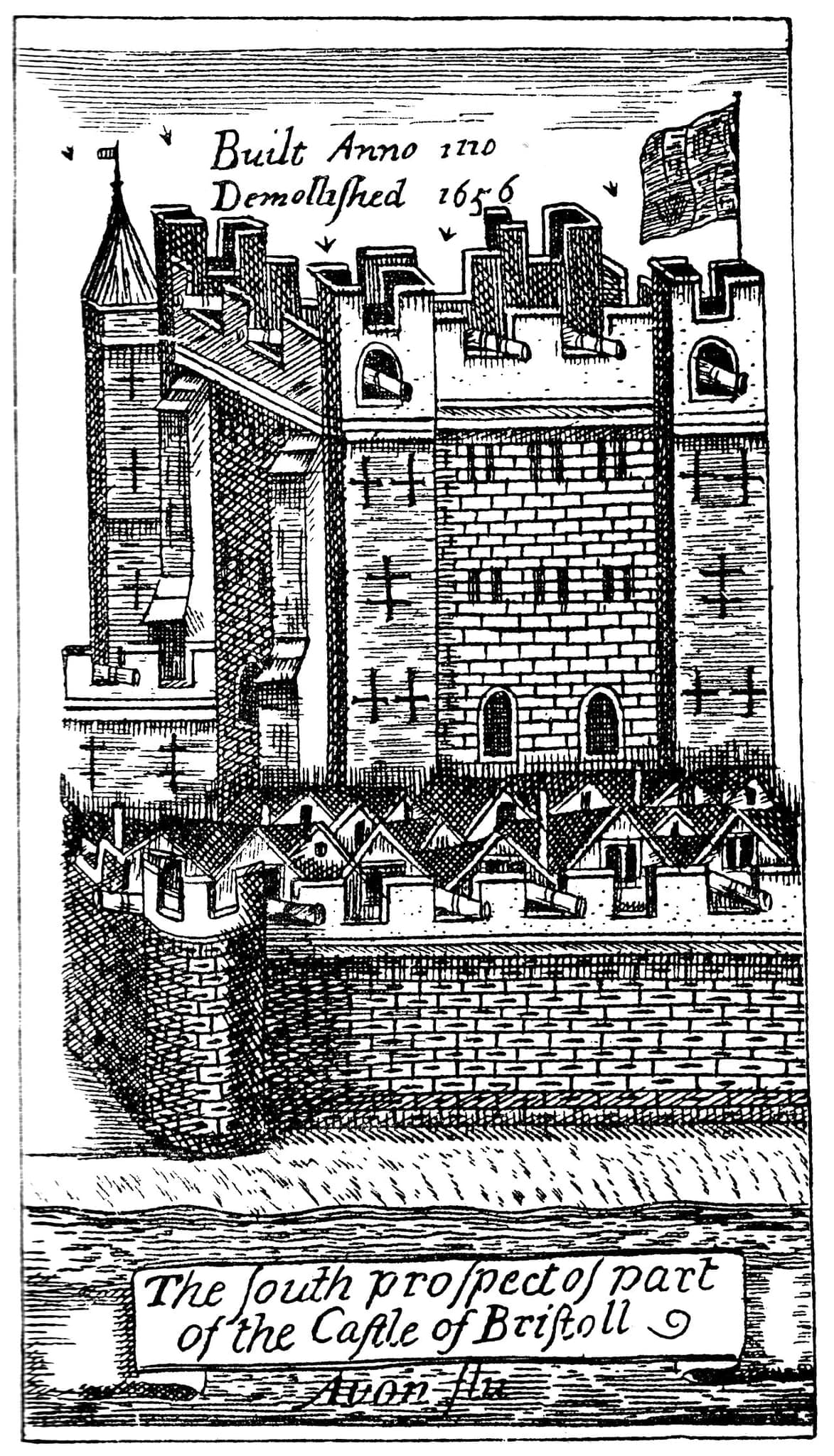
The castle's stone fortifications replaced the original timber structures, featuring a curtain wall, a large stone keep, and multiple towers. The complex was divided into two main courtyards: the outer court contained the keep and dungeon, while the inner court housed a church, living quarters, and the main southern gate. A stone bridge spanned the moat, which was formed by a canal linking the two rivers and regulated by a weir. Defensive earthworks and ramparts further protected the approach from the river mouth.
Defensive innovations
Among the castle's notable defensive features was a postern tunnel or sally port beneath the southwest section, measuring approximately 16 meters in length. This tunnel allowed defenders to exit covertly or launch surprise counterattacks. The sally port still exists near St Peter's Church, providing a rare surviving element of the castle's military infrastructure.
Later history and decline
Throughout the late medieval period, Bristol Castle continued to function as a prison and administrative center. It held the sons of Dafydd ap Gruffydd following the Welsh conquest in 1283 and was the site of executions linked to the accession of King Henry IV in 1399. However, by the 16th century, the castle's military importance waned, and it fell into neglect and disrepair, increasingly becoming a refuge for criminals.
Ownership passed to the city of Bristol in 1630. During the English Civil War, the castle was partially restored by parliamentary forces but was captured by Royalists before the war's conclusion. Its military role ended definitively when Oliver Cromwell ordered its demolition in 1656, resulting in much of the structure being destroyed.
Surviving remains and modern legacy
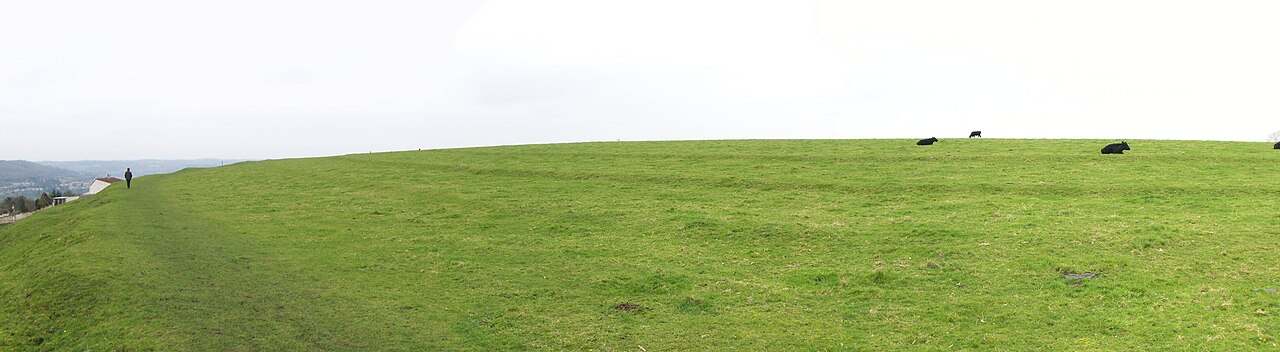
Today, only fragments of Bristol Castle survive. An octagonal tower stood until 1927, and several vaulted chambers remain incorporated into a building known as the Castle Vaults. These chambers are recognized as a Scheduled Ancient Monument, preserving a tangible connection to the castle's medieval past. The moat was largely filled in during the 19th century but survives beneath Castle Park as a navigable waterway linked to the Floating Harbour. The western section of the moat remains as a dry ditch.
The castle's site lies near the modern Broadmead Shopping Centre, with visible remnants such as the sally port near St Peter's Church accessible to visitors. The adaptive reuse of parts of the castle, including the incorporation of the banqueting hall into later commercial buildings, illustrates the evolving urban landscape of Bristol while maintaining links to its Norman heritage.
Historical significance and cultural impact
Bristol Castle played a pivotal role in England's medieval history, from its Norman origins through the turbulent periods of civil war and royal imprisonment. Its architectural evolution reflects broader trends in castle design, transitioning from timber fortifications to imposing stone structures with complex defensive features. The castle's connection to prominent historical figures and events underscores its importance within the royal and feudal power structures of medieval England.
Although largely lost to demolition, the surviving elements and archaeological remains offer valuable insights into Norman military architecture and urban fortification strategies. The site remains a focus for historical study and public interest, contributing to Bristol's rich cultural heritage and identity.
Frequently asked questions (FAQ)
- How do I visit Bristol Castle remains?
- Bristol Castle remains are located within Castle Park in Bristol city center. The park is open daily with free public access, and visitors can explore visible features such as the sally port near St Peter's Church.
- What is the historical significance of Bristol Castle?
- Bristol Castle was a major Norman fortress built in the 11th century, serving as a royal stronghold and prison during key medieval conflicts, including The Anarchy and the English Civil War.
- When was Bristol Castle built and by whom?
- The castle was constructed in the late 11th century shortly after the Norman Conquest, likely commissioned by William the Conqueror and initially overseen by Geoffrey de Montbray.
- Can I see any original architectural features of Bristol Castle today?
- Yes, some vaulted chambers and the sally port remain visible. These features are protected as Scheduled Ancient Monuments and offer a glimpse into the castle's medieval architecture.
- Why was Bristol Castle demolished?
- Oliver Cromwell ordered the castle's demolition in 1656 to prevent its use in future military conflicts following the English Civil War.
Photo gallery

Photo by The book's text by JF Nicholls (d. 1883) and John Taylor (d. 1893). Death dates citation: doi:10.1093/library/s1-V.1.86. Images by unknown engravers, and thus are PD due to age, per the relevant British legislation•Public domain
Information
Opening hours
Castle Park is open daily, public access to remains varies
Ticket prices
Free
Current owner
City of Bristol
Website
Visit websiteSources & official resources
Verify the information above using these authoritative references.
Loading map...
Visitor reviews
No reviews yet. Been here? Write the first review and help other travelers!
Write the first reviewVisited this castle? Share your experience
Your review helps other travelers and adds first-hand knowledge to our encyclopedia.