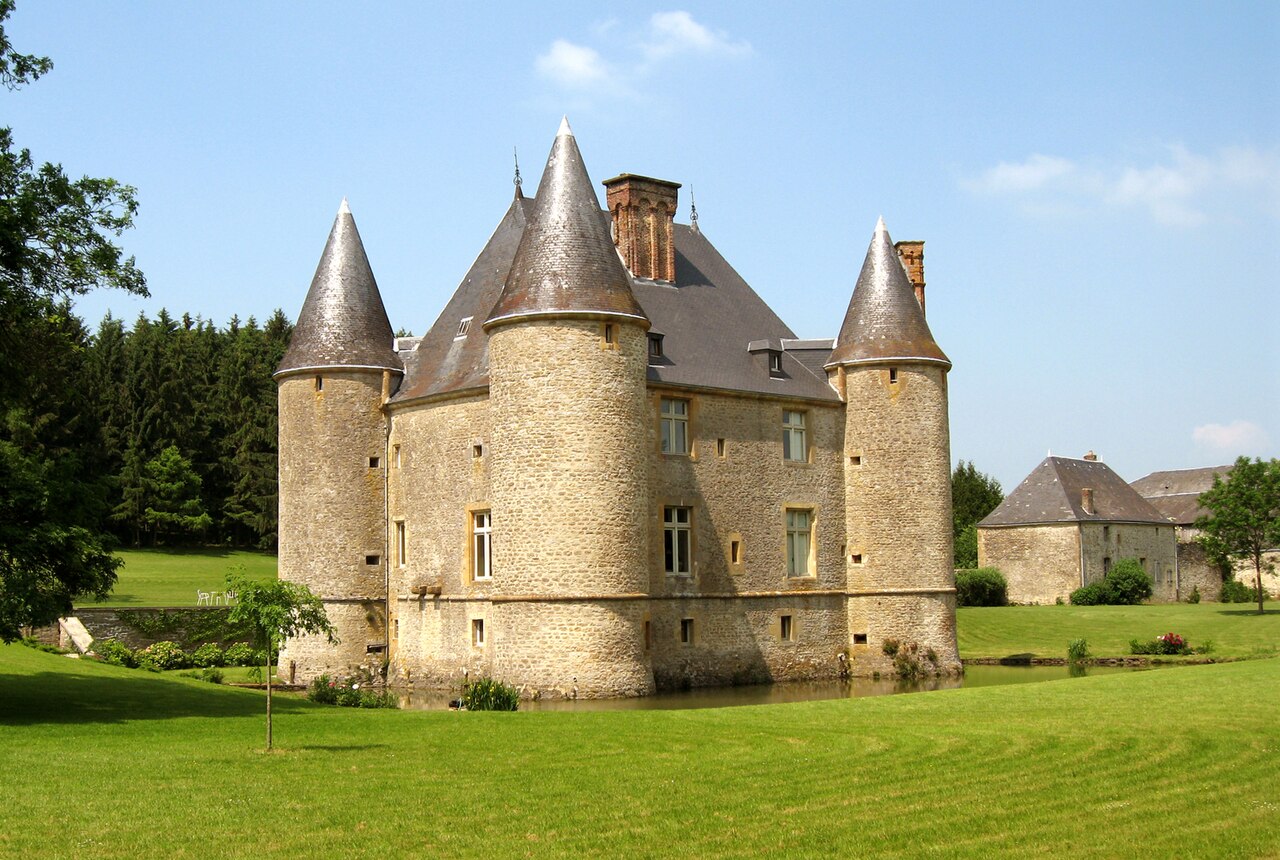
Braux-Sainte-Cohière Castle
Braux-Sainte-Cohière Castle, also known locally as Château de Braux-Sainte-Cohière or simply Château de Braux, is a notable example of a late medieval fortified military commandery located in the village of Braux-Sainte-Cohière in the Marne department of northeastern France. This castle occupies a strategic position near an ancient Roman road and close to the historical border between the Kingdom of France and the Duchy of Lorraine, highlighting its military and political significance during the turbulent centuries of the late Middle Ages and early modern period.
Historical background and strategic importance
The lordship of Braux was first documented in the late 14th century, with ownership divided between the King of France and Jehan de Saulx, the Lord of Braux, Epense, and Bignipont. This division underscores the castle's role as a frontier stronghold in a contested border region. The location was of particular importance due to its proximity to the Duchy of Lorraine and its position on a key Roman road, which facilitated military movements and trade.
The current castle structure was erected in the late 16th century on the site of an earlier fortification by Philippe de Thomassin, Lord of Braux and later Viscount of Châlon. Philippe was a prominent figure and loyal companion to French monarchs Henry III and Henry IV. The castle was constructed during the height of the French Wars of Religion, serving as a symbol of royal authority and as a military base for light reconnaissance cavalry. Its design prioritized defense and military function over residential comfort, reflecting the unsettled nature of the period.
Architectural features and military role
Braux-Sainte-Cohière Castle was built primarily as a fortified military commandery. Its architecture reflects the military needs of the late medieval period transitioning into the early modern era. While detailed architectural plans are scarce, the castle originally included defensive walls, towers, and a dovecote—the latter being the only surviving element from the 15th-century predecessor. The castle was designed to house troops and provide a stronghold for royal forces in a volatile region.
The military function of the castle diminished towards the end of the 17th century due to two main factors: the pacification of the region following the integration of Lorraine into the Kingdom of France and the evolution of artillery technology, particularly the use of metal cannonballs, which rendered many traditional fortifications obsolete. Consequently, parts of the castle, such as the officers' quarters, were converted into more comfortable residential spaces.
Ownership and later history
Over the centuries, Braux-Sainte-Cohière Castle passed through several noble families, including the Le Gorlier de Verneuils, Drouets, Dorigny d'Agny, Darteins, and Bussingers. Each family contributed to the castle's evolving function and structure, adapting it to the needs of their time.
In 2007, the castle was acquired by the Institut de France, a prestigious French learned society. Unfortunately, the castle remained unoccupied and fell into disrepair during this period. It was eventually sold in 2014 to private owners who have been undertaking gradual restoration efforts to preserve the castle's historical and architectural heritage.
Current condition and visitor experience
Today, Braux-Sainte-Cohière Castle stands as a partially restored late medieval fortress that offers a glimpse into the military and noble life of its era. The restoration work focuses on maintaining the castle's structural integrity while respecting its historical character. The surviving dovecote from the 15th century remains a distinctive feature of the site.
The castle and its gardens are open to visitors for a modest fee, allowing the public to explore this rural historic monument. Its location in the peaceful countryside of Marne provides a serene setting for appreciating the castle's architectural features and its role in French history.
Frequently asked questions (FAQ)
- When was Braux-Sainte-Cohière Castle originally built?
- The original castle dates back to the 14th century, with the current structure built in the late 16th century on the site of an earlier fortification.
- What was the primary purpose of Braux-Sainte-Cohière Castle?
- Braux-Sainte-Cohière Castle was primarily a fortified military commandery designed to house troops and assert royal authority during the French Wars of Religion.
- Is Braux-Sainte-Cohière Castle open to the public?
- Yes, the castle and its gardens are open to visitors for a small fee, offering a chance to explore its historic architecture and grounds.
- Who owns Braux-Sainte-Cohière Castle today?
- Since 2014, Braux-Sainte-Cohière Castle has been owned by private individuals who are gradually restoring the property.
- What remains from the original 15th-century castle?
- The dovecote is the only surviving structure from the earlier 15th-century castle on the site.
Information
Current owner
Private owner
Address
11 Grand'Rue, Braux-Sainte-Cohière, France
Loading map...
Visitor reviews
No reviews yet. Been here? Write the first review and help other travelers!
Write the first reviewVisited this castle? Share your experience
Your review helps other travelers and adds first-hand knowledge to our encyclopedia.