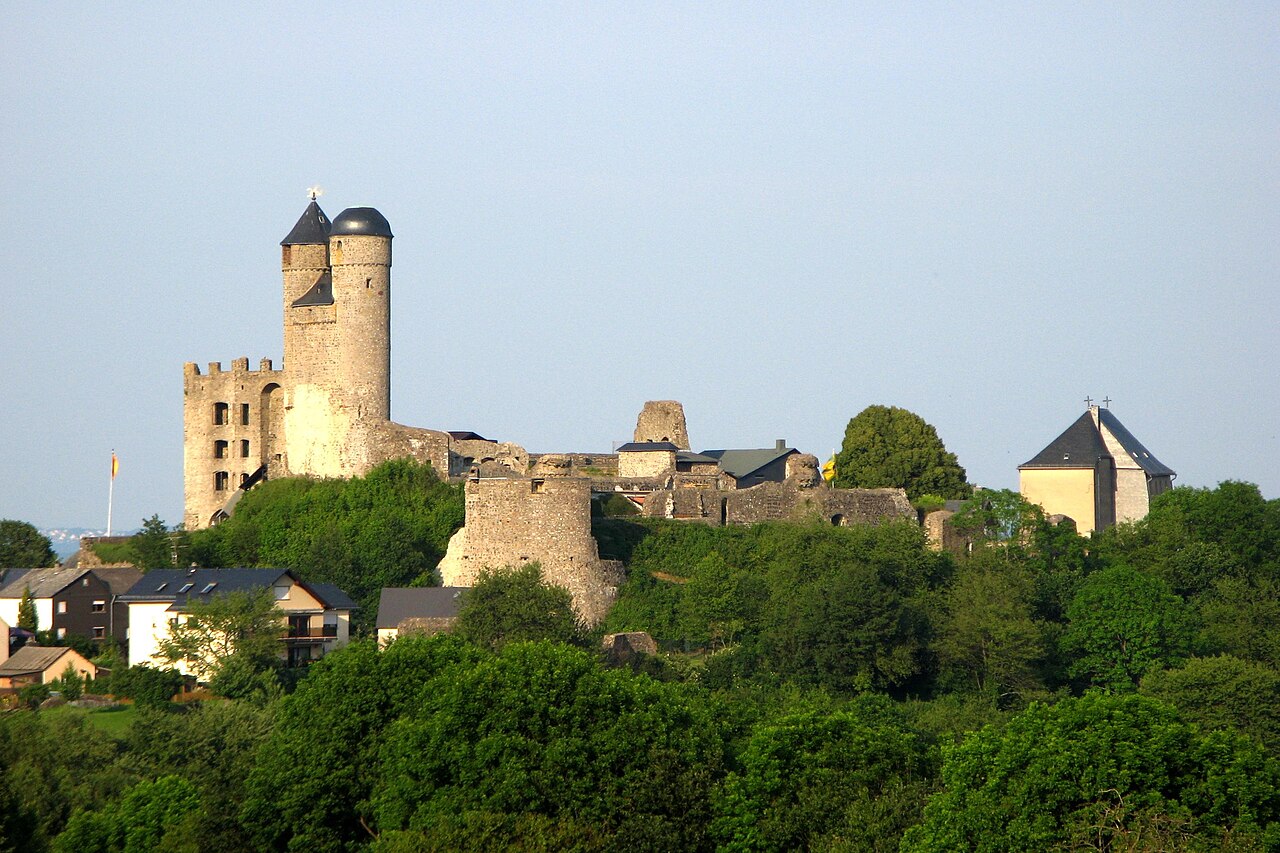
Braunfels Castle

Braunfels Castle: a neo-Gothic hill castle with centuries of princely heritage
Braunfels, Hessen, Germany
High Medieval (11th–13th c.)
Well Preserved

Braunfels Castle stands majestically atop a basalt rock, overlooking the town of Braunfels in Hessen, Germany. This impressive hill castle combines centuries of history with striking neo-Gothic architectural features that define its current silhouette. Originally constructed in the 13th century, Braunfels Castle has been continuously inhabited by the princely family for over 800 years, making it a rare example of a living cultural monument that bridges medieval origins with modern adaptations.

Historical evolution and architectural development

The castle’s origins date back to the High Medieval period, when it was first established as a fortified stronghold. Over the centuries, Braunfels Castle underwent numerous expansions and renovations reflecting changing tastes and defensive needs. The most transformative phase began in the late 19th century, specifically starting in 1880, when the castle was extensively remodeled according to neo-Gothic plans by the renowned building master Edwin Oppler. This renovation introduced characteristic pointed arches, ornate battlements, and decorative towers that give the castle its fairy-tale appearance today.

Despite these later modifications, many original medieval elements remain visible, including parts of the defensive walls and the castle’s strategic placement on a basalt outcrop, which provided natural fortification. The castle’s layout reflects a typical hill castle configuration, designed to maximize defensive advantage through elevation and robust stone construction.

Artistic and cultural treasures within the castle

Braunfels Castle houses an exceptional collection of artworks and historical artifacts. Among the highlights are masterpieces by the Dutch Masters, which enrich the castle’s interiors with Renaissance and Baroque artistic heritage. Another centerpiece is the historically significant Altenberg Altar, a religious artwork of great importance, alongside the legendary Saint Elizabeth's ring, a symbol tied to local Christian traditions and the castle’s princely lineage.

The castle’s interiors also feature richly decorated halls and chambers that showcase the aristocratic lifestyle of its inhabitants across centuries. Visitors can admire period furniture, tapestries, and intricate woodwork that reflect the evolving tastes from medieval austerity to romantic historicism.

Living heritage and visitor experience

Unlike many castles that have become static museums, Braunfels Castle remains a vibrant cultural hub. The princely family’s continuous residence for eight centuries has preserved a unique sense of living history. Guided tours bring the castle’s past to life by narrating the eventful development of the structure and the stories of the family’s extensive European and American connections.

The castle grounds and gardens provide a picturesque setting for cultural events, including open-air opera performances that take advantage of the historic ambiance and scenic backdrop. This blend of heritage and contemporary cultural programming attracts visitors of all ages and interests.

The castle’s visitor program is marked by its Christian family traditions and an open-door policy welcoming guests worldwide. With flexible opening hours throughout the year, Braunfels Castle offers a diverse range of tours and events, making it accessible and engaging for a broad audience.

Surroundings and seasonal attractions

The area around Braunfels Castle is lively with restaurants and beer gardens, especially in the warmer months when visitors can enjoy outdoor seating with views of the castle. The nearby market square adds to the charm of the location, providing a welcoming atmosphere for tourists.

During the Christmas season, the castle and its surroundings are beautifully decorated with festive lights, enhancing the magical experience of visiting this historic site. Whether in summer or winter, Braunfels Castle offers a captivating destination rich in history, architecture, and culture.

Frequently asked questions (FAQ)

How do I get to Braunfels Castle?
Braunfels Castle is easily accessible by car and public transport. If you are traveling by train, the nearest station is Braunfels, which is just a short walk from the castle. For those driving, there are parking facilities available nearby.
What is the historical significance of Braunfels Castle?
Braunfels Castle, built in the 13th century, is a prime example of medieval architecture in Germany. It served as the residence for the Counts of Braunfels and played a significant role in regional politics during the Middle Ages. Today, it stands as a testament to the rich history of the area and attracts many history enthusiasts.
When was Braunfels Castle built?
Construction of Braunfels Castle began in 1246, and it was continuously expanded and renovated over the centuries. Its strategic location and robust design made it an important fortress during its early years. The castle has preserved many original architectural features, showcasing its long-standing heritage.
Can I take a guided tour of Braunfels Castle?
Yes, guided tours are available for visitors who wish to learn more about the castle's history and architecture. Tours are typically conducted in both German and English, allowing for a wider audience. Be sure to check the schedule in advance, as times may vary.
Why is Braunfels Castle popular among tourists?
Braunfels Castle is popular for its picturesque setting and stunning panoramic views of the surrounding landscape. Visitors are drawn to its well-preserved medieval architecture and rich history. Additionally, the castle hosts various cultural events throughout the year, making it an attractive destination for both locals and tourists.
Is it possible to host events at Braunfels Castle?
Yes, Braunfels Castle offers facilities for hosting various events, such as weddings, corporate gatherings, and private celebrations. The unique ambiance of the castle provides a memorable backdrop for any occasion. It is advisable to contact the castle administration for specific details and availability.
What are the opening hours of Braunfels Castle?
Braunfels Castle is open to visitors from Wednesday to Sunday, with varying hours depending on the season. Typically, the castle opens at 10 AM and closes in the late afternoon. It is recommended to check the official website for the most current opening hours, especially during holidays.
What are the ticket prices for Braunfels Castle?
Ticket prices for Braunfels Castle are quite reasonable, with discounts offered for students and seniors. Children under a certain age may enter for free, making it accessible for families. It’s a good idea to purchase tickets in advance during the peak season to avoid long lines.
When is the best time to visit Braunfels Castle?
The best time to visit Braunfels Castle is during the spring and early autumn when the weather is mild, and the surrounding nature is in full bloom. Additionally, these seasons tend to be less crowded than the summer months, allowing for a more enjoyable experience. However, each season offers its own charm, so any time can be a good time to visit.
Are there any nearby attractions to Braunfels Castle?
Yes, there are several nearby attractions worth visiting, including the charming town of Braunfels itself, with its quaint shops and cafes. The surrounding area also offers beautiful hiking trails and other historical sites. This makes it easy to create a full day of exploration around your visit to the castle.

Information

Hill Castle

Sources & official resources

Verify the information above using these authoritative references.

Loading map...

Visitor reviews

No reviews yet. Been here? Write the first review and help other travelers!

Write the first review

Visited this castle? Share your experience

Your review helps other travelers and adds first-hand knowledge to our encyclopedia.

Write a review

(5/5)

0/2000 characters

Your review will be visible after admin approval

Nearby castles

8.4 km

Burg Kalsmunt

Wetzlar, Germany

Burg Kalsmunt stands as a striking example of a medieval imperial hill castle perched atop a basalt cone overlooking the historic city of Wetzlar in Germany. Its commanding position, rising approximately 90 meters above the city, afforded it strategic importance from its earliest days, controlling access and overseeing the surrounding Wetterau region. The castle's origins are steeped in historical ambiguity, with some scholarly debate suggesting a foundation as early as Roman times. However, the most credible accounts link its establishment to the reign of Charlemagne in the late 8th century, who is traditionally credited with naming the site "Carols Mons," reflecting its significance as a royal stronghold. Early history and imperial significance The castle's early medieval role was primarily as an imperial fortress within the Holy Roman Empire. By the 12th century, Burg Kalsmunt was closely associated with the imperial minting activities connected to Wetzlar, although the actual coin production took place within the city itself. This connection is symbolized by a denar coin minted during the reign of Emperor Frederick Barbarossa around 1180, which bears the inscription "Calsmund" and depicts a crowned figure holding a lily scepter and palm branch, emblematic of imperial authority. Frederick Barbarossa himself is credited with significant expansions of the castle around 1180, reinforcing its defensive capabilities to consolidate imperial control over the region. Further fortifications were added by 1252, and the castle was managed by appointed burgmannen, castle officials responsible for defense and administration. These developments underscore the castle's role as a keystone in the imperial territorial network. Political and administrative roles in the late middle ages During the late 13th century, Burg Kalsmunt played a notable role in regional political affairs. It was the site of the imprisonment and execution of the impostor Tile Kolup in 1284–1285, an event that highlights the castle's function as a center of imperial justice. In 1285, an agreement between the castle's occupants and the city of Wetzlar was established to prevent the harboring of enemies, reflecting the castle's delicate position in local power dynamics and its allegiance to the Holy Roman Emperor. The castle's governance was marked by royal appointments, including the notable castellanship of Count Adolf of Nassau in 1286, who later ascended as King of the Romans. The stewardship passed to Gottfried von Merenberg in 1292, with the influential Merenberg family maintaining control until the castle eventually came under the House of Nassau-Weilburg. This family's tenure included occasional pledging of the castellanship to third parties, indicating the castle's continued administrative importance. Decline, ownership changes, and preservation efforts By the early 16th century, Burg Kalsmunt had diminished in military significance and was fully owned by Nassau-Weilburg. In 1536, ownership transferred to Landgrave Philip the Magnanimous of Hesse through an exchange involving the castle and the Vogtei of Wetzlar. A detailed survey commissioned in 1609 by the Landgrave produced the earliest known ground plan of the castle ruins, providing valuable insight into its layout and condition at that time. Plans to modernize Burg Kalsmunt into a fortress emerged in 1740 but were abandoned due to financial constraints. The castle passed into municipal ownership in 1803, and in 1836, the local historical society altered the main tower (bergfried) by cutting a ground-level entrance through its thick walls, replacing the original elevated entryway. This modification marked a shift from military utility to historic preservation and public accessibility. Archaeological interest has grown steadily, with excavations conducted in 1928 under Carl Metz and extensive research since 2013 by the University of Marburg in collaboration with a local association. These efforts have mapped the castle's remains and enhanced understanding of its architectural and historical significance. Architectural features and the castle layout Burg Kalsmunt is characterized by its adaptation to the natural basalt cone, a volcanic rock formation that provided a formidable natural defense. The castle's layout reflects its medieval military purpose, with robust stone walls and strategically placed fortifications designed to protect the city below and assert imperial dominance. The centerpiece of the castle is the bergfried, a massive main tower with walls approximately three meters thick. This tower originally featured a first-floor entrance accessible via an adjoining tower annex, a common defensive feature intended to impede attackers. The 19th-century alteration to a ground-level entrance made the bergfried more accessible but less defensible, reflecting changing attitudes toward the castle's use. Surrounding the bergfried, the castle's 13th-century fortifications include curtain walls and defensive structures that remain partially visible today. The castle's enclosure likely contained additional buildings and functional spaces typical of imperial castles, such as living quarters, storage, and administrative offices, though much of this has been lost to time. Cultural heritage and modern significance Today, the ruins of Burg Kalsmunt serve as a tangible link to the medieval imperial history of the region. Its elevated position offers panoramic views of Wetzlar and the surrounding landscape, attracting visitors interested in history, architecture, and archaeology. The castle's enduring presence symbolizes the legacy of medieval imperial architecture and governance, reflecting centuries of political and military evolution. Ongoing archaeological research continues to uncover details about the castle's construction phases and historical context, contributing to the broader understanding of medieval fortifications in Germany. Preservation efforts ensure that Burg Kalsmunt remains a valuable cultural and educational resource, highlighting the importance of protecting historical sites.

High Medieval (11th–13th c.)
Details
13.5 km
Greifenstein Castle (Hesse) — Germany castle

Greifenstein Castle (Hesse)

Greifenstein, Germany

Greifenstein Castle (German: Burg Greifenstein) is a prominent hill castle situated in the village of Greifenstein, within the county of Lahn-Dill-Kreis in Middle Hesse, Germany. This medieval fortress is located within the boundaries of the Westerwald-Lahn-Taunus national geopark, a region known for its diverse geological formations and rich cultural heritage. Historical background and significance The origins of Greifenstein Castle trace back to the High Medieval period, with its initial construction likely dating to the 12th or 13th century. The castle was strategically built on a hilltop to oversee and control the surrounding territory, a common practice for fortifications of this type in medieval Germany. Throughout its history, the castle served as a residence and stronghold for various noble families and played a role in regional defense and administration. Its location in the Lahn-Dill-Kreis placed it within an important corridor for trade and military movement, contributing to its strategic value. Over the centuries, Greifenstein Castle underwent various modifications and expansions to adapt to changing military technologies and residential needs. Architectural features The castle exemplifies typical hill castle architecture of the medieval period, featuring robust stone walls that follow the natural contours of the hill. Defensive structures such as battlements, towers, and a gatehouse are integral parts of its design, providing protection and control over access points. The layout includes a central keep (donjon), which served both as a last refuge during sieges and as the lord's residence. Surrounding the keep is a curtain wall enclosing a courtyard with various ancillary buildings such as stables, workshops, and storage rooms. The castle's elevated position offers commanding views of the surrounding landscape, enhancing its defensive capabilities. Defensive elements Greifenstein Castle incorporates several defensive features typical of medieval fortifications. The curtain walls are thick and high, designed to withstand attacks and sieges. The towers provide vantage points for archers and lookouts, while the gatehouse controls entry and could be fortified with a portcullis and drawbridge. Although the castle does not have a moat, its hilltop location naturally protects it from direct assault. The steep slopes around the castle act as natural barriers, making it difficult for attackers to approach unnoticed or launch effective sieges. Current condition and accessibility Today, Greifenstein Castle is well preserved and serves as a cultural and historical monument. It is accessible to visitors who can explore its architectural features and enjoy panoramic views of the surrounding region. The castle is part of local heritage tourism and often hosts events that highlight its medieval past. Its inclusion within the Westerwald-Lahn-Taunus geopark emphasizes its geological and historical importance, attracting visitors interested in both natural landscapes and cultural history. Greifenstein village and surrounding area The village of Greifenstein itself is a small community that retains a traditional atmosphere, with the castle as its focal point. The surrounding landscape of Middle Hesse features rolling hills, forests, and river valleys, offering opportunities for hiking and outdoor activities. Visitors to the castle often combine their trip with exploring the geopark's trails and natural sites, making Greifenstein Castle a key destination within this scenic and historically rich region. Architectural style and period The castle's architectural style is predominantly medieval Gothic, characteristic of many German hill castles built during the High Medieval period. Its stone masonry and defensive design reflect the military and residential needs of the time. While later modifications may have introduced elements from other periods, the core structure remains a fine example of medieval fortification architecture.

High Medieval (11th–13th c.)
Details
13.9 km

Greifenstein Castle

Greifenstein, Germany

Greifenstein Castle is a striking hill castle perched prominently above the Dill valley in Germany's Westerwald region. Its commanding location offers expansive views and underscores its historic role as a strategic fortress in controlling the surrounding landscape. The castle complex, dating originally from the 12th century, remains a significant heritage site that attracts visitors with its rich history, architectural remnants, and cultural attractions. The castle's origins trace back to the High Medieval period, when it was constructed by local knights to oversee and protect vital valley routes. It is first documented in 1172, marking it as an enduring symbol of medieval power and defense. Over the centuries, Greifenstein Castle has witnessed considerable historical events, including destruction during the Peasants' War of 1524-1525 and subsequent rebuilding phases that reflect evolving architectural styles and ownership. Historical development and architectural evolution Early medieval origins and strategic significance Greifenstein Castle began as a medieval fortress designed to command the Dill valley, a key geographic corridor. The original structure was a classic example of a hill castle, utilizing the natural rocky outcrop for defense. The castle's earliest known mention in 1172 coincides with the period of territorial consolidation in the Holy Roman Empire, highlighting its role in regional power dynamics. Destruction and baroque transformation The castle suffered significant damage during the Peasants' War, a widespread uprising that targeted many noble estates and fortifications. Following this, Greifenstein was rebuilt under the auspices of Marquard Sebastian von Schenk von Stauffenberg, the Prince-Bishop of Bamberg, between 1691 and 1693. This reconstruction introduced Baroque architectural elements under the guidance of the renowned Bavarian architect Leonhard Dientzenhofer. Although often referred to as Greifenstein Palais due to its episcopal connections, it was not the official bishop's palace, which remained in Bamberg. Modern restoration and preservation efforts In the 20th century, the castle underwent extensive restoration led by Otto Philipp Schenk, Graf von Stauffenberg from 1975 to 1977. These efforts aimed to stabilize the structure and preserve its historical integrity, ensuring that visitors can appreciate both its medieval origins and later Baroque modifications. Today, the castle is well-preserved and serves as a cultural landmark. Architectural features and site layout Castle complex and notable structures The castle complex includes a rare double chapel, one of the few surviving examples in Germany, illustrating the site's religious as well as military significance. The castle walls and defensive towers remain prominent features, showcasing typical medieval construction techniques using local stone. The presence of a moat and bergfried (main tower) highlights the castle's defensive design. Surrounding attractions and visitor experience Greifenstein Castle is not only a historical monument but also a vibrant cultural destination. It hosts the Village and Castle Museum, which offers insights into the local history and the castle's role over the centuries. Visitors can enjoy scenic walks around the castle grounds and explore an educational herb garden, enhancing the site's appeal as a family-friendly and educational attraction. The dual castles of greifenstein near holzelfingen Untergreifenstein and obergreifenstein In a different region, near Holzelfingen in Baden-Württemberg, there exists another historical site known as Greifenstein Castle, consisting of two hilltop fortifications: Untergreifenstein and Obergreifenstein. These castles were built in the 12th century by medieval knights to control the Holzelfinger valley. The two castles are situated close to each other on a rocky ridge, with Obergreifenstein positioned about 100 meters higher, providing a superior defensive vantage point. Historical conflicts and current state Both castles were destroyed during the Imperial War of 1311-1312, a conflict that led to widespread damage in the region. By the mid-14th century, the ruins came under the control of the rulers of Württemberg. Today, Obergreifenstein retains parts of its ring wall and the bergfried, while Untergreifenstein is largely reduced to small wall fragments and earthworks. Archaeological finds such as ceramic fragments provide valuable insights into medieval life at the site. Cultural significance and tourism Greifenstein Castle remains an important cultural landmark in Germany, blending medieval fortification heritage with later Baroque influences. Its inclusion on the Burgenstraße tourist route makes it a key destination for those exploring German castles. The site's museums, architectural features, and natural surroundings offer a comprehensive experience that appeals to history enthusiasts, architecture lovers, and casual visitors alike. Overall, Greifenstein Castle stands as a testament to the layered history of German castle architecture, from its High Medieval origins through Baroque transformations and modern preservation, making it a fascinating subject for study and tourism.

High Medieval (11th–13th c.)
Details