Brancepeth Castle
Brancepeth Castle stands as a remarkable example of a historic hill castle in the village of Brancepeth, Durham, England. Its origins trace back to the Norman period, when the Bulmer family established the first fortified stronghold on this strategic elevated site. Over centuries, the castle evolved through multiple phases of construction, ownership, and restoration, reflecting the changing political and architectural landscape of northern England.
The early history and medieval transformations
The initial construction by the Bulmer family during the Norman era laid the foundation for Brancepeth Castle's role as a defensive fortress in the region. The castle's position on a hilltop provided natural advantages for surveillance and defense, typical of hill castles designed to oversee and control surrounding territories.
In the late 14th century, the castle passed into the hands of the influential Neville family, who undertook significant rebuilding efforts. This period saw the castle fortified and expanded to suit the needs of a powerful noble family deeply involved in the politics of the north. The Nevilles maintained control until their participation in the Rising of the North in 1569, a Catholic uprising against Queen Elizabeth I's Protestant rule. Following the rebellion's failure, the Crown confiscated Brancepeth Castle, marking a major turning point in its history.
Ownership changes and architectural developments from the 17th to 18th centuries
In the early 17th century, King James I granted the castle to Robert Carr, 1st Earl of Somerset, but after a poisoning scandal at court, the property reverted to royal ownership. It was sold in 1636 to Ralph Cole of Newcastle, whose family held it until 1701 when it was acquired by Sir Henry Belaysyse. The Belaysyse family is noted for their connection to the traditional English ballad "Bobby Shafto," believed to be inspired by Sir Henry's daughter.
19th-century reconstruction and architectural significance
The most transformative phase in Brancepeth Castle's architectural history occurred after its purchase by William Russell in 1796. As a prosperous banker and mine owner, Russell's family had the means to commission extensive renovations. His son, Matthew Russell, a Member of Parliament, engaged architect John Paterson in the 1820s to reshape the castle. Paterson's work gave Brancepeth much of its present form, blending traditional stone construction with the stylistic elements of a grand English country house.
Mid-19th century enhancements were carried out by Anthony Salvin, a leading architect known for his expertise in restoring and designing country houses and castles. Salvin's contributions further refined the castle's appearance and functionality, aligning it with contemporary tastes while respecting its medieval heritage. These renovations contributed to the castle's designation as a Grade I listed building, recognizing its exceptional historic and architectural importance.
20th-century uses and preservation efforts
During the First World War, Brancepeth Castle served as a hospital for recovering patients from Newcastle General Hospital, illustrating its adaptability beyond a noble residence. In the Second World War, it became the regimental headquarters for the Durham Light Infantry. To support military operations, a large camp consisting of over 100 huts was constructed south of the village, underscoring the castle's strategic military role in the 20th century.
After the regiment's departure in 1962, the castle passed into private ownership. Since 1978, the Dobson family has been responsible for its care. Margaret Dobson acquired the property initially for practical use linked to her husband's publishing business but undertook significant restoration, including replacing a lead roof that had previously been removed. The castle's principal rooms were refurbished to host public events such as auctions, craft fairs, and theatrical performances, especially Shakespearean plays held in the main courtyard.
Architectural features and layout
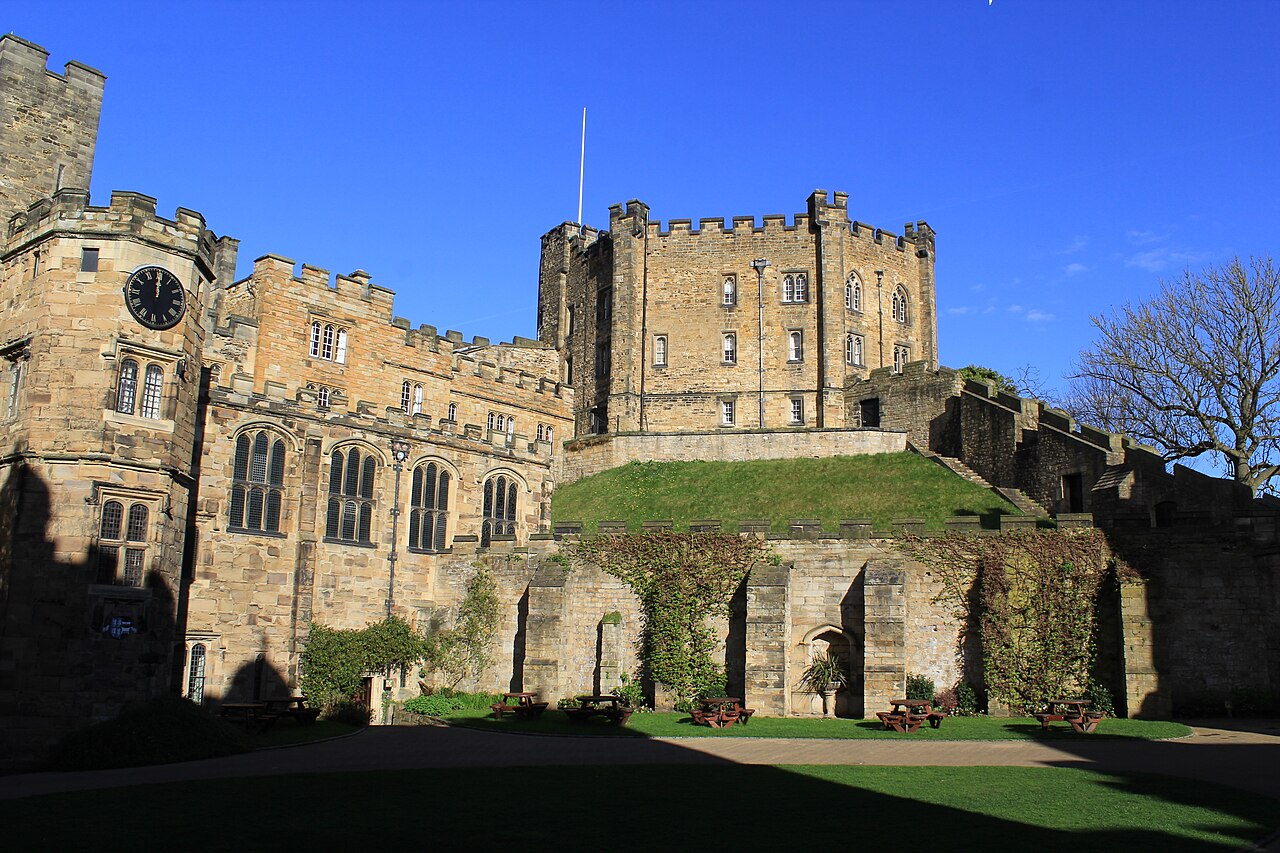
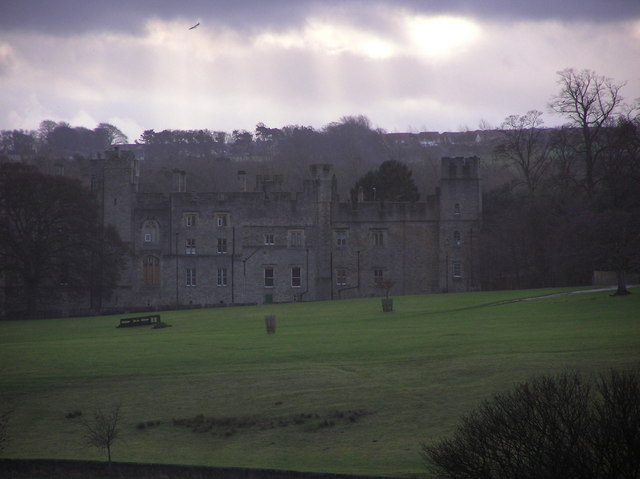
Brancepeth Castle occupies slightly elevated terrain at approximately 108 meters above sea level, set within gently rolling countryside. The castle complex is characterized by a central courtyard surrounded by stone buildings, a layout typical of fortified manor houses that combine defensive and residential functions.
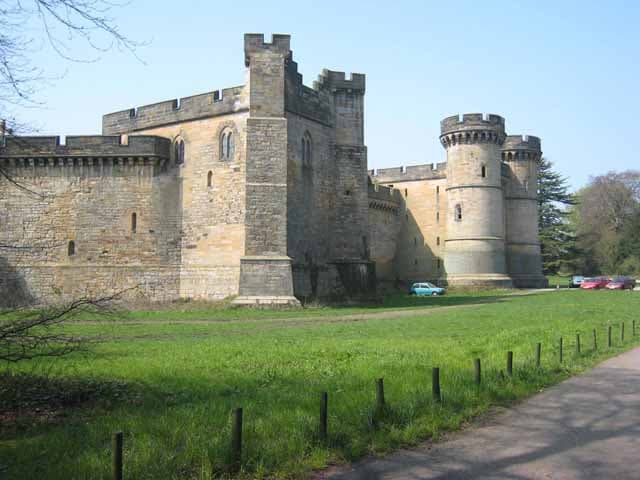
The castle's stone construction reflects the traditional materials and methods of English country houses adapted from medieval castles. Its appearance today owes much to the 19th-century rebuilding phases, which preserved and enhanced its historic character while introducing elements suitable for modern habitation and public use.
Notable architectural features include robust stone walls, battlements, and a variety of towers and gatehouses that emphasize its defensive origins. The main courtyard serves as a versatile space for cultural events, maintaining the castle's role as a community focal point.
Archaeological and cultural significance
An intriguing archaeological discovery was made in the castle's cellar, where a collection of French political posters from 1968 was found. These posters gained attention through a BBC television program in 2019, adding a unique modern historical layer to the castle's long timeline.
Brancepeth Castle's Grade I listing highlights its importance as a cultural heritage site, reflecting centuries of English history from the Norman conquest through medieval noble conflicts to Victorian restoration and 20th-century military use. Its ongoing preservation and adaptation for public events ensure that it remains a vibrant part of the local community and a significant landmark in Durham.
Frequently asked questions (FAQ)
- How do I visit Brancepeth Castle?
- Brancepeth Castle is privately owned but hosts occasional public events such as auctions, craft fairs, and theatrical performances. Visitors should check the castle's official website or local event listings for scheduled openings and special events.
- What is the historical significance of Brancepeth Castle?
- Brancepeth Castle has a rich history dating back to the Norman period and was associated with powerful families like the Nevilles. It played roles in significant events such as the Rising of the North and served military functions during both World Wars.
- Can I attend events or performances at Brancepeth Castle?
- Yes, the castle's main courtyard is used for cultural activities including Shakespearean plays and other performances, particularly during the warmer months. These events provide a unique opportunity to experience the castle's historic atmosphere.
- When was Brancepeth Castle last restored?
- Significant restoration work was undertaken by the Dobson family starting in 1978, including roof repairs and refurbishment of principal rooms to support public use and preservation.
- Is Brancepeth Castle accessible for visitors with mobility issues?
- Due to its historic structure and layout, accessibility may be limited in some areas. Visitors with mobility concerns should inquire in advance to understand which parts of the castle and grounds are accessible.
Photo gallery

Information
Sources & official resources
Verify the information above using these authoritative references.
Loading map...
Visitor reviews
No reviews yet. Been here? Write the first review and help other travelers!
Write the first reviewVisited this castle? Share your experience
Your review helps other travelers and adds first-hand knowledge to our encyclopedia.