Auckland Castle
Auckland Castle, located in Bishop Auckland, England, stands as a remarkable example of a medieval episcopal residence that has evolved architecturally and culturally over more than eight centuries. Originally constructed in the late 12th century, it served as the principal residence of the Bishops of Durham, reflecting the power and influence of the medieval English Church in the region. The castle's strategic location between the River Gaunless and the River Wear on gently sloping terrain provided both defensive advantages and access to extensive hunting grounds, which were highly prized by its episcopal occupants.
The castle's origins date back to around 1183, when Bishop Hugh de Puiset, also known as Bishop Pudsey, initiated the construction of a great hall and palace complex. This great hall, originally built as a multifunctional main gathering space, formed the nucleus of the castle and was a symbol of the bishop's temporal authority as well as his ecclesiastical role. By the early 13th century, Auckland Castle had been substantially completed, serving as a residence and administrative center within the bishopric's extensive lands.
Medieval foundations and episcopal expansions
At the turn of the 14th century, Bishop Antony Bek, one of the most powerful and influential bishops of Durham, undertook significant expansions to Auckland Castle. Bek's enhancements included the addition of a large chapel and the erection of defensive walls, transforming the site into a fortified episcopal palace. His decision to relocate his principal residence from Durham Castle to Auckland was motivated by the desire for better access to hunting grounds and a more comfortable domestic environment. The chapel, built around 1300, was among the largest ecclesiastical buildings of its kind in England, underscoring the castle's dual role as a religious and administrative center.
Throughout the medieval period, the castle remained a symbol of the bishop's secular power and spiritual authority. The fortified walls, battlements, and gatehouses not only provided defense but also projected prestige and status in a turbulent political landscape. The castle's layout, with its courtyard flanked by the chapel and residential ranges, reflected typical medieval episcopal palace design, combining functionality with grandeur.
Early modern transformations and royal connections
The early 17th century saw Auckland Castle host a notable royal visit. In 1603, Bishop Tobias Matthew welcomed Anne of Denmark, queen consort to King James VI and I, along with their children Prince Henry and Princess Elizabeth, during their journey south following the Union of the Crowns. This event underscored the castle's continued importance as a residence befitting high-ranking clergy and its role in national political and social affairs.
The English Civil Wars in the mid-17th century brought significant upheaval. After the disestablishment of the Church of England in 1646, Auckland Castle was sold to Sir Arthur Haselrig, a prominent Parliamentarian. Haselrig dismantled much of the medieval fabric, including the original chapel, and replaced it with a mansion reflecting contemporary tastes and the shift from ecclesiastical to private ownership. However, this mansion was short-lived, as the Restoration of the monarchy in 1660 prompted a return to ecclesiastical control.
Restoration and baroque influences under bishop john cosin
Bishop John Cosin led a major rebuilding project between 1661 and 1665, removing Haselrig's mansion and reinstating Auckland Castle as the bishop's residence. Cosin transformed the former banqueting hall into the present chapel, blending Gothic and Baroque woodwork styles. This unique architectural synthesis created a visually distinctive and spiritually resonant space that remains a highlight of the castle's interior. Cosin's work symbolized the restoration of the Church of England's authority and the revival of episcopal grandeur after the turmoil of the Civil Wars.
18th-century cultural enrichment and gothic revival
The 18th century brought further cultural and architectural developments. Bishop Richard Trevor notably enriched the castle's artistic heritage by acquiring twelve paintings by the Spanish master Francisco de Zurbarán, depicting the biblical story of Jacob and his twelve sons. These paintings, originally destined for South America, were installed in the Long Dining Room, which Trevor redesigned specifically to showcase them. This addition significantly enhanced the castle's cultural prestige and remains a key attraction for visitors.
Later in the century, around 1795, Bishop Shute Barrington commissioned the renowned architect James Wyatt to unify the castle's diverse architectural elements. Wyatt employed the Gothick style, a romantic revival of medieval Gothic architecture, to create cohesive features such as the Throne Room and the castellated garden screen. These enhancements contributed to the castle's picturesque character and reflected contemporary tastes for medieval revivalism.
Modern preservation and archaeological discoveries
In the 21st century, Auckland Castle has undergone extensive restoration and preservation efforts to safeguard its heritage. The castle was acquired by philanthropist Jonathan Ruffer in 2012 and placed under a trust dedicated to its protection. After comprehensive restoration work, the castle reopened to the public in 2019, offering visitors access to its historic interiors, art collections, and newly constructed visitor facilities.
Recent archaeological excavations have shed new light on the castle's complex history. In 2020, researchers uncovered the foundations of Bishop Antony Bek's large chapel, revealing the scale and grandeur of this medieval structure. Further discoveries in June 2024 included a decorative Golden Primrose and substantial wall remains attributed to the period of Sir Arthur Haselrig's ownership. These findings enrich understanding of the castle's architectural evolution and the layers of history embedded within its walls.
Architectural features and site layout
Castle grounds and defensive elements
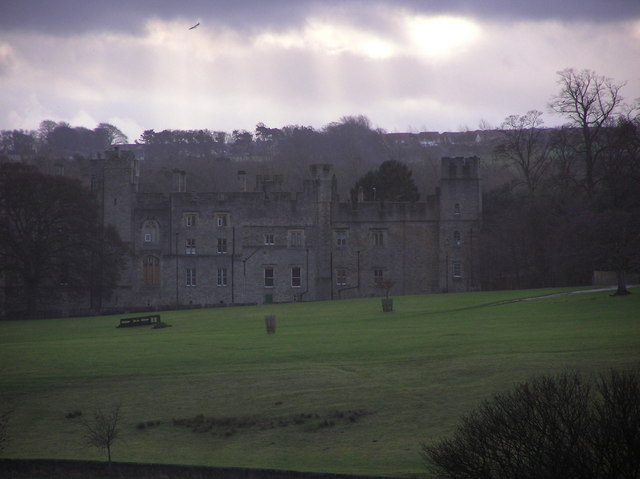
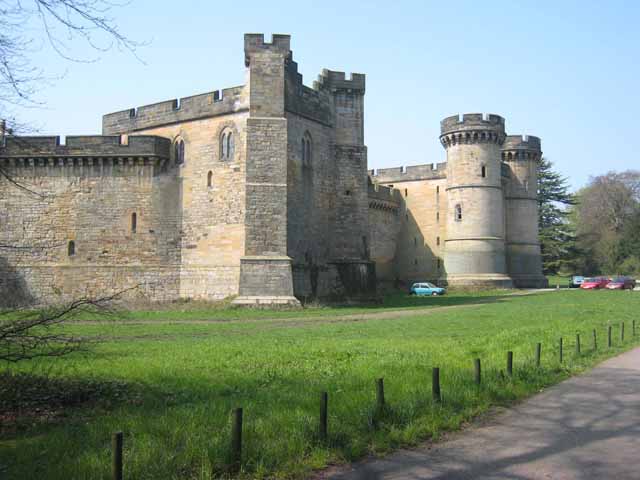
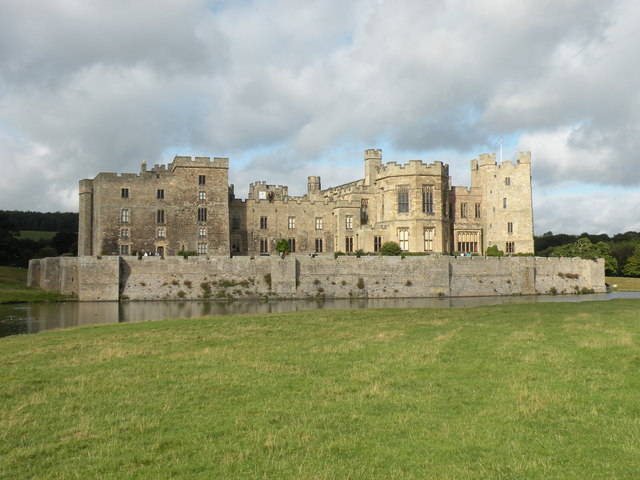
Auckland Castle is situated on flat terrain with steep slopes on three sides, enhancing its natural defensibility. The main structures form two sides of a courtyard, with the north range dominated by the large chapel originally built as a great hall by Bishop Hugh de Puiset. This chapel features four bays and aisles, reflecting its ecclesiastical functions and architectural grandeur. The exterior exhibits a blend of medieval and 17th-century alterations, including the replacement of clerestory windows and the integration of Gothic and Baroque elements.
Residential and ceremonial spaces
The western range contains the bishop's state apartments above former service areas, now adapted for modern use such as a café. While the core structure dates to the 14th century, later modifications from the 16th and 18th centuries have obscured much of the medieval fabric. Notable interior spaces include the ante-room and the Throne Room, redesigned by James Wyatt in the late 18th century in the Gothick style, showcasing ornate woodwork and decorative detailing.
The Long Dining Room remains a focal point, housing the Zurbarán paintings and serving as a testament to the castle's artistic and cultural heritage. The Scotland Wing, originally a long gallery built by Bishop Tunstall, historically served as a holding area for Scottish prisoners and now functions as part of the Faith Museum and diocesan offices, linking the castle's historical and contemporary roles.
Gardens and parkland
The castle is surrounded by an extensive deer park covering approximately 800 acres (320 hectares), preserving medieval landscape features such as fish ponds and woodland paths. The Deer House, a large crenellated stone building dating from 1760, was originally constructed to shelter deer and today serves as a visitor exhibit. The parkland reflects the hunting lifestyle of the early bishops and contributes to the castle's historic setting.
The 17th-century walled gardens were reopened in May 2024, featuring a new glasshouse and a garden designed around themes of faith. A further garden, known as the Great Garden, is planned to open in 2025, continuing the tradition of landscaped grounds integral to the castle's character.
Cultural significance and public engagement
Auckland Castle remains a vital cultural and spiritual landmark in northern England. The establishment of the Faith Museum in October 2023, designed by Niall McLaughlin Architects, within the Scotland Wing and adjoining extensions, offers visitors an immersive experience tracing six millennia of British religious history. This museum enhances the castle's role as a center for education, heritage, and interfaith dialogue.
The castle's preservation and public accessibility have been greatly enhanced by recent restoration projects, including the addition of a 115-foot (35-meter) visitor tower with lifts and viewing platforms, completed in 2019. These facilities provide panoramic views of the castle and surrounding landscape, enriching the visitor experience.
Throughout its long history, Auckland Castle has maintained its connection to the Bishops of Durham, serving as their principal residence from the late 12th century until 2012. The castle's architectural evolution, artistic treasures, and extensive grounds collectively embody the religious, political, and cultural history of the region.
Frequently asked questions (FAQ)
- When was Auckland Castle originally built?
- Auckland Castle was originally constructed around 1183 under Bishop Hugh de Puiset as a medieval episcopal residence.
- What architectural styles are present at Auckland Castle?
- The castle features a mix of Gothic, Baroque, and Gothick revival styles due to various renovations from the 12th to 18th centuries.
- Can visitors see the Zurbarán paintings at Auckland Castle?
- Yes, the Zurbarán paintings depicting Jacob and his twelve sons are displayed in the Long Dining Room, accessible to visitors.
- Is Auckland Castle open to the public?
- Yes, Auckland Castle reopened to the public in 2019 after restoration, offering tours, exhibitions, and visitor facilities.
- What is the significance of the Faith Museum at Auckland Castle?
- The Faith Museum, opened in 2023, explores six millennia of British religious history and is housed in the Scotland Wing and adjoining extensions.
- Are there gardens and parklands to explore at Auckland Castle?
- Visitors can explore the extensive deer park, walled gardens reopened in 2024, and the upcoming Great Garden scheduled to open in 2025.
- What recent archaeological discoveries have been made at Auckland Castle?
- Excavations in 2020 and 2024 uncovered foundations of Bishop Bek's chapel and decorative elements from Sir Arthur Haselrig's period, enriching the castle's history.
Information
Website
Visit websiteAddress
Auckland Castle, Market Place, Bishop Auckland, County Durham DL14 7NR, United Kingdom
Sources & official resources
Verify the information above using these authoritative references.
Loading map...
Visitor reviews
No reviews yet. Been here? Write the first review and help other travelers!
Write the first reviewVisited this castle? Share your experience
Your review helps other travelers and adds first-hand knowledge to our encyclopedia.