Boo Castle — Sweden castle

Boo Castle

Boo Castle in Hallsberg, Sweden
Hallsberg, Sweden
Modern (19th–20th c.)

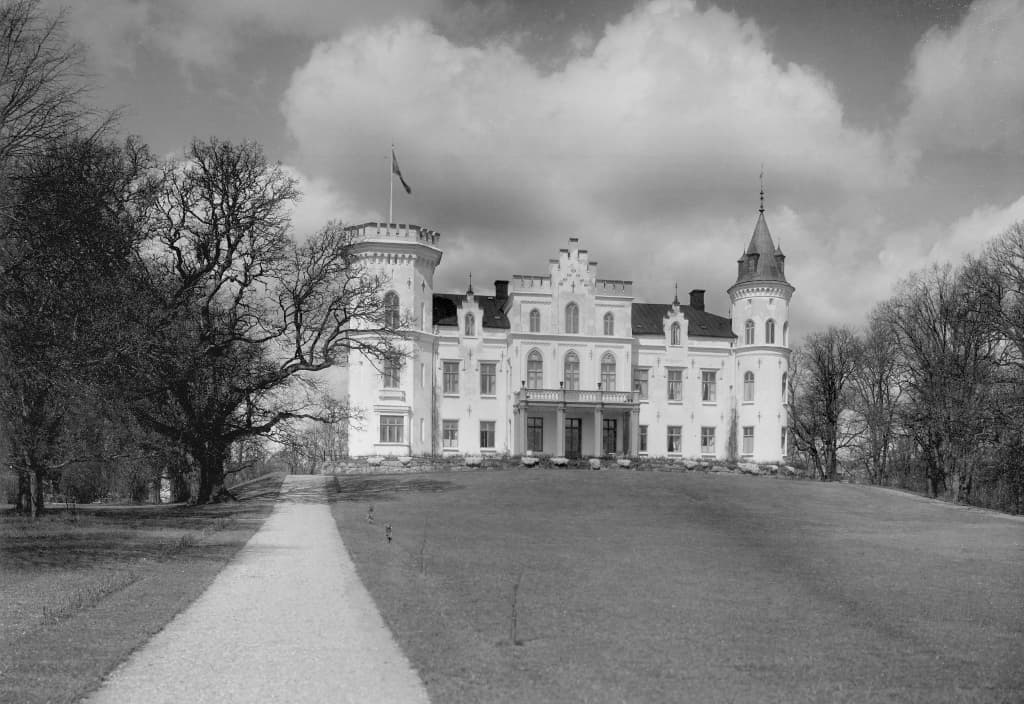
Boo Castle (Swedish: Boo slott) is a notable Neo-Gothic hill castle located in Hallsberg Municipality, Örebro County, Sweden. Constructed between 1874 and 1882, it stands on the site of an older manor house, continuing a legacy that dates back to the early 18th century. The castle remains a private residence today, preserving its historical and architectural significance within the region.

Historical background and founding

The estate known as Boo fideikommiss was established in 1735, marking the beginning of its documented history. The first owner was Baron H. J. Hamilton, a distinguished general under King Charles XII of Sweden. After enduring imprisonment in Russia, Hamilton settled at Boo, beginning a lineage of ownership that has remained within the Hamilton af Hageby family for generations. This continuity of family stewardship has contributed to the preservation of the estate's character and heritage.

Architectural design and construction

The current Boo Castle was commissioned to replace the earlier manor house on the estate. The design was entrusted to Johan Fredrik Åbom, a prominent Swedish architect known for his work in the Neo-Gothic architectural style. The construction period spanned from 1874 to 1882, reflecting the 19th-century revival of Gothic motifs and medieval-inspired aesthetics.

Neo-Gothic style features

The castle exhibits characteristic elements of the Neo-Gothic movement, including pointed arches, ornate stonework, and decorative battlements. The design emphasizes verticality and intricate detailing, which were intended to evoke the grandeur and romanticism of medieval castles while serving modern residential functions. The building's silhouette is marked by towers and turrets that enhance its imposing presence on the hilltop.

Site and landscape

Situated as a hill castle, Boo Castle benefits from a commanding position overlooking the surrounding landscape. This elevated location was historically strategic, providing natural defense advantages and expansive views. The grounds include landscaped gardens and parkland that complement the castle's architectural elegance, maintaining the estate's status as a prestigious residence.

The Hamilton af Hageby family and Boo Castle's legacy

The Hamilton af Hageby family has played a central role in the castle's history, with ownership passing through successive generations. Hugo Johan Hamilton af Hageby was a notable resident during the castle's late 19th-century period, overseeing its development and upkeep. The family's stewardship has ensured that Boo Castle remains a well-preserved example of Swedish Neo-Gothic architecture and a symbol of aristocratic heritage in the region.

Current status and preservation

Today, Boo Castle continues to serve as a private residence, maintaining its original function as a family home rather than a public museum or tourist site. Its well-preserved condition reflects ongoing care and respect for its architectural and historical value. While not generally open to the public, the castle remains an important cultural landmark within Örebro County.

Architect Johan Fredrik Åbom and his influence

Johan Fredrik Åbom was a significant figure in 19th-century Swedish architecture, contributing to the popularization of the Neo-Gothic style in Sweden. His work on Boo Castle exemplifies his skill in blending historical architectural motifs with the practical needs of a modern residence. Åbom's designs often featured detailed ornamentation and structural innovations that enhanced the visual impact and functionality of his buildings.

Architectural elements and interior features

The castle's exterior is distinguished by its use of steeply pitched roofs, lancet windows, and decorative stone carvings typical of the Neo-Gothic style. Inside, the layout includes grand halls, reception rooms, and private chambers designed for comfort and social functions. The interiors likely feature wood paneling, ornate fireplaces, and stained glass windows, which were common in aristocratic homes of the period, although specific details remain private due to the castle's residential status.

Frequently asked questions (FAQ)

How do I get to Boo Castle from Hallsberg?
Boo Castle is conveniently located just a short drive from Hallsberg, making it easily accessible by car. You can also reach the castle via public transportation, with local bus services running regularly to the area.
What is the historical significance of Boo Castle?
Boo Castle, built in the early 18th century, is a remarkable example of Swedish Baroque architecture. It has played a vital role in the region's history, serving as a residence for prominent families and a center for local culture.
When was Boo Castle constructed?
Boo Castle was constructed between 1709 and 1713. It showcases the architectural style of the period and reflects the wealth and status of its original owners.
Can I take guided tours of Boo Castle?
Yes, guided tours are available for visitors who want to learn more about the castle's history and architecture. These tours typically take place during the main tourist season and provide an in-depth look at both the interior and exterior of the castle.
Why is Boo Castle a popular tourist attraction?
Boo Castle attracts visitors due to its stunning architecture, rich history, and beautiful surrounding gardens. It is a perfect destination for history enthusiasts, architecture lovers, and anyone looking to explore Swedish heritage.
Is it possible to host events at Boo Castle?
Yes, Boo Castle offers facilities for private events, including weddings and corporate functions. The picturesque setting and historical ambiance make it an ideal location for memorable gatherings.
What are the opening hours for Boo Castle?
Boo Castle is typically open to visitors from May to September, with varying hours depending on the day of the week. It is advisable to check the official website for the most current opening times before planning your visit.
What are the ticket prices for Boo Castle?
Ticket prices for Boo Castle vary based on the type of tour and age of the visitor. Discounts are often available for children, students, and seniors, so be sure to inquire about the current rates when planning your visit.
When is the best time to visit Boo Castle?
The best time to visit Boo Castle is during the summer months, from June to August, when the weather is pleasant and the gardens are in full bloom. This is also when most guided tours and events take place, offering a vibrant experience.
Are there any nearby attractions to Boo Castle?
Yes, there are several attractions near Boo Castle, including local museums, parks, and historical sites. Visitors can enjoy exploring the charming town of Hallsberg and its surrounding landscapes for a complete day of adventure.

Photo gallery

Boo Castle
Click to view

Photo by Sam Lindskog•Public domain

1 photo • Click any image to view in full screen

Information

Hill Castle

Sources & official resources

Verify the information above using these authoritative references.

Loading map...

Visitor reviews

No reviews yet. Been here? Write the first review and help other travelers!

Write the first review

Visited this castle? Share your experience

Your review helps other travelers and adds first-hand knowledge to our encyclopedia.
Write a review

(5/5)

0/2000 characters

Your review will be visible after admin approval

Nearby castles

26.4 km
Sävstaholm Castle — Sweden castle

Sävstaholm Castle

Vingåker Municipality, Sweden

Sävstaholm Castle, located in Vingåker Municipality, Södermanland County, Sweden, is a notable example of a 17th-century Renaissance hill castle with a layered history spanning medieval origins to modern cultural uses. The castle stands on a site originally known as the village of Sävsta, documented since 1382, and has been associated with several prominent Swedish noble families including Natt och Dag, Posse, Soop, Sparre, and Bonde af Björnö from the 15th to 18th centuries. Medieval roots and noble ownership The earliest records of the site highlight its significance as a medieval estate, which evolved over centuries through various noble hands. The castle's name, sometimes spelled Säfstaholm in older Swedish orthography, reflects its deep historical roots in the region. Ownership transitions among influential families shaped the estate's development and status within Swedish aristocracy. Construction and architectural design in the 17th century The present structure of Sävstaholm Castle was constructed in 1666 by Gustaf Larsson Sparre, a Swedish nobleman who commissioned the renowned architect Erik Dahlberg. Dahlberg, known for his architectural contributions to nearby estates such as Skenäs Castle, designed Sävstaholm to transform earlier manor buildings into a grand residence reflecting the Renaissance style prevalent in Sweden during the 17th century. The castle's architectural layout exhibits typical Renaissance features, including a balanced and symmetrical plan, robust stone walls, and a stately presence atop a hill, giving it the classification of a hill castle. Dahlberg's influence is evident in the castle's harmonious proportions and the integration of defensive elements with residential comfort. Fire damage and 19th-century restoration In 1762, the castle suffered severe damage due to a fire, which necessitated extensive rebuilding. The restoration, completed in 1815, largely preserved the original 17th-century layout, with only minor modifications. This rebuilding phase coincided with the ownership of Gustaf Trolle-Bonde, known as "the blind excellency," who significantly influenced the castle's character. Trolle-Bonde remodeled the castle interiors and grounds to reflect the English country house style, a popular architectural and landscaping trend in the early 19th century. He expanded the estate's park, creating a landscaped garden that included the planting of the mother tree of the Sävstaholm apple in the mid-1800s, which remains a living botanical feature of the grounds. 20th-century uses and preservation efforts Following centuries of noble ownership, the castle was sold in 1920, leading to the dispersal of its renowned art collection. Subsequently, the castle experienced neglect until it was repurposed as a school for children with developmental disabilities from 1935 to 1968, operated by the organization Föreningen för sinnesslöa barns vård. In 1968, ownership transferred to the Vingåker municipality, which initiated extensive restoration efforts during the 1980s in cooperation with the Södermanland Museum. These restorations focused on reopening and restoring the castle's middle floor to reflect its early 19th-century domestic appearance under Gustaf Trolle-Bonde, preserving the English country house ambiance and historical interiors. Architectural features and cultural significance Sävstaholm Castle retains much of its original Renaissance architectural character despite the fire and subsequent rebuilding. Its stone construction, symmetrical layout, and hilltop location are characteristic of its classification as a hill castle. The castle's interiors, especially on the middle floor, showcase the early 19th-century remodeling with period furnishings and decorative details that evoke the English country house style. The castle's park, including the historic Sävstaholm apple mother tree, represents the estate's landscape evolution and 19th-century horticultural interests. The connection to Erik Dahlberg links Sävstaholm to other regional estates such as Skenäs Castle, reflecting shared architectural influences in Södermanland. Today, the castle functions as a cultural venue hosting art exhibitions and various events, maintaining its role as a site of historical and cultural importance in the region. Comparison with nearby estates Architecturally, Sävstaholm shares similarities with Skenäs Castle, where Erik Dahlberg also contributed his expertise. Both castles exhibit Renaissance design principles adapted to Swedish noble residences, blending defensive features with elegant living spaces. Preservation and visitor experience The restoration efforts have ensured that visitors can experience the castle's historical ambiance, particularly the early 19th-century interiors. The castle's use as a cultural center allows public engagement with its rich heritage through exhibitions and events that highlight its architectural and historical significance.

Renaissance (15th–17th c.)
Details
28.3 km
Finspång Castle — Sweden castle

Finspång Castle

Finspång, Sweden

Finspång Castle is a historic manor located in Finspång, in the province of Östergötland, Sweden. Constructed between 1668 and 1685, the castle was commissioned by Louis de Geer the younger, a prominent industrialist descended from the influential de Geer family. The castle was designed by the Dutch architect Adriaan Dortsman, known for his work in the Netherlands Classicist architectural style, which blends classical symmetry and restrained ornamentation with functional design. Architectural design and construction The castle's design reflects the Dutch Classicist style, characterized by balanced proportions, clear geometric forms, and elegant yet modest decoration. The main building was constructed on a gentle hill, giving it a commanding presence over the surrounding landscape. The two annex wings, added in 1742 by Louis de Geer’s grandson, complement the main structure and are currently used as a hotel and restaurant. These wings maintain the architectural harmony of the estate while serving modern hospitality functions. The castle grounds and gardens Surrounding Finspång Castle is a park laid out during the 18th century, which is notable for its collection of follies—decorative garden structures that add charm and historical interest. Among these are the Aurora temple, the iron temple, and the Lugnet summerhouse. These structures reflect the period's fascination with romantic and classical garden elements and are open to visitors year-round. One of the castle’s unique botanical features is the orangery, built in 1831. Through its windows, visitors can see Sweden’s oldest grapevine, an exceptional specimen that highlights the estate’s horticultural heritage and the long-standing tradition of cultivating exotic plants in Sweden’s climate. Historical significance and usage Finspång Castle has played a significant role in the local industrial history, originally linked to the de Geer family’s ironworks and turbine industry ventures. Today, the castle serves as offices for Finspång’s turbine industry, connecting its historical roots with contemporary industrial activity. The preservation of the castle and its grounds reflects a blend of heritage and practical use. The castle’s interiors, especially in the annex wings, are furnished to represent various milestones in Finspång’s history, offering guests an immersive experience into the region’s cultural and industrial past. This approach to interior decoration enhances the castle’s role as both a historical monument and a functional space for visitors and industry professionals alike. Architectural style and period context The castle’s Renaissance period classification is appropriate given its construction dates and stylistic influences, although the Dutch Classicist style represents a regional variant of Renaissance architecture that emphasizes clarity and order over the ornate decoration typical of earlier Renaissance buildings. This style was popular in Northern Europe in the 17th century and reflects the transnational exchange of architectural ideas during that era. Visiting Finspång Castle The castle’s park and garden follies are open to the public throughout the year, providing a scenic destination for visitors interested in historical landscapes and architecture. While the main castle building is used for industrial offices and not generally open for public tours, the annex wings offer accommodations and dining options, making it possible to experience the castle’s atmosphere firsthand. Visitors can enjoy walking through the gardens, exploring the unique follies, and viewing the orangery’s historic grapevine. The site combines natural beauty, architectural heritage, and industrial history, making it a multifaceted attraction in Östergötland.

Renaissance (15th–17th c.)
Details
32.8 km

Stjärnsund castle

Askersund, Sweden

Stjärnsund castle is a distinguished post-renaissance manor located in Askersund, Sweden, prominently situated at the point where the peninsula of Alsen meets the expansive Lake Vättern. This strategic and scenic location has contributed to the estate's historical significance and its enduring appeal. The present manor house was constructed between 1798 and 1801, embodying architectural and decorative elements characteristic of the late 18th and early 19th centuries. Historical origins and ownership The estate of Stjärnsund was originally established in 1637 by Johan Gabrielsson Oxenstierna, a notable figure of Swedish nobility. The manor remained an important noble residence through the centuries, reflecting the evolving tastes and fortunes of its owners. In 1785, the manor was acquired by Olaf Burenstam, who was responsible for commissioning the current manor house that replaced earlier structures on the site. Following Burenstam's ownership, the estate passed to his son-in-law, who later sold it to King Carl XIV Johan of Sweden. This royal connection adds to the manor's prestige and historical relevance within Swedish cultural heritage. Today, Stjärnsund castle is owned by Vitterhetsakademien (The Royal Institute of Letters, History and Antiquities), an institution dedicated to preserving Sweden's historical and cultural assets. Architectural features and style The manor house at Stjärnsund is an excellent example of post-renaissance architecture in Sweden, constructed at the close of the 18th century. The building's design reflects the transition from the restrained classical styles of the earlier 18th century to more elaborate and comfortable residential architecture favored by the Swedish aristocracy during this period. The structure is characterized by its balanced proportions, elegant façades, and refined detailing. The building's layout includes a main living quarters and two wings, which are accessible during guided tours. The estate also features ancillary buildings such as the former Estate Manager's cottage, now repurposed as a café for visitors. Interior decoration and furnishings One of the most remarkable aspects of Stjärnsund castle is its exceptionally well-preserved mid-19th-century interiors. The furnishings, including curtains, carpets, chandeliers, and mirrors, have survived largely intact, offering a rare glimpse into the domestic environment of Swedish nobility during this era. The interior décor is notably influenced by Prince Gustav, known as "The Singing Prince", whose tastes and patronage shaped much of the manor's artistic and decorative character. This connection enriches the cultural significance of the interiors, linking them to a prominent figure in Swedish history. Visiting Stjärnsund castle today Currently, Stjärnsund castle is open to the public with daily guided tours of the main living quarters and the two wings, allowing visitors to experience the historical ambiance and architectural beauty firsthand. The tours provide insights into the manor's history, architectural evolution, and the lives of its former inhabitants. Visitors can also enjoy refreshments at the on-site café, located in the building that once served as the Estate Manager's cottage, adding to the visitor experience by combining historical exploration with modern hospitality. Significance and preservation Stjärnsund castle stands as a significant cultural monument within Sweden, representing the architectural and social history of the post-renaissance period. Its preservation by the Royal Institute of Letters, History and Antiquities ensures that this heritage site remains accessible for education and enjoyment. The manor's intact interiors provide valuable material culture evidence for researchers and enthusiasts of Swedish aristocratic life in the 19th century.

Post-Renaissance (17th–18th c.)
Details