Bongard Castle
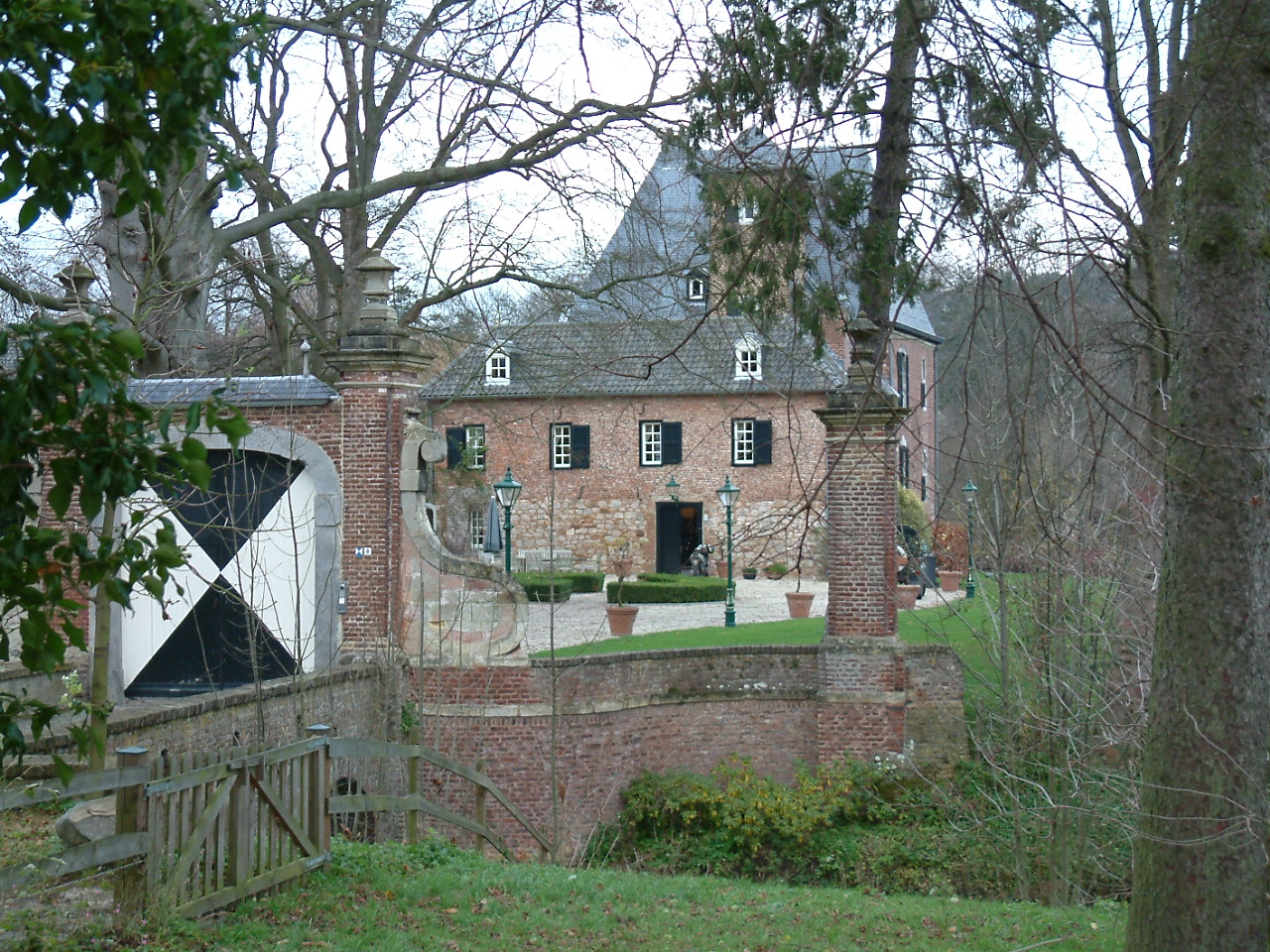
Bongard Castle, locally known as Kasteel de Bongard, is situated in the village of Bocholtz in the province of Limburg, Netherlands. This castle has a recorded history dating back to 1372, although its origins likely trace to the early 14th century. It was originally constructed by the Bongard family, a noble lineage influential in the region since around 1300.
Early history and original construction
The earliest structure on the site was a moated castle, typical of medieval fortifications designed for defense and residence. The Bongard family established their presence with this initial fortification, which served as a local stronghold and symbol of their status. The castle's strategic location in Limburg allowed it to play a role in regional power dynamics during the Middle Ages.
16th-century transformation in Mosan Renaissance style
In 1523, ownership under Bernard van Bongard marked a significant architectural transformation. He rebuilt the castle on the foundations of the older moated structure, adopting the Mosan Renaissance style, a regional architectural style noted for its blend of Gothic and Renaissance elements, characterized by ornate stonework and balanced proportions.
Bernard van Bongard added four round corner towers in 1550, enhancing both the defensive capabilities and the aesthetic appeal of the castle. The castle then featured a square ground plan with a prominent square gate tower and the four round towers at each corner, a common design in Renaissance fortifications that combined functionality with elegance.
Ownership changes and decline in the 18th and 19th centuries
The castle remained in the Bongard family and their descendants, the Von der Leyen family, until 1783. Afterward, it was sold to Baroness Marie Barbe de Rochow. The political upheaval of the French Revolution led to the castle's confiscation in 1795, after which it was sold to private commoner owners.
During the 19th century, the castle underwent significant reduction. Much of the original structure was lost, leaving only two wings: one connecting the gate tower to a corner tower, and the other adjoining another corner tower. This downsizing reflected changing needs and economic conditions, as many castles were no longer maintained as full fortresses or noble residences.
Architectural features and style
Bongard Castle is a notable example of the Mosan Renaissance architectural style, which is indigenous to the Meuse River valley region encompassing parts of Belgium, the Netherlands, and Germany. This style is distinguished by its use of brick and natural stone, ornamental details, and balanced, symmetrical layouts.
The castle’s original layout with a square gate tower and four round corner towers was typical of Renaissance defensive architecture, combining military function with residential comfort. The surviving wings still reflect elements of this style, though much of the castle's grandeur has been lost.
Current status and accessibility
Today, Bongard Castle serves as a private residence and is not open to the public. Despite its limited accessibility, the castle remains an important cultural and historical landmark in Limburg. Its surviving structures offer insight into the evolution of castle architecture in the region from the medieval period through the Renaissance and into the modern era.
The castle’s location in Bocholtz places it within a region rich in history, with several other castles and historic sites nearby, making it part of a broader heritage landscape.
Historical significance
The castle’s long history reflects the shifting political and social landscape of the region. From its medieval origins to its Renaissance transformation and subsequent decline, Bongard Castle illustrates the changing fortunes of noble families and the impact of broader European events such as the French Revolution.
Its architectural evolution from a moated medieval fortress to a Renaissance residence with characteristic towers highlights the adaptation of defensive structures to more domestic and representational functions over time.
Preservation and heritage value
Although much reduced from its original form, Bongard Castle remains a valuable example of regional castle architecture. Its preservation as a private residence has helped maintain the remaining structures, though it limits public engagement. The castle is part of the cultural heritage of Limburg and contributes to the understanding of the area's noble history and architectural development.
Frequently asked questions (FAQ)
- What is the historical significance of Bongard Castle?
- Bongard Castle, located in Bocholtz, Netherlands, dates back to the medieval period and is a remarkable example of regional architecture. It served as a strategic fortification and residence, reflecting the power dynamics of the time. Today, it stands as a testament to Dutch heritage and attracts history enthusiasts from around the world.
- When was Bongard Castle built?
- Bongard Castle was constructed in the late 13th century, showcasing the architectural style of that era. Over the centuries, it has undergone several renovations, preserving its historical charm while adapting to modern needs. This long history adds to its allure as a destination for visitors.
- Can I visit Bongard Castle?
- Yes, Bongard Castle is open to visitors throughout the year. Guided tours are available, allowing guests to explore its rich history and stunning architecture. It is advisable to check the official website for specific visiting hours and any seasonal events.
- What are the opening hours of Bongard Castle?
- Bongard Castle typically opens at 10 AM and closes at 5 PM, but these hours may vary based on the season or special events. It is recommended to verify the current opening hours before your visit to ensure a smooth experience. Consider arriving early to fully enjoy the site.
- Is it possible to access Bongard Castle with mobility issues?
- While Bongard Castle strives to be accessible to all visitors, certain areas may present challenges for those with mobility issues due to historical architecture. It is best to contact the castle directly for detailed information regarding accessibility options and facilities available for visitors with special needs.
- What is the best time to visit Bongard Castle?
- The best time to visit Bongard Castle is during the spring and early fall when the weather is mild, and the gardens are in full bloom. These seasons also offer fewer crowds, allowing for a more enjoyable experience. Special events often take place during these months, adding to the visit's appeal.
- Are there nearby attractions to explore after visiting Bongard Castle?
- Yes, the area surrounding Bongard Castle is rich in attractions. Nearby, you can find beautiful hiking trails, charming villages, and other historical sites that showcase the region's culture. Consider visiting local museums or enjoying outdoor activities to enhance your experience.
- What are the ticket prices for visiting Bongard Castle?
- Ticket prices for Bongard Castle vary based on age and group size, with discounts available for children and seniors. Group rates may also apply, making it an affordable option for families and educational tours. Check the official website for the most up-to-date pricing information and any available promotions.
Information
Loading map...
Visitor reviews
No reviews yet. Been here? Write the first review and help other travelers!
Write the first reviewVisited this castle? Share your experience
Your review helps other travelers and adds first-hand knowledge to our encyclopedia.