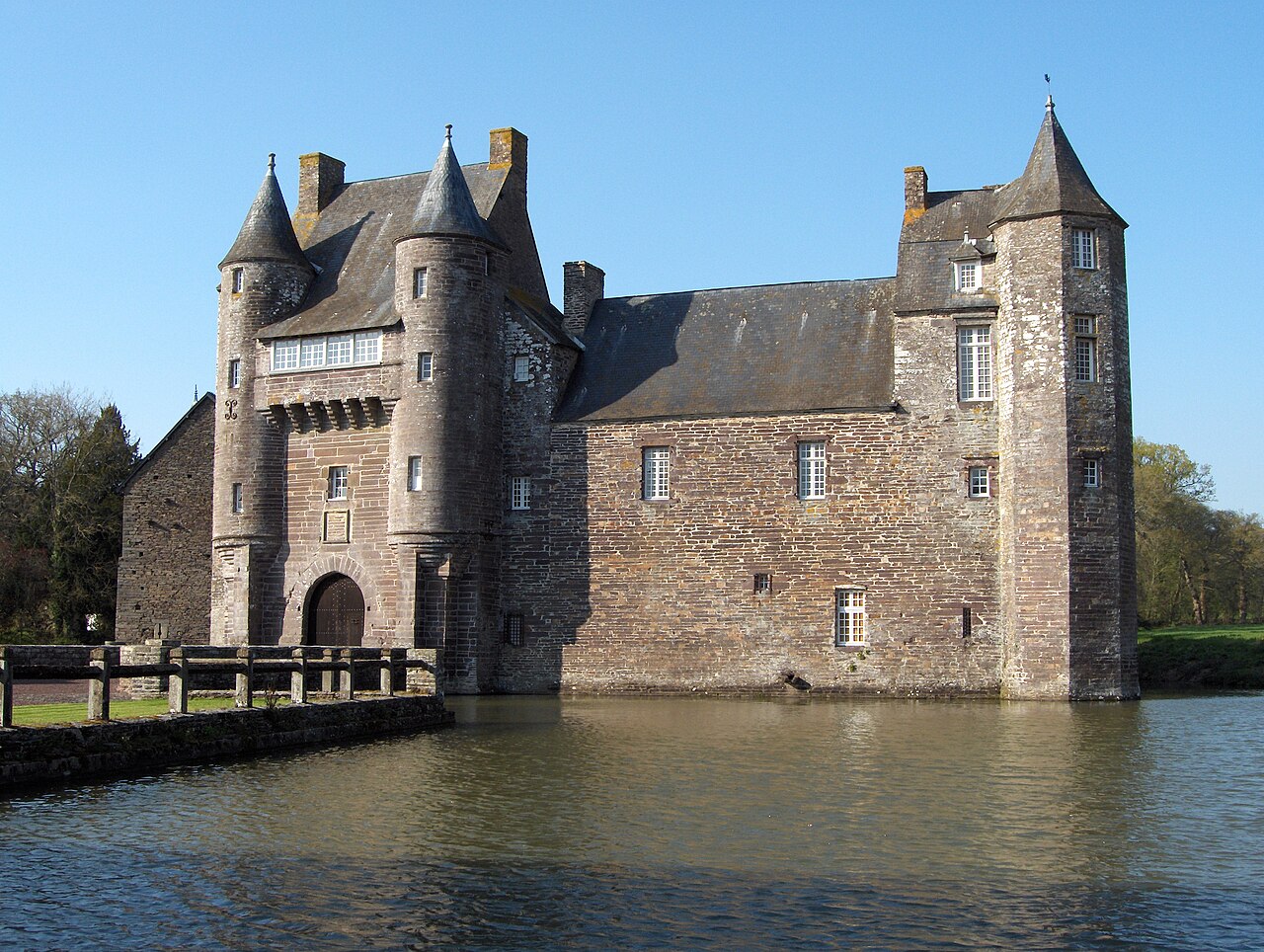
Bois-du-Loup Castle
Bois-du-Loup Castle, known locally as Château du Bois-du-Loup, is situated northeast of the village of Augan in the Morbihan department of France. Despite its name, Bois-du-Loup is not a medieval fortress but a 19th-century Renaissance-style country house built between 1871 and 1874. The castle was commissioned by Count Roland des Clos de la Fonchais, whose family had owned the estate since 1805 when his father purchased the land.
Architectural style and construction
The castle was constructed in the Renaissance architectural style, reflecting the 19th-century revival of classical elements rather than medieval defensive features. Its design included characteristic elements such as round towers and ornate façades typical of Renaissance revival architecture. The building was intended as a stately residence rather than a fortress, emphasizing aesthetic appeal and comfort over military utility.
Historical context and estate changes
In 1880, a significant portion of the Bois-du-Loup estate—178 hectares—was expropriated to establish the artillery firing range of Coëtquidan. This military installation's southern boundary came to lie just 500 meters north of the castle, dramatically altering the estate's surroundings. Despite this, the castle remained in the family until 1910.
In 1898, Count Roland's mother gifted the castle to Raymond de la Fonchais, retaining usufruct rights herself. However, a ministerial decision in 1910 mandated the sale of the castle, its chapel, outbuildings, and remaining estate lands to extend the firing range. After negotiations, Raymond agreed to sell the property to the State for 900,000 francs. The family vacated the castle in 1910 but rented it until mid-1911. The State thus acquired a relatively modern castle, only 37 years old at the time.
Military use and impact on the castle
Following its acquisition, Bois-du-Loup Castle and the surrounding lands were fully integrated into the Camp Coëtquidan military complex. The castle served as a vantage point for generals and their staff commanding military divisions. From May to September 1939, approximately 1,000 Spanish Republican refugees fleeing Franco's regime were stationed at the camp. They constructed barracks nearby using stones from demolished village houses. Subsequently, from September 1939 to June 1940, these barracks housed Polish refugees escaping the turmoil of World War II.
During the German occupation from June 1940 to June 1944, the camp was used for tank training and recuperation. The Germans abandoned the castle itself but left it structurally intact. After the liberation, American forces occupied the camp from January to June 1945. Unfortunately, they subjected the castle to heavy strafing and bombing as target practice, severely damaging it. The southwest round tower still bears visible scars from the strafing, and the southeast round tower was destroyed during these attacks. Since then, Bois-du-Loup Castle has remained a ruin.
Current condition and access
Today, Bois-du-Loup Castle stands as a well-preserved ruin within the active military grounds of Camp Coëtquidan. Its historical significance lies in its unique status as a 19th-century Renaissance-style château transformed by military use and conflict. Access to the site is restricted due to its location on regulated military terrain, preventing public visitation. Despite this, the ruin offers valuable insight into the architectural and military history of the region.
Legacy and cultural significance
Bois-du-Loup Castle exemplifies the transformation of aristocratic estates in France during the late 19th and early 20th centuries, especially under the pressures of expanding military infrastructure. Its story reflects broader historical narratives, including the displacement caused by military expansions, the refuge provided to displaced populations during turbulent times, and the destructive impact of war on heritage buildings. Although not a medieval fortress, Bois-du-Loup remains a noteworthy example of Renaissance revival architecture and the complex interplay between civilian estates and military developments in modern French history.
Architectural features
The castle's design incorporated round towers at its corners, which were more decorative than defensive, consistent with Renaissance revival aesthetics. The façades featured ornate stonework and large windows, emphasizing light and elegance. The presence of a chapel and various outbuildings complemented the main residence, forming a complete estate complex typical of French country houses of the period.
Military adaptations
Following its incorporation into Camp Coëtquidan, the castle's role shifted dramatically. It became a strategic observation post and command center for military operations. The conversion of nearby village houses into barracks by Spanish Republican refugees illustrates the adaptive reuse of local materials and the castle's surroundings during wartime. The castle's eventual destruction by American forces during target practice underscores the vulnerability of heritage sites in active conflict zones.
Frequently asked questions (FAQ)
- How do I get to Bois-du-Loup Castle?
- Bois-du-Loup Castle is located in Augan, France, and is accessible by car or public transport. If driving, you can follow the D779 road from Rennes, which is about a 45-minute journey. Check local bus schedules for public transport options that connect to Augan.
- What is the historical significance of Bois-du-Loup Castle?
- Bois-du-Loup Castle dates back to the 15th century and is a prime example of medieval architecture in Brittany. It played a crucial role during the regional conflicts of the time, serving as both a stronghold and residence for noble families. Today, it stands as a testament to the rich history of the area.
- When was Bois-du-Loup Castle built?
- Construction of Bois-du-Loup Castle began in the late 1400s and was completed in the early 1500s. The castle showcases the architectural styles of the period, with its impressive towers and fortified walls. Its age adds to the charm and historical allure for visitors.
- Can I take guided tours of the castle?
- Yes, guided tours are available for visitors who wish to learn more about the history and architecture of Bois-du-Loup Castle. Tours typically last about an hour and are led by knowledgeable guides who provide fascinating insights. It’s advisable to check the schedule in advance as timings may vary.
- Is Bois-du-Loup Castle accessible for visitors with disabilities?
- Bois-du-Loup Castle aims to be accessible to all visitors; however, some areas may present challenges due to the historical nature of the site. It is recommended to contact the castle's visitor services in advance to discuss specific accessibility options and accommodations. Staff are available to assist wherever possible.
- What are the opening hours for Bois-du-Loup Castle?
- Bois-du-Loup Castle is typically open to the public from Tuesday to Sunday, with hours varying by season. During the summer months, the castle may open earlier and close later, while winter hours are usually shorter. Always check the official website for the most current opening times before your visit.
- What is the best time to visit Bois-du-Loup Castle?
- The best time to visit Bois-du-Loup Castle is during the spring and early autumn months when the weather is mild, and the surrounding gardens are in full bloom. Visiting during these seasons allows you to fully enjoy the castle's outdoor spaces and picturesque views. Summer can be crowded, so plan accordingly if you prefer a quieter experience.
- Are there any nearby attractions to see when visiting Bois-du-Loup Castle?
- Yes, there are several attractions near Bois-du-Loup Castle, including the charming village of Augan and the beautiful Brittany countryside. Visitors can explore local markets, enjoy hiking trails, or visit other historical sites in the region. This makes it an ideal hub for those looking to discover more of Brittany's rich heritage.
- What are the ticket prices for visiting Bois-du-Loup Castle?
- Ticket prices for Bois-du-Loup Castle vary based on age and the type of tour selected. Typically, adult tickets range from €8 to €12, with discounts available for children and seniors. Group rates may also apply, so be sure to inquire if you are visiting with a larger party.
Information
Address
Camp Coëtquidan, Morbihan, France
Loading map...
Visitor reviews
No reviews yet. Been here? Write the first review and help other travelers!
Write the first reviewVisited this castle? Share your experience
Your review helps other travelers and adds first-hand knowledge to our encyclopedia.