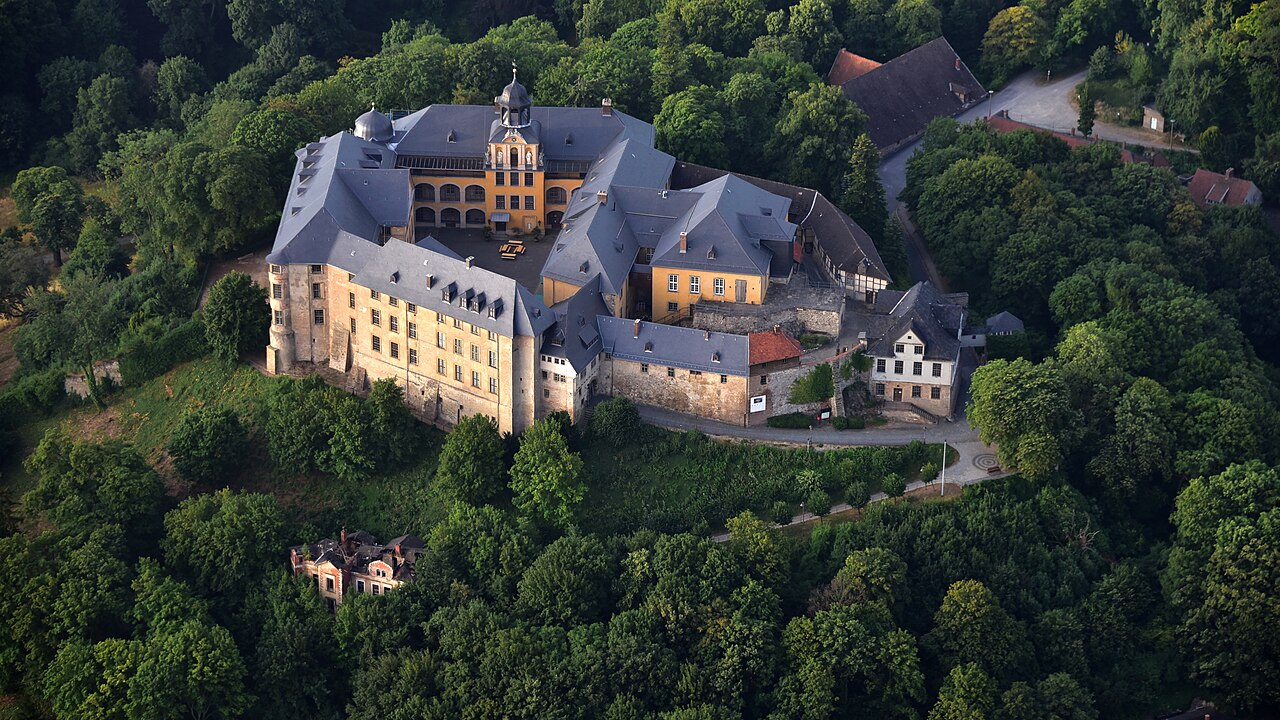
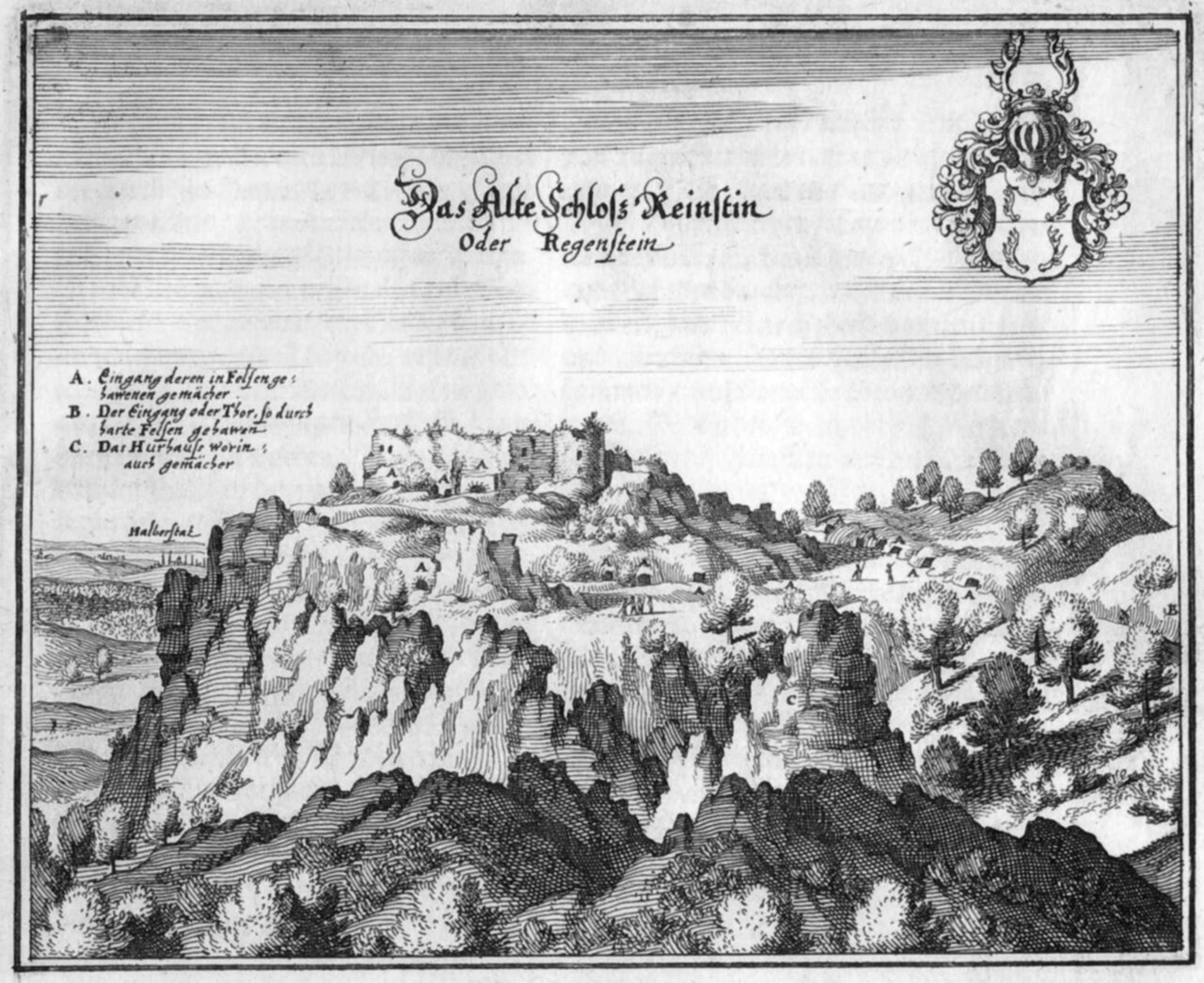
Bodfeld is a significant medieval royal hunting lodge and administrative complex located near Elbingerode in the Harz mountains of Germany. Established during the Ottonian dynasty in the 10th century, it functioned primarily as a retreat for royal hunting expeditions and as a center for managing the rich ore mining activities in the surrounding region. Its strategic location on a hill spur known as Schloßkopf provided both defensibility and oversight of the nearby territories.
The earliest historical references to Bodfeld date back to the reign of Henry I, who reportedly fell ill at the site in 935. His son, Otto I, officially designated Bodfeld as a royal hunting lodge around 936 and made multiple visits thereafter. The lodge maintained its importance through the reigns of subsequent rulers, including Otto II, Otto III, and Henry III. Notably, Henry III issued his last known document at Bodfeld in September 1056 and died there the following month, with the event attended by the pope and imperial princes. Later that year, Henry IV was crowned King of the Germans at Bodfeld, underscoring the site's continued ceremonial and administrative significance.
Historical context and royal significance
Bodfeld was part of a broader network of royal lodges used by the Ottonian and early Salian monarchs for hunting and governance. Unlike major imperial palaces known as pfalzen, Bodfeld did not host significant church festivals, which may have limited its political status. Nevertheless, it served as a vital hub for managing the surrounding forested lands and mineral resources, especially the important ore deposits in the Harz region.
The lodge was connected to other Saxon hunting sites through routes such as the Königsstieg or "King's Path," facilitating travel and communication between royal residences. Nearby villages like Erdfeld, located about 1.5 kilometers away on an old military road, were likely associated with Bodfeld's operations before being abandoned in the late Middle Ages.
The name Bodfeld also referred to a large forested territory granted by Henry II in 1009 to Gandersheim Abbey. This extensive area stretched across the Harz from Braunlage in the west to Elbingerode in the northeast and included villages such as Stiege and Beneckenstein. This grant highlights the region's importance in medieval resource management and ecclesiastical land holdings.
Archaeological discoveries and site layout
The precise location of Bodfeld was lost by the end of the 13th century and only rediscovered through archaeological efforts beginning in the late 19th century. Initial misidentifications near Königshütte were corrected by researchers such as Paul Grimm, who demonstrated the absence of typical Ottonian artifacts at that site. Subsequent investigations by Carl Erdmann and Friedrich Stolberg pointed to the hill spur known as Schloßkopf northeast of Elbingerode as the true location.
Modern archaeological techniques, including infrared aerial photography and geophysical surveys, confirmed the presence of a fortified complex dating to the Ottonian period. Excavations led by historian and building archaeologist Heinz A. Behrens revealed a defensible enclosure with stone walls on two sides, complemented by two round towers likely used for observation and defense.
Within the enclosure, several significant buildings were identified. A chapel catered to the spiritual needs of the royal occupants, while two large halls served as the main assembly and administrative spaces. Residential buildings accommodated the royal retinue and staff during visits. The main entrance was marked by a gatehouse, strategically positioned to control access to the site.
Architectural features and defensive elements
The layout of Bodfeld reflects typical Ottonian royal lodge design principles, favoring elevated positions with natural defensive advantages. The stone walls and towers provided protection against potential threats, while the arrangement of halls and residences supported the multifunctional use of the site as both a hunting retreat and an administrative center.
Bodfeld shares architectural similarities with the Pfalz of Grone, built by Henry I, indicating a shared tradition in royal lodge construction during the Ottonian era. However, Bodfeld's lack of major ecclesiastical festivals differentiates it from full imperial palaces, suggesting a more specialized role focused on hunting and resource management.
Decline and historical legacy
After the 11th century, Bodfeld's prominence declined, with documented royal visits becoming increasingly rare. By the late 13th century, the lodge fell out of use and its location was forgotten for centuries. The revival of interest in the site during the 19th and 20th centuries has allowed historians and archaeologists to piece together its significance in medieval German history.
Today, the remains of Bodfeld provide valuable insights into Ottonian royal architecture and medieval hunting culture. The surviving walls, towers, and foundations attest to the site's dual function as a fortified residence and administrative hub. Bodfeld exemplifies the integration of military, residential, and economic roles in a royal lodge designed to support the complex demands of medieval kingship.
Visiting bodfeld and its surroundings
While Bodfeld itself is an archaeological site with limited visible structures, its location near Elbingerode offers opportunities to explore the natural beauty of the Harz mountains and other historic sites. Visitors interested in medieval history and architecture can appreciate the strategic importance of the site and its role within the network of Ottonian royal lodges.
The surrounding region retains traces of medieval settlement patterns, including the abandoned village of Erdfeld and the extensive forest lands once granted to ecclesiastical authorities. These features contribute to understanding the broader historical landscape in which Bodfeld operated.
Frequently asked questions (FAQ)
- What is the historical significance of Bodfeld Castle?
- Bodfeld Castle is a remarkable example of medieval architecture in Germany, showcasing the strategic importance of fortifications during the feudal era. It served as a defensive stronghold and a residence for noble families, reflecting the social and political dynamics of its time. Today, it stands as a testament to the region's rich history and attracts visitors interested in medieval heritage.
- When was Bodfeld Castle built?
- Bodfeld Castle was constructed in the late 12th century, during a period of significant political change in the region. Its establishment was part of a broader trend of building fortified structures as a means of asserting power and control. Over the centuries, it has undergone various renovations, preserving its historical essence.
- Can I visit Bodfeld Castle year-round?
- Yes, Bodfeld Castle is open to visitors throughout the year, although opening hours may vary by season. It's advisable to check the official website or local tourism information for specific visiting hours and any seasonal events that may enhance your experience. Plan your visit accordingly to fully enjoy the castle and its surroundings.
- What are the ticket prices for visiting Bodfeld Castle?
- Ticket prices for Bodfeld Castle are generally affordable, with discounts available for children, students, and seniors. Group rates may also apply, making it an excellent option for families or school trips. It's best to verify current prices on the official website prior to your visit.
- Is Bodfeld Castle accessible for visitors with disabilities?
- Bodfeld Castle is committed to providing access for all visitors, including those with disabilities. However, due to its historical architecture, some areas may have limited accessibility. It's recommended to contact the castle's administration ahead of your visit to inquire about specific accommodations and available facilities.
- What is the best time to visit Bodfeld Castle?
- The best time to visit Bodfeld Castle is during the spring and early autumn months when the weather is mild, and the surrounding landscape is in full bloom. These seasons often feature fewer crowds, allowing for a more enjoyable experience. Additionally, special events and guided tours are frequently held during these times, enhancing your visit.
- Are there any nearby attractions worth visiting?
- Yes, the area surrounding Bodfeld Castle offers a range of attractions, including picturesque villages, hiking trails, and stunning natural landscapes. Visitors can explore nearby historical sites, museums, and local markets to immerse themselves in the region's culture. Be sure to allocate time to discover the charm of the surrounding area while visiting the castle.
- What are the opening hours for Bodfeld Castle?
- Bodfeld Castle typically opens at 10 AM and closes at 6 PM, but these hours may vary based on the season or special events. Always check the castle's official website for the most current information regarding opening hours before planning your visit. This will help ensure you maximize your time exploring the castle and its grounds.
Information
Loading map...
Visitor reviews
No reviews yet. Been here? Write the first review and help other travelers!
Write the first reviewVisited this castle? Share your experience
Your review helps other travelers and adds first-hand knowledge to our encyclopedia.