Bleijenbeek Castle
Bleijenbeek Castle, also known locally as Kasteel Bleijenbeek, is a notable medieval hill castle located near the village of Afferden in the Limburg province of the Netherlands. This historic fortress stands as a testament to the region's turbulent past and architectural evolution from the Late Medieval period onward. Originally constructed around the mid-14th century, the castle's strategic position and defensive features highlight its importance during centuries marked by conflict and political change.
Early history and medieval origins
The origins of Bleijenbeek Castle date back to approximately 1350, when it was initially established as a moated farmstead featuring a simple keep. This early structure served both residential and defensive purposes, typical of medieval fortifications in the region. The castle was first inhabited by the Van Mirlaer family, who oversaw its initial construction and use.
By 1405, the castle came into the possession of Wynant Schenck, marking the beginning of significant architectural enhancements. During the 15th century, the castle was fortified extensively: the original keep was incorporated into a newly constructed residential hall, surrounded by a curtain wall and flanked by two corner towers—one square and one round. These additions reflected the evolving military architecture of the Late Medieval period, designed to withstand sieges and improve the lord’s living quarters.
Architectural features of the late medieval period
The castle’s layout was centered around a rectangular moat, filled with water and constructed using marl and bricks, which provided a formidable defensive barrier. A prominent square tower projected from the northeast corner, serving as a lookout and defensive stronghold. The curtain walls enclosed a courtyard, with a gatehouse adjacent to the south tower, featuring a bridge cellar beneath it, likely controlling access and water flow under the drawbridge.
In the 15th century, a shield wall was added to absorb attacks, complete with an arcade-supported walkway allowing defenders to patrol while protected. A hall wing with a cellar and a square tower on the southern side were also constructed around this time, many elements of which survive in part today.
16th and 17th-century transformations
The 16th century saw further enlargement of the castle, including the addition of a second, larger residential wing on the eastern side. These expansions enclosed the inner courtyard more completely, enhancing both the living space and defensive capabilities.
In 1579, the castle was owned by the renowned military commander Maarten Schenck van Nydeggen, who undertook extensive fortifications during the turbulent years of the Eighty Years’ War. Despite these efforts, the castle was besieged and severely damaged by Spanish forces in 1589 after a prolonged siege lasting nearly two months. This event marked a significant moment in the castle’s history, reflecting the broader conflict between the Dutch rebels and Spanish rule.
During the 17th century, the castle underwent radical alterations that transformed its medieval character. Many original architectural details were lost as the structure was rebuilt into a stately mansion, reusing much of the old building material. The castle expanded to four wings arranged around the central courtyard, emphasizing residential comfort over military defense. A notable feature from this period is the natural stone frame around the main entrance, dated to 1688, which remains visible on the ruins today.
19th and early 20th-century uses and changes
By the 19th century, Bleijenbeek Castle had shifted from a noble residence to religious use. In 1872, it became a Jesuit convent, with a chapel added on the west side. This period saw further modifications to the building, including the replacement of original medieval windows with 19th-century styles considered less historically authentic.
A fire in 1911 damaged the bailey, but it was rebuilt shortly after. Ownership changed hands several times, with the castle passing to a Rotterdam merchant, W. Prins, and later to the Jurgens family of Nijmegen in 1917. The Jurgens family were notable industrialists, known for their margarine production.
Destruction and preservation efforts
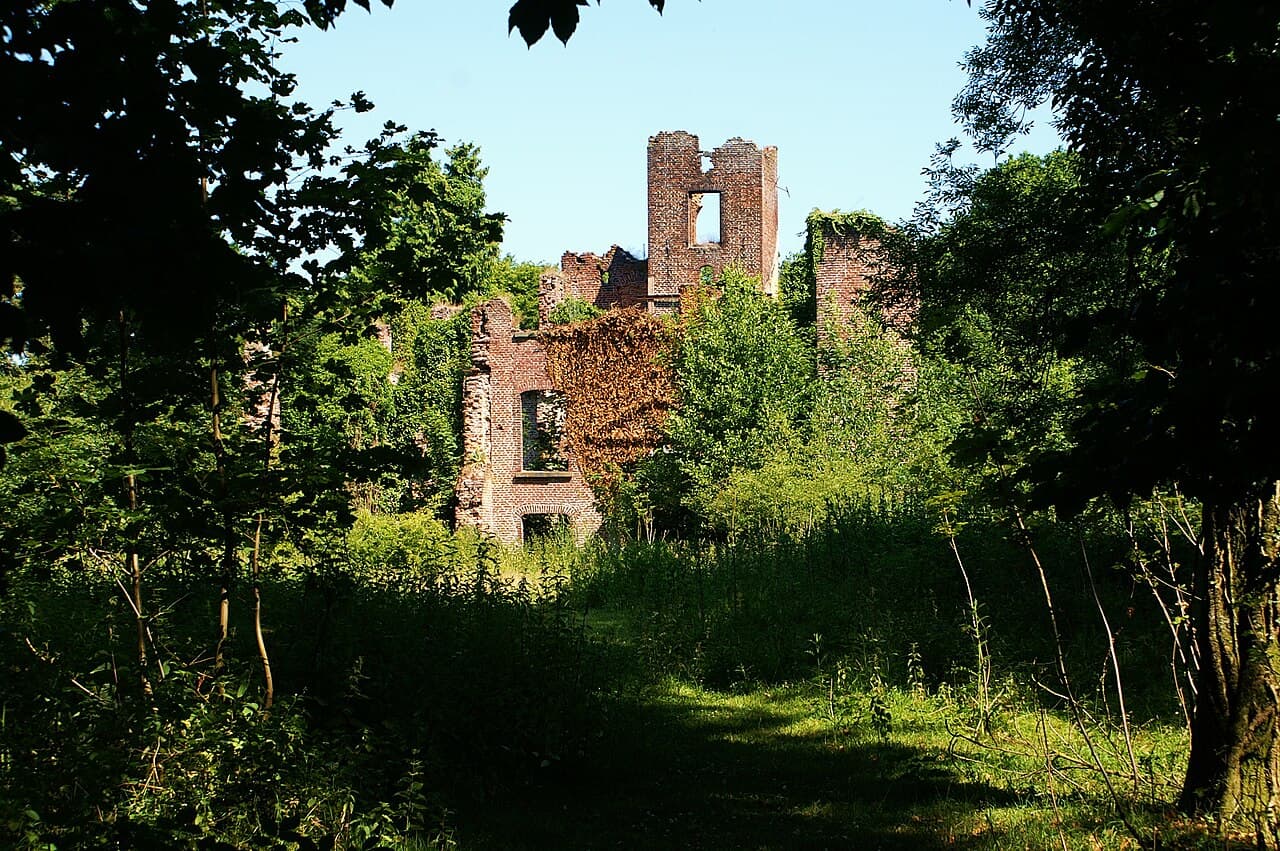
The castle's final and most dramatic chapter came during World War II. In February 1945, the Royal Air Force bombed the site during Operation Veritable, aiming to dislodge German forces occupying the castle. The bombardment left the structure in ruins, and it was never rebuilt. Stones and materials from the ruins were later repurposed for restoration projects at nearby historic estates, such as Huis Heijen.
Since 2009, the Bleijenbeek Foundation has owned the property and initiated conservation and restoration work. Efforts focus on stabilizing the remaining structures, restoring the moat, and rehabilitating the surrounding gardens. The foundation collaborates with regional heritage organizations to ensure the site’s preservation and public accessibility.
Today, the castle stands as a well-preserved ruin and a significant cultural heritage site. Visitors can explore the grounds by appointment, guided tours offering insights into its layered history and architectural features. The surrounding landscape includes a golf course and residential developments, integrating the historic site within the modern environment.
Architectural remains and archaeological significance
The surviving elements of Bleijenbeek Castle include substantial portions of the outer walls, the courtyard layout, and vestiges of the original towers. The moat, once broad and water-filled, still exists in parts and supports a thriving freshwater fish population managed by a local fishing association.
Archaeological finds from the site, such as pottery shards, construction fragments, and a weather vane that once adorned a tower, are preserved in a local cultural history center. These artifacts provide valuable insights into the castle’s construction techniques, daily life, and historical transformations.
Overall, Bleijenbeek Castle offers a rich narrative of medieval fortification, noble residence, religious use, wartime destruction, and modern conservation. Its layered history and architectural evolution make it a fascinating subject for historians, architects, and visitors interested in Dutch heritage and medieval castles.
Frequently asked questions (FAQ)
- How do I get to Bleijenbeek Castle?
- Bleijenbeek Castle is located in Afferden, Netherlands, and is easily accessible by car or public transportation. If traveling by car, you can use GPS coordinates or the address to find the best route. For public transport, check local train and bus schedules to plan your visit.
- What is the historical significance of Bleijenbeek Castle?
- Bleijenbeek Castle dates back to the late 13th century and is a prime example of medieval architecture in the Netherlands. It has served various purposes throughout history, including a noble residence and a military fortification. The castle is a testament to the region's rich history and is an important cultural landmark.
- When was Bleijenbeek Castle built?
- Construction of Bleijenbeek Castle began in 1280, making it one of the oldest castles in the region. Over the centuries, it has undergone several renovations and restorations, reflecting the architectural styles of different eras. This long history adds to its allure as a destination for history enthusiasts.
- Can I visit Bleijenbeek Castle?
- Yes, Bleijenbeek Castle is open to the public for tours and events. Visitors can explore the grounds and learn about the castle's history through guided tours. However, it is recommended to check the official website for any specific visiting hours or special events that might affect access.
- Why is Bleijenbeek Castle popular among tourists?
- Bleijenbeek Castle attracts tourists due to its picturesque setting and historical significance. The castle's stunning architecture and beautiful surrounding landscape offer great opportunities for photography and exploration. Additionally, its rich history and connection to the region's past make it a fascinating destination for history lovers.
- Is it possible to host events at Bleijenbeek Castle?
- Yes, Bleijenbeek Castle offers facilities for hosting various events, including weddings, corporate events, and private parties. The unique ambiance and historical backdrop make it an appealing venue for special occasions. Interested parties should contact the castle directly for more information on availability and booking.
- What are the opening hours for Bleijenbeek Castle?
- Bleijenbeek Castle's opening hours may vary depending on the season and specific events. Typically, the castle is open to visitors during the weekends and on holidays. It is advisable to check the official website for the most current information on opening times before planning your visit.
- What are the ticket prices for visiting Bleijenbeek Castle?
- Ticket prices for Bleijenbeek Castle vary based on age, group size, and type of tour. Generally, adult tickets are priced reasonably, while discounts may be available for children, seniors, and groups. For the most accurate and up-to-date pricing information, please visit the castle's official website.
- What are some nearby attractions to Bleijenbeek Castle?
- In addition to Bleijenbeek Castle, visitors can explore other attractions in Afferden and the surrounding area. Nearby sites include natural parks, historical villages, and cycling routes that showcase the beautiful Dutch countryside. These attractions offer a great way to enhance your visit and experience the local culture.
Photo gallery

Information
Website
Visit websiteSources & official resources
Verify the information above using these authoritative references.
Loading map...
Visitor reviews
No reviews yet. Been here? Write the first review and help other travelers!
Write the first reviewVisited this castle? Share your experience
Your review helps other travelers and adds first-hand knowledge to our encyclopedia.