Blarney Castle
Blarney Castle stands as a prominent late-medieval stone fortress located near the town of Blarney in County Cork, Ireland. It is renowned worldwide for the legendary Blarney Stone, reputed to bestow the gift of eloquence on those who kiss it. The castle’s rich history, distinctive architecture, and cultural significance make it a key heritage site and popular tourist destination.
The origins of the site trace back to the early 13th century, when a wooden fortification was first established near the confluence of the Martin River and the Blarney River. This was replaced by a stone fortification around 1210. The original stone castle was destroyed in 1446, after which the current stone keep was constructed by Cormac Láidir MacCarthy, Lord of Muskerry, a cadet branch of the powerful MacCarthy dynasty. An inscription on the castle’s machicolation commemorates this construction date and builder.
Architectural features and layout
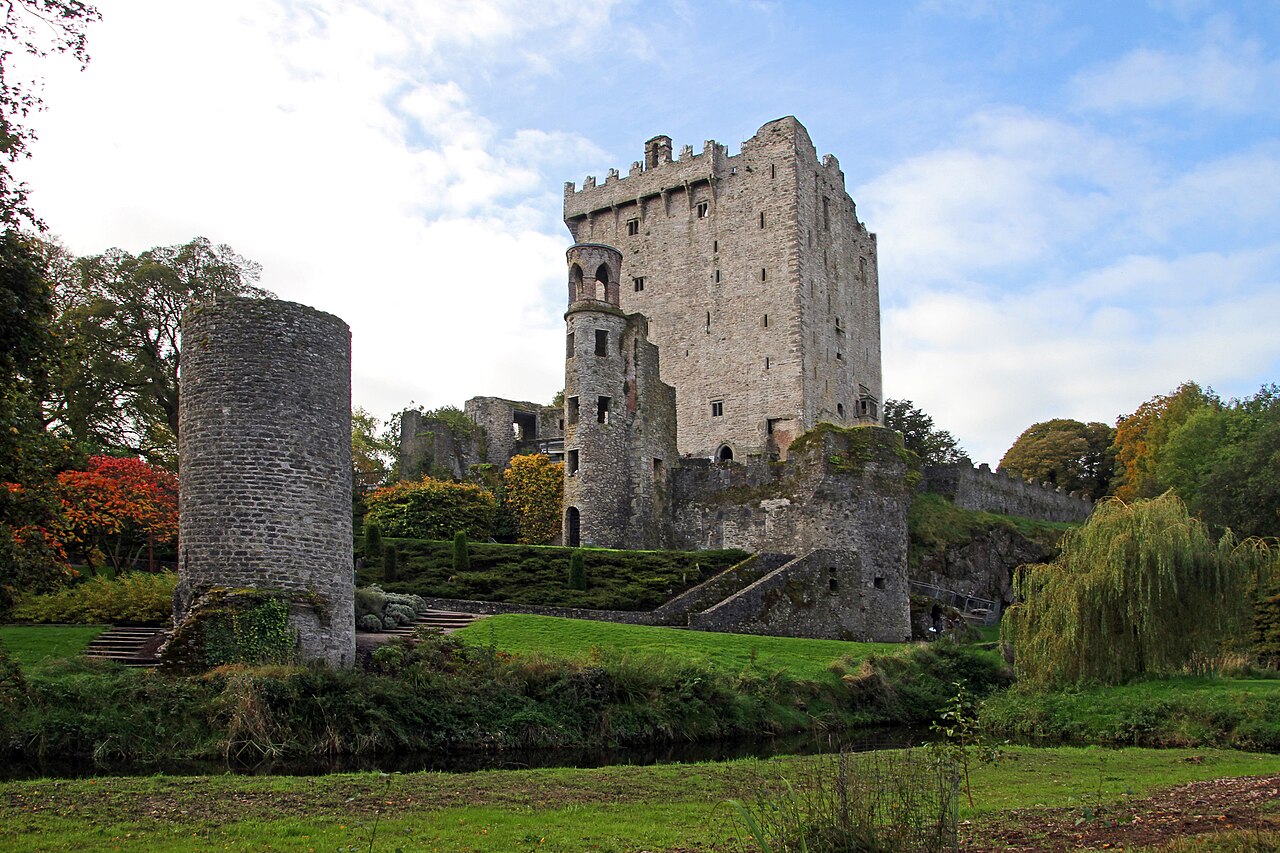
The surviving structure of Blarney Castle is primarily a rectangular stone keep built in the 15th century, characteristic of late-medieval defensive architecture in Ireland. The castle features thick stone walls, narrow arrow slits, and a bawn (walled courtyard) that once enclosed the stronghold. The original 15th-century tower house included flankers and a square tower which now forms the lower wing projecting from the west corner of the main tower.
The castle’s most famous architectural element is its machicolation at the parapet level, a projecting stone gallery with openings through which defenders could drop objects or pour boiling liquids on attackers. This machicolation also houses the Blarney Stone, embedded in the underside of the parapet about 22.5 meters above ground level. The ritual of kissing the stone requires visitors to lean backward over the edge, supported by iron railings and assistants, to reach this historic relic.
Gardens and surrounding estate
The castle is set within extensive grounds that include beautifully maintained gardens and natural rock formations with evocative names such as the Druid’s Circle, Witch’s Cave, and Wishing Steps. These features contribute to the mystical atmosphere surrounding the castle and enhance the visitor experience.
One of the estate’s unique attractions is the Poison Garden, which contains a collection of toxic plants from around the world, including wolfsbane, mandrake, ricin, opium poppy, and cannabis. This garden highlights the historical interest in poisonous flora and adds an educational dimension to the visit.
Historical significance and events
Blarney Castle has played a significant role in Irish history, particularly during the turbulent periods of the 17th century. After its construction in 1446 by Cormac Láidir MacCarthy, the castle served as a stronghold for the MacCarthy family, influential lords in the region.
During the Irish Confederate Wars in the mid-17th century, the castle was besieged and captured twice by Parliamentarian forces. In 1646, it fell to the troops of Lord Broghill, and again in 1649 during the campaign of Oliver Cromwell. Despite heavy artillery damage, the castle remained structurally intact enough to allow defenders to escape through a network of underground tunnels known as the "badger caves."
Following the Restoration of the Stuart monarchy, the castle was returned to the MacCarthy family. However, during the Williamite War in Ireland in the 1690s, the castle was confiscated by Williamite forces after the capture of Donough MacCarty, 4th Earl of Clancarty.
Ownership and later developments
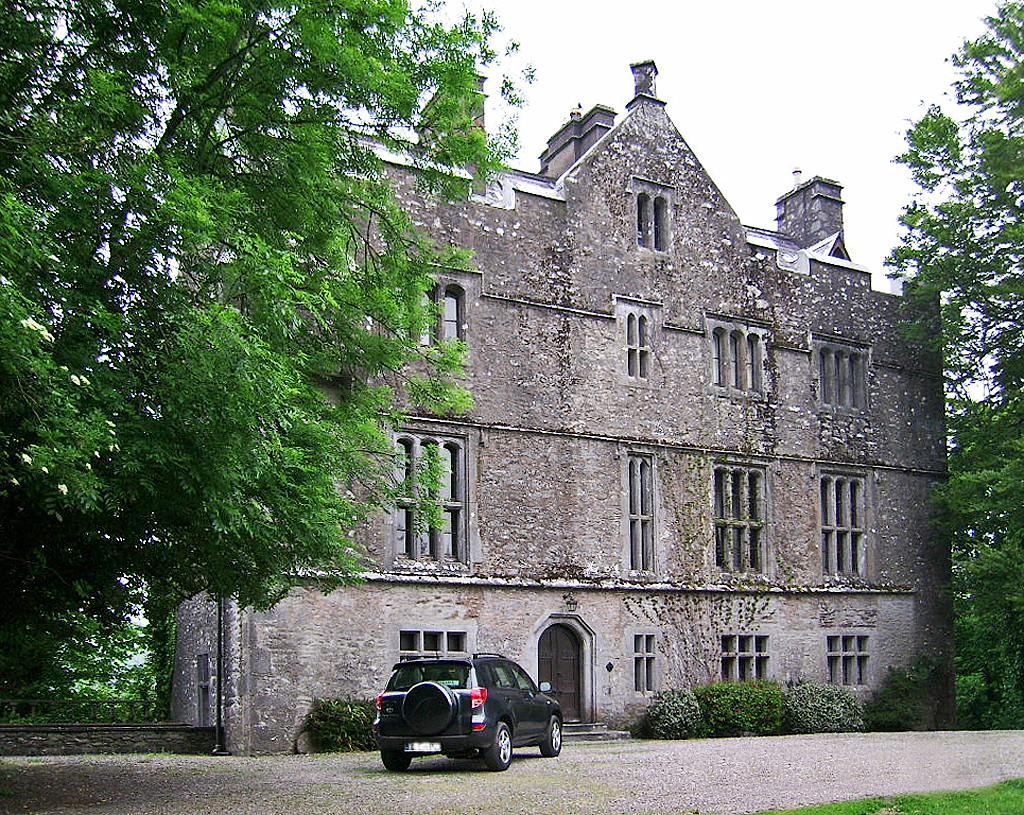
In the early 18th century, ownership of the castle passed through several hands, including Sir Richard Pyne, Lord Chief Justice of Ireland, and later Sir James Jeffreys, governor of Cork. The Jefferyes family constructed a Georgian gothic house adjacent to the medieval keep. After a fire in 1874, the family built Blarney House, a grand Scottish baronial style mansion designed by architect John Lanyon, which overlooks the castle grounds.
The estate has remained in the hands of the Colthurst family since the 19th century, following a marriage alliance with the Jefferyes. Today, the castle and estate are managed as a tourist attraction and heritage site.
The legend of the blarney stone
The Blarney Stone is the castle’s most famous feature and a cultural icon in Ireland. According to legend, kissing the stone grants the "gift of eloquence" or persuasive speech. Visitors climb narrow, winding staircases to the top of the castle, where they lean backward over a sheer drop to kiss the stone embedded in the castle’s machicolation.
The origins of the stone’s legend are linked to Cormac MacCarthy, who, according to folklore, sought the help of the goddess Cliodhna to negotiate with Queen Elizabeth I. The goddess instructed him to kiss the first stone he encountered the next morning, which endowed him with extraordinary diplomatic skill. This story is often cited as the source of the term "blarney," meaning flattering or deceptive talk.
Visitor experience and tourism
Today, Blarney Castle operates as a museum and tourist attraction, welcoming visitors who come to explore its historic rooms, climb its towers, and kiss the Blarney Stone. The castle’s partially ruined state allows access to several chambers and defensive features, providing insight into medieval Irish castle life.
The extensive gardens and the Poison Garden add to the appeal, offering a diverse experience beyond the castle walls. Visitor facilities include guided tours, educational signage, and safety measures for the stone-kissing ritual.
Despite its popularity and the crowds it attracts, Blarney Castle remains a captivating site that combines architectural heritage, historical depth, and Irish folklore in a unique cultural landmark.
Frequently asked questions (FAQ)
- How do I get to Blarney Castle?
- Blarney Castle is located just 8 km from Cork City, making it easily accessible by car or public transport. Several bus services operate from Cork to Blarney, and there is ample parking available on-site for those who choose to drive.
- What is the historical significance of Blarney Castle?
- Blarney Castle was built in the 15th century and is famous for the Blarney Stone, which is said to grant the gift of eloquence to those who kiss it. The castle has a rich history involving various notable figures and is a significant landmark in Irish heritage.
- When was Blarney Castle built?
- The current structure of Blarney Castle was constructed in 1446, though earlier fortifications existed on the site. It has undergone several renovations and restorations over the centuries, preserving its historical integrity.
- Can I visit Blarney Castle with children?
- Yes, Blarney Castle is very family-friendly, offering a range of activities for children, including exploring the gardens and the castle grounds. There are also picnic areas available where families can relax and enjoy their visit.
- Why is the Blarney Stone considered special?
- The Blarney Stone is believed to bestow the gift of gab, or eloquence, upon those who kiss it. This legend has attracted countless visitors over the years, making it one of Ireland's most famous attractions.
- Is it possible to access all areas of Blarney Castle?
- While many areas of Blarney Castle are accessible to visitors, certain parts may have restrictions due to safety considerations. However, the main attractions, including the castle itself and the beautiful gardens, are open to the public.
- What are the opening hours for Blarney Castle?
- Blarney Castle typically opens daily from 9 AM to 5 PM, though hours may vary seasonally. It is advisable to check the official website or contact the castle for the most current information before planning your visit.
- What are the ticket prices for Blarney Castle?
- Ticket prices for Blarney Castle generally range from €18 for adults to reduced rates for children and seniors. Family tickets and group rates are also available, making it an affordable option for visitors.
- When is the best time to visit Blarney Castle?
- The best time to visit Blarney Castle is during the spring and summer months, from April to September, when the gardens are in full bloom and the weather is usually pleasant. However, visiting during the off-season can also offer a quieter experience with fewer crowds.
- Are there any nearby attractions to visit while at Blarney Castle?
- Yes, there are several attractions near Blarney Castle, including the picturesque village of Blarney, the nearby Blarney Woollen Mills, and various walking trails. Exploring these sites can enrich your visit and provide a fuller experience of the local culture.
Information
Website
Visit websiteSources & official resources
Verify the information above using these authoritative references.
Loading map...
Visitor reviews
No reviews yet. Been here? Write the first review and help other travelers!
Write the first reviewVisited this castle? Share your experience
Your review helps other travelers and adds first-hand knowledge to our encyclopedia.