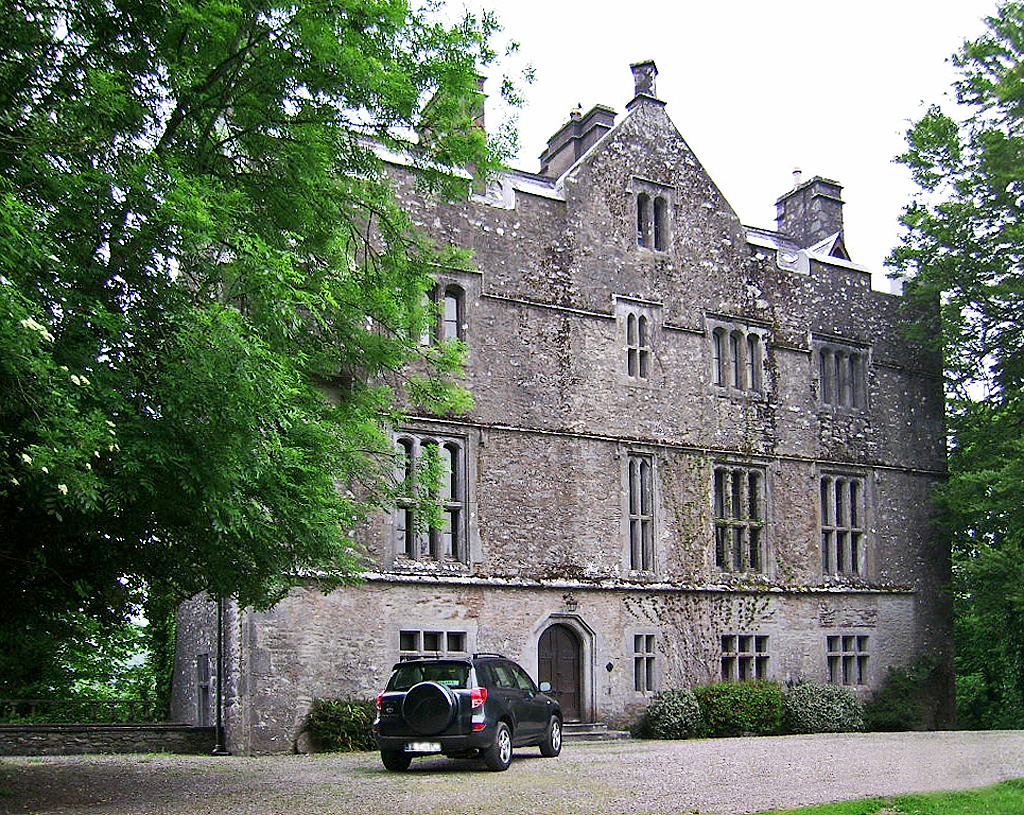
Blarney Castle — Ireland castle

Blarney Castle

Blarney castle: iconic medieval stronghold in cork, ireland
Blarney, Cork, Ireland
Late Medieval (14th–15th c.)
Well Preserved

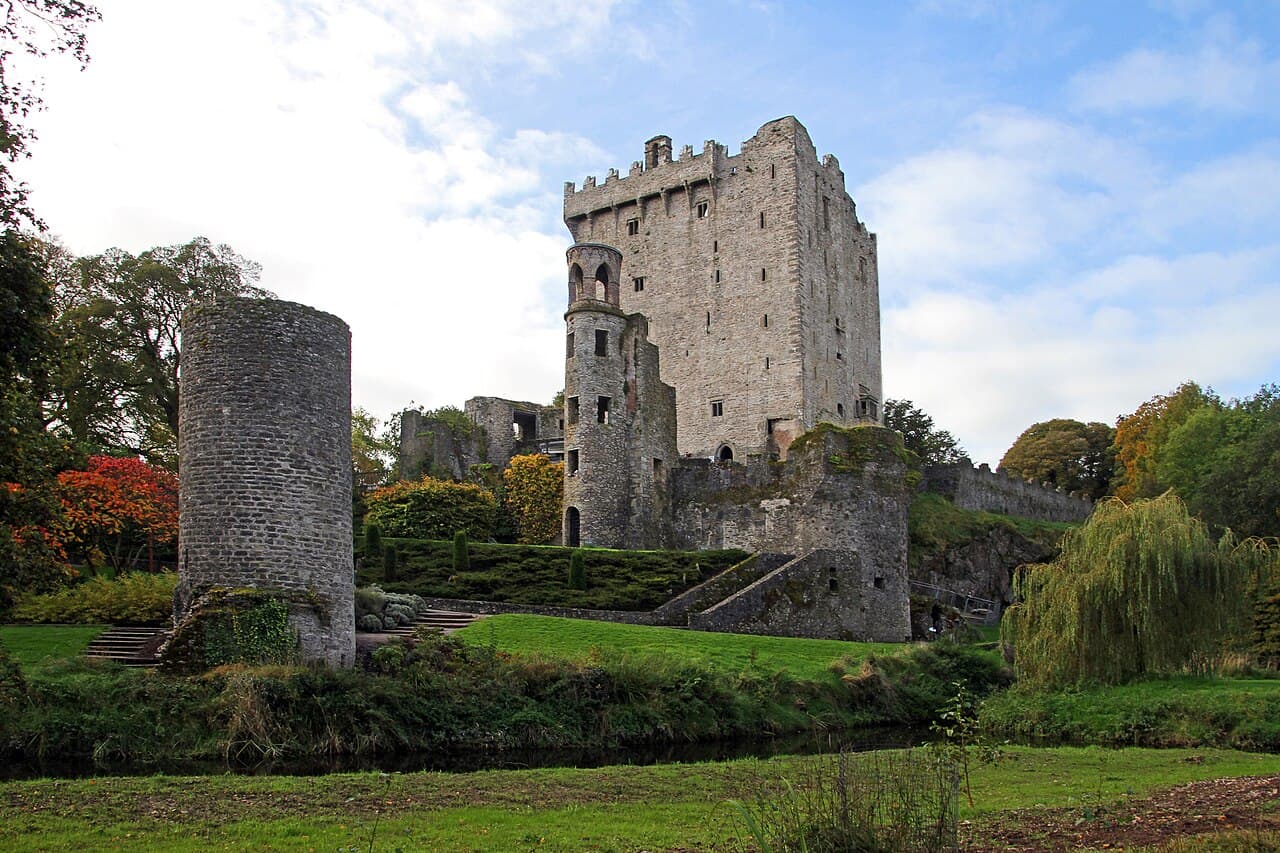
Blarney Castle (Irish: Caisleán na Blarnan) stands as a prominent medieval hill castle located in the town of Blarney, County Cork, Ireland. Its imposing stone keep, constructed in 1446, was commissioned by the MacCarthy of Muskerry dynasty, a cadet branch of the powerful Kings of Desmond. The site itself had earlier fortifications, but the current structure is the most notable surviving element from the late medieval period.

The castle is world-renowned for the Blarney Stone, a block of limestone built into the battlements of the castle’s machicolations. Legend holds that kissing the stone endows the kisser with the gift of eloquence or persuasive speech, attracting visitors from around the globe. This unique feature has made Blarney Castle a cultural icon and a major tourist attraction in Ireland.

Architectural features and layout

The castle is primarily a stone keep typical of the 15th century Irish fortifications. It rises on a natural hill, providing strategic views over the surrounding countryside. The keep is a rectangular tower with thick walls designed for defense, featuring narrow arrow slits and machicolations—openings between the supporting corbels of the battlements through which defenders could drop projectiles or boiling liquids on attackers.

The machicolations are especially significant as the location of the Blarney Stone. Visitors must climb a narrow stairway to reach the top of the keep to access the stone, which is set into the wall below the battlements.

Surrounding the keep are the remnants of the original curtain walls and outer defensive structures, though much of these have fallen into ruin over time. The castle’s defensive design reflects the turbulent nature of late medieval Ireland, where clan warfare and English incursions were frequent.

Historical context and ownership

The site of Blarney Castle has been fortified since at least the 13th century, with earlier wooden and stone structures preceding the current keep. The MacCarthy family took control of the castle in the 15th century, building the stone keep as a symbol of their power and to defend their lands in Munster.

Throughout its history, Blarney Castle played a role in various conflicts, including the Irish Confederate Wars in the 17th century. It changed hands multiple times, reflecting the shifting political landscape of Ireland during periods of English rule and rebellion.

The macarthy dynasty

The MacCarthy of Muskerry were a branch of the ancient MacCarthy clan, who were powerful Gaelic lords in southern Ireland. Their construction of Blarney Castle’s stone keep was part of their effort to consolidate power and assert dominance in the region.

The blarney stone and cultural significance

The Blarney Stone is embedded in the castle’s battlements and has become synonymous with the castle itself. According to tradition, kissing the stone grants the gift of persuasive eloquence. This legend has no clear historical origin but is deeply ingrained in Irish folklore.

Visitors must lean backward while holding iron rails to kiss the stone, a practice that adds to the castle’s allure and visitor experience. The ritual has made Blarney Castle one of Ireland’s most visited heritage sites.

Visitor experience and preservation

Today, Blarney Castle is well preserved and managed as a major tourist destination. The castle grounds include extensive gardens and woodlands that visitors can explore, adding to the site’s appeal beyond the historic structure itself.

The interior of the keep retains some original features, and the climb to the battlements offers panoramic views of the surrounding Cork countryside. The castle is accessible to the public, with guided tours available to explain its history and architecture.

Preservation efforts have maintained the castle’s structural integrity, ensuring that the keep and its unique features, including the Blarney Stone, remain intact for future generations.

Access and visitor information

Blarney Castle is open year-round, with peak visitor seasons in spring and summer. Facilities include a visitor center, gift shops, and cafes, enhancing the overall tourist experience.

Safety measures are in place for the stone-kissing ritual, and staff provide assistance to ensure visitor safety during the climb to the battlements.

Frequently asked questions (FAQ)

How do I get to Blarney Castle from Cork city?
Blarney Castle is located about 8 kilometers northwest of Cork city and can be reached by car or public bus. Regular bus services run from Cork city center to Blarney village, and the castle is within walking distance from the bus stop.
What is the best time of year to visit Blarney Castle?
The best time to visit Blarney Castle is during the spring and summer months, from April to September, when the weather is milder and the castle gardens are in full bloom. These months also offer longer daylight hours for exploring.
Is it possible to kiss the Blarney Stone?
Yes, visitors can kiss the Blarney Stone by climbing to the top of the castle keep. Safety rails and staff assistance are provided to ensure a safe experience while performing the traditional kiss.
What architectural style is Blarney Castle built in?
Blarney Castle exemplifies <strong>late medieval Irish castle architecture</strong>, characterized by its stone keep, defensive machicolations, and thick walls designed for protection during clan warfare.
Are there guided tours available at Blarney Castle?
Guided tours are available and provide detailed insights into the castle’s history, architecture, and the legend of the Blarney Stone. Tours enhance visitor understanding and are recommended for a comprehensive experience.

Photo gallery

Blarney Castle
Click to view

Photo by Gerd Eichmann•CC BY-SA 4.0

1 photo • Click any image to view in full screen

Information

Hill Castle

Loading map...

Visitor reviews

No reviews yet. Been here? Write the first review and help other travelers!

Write the first review

Visited this castle? Share your experience

Your review helps other travelers and adds first-hand knowledge to our encyclopedia.

Write a review

(5/5)

0/2000 characters

Your review will be visible after admin approval

Nearby castles

0 km

Blarney Castle

Blarney, United Kingdom

Blarney Castle stands as a prominent late-medieval stone fortress located near the town of Blarney in County Cork, Ireland. It is renowned worldwide for the legendary Blarney Stone, reputed to bestow the gift of eloquence on those who kiss it. The castle’s rich history, distinctive architecture, and cultural significance make it a key heritage site and popular tourist destination. The origins of the site trace back to the early 13th century, when a wooden fortification was first established near the confluence of the Martin River and the Blarney River. This was replaced by a stone fortification around 1210. The original stone castle was destroyed in 1446, after which the current stone keep was constructed by Cormac Láidir MacCarthy, Lord of Muskerry, a cadet branch of the powerful MacCarthy dynasty. An inscription on the castle’s machicolation commemorates this construction date and builder. Architectural features and layout The surviving structure of Blarney Castle is primarily a rectangular stone keep built in the 15th century, characteristic of late-medieval defensive architecture in Ireland. The castle features thick stone walls, narrow arrow slits, and a bawn (walled courtyard) that once enclosed the stronghold. The original 15th-century tower house included flankers and a square tower which now forms the lower wing projecting from the west corner of the main tower. The castle’s most famous architectural element is its machicolation at the parapet level, a projecting stone gallery with openings through which defenders could drop objects or pour boiling liquids on attackers. This machicolation also houses the Blarney Stone, embedded in the underside of the parapet about 22.5 meters above ground level. The ritual of kissing the stone requires visitors to lean backward over the edge, supported by iron railings and assistants, to reach this historic relic. Gardens and surrounding estate The castle is set within extensive grounds that include beautifully maintained gardens and natural rock formations with evocative names such as the Druid’s Circle, Witch’s Cave, and Wishing Steps. These features contribute to the mystical atmosphere surrounding the castle and enhance the visitor experience. One of the estate’s unique attractions is the Poison Garden, which contains a collection of toxic plants from around the world, including wolfsbane, mandrake, ricin, opium poppy, and cannabis. This garden highlights the historical interest in poisonous flora and adds an educational dimension to the visit. Historical significance and events Blarney Castle has played a significant role in Irish history, particularly during the turbulent periods of the 17th century. After its construction in 1446 by Cormac Láidir MacCarthy, the castle served as a stronghold for the MacCarthy family, influential lords in the region. During the Irish Confederate Wars in the mid-17th century, the castle was besieged and captured twice by Parliamentarian forces. In 1646, it fell to the troops of Lord Broghill, and again in 1649 during the campaign of Oliver Cromwell. Despite heavy artillery damage, the castle remained structurally intact enough to allow defenders to escape through a network of underground tunnels known as the "badger caves." Following the Restoration of the Stuart monarchy, the castle was returned to the MacCarthy family. However, during the Williamite War in Ireland in the 1690s, the castle was confiscated by Williamite forces after the capture of Donough MacCarty, 4th Earl of Clancarty. Ownership and later developments In the early 18th century, ownership of the castle passed through several hands, including Sir Richard Pyne, Lord Chief Justice of Ireland, and later Sir James Jeffreys, governor of Cork. The Jefferyes family constructed a Georgian gothic house adjacent to the medieval keep. After a fire in 1874, the family built Blarney House, a grand Scottish baronial style mansion designed by architect John Lanyon, which overlooks the castle grounds. The estate has remained in the hands of the Colthurst family since the 19th century, following a marriage alliance with the Jefferyes. Today, the castle and estate are managed as a tourist attraction and heritage site. The legend of the blarney stone The Blarney Stone is the castle’s most famous feature and a cultural icon in Ireland. According to legend, kissing the stone grants the "gift of eloquence" or persuasive speech. Visitors climb narrow, winding staircases to the top of the castle, where they lean backward over a sheer drop to kiss the stone embedded in the castle’s machicolation. The origins of the stone’s legend are linked to Cormac MacCarthy, who, according to folklore, sought the help of the goddess Cliodhna to negotiate with Queen Elizabeth I. The goddess instructed him to kiss the first stone he encountered the next morning, which endowed him with extraordinary diplomatic skill. This story is often cited as the source of the term "blarney," meaning flattering or deceptive talk. Visitor experience and tourism Today, Blarney Castle operates as a museum and tourist attraction, welcoming visitors who come to explore its historic rooms, climb its towers, and kiss the Blarney Stone. The castle’s partially ruined state allows access to several chambers and defensive features, providing insight into medieval Irish castle life. The extensive gardens and the Poison Garden add to the appeal, offering a diverse experience beyond the castle walls. Visitor facilities include guided tours, educational signage, and safety measures for the stone-kissing ritual. Despite its popularity and the crowds it attracts, Blarney Castle remains a captivating site that combines architectural heritage, historical depth, and Irish folklore in a unique cultural landmark.

Late Medieval (14th–15th c.)
Details
3.7 km
Carrigrohane Castle — Ireland castle

Carrigrohane Castle

Carrigrohane, Ireland

Carrigrohane Castle is a historic hill castle located in the village of Carrigrohane within the barony of Barretts in County Cork, Ireland. This medieval stronghold is strategically positioned on a rocky cliff-edge overlooking the River Lee, providing commanding views of the surrounding landscape and natural defensive advantages. Historical background and strategic importance The origins of Carrigrohane Castle date back to the medieval period, with its construction likely occurring between the 13th and 15th centuries, a time when castles were essential for territorial defense and control in Ireland. The castle's location on elevated terrain above the river was typical of hill castles, designed to oversee and protect important waterways and trade routes. The River Lee was a significant artery for transport and commerce, making the castle's position crucial for monitoring movement and asserting local authority. Architectural features and layout The castle is built on a natural rocky outcrop, which enhances its defensive capabilities by creating steep approaches on several sides. Although much of the original structure has not survived intact, the remains suggest a typical medieval fortification with thick stone walls and limited openings to withstand attacks. The castle likely included a keep or donjon, serving as the main stronghold and residence for the lord or garrison. Defensive elements such as battlements, arrow slits, and possibly a gatehouse would have been part of the original design, although these features are now mostly in ruins or have disappeared over time. The rocky cliff provided a natural moat-like barrier on one side, reducing the need for extensive artificial defenses there. Materials and construction techniques The castle was constructed primarily from locally sourced stone, typical of medieval Irish castles. The masonry would have been robust and designed to endure sieges and the harsh Irish climate. The use of stone also reflects the transition from earlier wooden fortifications to more permanent and imposing structures during the high to late medieval period. Role in local history and ownership Throughout its history, Carrigrohane Castle played a role in the regional power dynamics of County Cork. It was likely controlled by local Gaelic lords or Anglo-Norman settlers who used it as a defensive stronghold and administrative center. The castle's proximity to Cork city and the River Lee made it strategically valuable during periods of conflict, including the various Irish wars and rebellions. Over time, the castle fell into disuse and decline, a fate common to many medieval fortifications as military technology and political structures evolved. Today, it stands as a ruined monument, reflecting the turbulent history of the region. Current condition and preservation Carrigrohane Castle is currently classified as ruins, with only portions of the original walls and foundations visible. The site remains an important cultural and historical landmark in County Cork, attracting visitors interested in medieval architecture and Irish history. Efforts to preserve the ruins focus on maintaining the existing stonework and preventing further deterioration caused by weathering and vegetation growth. Visiting Carrigrohane Castle The castle is accessible to the public, although facilities are limited due to its ruined state and natural setting. Visitors can explore the cliff-edge site and enjoy panoramic views of the River Lee valley. The surrounding village of Carrigrohane offers additional amenities and serves as a gateway for those interested in exploring the heritage of County Cork. Nearby attractions Close to Carrigrohane Castle are several other historical sites and natural attractions, including the city of Cork with its rich cultural offerings, the scenic Lee Valley, and various walking trails along the river. These features make the castle part of a broader network of tourism and heritage experiences in the region.

Late Medieval (14th–15th c.)
Details
5.9 km

Ballincollig Castle

Ballincollig, United Kingdom

Ballincollig Castle is a striking Norman fortress located just south of the town of Ballincollig in County Cork, Ireland. Perched on a limestone outcrop overlooking the Maglin Valley, this hill castle exemplifies medieval military architecture and the complex history of Norman influence in Ireland. Its origins date back to the 13th century, shortly after the Norman invasion, with the oldest surviving structure being its tall and slender keep. The castle's strategic position on a natural limestone hill provided formidable defensive advantages, including a cavern beneath the fortress and traces of a surrounding moat. The main castle complex consists of a large rectangular enclosure or bawn, with thick walls approximately 1.5 meters thick and up to 5 meters high. The walls are topped with a parapet and accessed by stairways, enhancing its defensive capabilities. The origins and early history of Ballincollig Castle Construction of Ballincollig Castle began in the late 12th or early 13th century, attributed to Sir Robert Coll, a Norman knight whose name likely influenced the naming of the town of Ballincollig. This early fortification marked the establishment of Norman authority in the region following their invasion of Ireland in 1169. Throughout the High Medieval period, the castle served as a key stronghold in the area. The principal surviving structure from this era is the keep, a tall tower rising approximately 14 to 15 meters, featuring a vaulted stone ceiling on the ground floor and narrow staircases leading to upper chambers. The keep was designed primarily as a secure refuge rather than a comfortable residence, evident from its lack of windows and open fireplaces, and its original ground floor access only via a trapdoor from above, suggesting use as a prison. The Barrett family and castle expansions In 1458, the castle was purchased by the Barrett family from Robert Coil, marking a significant chapter in its history. The Barretts, themselves of Norman descent, transformed Ballincollig Castle into their principal stronghold. They expanded the castle's defenses by extending the enclosure southwards in the 16th century to occupy the entirety of the limestone outcrop. The Barretts also added two defensive towers along the curtain wall of the bawn, one at the south-east corner (now in ruins) and another on the south wall, both dating from the 15th century. Within the enclosed courtyard, architectural evidence such as a fireplace, chimney, and a two-light window indicate the presence of a large hall used for domestic and administrative purposes. Internal conflicts and ownership changes The late 16th century saw internal disputes within the Barrett family, escalating into armed conflicts over control of the castle. Financial difficulties in the early 17th century forced the Barretts to mortgage the castle to the Coppinger family in 1618. By 1630, the Coppingers had full ownership, marking a shift in stewardship. Ballincollig Castle in the 17th century conflicts The castle played a role during the turbulent mid-17th century wars in Ireland. In 1644, it was captured by forces loyal to Oliver Cromwell during the English conquest of Ireland. Later, around 1689, Ballincollig Castle was garrisoned for supporters of James II during the Williamite War. After the decisive battles of the late 17th century, the castle fell into disuse and gradually deteriorated. 19th century restoration and current condition In 1857, the Wyse family undertook restoration efforts on the castle's keep. Their work included the insertion of new windows on all sides of the upper floor and the main chamber, allowing more natural light inside while preserving much of the original defensive architecture, such as loopholes and thick stone walls. A dated shield bearing the monogram "W" commemorates their restoration. Today, Ballincollig Castle stands as a partially preserved medieval fortress with significant architectural and historical value. Its keep, curtain walls, and remnants of defensive towers offer insight into Norman military architecture and the complex socio-political history of medieval Ireland. The castle is freely accessible and remains a popular site for visitors interested in Ireland's Norman heritage. Architectural features and defensive elements The castle's design reflects typical Norman defensive priorities. The keep is the oldest and most prominent structure, characterized by its slender form and vaulted stone ceilings. The ground floor's lack of external access and secure trapdoor entry suggest its use as a dungeon or secure storage. The surrounding bawn walls are robust, with parapets and stairways for defenders to patrol and repel attackers. The two surviving defensive towers along the curtain wall provided flanking fire and observation points, though one tower is now largely ruined. Inside the courtyard, the remains of a large hall with a chimney and two-light window highlight the castle's role as a domestic center as well as a military fortress. The garderobe drain and stone seating in the keep's upper chambers illustrate the blend of functionality and defense. Natural defensive advantages Built on a limestone hill, the castle benefits from natural elevation, giving defenders a commanding view of the surrounding valley. The presence of a cavern beneath the fortress and traces of a moat further enhanced its defenses, creating obstacles for potential attackers. Visiting Ballincollig Castle Ballincollig Castle is freely accessible to the public, offering visitors the opportunity to explore a well-preserved example of a 13th-century Norman hill castle. Its location near the town of Ballincollig makes it an easily reachable destination for those interested in medieval history and architecture. Visitors can appreciate the castle's imposing keep, extensive curtain walls, and the atmospheric remains of its defensive towers and courtyard structures. The site provides a tangible connection to Ireland's Norman past and the turbulent centuries that shaped its history.

High Medieval (11th–13th c.)
Details