Bílina Castle
Bílina Castle stands as a significant historical monument in the town of Bílina, Czechia, tracing its origins to the early 13th century. Founded likely by the noble Ojíř of Frýdberk, the castle was initially constructed as a Gothic bergfried-style fortress, replacing an earlier administrative center linked to the Přemyslid dynasty. Its strategic location on a promontory underscores its medieval military and administrative importance.
Medieval origins and strategic significance
The original fortress was designed with defensive priorities typical of the high medieval period, featuring a round bergfried tower known as the Red Tower, which served as a stronghold and lookout. Surrounding this core was an outer bailey or courtyard, providing space for auxiliary buildings and defensive operations. The castle’s early architecture reflected the Gothic style prevalent in Central Europe, with robust stone walls and vaulted chambers.
Throughout the 14th and 15th centuries, Bílina Castle was a focal point in regional power struggles. Ownership passed through noble families including the Lords of Berg, Janovice, and Koldice. Its role was notably prominent during the Hussite Wars in the 15th century, when in 1421 it was seized by the Prague Union, a Hussite faction. Subsequently, the castle served as an administrative center under lords loyal to King Sigismund of Luxembourg, illustrating its political and military relevance during this turbulent era.
Renaissance and baroque transformation under the lobkowicz family
In the early 16th century, the powerful Lobkowicz family acquired Bílina Castle, with Oldřich Felix of Lobkowicz consolidating the estate by 1593. The castle underwent significant changes reflecting evolving architectural tastes and functional needs. The most substantial transformation occurred in the late 17th century under Václav Ferdinand Popel of Lobkowicz, an imperial prince since 1670.
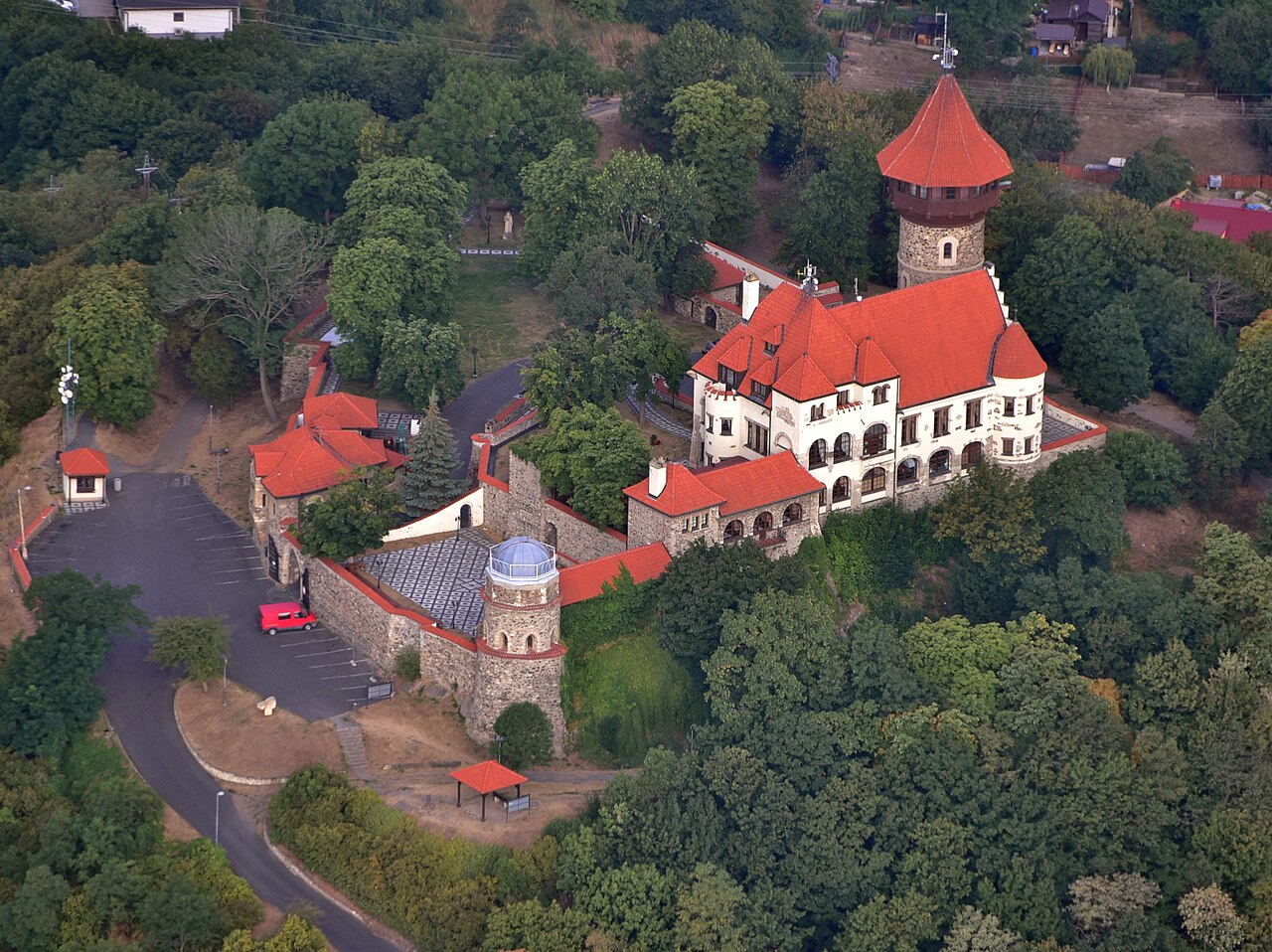
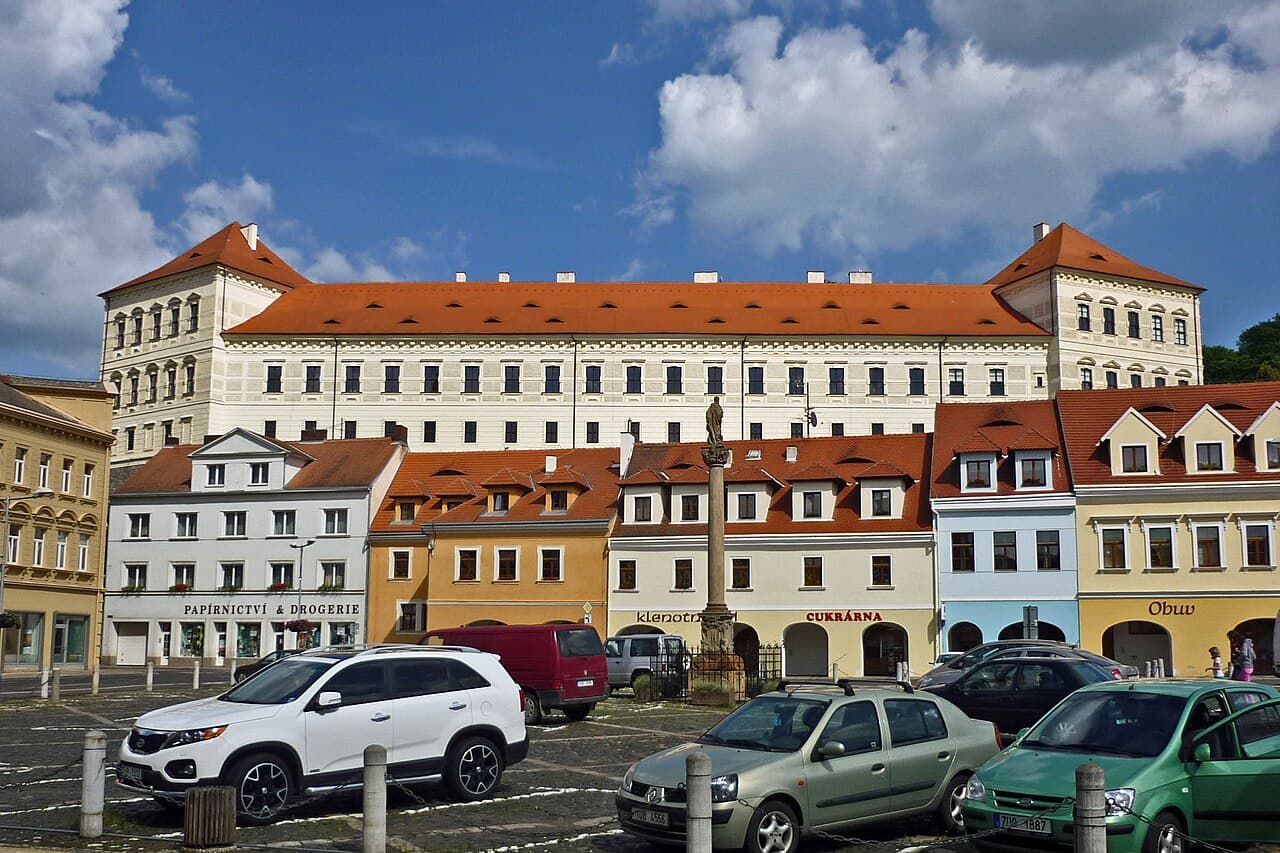
Between 1675 and 1682, the castle was extensively rebuilt in the Baroque style following designs by the Italian architect Giovanni Pietro Tencalla and executed by Antonio della Porta. This renovation introduced a long, rectangular, one-story building flanked by two corner towers, replacing much of the medieval fortress’s austere appearance with elegant Baroque features. The project was a major financial undertaking, costing nearly 25,000 Rhine gold coins, and set the castle’s architectural character for centuries.
Architectural features of the baroque renovation
The northern tower retains late Gothic vaulted rooms with ribbed and cross vaulting, demonstrating the blend of medieval craftsmanship within the Baroque framework. The southern tower, completed after 1813, housed official apartments, reflecting the castle’s residential function. Inside, the layout consists of two parallel rows of chambers on each floor, separated by a heated corridor, an advanced feature for comfort in the period.
The castle also includes a chapel added in 1837, a castle park, and a winter garden beneath the northern tower. The interior features an Italian-style hall decorated with 17th-century stucco work, highlighting the artistic influences of the Baroque era. Underground, a Gothic cellar carved into bedrock and vaulted cellars in the northern pavilion provide insight into the castle’s functional design for storage and preservation.
Modern history and preservation efforts
The Lobkowicz family maintained ownership of Bílina Castle until 1945, when it was nationalized after World War II. The castle served various public roles including military use, housing a local museum, and hosting an archaeological department dedicated to the site’s study. Archaeological research from 1971 to 2004 has revealed much about the castle’s layered history and architectural evolution.
Following the political changes of 1989, the castle was restituted to the Lobkowicz family but later sold to private owners. Since 1964, it has been protected as a cultural monument by the Czech Republic, recognizing its architectural and historical significance under catalog number 1000155386.
Architectural remnants and cultural significance
Bílina Castle today preserves elements from its Gothic origins and Baroque transformation. The Manda bastion, a semi-circular defensive projection within the outer bailey, remains from the late Gothic period. The castle’s structure reflects the transition from a medieval fortress to a noble residence with refined Baroque aesthetics.
The castle’s adaptation in the 19th century to include a museum, notably featuring a mineral collection by geologist F. A. Reuss, underscores its role in preserving local cultural and natural history. The combination of architectural styles and historical layers makes Bílina Castle a valuable site for understanding Central European noble residences and fortifications.
Frequently asked questions (FAQ)
- What is the best time to visit Bílina Castle?
- The best time to visit Bílina Castle is during the warmer months from late spring to early autumn when the castle park and gardens are most enjoyable. Seasonal events and guided tours are often available during this period.
- How do I get to Bílina Castle?
- Bílina Castle is located in the town of Bílina in the Ústí nad Labem Region of Czechia. It is accessible by car and public transport, with local bus and train connections to the town center where the castle stands.
- Can I tour the interior of Bílina Castle?
- Access to the interior of Bílina Castle may be limited as it is privately owned. Visitors can enjoy the exterior architecture and surrounding park, but it is recommended to check for any public opening times or special events that allow interior tours.
- What historical periods are reflected in Bílina Castle's architecture?
- Bílina Castle showcases architectural elements from the <strong>high medieval Gothic period</strong> and the <strong>Baroque era</strong>, reflecting its evolution from a fortress to a noble residence. Gothic vaulted rooms and Baroque stucco decorations are notable features.
- Why is Bílina Castle historically significant?
- Bílina Castle is historically significant for its role in regional conflicts such as the Hussite Wars, its association with prominent noble families like the Lobkowicz, and its architectural transformation illustrating Central European castle evolution.
Photo gallery

Information
Current owner
Private owner
Loading map...
Visitor reviews
No reviews yet. Been here? Write the first review and help other travelers!
Write the first reviewVisited this castle? Share your experience
Your review helps other travelers and adds first-hand knowledge to our encyclopedia.