Biały Kościół
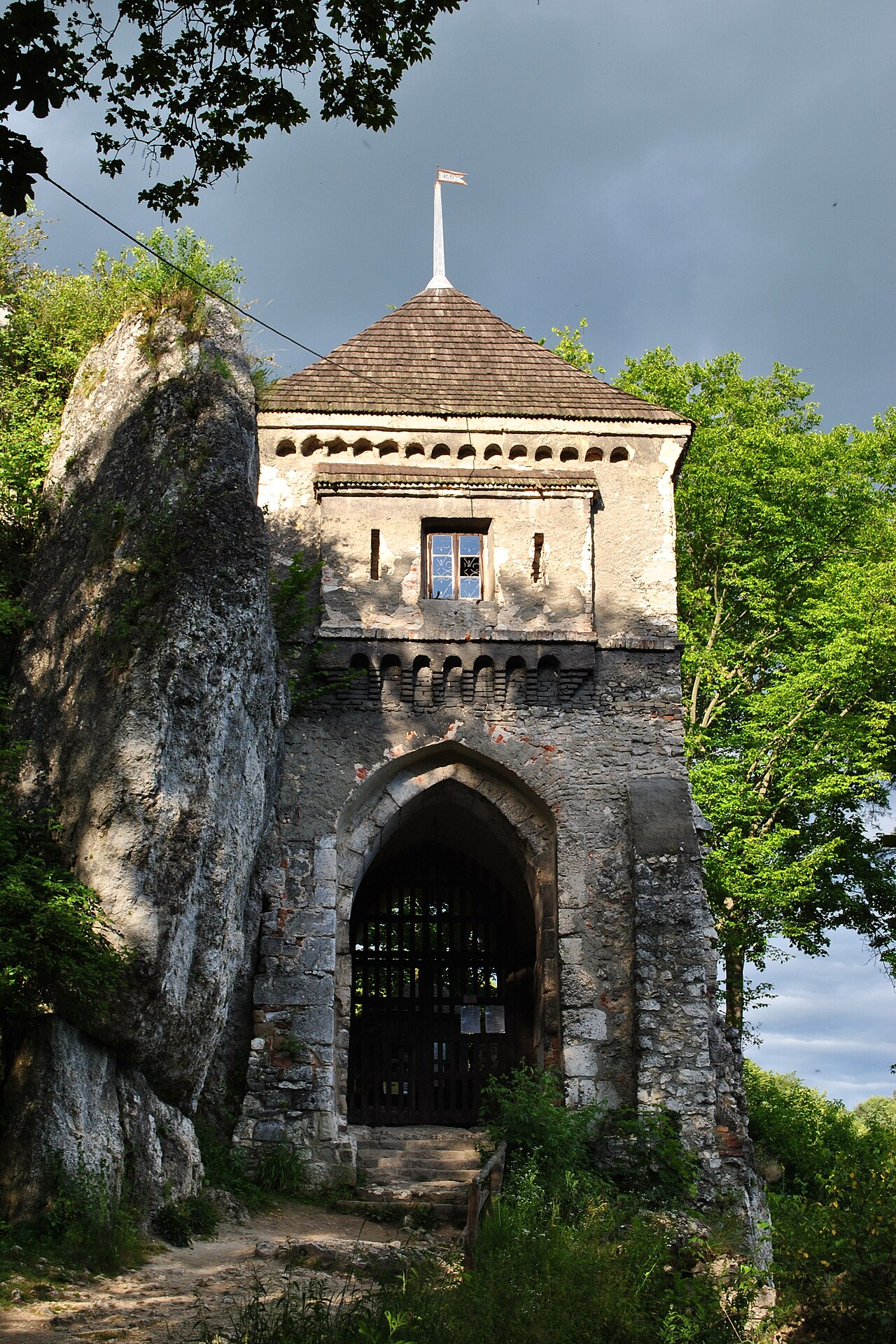
Located near the village of Biały Kościół in Poland, this historic site features the remains of a medieval hill castle perched atop a prominent limestone outcrop known as Zamkowa Skała (Castle Rock), standing at 342 meters above sea level. The castle ruins lie within a picturesque valley through which the Kluczwoda River flows, an area now designated as a nature reserve famed for its numerous limestone formations. This natural setting provided a strategic defensive advantage that was skillfully utilized in the castle's design and construction during the 14th century, placing it firmly within the late medieval period.
Historical background and ownership
The castle is traditionally attributed to the Syrokomla family, a noble lineage that owned the village of Biały Kościół at the beginning of the 14th century. The Syrokomlas established the castle as a defensive residence, capitalizing on the natural fortifications offered by the limestone rock. However, their tenure at the site was brief. By the end of the 14th century, the family relocated to Korzkiew, where they constructed a new fortified residence. It is believed that the abandonment of Biały Kościół Castle was precipitated by the partial collapse of the northwest corner of the castle walls, which compromised its defensive integrity.
Architectural features and layout
The castle's layout was compact, adapted to the uneven topography of Zamkowa Skała. A defensive wall made of local limestone, approximately 1.2 to 1.3 meters thick, traced the edge of the rock summit, enclosing an area measuring roughly 20 by 15 meters. This wall formed a small enclosure that functioned as the castle's primary fortification.
Main residential tower
The principal building within the enclosure was a rectangular tower located in the northeastern corner. This tower likely rose to three stories, serving as the main living quarters and defensive stronghold. Its robust construction and positioning suggest it was the focal point of the castle's defense and habitation.
Additional structures
In addition to the main tower, a narrow stone wing was attached to the eastern section of the defensive wall. This wing likely served functional purposes such as storage or additional living space. The rest of the castle's buildings were probably constructed of wood, a common practice in medieval fortifications where stone was reserved for key defensive elements.
Division and access
The summit's irregular shape divided the castle into two distinct parts: a lower southern section and a higher northern section. These were connected by stairs cut directly into the rock, facilitating movement between the two courtyards. The castle was naturally protected on three sides by steep rock faces, while the eastern side was fortified with an earthen rampart and a dry moat. The main entrance was located on the eastern wall, providing controlled access to the fortress.
Archaeological investigations and preservation
Extensive archaeological excavations conducted in 1993-94 uncovered significant structural remains, including the foundations of the residential tower and the eastern wing, as well as fragments of the surrounding defensive walls. These excavations also clarified the castle's two-part division and revealed details about its construction techniques and defensive strategies.
Today, the castle remains well-preserved as a ruin, with visible masonry that allows visitors to appreciate its medieval defensive architecture and strategic location. The site is accessible to the public and offers insight into the late medieval fortifications typical of hill castles in this region of Poland.
Natural setting and strategic importance
The castle's placement on a limestone outcrop within a valley enriched by the Kluczwoda River provided natural defenses and an elevated vantage point over surrounding lands. The steep cliffs on three sides made direct assault difficult, while the man-made earthworks and moat enhanced security on the more vulnerable eastern approach.
This combination of natural and artificial defenses exemplifies the medieval approach to castle-building, where terrain was maximized to reduce construction costs and improve defensive capabilities.
Visitor information and cultural significance
As a site of historical and architectural significance, Biały Kościół Castle attracts visitors interested in medieval history, archaeology, and natural beauty. The surrounding nature reserve offers hiking opportunities among striking limestone formations, complementing the cultural experience of exploring the castle ruins.
The castle's story reflects the regional dynamics of noble families in medieval Poland, their strategic relocations, and the challenges of maintaining fortifications in difficult terrain.
Frequently asked questions (FAQ)
- How do I get to Biały Kościół Castle?
- Biały Kościół Castle is located near the village of Biały Kościół in Poland. Visitors can reach the site by local roads and then follow walking paths to the castle ruins atop Zamkowa Skała.
- What is the historical significance of Biały Kościół Castle?
- Biały Kościół Castle is a well-preserved example of a 14th-century hill castle built by the Syrokomla family. It illustrates medieval defensive architecture adapted to natural limestone formations.
- Can I explore the castle ruins?
- Yes, the castle ruins are accessible to the public. Visitors can explore the visible foundations, defensive walls, and rock-cut stairs that reveal the castle's layout and construction.
- When was the castle built and by whom?
- The castle was constructed in the 14th century by the noble Syrokomla family, who owned the village of Biały Kościół at that time.
- Why was the castle abandoned?
- The castle was likely abandoned after the partial collapse of its northwest corner, which compromised its structural integrity and defensive capability, prompting the owners to relocate.
Information
Loading map...
Visitor reviews
No reviews yet. Been here? Write the first review and help other travelers!
Write the first reviewVisited this castle? Share your experience
Your review helps other travelers and adds first-hand knowledge to our encyclopedia.