Bezdez Castle
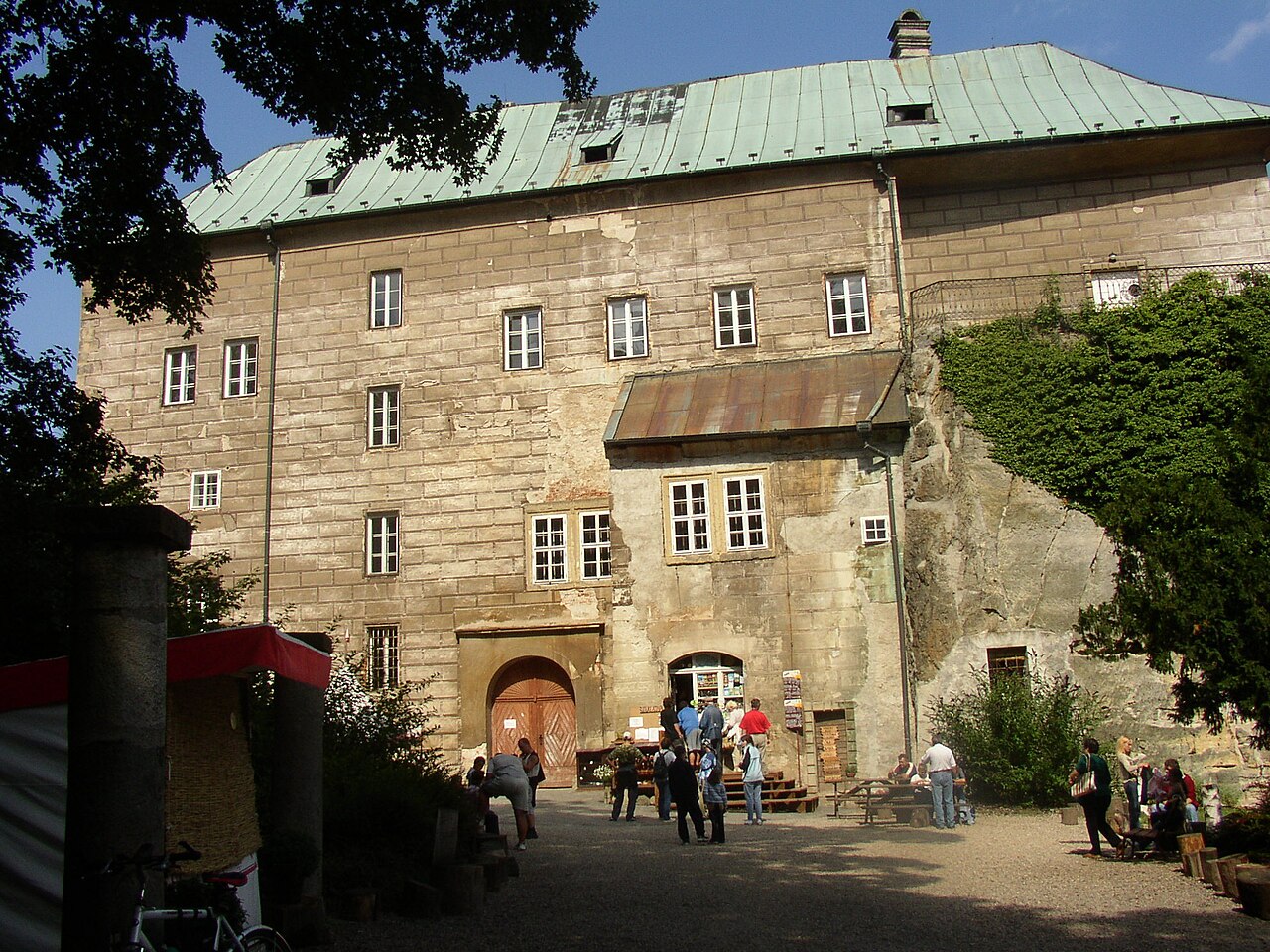
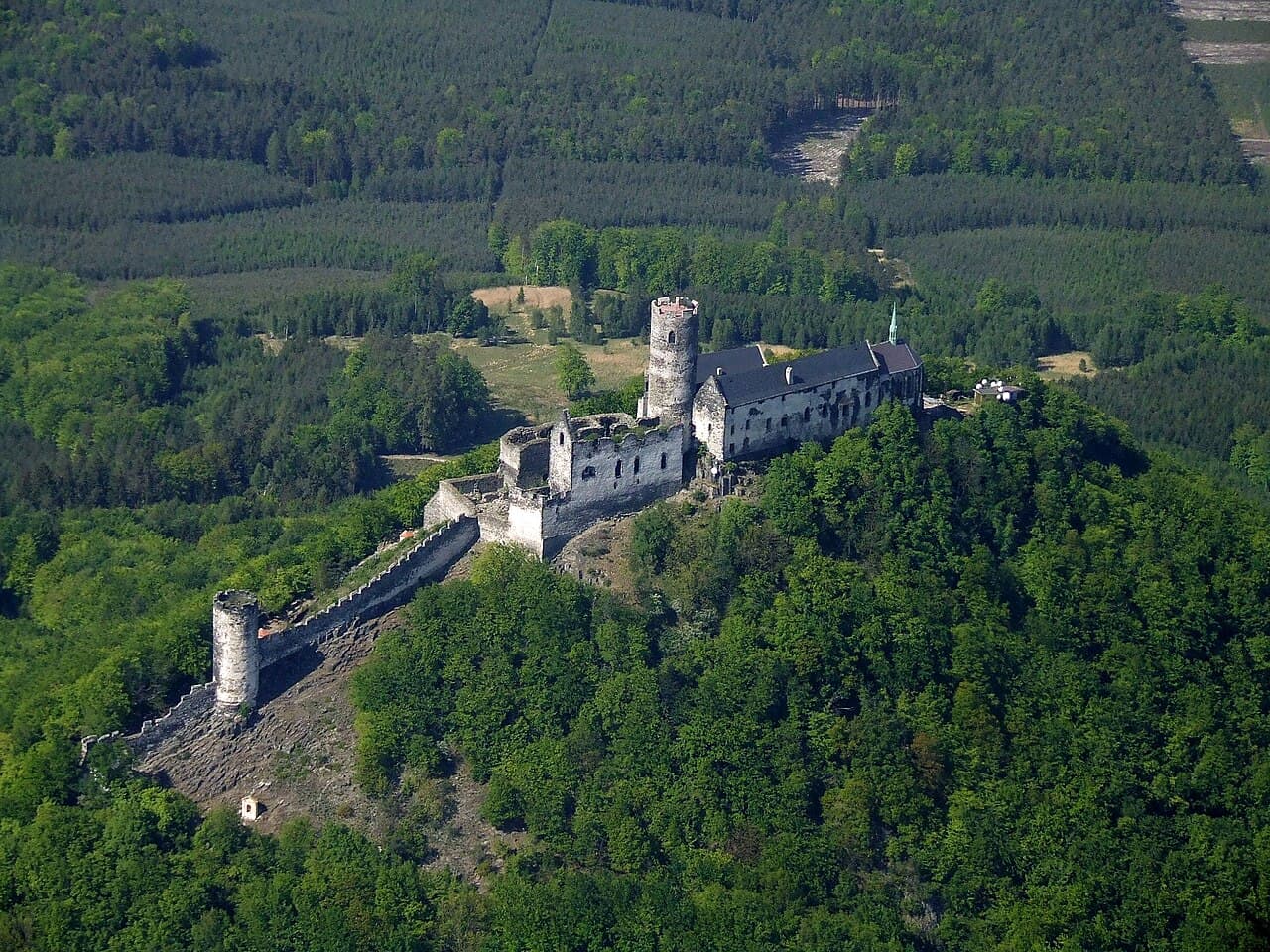
Bezdez Castle stands as a remarkable example of 13th-century Gothic architecture in the Czech Republic. Perched atop a steep hill reaching 606 meters, it commands sweeping views of the surrounding landscape, symbolizing medieval royal power and strategic military foresight. Construction began before 1264 under the order of King Přemysl Otakar II, making it one of the most significant royal castles in the Czech lands during the High Medieval period. Its location was chosen for both defensive advantage and control over a vital trade route connecting Mělník to Zittau.
Founding and early history
The castle was founded as a royal fortress and administrative center for a large royal estate. The initial phase of construction was largely completed by 1279. Shortly after, in a turbulent political episode following the Battle on the Marchfeld (1278), the unfinished castle was used as a prison for the young Václav II (Wenceslas II) and his mother, Queen Kunhuta. Guarded by Ota of Brandenburg, Václav II was held in spartan conditions, an experience that profoundly influenced him. As king, he later returned to the castle and commissioned the construction of a chapel, which remains one of the best-preserved parts of the complex today.
Architectural design and defensive features
Bezdez Castle is classified as a hill castle, constructed primarily from sodalite nefelinite, a local volcanic rock, with finer architectural details such as window frames and vaults crafted from sandstone. The castle's elongated and narrow layout was optimized for defense and administration. Its outer defenses include three successive gatehouses fortified by ramparts and ditches, designed to slow and repel attackers effectively.
The devil's tower
A standout feature is the "Devil's Tower" (Čertova věž), a massive round bergfried with a diameter of 8.5 meters. This tower served as a last refuge during sieges, with five floors supported by timber ceilings resting on ledges embedded within thick walls. The original entrance is elevated about 1.8 meters above ground level, emphasizing its defensive purpose.
The royal palace and chapel of st. michael
The Royal Palace extends 50 by 8.6 meters and adjoins the Gothic Chapel of St. Michael. The chapel features a single nave with a slightly skewed axis, a porch decorated with vine motifs on its tympanum, and a pentagonal presbytery. Its ribbed vault comprises two square bays, and an emporium or gallery partially surrounds the nave. Walls nearly three meters thick contain windows and stone seats (sedilia), underscoring the chapel's architectural significance.
Burgrave's palace and water supply
Opposite the Royal Palace, across a narrow courtyard, lies the smaller Burgrave's Palace. The courtyard includes a rock-cut cistern that collected rainwater, a crucial feature given the absence of a natural well due to geological conditions. This cistern ensured a reliable water supply during sieges or droughts.
Lower castle and mansky palaces
The lower castle section contains two opposing buildings known as the Manský Palaces, separated by a wider courtyard. Access between the upper and lower castle was controlled by a small gate near the bergfried, adding an additional layer of defense. The palaces share a similar interior layout: ground floors with flat ceilings served service functions; first floors contained vaulted halls, a heated chamber, and a wooden-paneled chamber; second floors housed auxiliary rooms accessed by spiral staircases.
Historical transitions and religious significance
During the Thirty Years' War, the castle suffered damage and changed hands as part of post-war confiscations. Albrecht of Wallenstein acquired the property and initially planned to convert it into a fortress but halted the work. Instead, in 1627, the castle was transformed into a monastery for the Benedictines from Montserrat. This religious phase introduced a copy of the Black Madonna of Montserrat in 1666, establishing Bezdez as a significant pilgrimage site.
Stations of the cross and pilgrimage route
In 1686, a series of Baroque Stations of the Cross chapels were erected along the path leading to the castle, enhancing its spiritual landscape. The pilgrimage tradition flourished until 1785 when Emperor Joseph II dissolved the monastery and banned pilgrimages, leading to the castle's abandonment and gradual decline.
Preservation and cultural legacy
The Romantic Movement of the 19th century played a crucial role in preserving Bezdez Castle, recognizing its value as a unique example of an unaltered 13th-century castle. Restoration efforts throughout the 20th and 21st centuries have stabilized key structures such as the Royal Palace roof, the Chapel of St. Michael, and the Devil's Tower. The southern section, including the Manský and Templar Palaces, has been reconstructed to house exhibitions showcasing medieval torture instruments and archaeological findings.
Modern access and tourism
Visitors today can explore the castle precincts, including the royal and burgrave palaces, the chapel, and the imposing bergfried tower, which offers panoramic views of the surrounding Bohemian landscape. Access is facilitated by a cableway originally built in 1982 and replaced in 2024, ensuring ease of transport for maintenance and visitors alike.
Bezdez castle in art and literature
The castle's romantic silhouette has inspired numerous artists, writers, and composers, notably the poet Karel Hynek Mácha and composer Bedřich Smetana. Its evocative presence in Czech cultural heritage continues to captivate and draw visitors, blending medieval history with artistic imagination.
Frequently asked questions (FAQ)
- How do I get to Bezdez Castle?
- Bezdez Castle is located near the village of Bezděz in the Liberec Region of Czechia. Visitors can reach the site by car or public transport, followed by a short hike or cableway ride to the hilltop castle.
- What is the historical significance of Bezdez Castle?
- Bezdez Castle is a prime example of 13th-century Gothic architecture and was a royal fortress and prison. It played a key role in Czech medieval history and later became a Benedictine monastery and pilgrimage site.
- Can I visit the chapel of St. Michael at Bezdez Castle?
- Yes, the Gothic Chapel of St. Michael is one of the best-preserved parts of Bezdez Castle and is open to visitors. It features unique architectural elements such as ribbed vaults and stone sedilia.
- Is Bezdez Castle accessible for visitors with mobility issues?
- The castle is situated on a steep hill, which can be challenging for visitors with mobility issues. However, a cableway is available to assist with access from the base of the hill to the castle precincts.
- When is the best time to visit Bezdez Castle?
- The castle is open year-round, but the best time to visit is during the warmer months from spring to early autumn, when weather conditions are favorable for exploring the hilltop and surrounding landscape.
- Are there guided tours available at Bezdez Castle?
- Guided tours are offered seasonally and provide detailed insights into the castle's history, architecture, and cultural significance. Visitors are encouraged to check the official website or local tourist information for schedules.
Photo gallery

Information
Opening hours
9:00-17:00, daily
Ticket prices
€5 adult, €3 child
Current owner
State museum
Website
Visit websiteSources & official resources
Verify the information above using these authoritative references.
Loading map...
Visitor reviews
No reviews yet. Been here? Write the first review and help other travelers!
Write the first reviewVisited this castle? Share your experience
Your review helps other travelers and adds first-hand knowledge to our encyclopedia.