Bettembourg Castle
Bettembourg Castle is a notable hill castle situated in the heart of Bettembourg, in the southern region of Luxembourg. Its origins trace back to a small fortification existing as early as the 10th century, highlighting the site's long-standing strategic importance. Over the centuries, the castle evolved through various phases of construction and renovation, reflecting the architectural and social shifts of the post-Renaissance period.
Early fortifications and the original castle
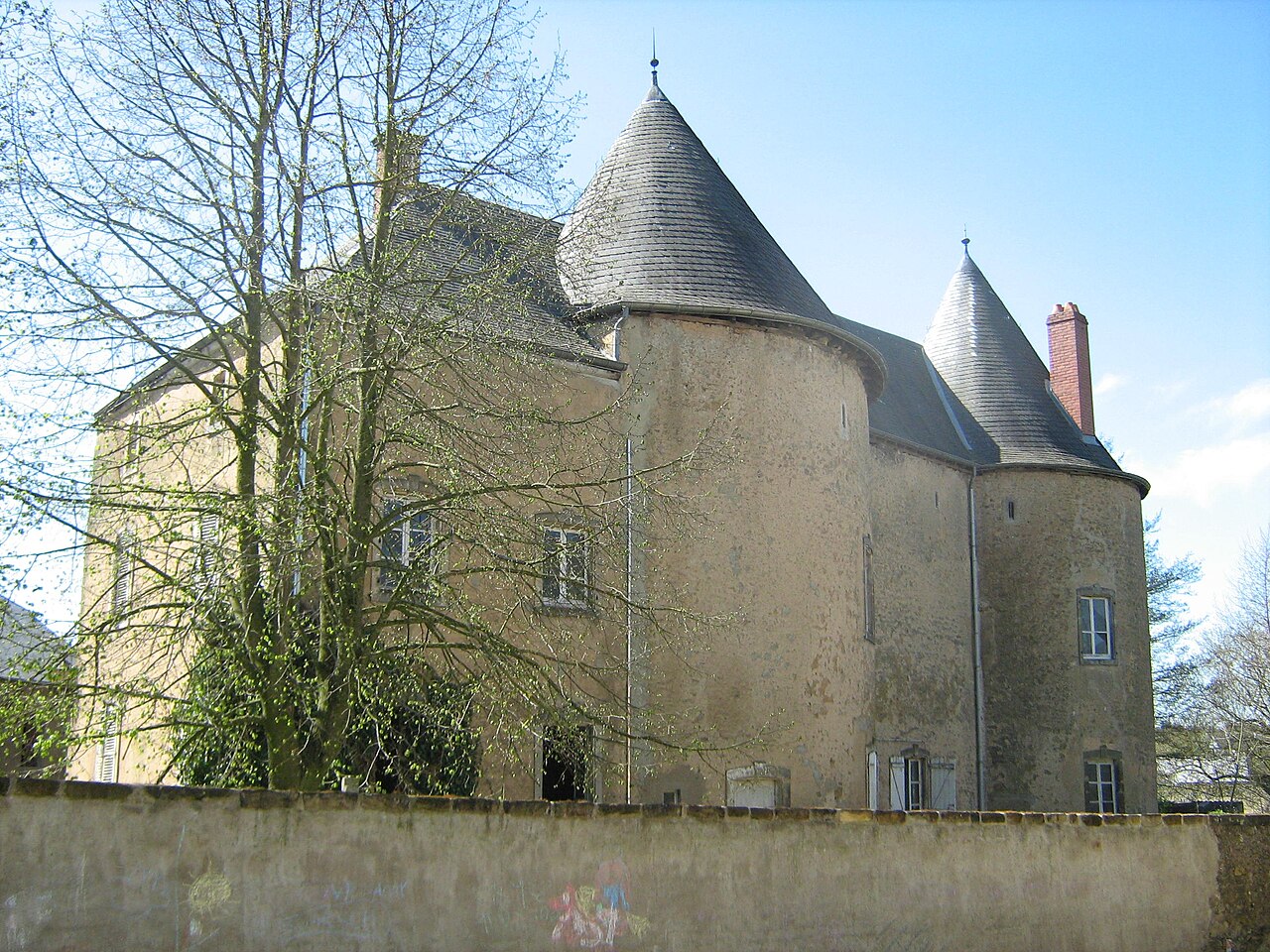
The site initially hosted a small fort in the 10th century, which later saw the addition of a tower. This tower was removed during extensive expansions in the 17th century, marking the transition from a purely defensive structure to a more residential and agricultural complex. Around 1733, the present castle was constructed by Lothaire de Zievel and his wife Appolinaire-Agnès-Elisabeth de Haagen Motten. Their choice of location was likely influenced by the nearby Düdelingerbach stream, which provided water resources essential for farming and daily life.
Architectural design and structural evolution
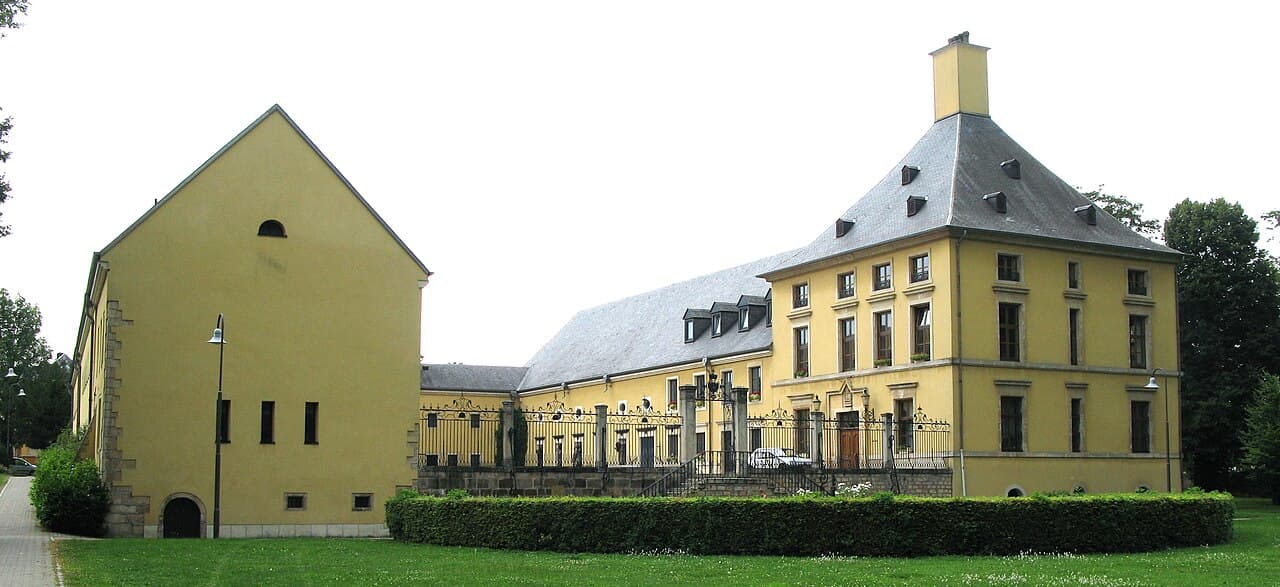
The castle's architecture is characterized by a rather austere style typical of the post-Renaissance period, emphasizing functionality over ornate decoration. This reflects its original purpose as a residence supporting agricultural activities. The south wing, the oldest part of the castle, was primarily used for stables and barns, underscoring the estate's farming operations. The north wing, which now forms the main part of the distinctive U-shaped complex, was added later to expand living and administrative spaces.
Restoration and modifications in the 18th century
In about 1759, Jean-Henri de Zievel commissioned the architect Rousselet de Boulay to undertake major restoration work. These renovations likely enhanced the castle's structural integrity and updated its interiors to contemporary standards of comfort and style. Following the death of the last member of the De Zievel family in 1765, the castle passed to the castle manager, Marc-Antoine de Verniolles, marking a shift in ownership from noble lineage to managerial hands.
Ownership transitions and industrial connections
Throughout the late 18th and 19th centuries, Bettembourg Castle changed hands among several prominent families. The Hohenzollern-Hechingen-Haigerloch family owned it from 1780, followed by Charles Joseph Collart de Donnea in 1807, who was notably the owner of the Dommeldange iron works. The Collart family retained ownership until 1971, with the castle serving various residential and administrative functions during their tenure.
Modern restoration and current use
After the death of Daisy Collart-Weber in 1969, the property was sold to the commune of Bettembourg in 1971. The local authorities undertook extensive restoration and reconstruction efforts to preserve the castle's historical and architectural value. In 1991, the castle was repurposed as the town hall of Bettembourg, housing administrative offices and public services.
Cultural and architectural features
The castle features ornamental wooden panelling and numerous fireplaces that exemplify the craftsmanship of the period. One of the significant interior modifications was the creation of a large cultural room or art gallery, which serves as a venue for exhibitions and community events. The surrounding large park is open to the public, providing a green space that complements the historic setting.
Significance in luxembourg's heritage
Bettembourg Castle stands as an example of a post-Renaissance hill castle that transitioned from a fortified residence to a functional administrative center. Its architectural evolution reflects broader historical trends in Luxembourg, including shifts in ownership from noble families to municipal authorities. The castle's preservation and adaptive reuse demonstrate the community's commitment to maintaining its cultural heritage while serving contemporary needs.
Frequently asked questions (FAQ)
- What is the historical significance of Bettembourg Castle?
- Bettembourg Castle dates back to a 10th-century fort and was rebuilt in 1733, illustrating Luxembourg's post-Renaissance architectural and social history.
- Can I visit the castle's park and cultural spaces?
- Yes, the large park surrounding Bettembourg Castle is open to the public, and the castle hosts cultural events in its art gallery.
- When was Bettembourg Castle restored and repurposed?
- The castle underwent extensive restoration after being acquired by the commune in 1971 and was opened as the town hall in 1991.
Photo gallery

Photo by The original uploader was Cornischong at Luxembourgish Wikipedia.•CC BY-SA 1.0
Information
Current owner
Commune of Bettembourg
Loading map...
Visitor reviews
No reviews yet. Been here? Write the first review and help other travelers!
Write the first reviewVisited this castle? Share your experience
Your review helps other travelers and adds first-hand knowledge to our encyclopedia.