Benevár
Benevár Castle, located in the municipality of Gyöngyös, Hungary, stands as a significant historical fortress with origins tracing back to the early formation of the Hungarian state. This hill castle occupies a strategic position on the Benevár ridge within the Mátra forest region, elevated approximately 470 meters above sea level. The castle's location between the Somor and Csatorna streams provided natural defensive advantages, which were further enhanced by its robust architectural design.
Early history and foundation
The site of Benevár is closely linked to the descendants of the Hungarian chieftain Edömér, dating back to the period of the Hungarian conquest. The original fortress was likely constructed as a pagan stronghold and was granted to Bene vitéz, Edömér's grandson, who received lands in this forested region. This early phase set the foundation for Benevár's role as a defensive and administrative center in the Mátra area.
Medieval reconstruction and ownership changes
The fortress suffered significant damage during the Mongol invasion of Hungary (Tatárjárás) in the 13th century. In response, between 1243 and 1250, the castle was reconstructed by Csobánka, a comes of the Aba clan. This reconstruction established Benevár as the principal seat of the Aba family. By the early 14th century, the castle came under the influence of Csák Máté, a powerful regional lord, with the owners aligning militarily with him.
Following the consolidation of royal power by King Charles I of Anjou, Benevár was seized from the Csák faction and granted to the nobleman Szécsényi Tamás. This transfer reflects the shifting political landscape of medieval Hungary and the castle's importance as a noble estate.
Decline and royal control
In the early 15th century, Benevár's fortunes waned during the tenure of Salgói Miklós, who faced accusations of counterfeiting and adultery by King Sigismund. These charges led to Miklós's exile and the confiscation of his properties, including Benevár. By 1424, the castle was under direct royal control and was subsequently granted to Queen Barbara before passing to the Rozgonyi family.
Destruction and archaeological rediscovery
The castle met its demise amid the Hussite conflicts in the 15th century. Forces associated with the Hussites, who took refuge in the nearby Pata castle, are believed to have been responsible for the destruction of Benevár. By 1497, historical records identified the castle as abandoned under the ownership of the Kanizsai family.
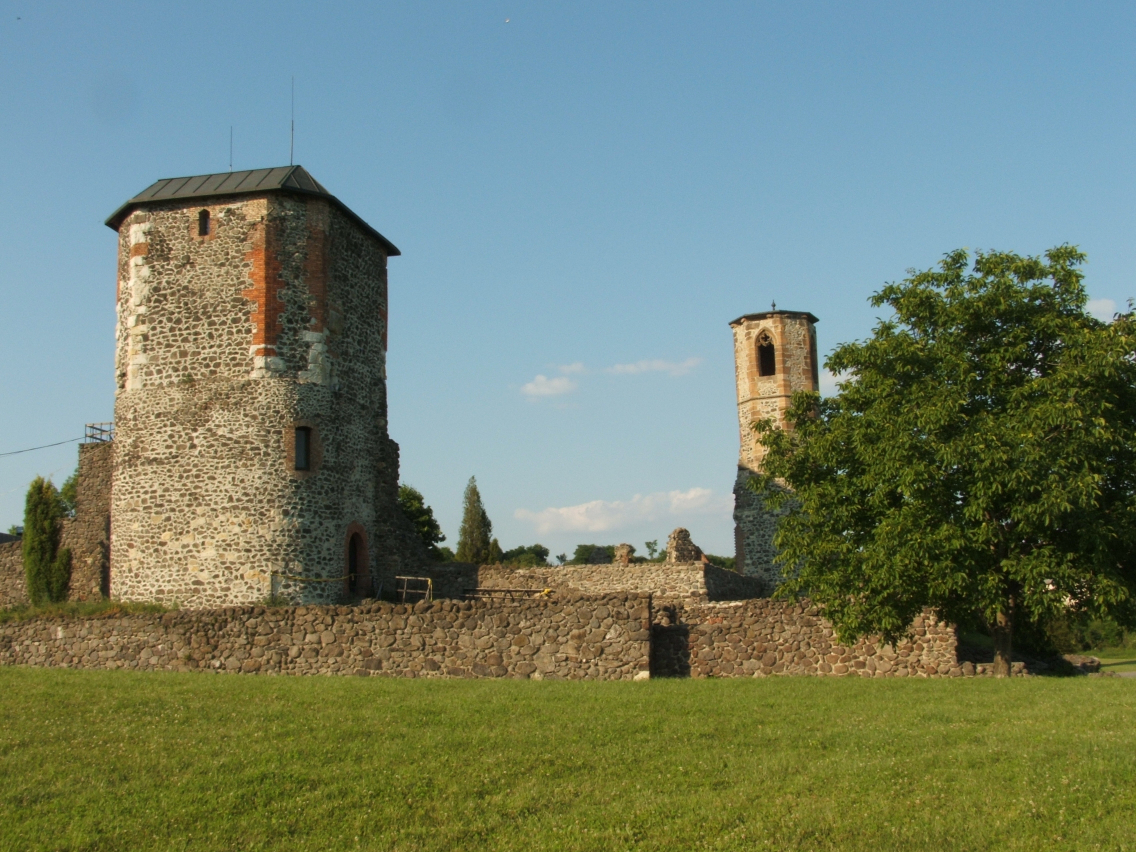
Interest in Benevár was revived in the 1980s through archaeological excavations and partial restoration efforts. These studies confirmed the castle's pentagonal layout and revealed key structural elements, including an old tower that served as a lookout and refuge, a palace wing for residential purposes, and a second tower guarding the entrance. The fortress was also protected by a double dry moat, enhancing its defensive capabilities.
Architectural features and layout
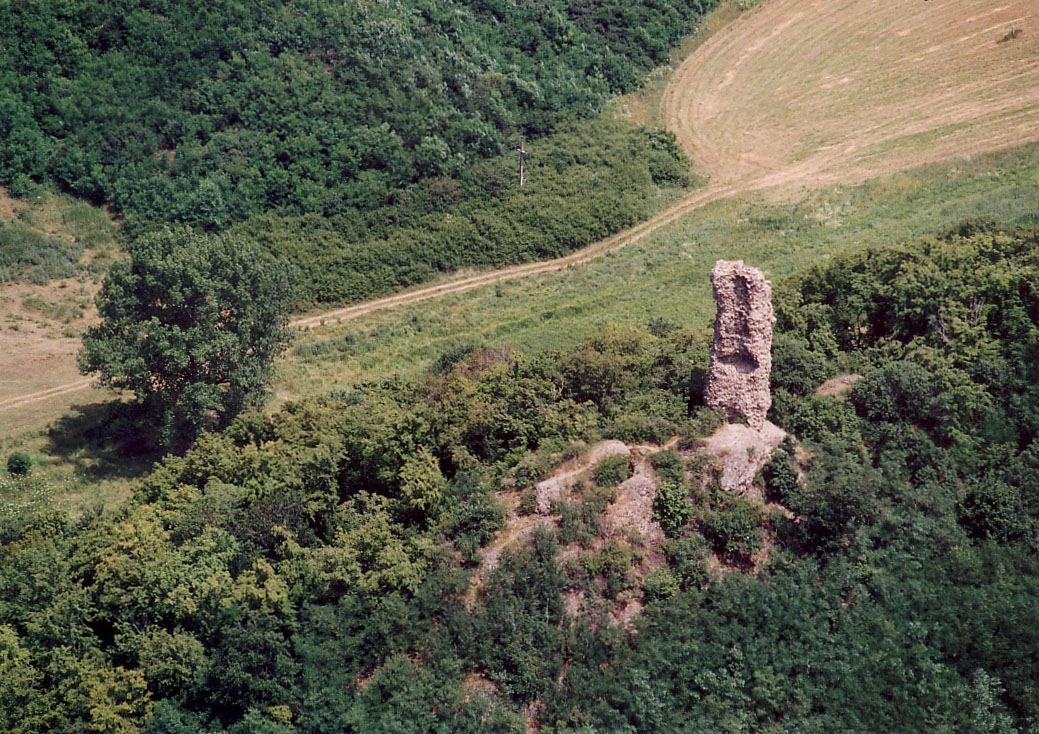
The ruins of Benevár showcase a well-planned fortified complex adapted to its mountainous terrain. The castle's elongated pentagonal shape is a distinctive feature, with stone construction that utilized the natural ridge for defense. The double dry moat surrounding the outer perimeter was a strategic element designed to slow and hinder attackers.
Within the enclosure, the large central tower was the focal point, providing a vantage point over the surrounding landscape and a stronghold during sieges. The adjacent palace wing indicates the castle's dual function as both a military fortress and a noble residence. Smaller ancillary buildings supported the castle's economic activities, essential for sustaining the garrison and inhabitants.
The second tower near the entrance was crucial for controlling access and reinforcing the castle's defenses at a vulnerable point. These architectural components reflect the castle's evolution from a pagan fortress to a medieval noble estate.
Cultural and historical significance
Benevár's history is intertwined with key figures and events in Hungarian medieval history, including the Mongol invasion, the rise of regional powers like the Aba clan and Csák Máté, and the Hussite wars. The castle's changing ownership mirrors the political shifts and conflicts that shaped Hungary during the Middle Ages.
Today, the partially preserved ruins offer valuable insights into medieval castle construction and the defensive strategies employed in hill castles of the region. The site's proximity to Pata castle and its association with Hussite activity add layers of historical context, making Benevár an important cultural heritage site.
Visiting benevár castle
Visitors to Benevár can explore the visible stone foundations and remnants that evoke the castle's storied past. The site, accessible within the Mátra forest area near Gyöngyös, provides a scenic and historically rich experience for those interested in medieval architecture and Hungarian history. Although much of the castle remains in ruins, the partial restoration efforts have stabilized key sections, allowing for safer exploration.
Due to its mountainous location and fragmentary condition, visitors are advised to wear appropriate footwear and prepare for uneven terrain. The castle's historical significance and picturesque setting make it a rewarding destination for history enthusiasts and hikers alike.
Frequently asked questions (FAQ)
- What is the historical significance of Benevár Castle?
- Benevár Castle, located in Gyöngyös, Hungary, is an important historical site that dates back to the 13th century. It served as a defensive stronghold during various conflicts and showcases the architectural styles of different eras, reflecting the rich history of the region.
- When was Benevár Castle built?
- The construction of Benevár Castle began in the 13th century, with various expansions and renovations occurring over the centuries. Its strategic location and robust design were crucial during medieval times, making it a significant military and residential structure.
- What are the opening hours for visiting Benevár Castle?
- Benevár Castle is typically open to visitors from 9 AM to 5 PM, Tuesday through Sunday. It is advisable to check their official website for any seasonal changes or special holiday hours before planning your visit.
- Can I access Benevár Castle with a wheelchair?
- Benevár Castle has made efforts to improve accessibility for visitors with mobility challenges. While some areas may be difficult to navigate due to historical preservation, there are designated paths and assistance available for a more comfortable visit.
- Is it possible to take guided tours of Benevár Castle?
- Yes, guided tours are available at Benevár Castle, offering visitors in-depth insights into its history and architecture. These tours are led by knowledgeable guides who can provide a more enriching experience during your visit.
- What is the best time to visit Benevár Castle?
- The best time to visit Benevár Castle is during the spring and early fall when the weather is mild and pleasant. Additionally, these seasons often have fewer crowds, allowing for a more enjoyable exploration of the castle and its surroundings.
- What are the ticket prices for Benevár Castle?
- Ticket prices for Benevár Castle vary depending on age and group size, with discounts available for students and seniors. It's recommended to check the official website for the most current pricing and any special promotions that may be available.
- Are there any nearby attractions to visit while in Gyöngyös?
- Yes, while visiting Benevár Castle, you can also explore nearby attractions such as the beautiful Mátra Mountains and the charming town of Gyöngyös. The area is rich in natural beauty and cultural heritage, making it a great destination for a full day of exploration.
Information
Loading map...
Visitor reviews
No reviews yet. Been here? Write the first review and help other travelers!
Write the first reviewVisited this castle? Share your experience
Your review helps other travelers and adds first-hand knowledge to our encyclopedia.