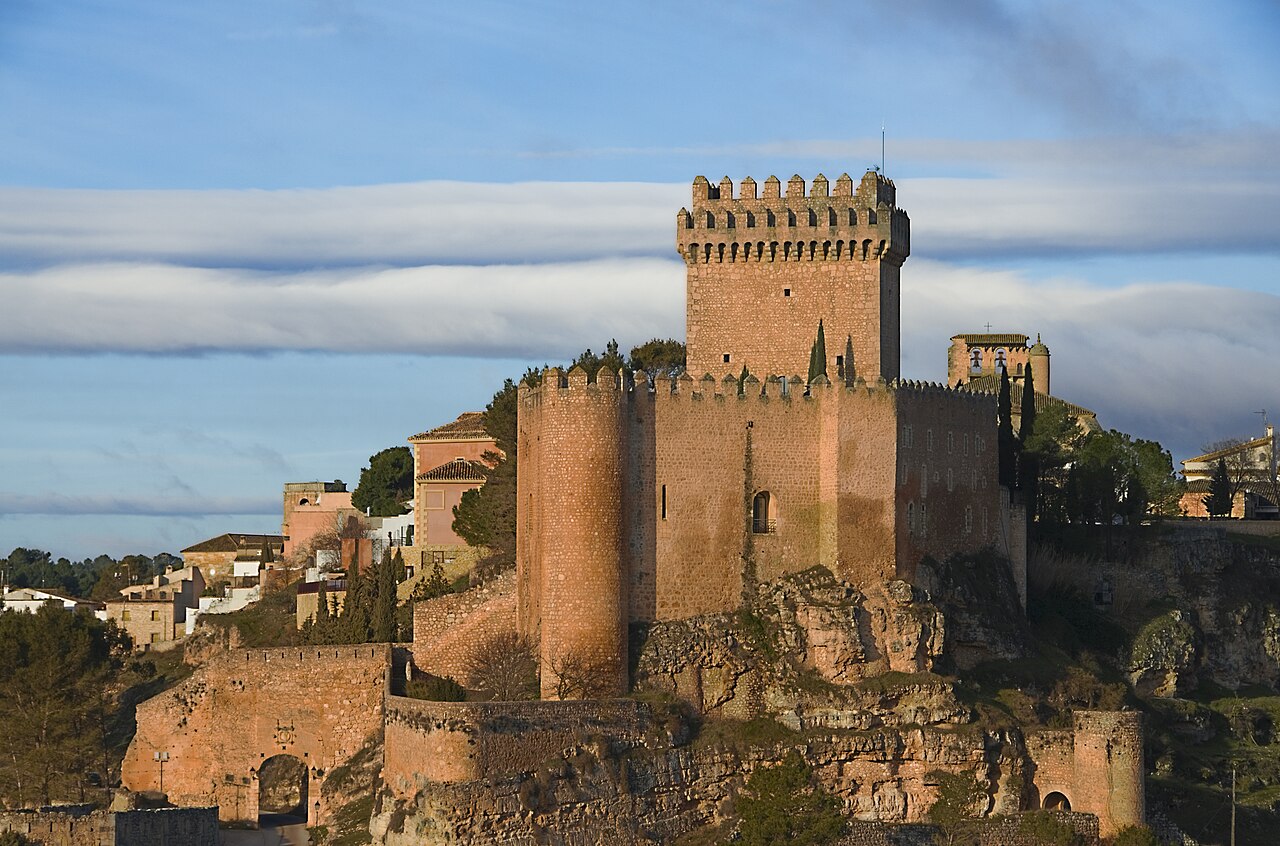
Belmonte Castle
Belmonte Castle stands as one of the most remarkable and well-preserved medieval castles in Spain. Constructed in the 15th century by the powerful Marquis of Villena, this fortress is located in the province of Cuenca, within the historic region of Castilla-La Mancha, approximately ninety miles from Madrid. The castle’s strategic position and imposing architecture reflect its significance during a turbulent era marked by dynastic struggles and cultural transformation in Spain.
Historical significance and royal connections
Belmonte Castle has witnessed several pivotal moments in Spanish history. It served as a royal lodge for the Catholic Monarchs, Ferdinand and Isabella, who played a crucial role in the unification of Spain and the completion of the Reconquista. The castle was also a backdrop for battles related to the struggle for the Castilian crown, underscoring its military and political importance during the late medieval period.
Additionally, the castle is linked to cultural history as the birthplace of the revered Renaissance poet Fray Luis de León, whose literary works contributed significantly to Spanish literature. In modern times, Belmonte Castle gained cinematic fame as a filming location for the epic film "El Cid", starring Charlton Heston and Sofia Loren, further cementing its place in popular culture.
Architectural features and styles
The castle’s architecture is a fascinating blend of Gothic and Moorish styles, evident in its interior decorations and structural elements. The interiors are renowned for their outstanding stucco works that showcase intricate Gothic and Moorish artistic influences, reflecting the cultural interplay characteristic of Spain’s medieval period.
One of the castle’s distinctive features is its Neo-Gothic courtyard, which was added during a significant 19th-century restoration. This restoration was commissioned by its former owner, Empress Eugenie, who was the wife of Napoleon III of France. She passed the castle on to her nephew, the Duke of Peñaranda de Duero, ensuring the preservation and enhancement of the castle’s historical and architectural heritage.
Fortifications and layout
Belmonte Castle is a classic example of a hill castle, strategically built on elevated ground to maximize defensive capabilities. Its robust walls, fortified towers, and battlements were designed to withstand sieges and protect its inhabitants. The castle’s layout includes a series of defensive structures such as moats, gatehouses, and watchtowers, typical of medieval military architecture.
Preservation and current status
Today, Belmonte Castle is considered one of the best-preserved medieval castles in Spain, retaining much of its original structure and artistic decor. The castle’s condition is classified as well preserved, thanks to continuous conservation efforts over the centuries. Its historical authenticity and architectural grandeur make it a significant cultural landmark, attracting visitors interested in medieval history, architecture, and Spanish heritage.
Cultural impact and tourism
The castle’s rich history and stunning architecture make it a popular destination for tourists and scholars alike. It offers a unique glimpse into the late medieval period in Spain, combining military, royal, and cultural narratives within its walls. Visitors can explore the castle’s courtyards, halls, and chambers, admiring the detailed stucco work and the harmonious blend of Gothic and Moorish design elements.
Belmonte Castle also hosts various cultural events and exhibitions that celebrate its heritage and the broader history of Castilla-La Mancha. Its connection to notable historical figures and events enhances its appeal as a site of educational and historical significance.
Frequently asked questions (FAQ)
- What is the historical significance of Belmonte Castle?
- Belmonte Castle was built in the 15th century by the Marquis of Villena and served as a royal lodge for the Catholic Monarchs, playing a key role in Castilian history and battles for the crown.
- Can I visit the interiors of Belmonte Castle?
- Yes, visitors can explore the castle's interiors, which feature outstanding Gothic and Moorish stucco works and a Neo-Gothic courtyard added during the 19th-century restoration.
- When was Belmonte Castle constructed?
- Belmonte Castle was constructed in the 15th century, reflecting the architectural styles and defensive needs of the late medieval period.
- Why is Belmonte Castle architecturally significant?
- The castle combines Gothic and Moorish architectural styles, with notable stucco decorations and a Neo-Gothic courtyard, showcasing Spain's cultural and artistic heritage.
- Is Belmonte Castle well preserved?
- Yes, Belmonte Castle is one of the best-preserved medieval castles in Spain, maintaining much of its original structure and artistic features.
Information
Loading map...
Visitor reviews
No reviews yet. Been here? Write the first review and help other travelers!
Write the first reviewVisited this castle? Share your experience
Your review helps other travelers and adds first-hand knowledge to our encyclopedia.