
Belcastel Castle
Belcastel Castle stands as a remarkable example of medieval fortification perched on a steep rocky promontory overlooking the Aveyron River in the Occitanie region of southern France. Its origins trace back to the 9th century, when the first religious structure, a chapel dedicated to Saint Mary Magdalene, was established by the villagers of Belcastel. This chapel marked the beginning of the castle’s complex evolution from a modest place of worship into a formidable hill castle that would dominate the surrounding valley for centuries.
The castle’s strategic location on a high rocky outcrop approximately 40 meters above the river was chosen to control the passage through the valley and to provide defense against invaders. Over the following centuries, the site expanded with successive building phases that incorporated military, residential, and religious functions, reflecting the changing needs and fortunes of its noble owners. The castle’s architecture, fortified walls, towers, and chapels reveal a rich history intertwined with the political and social dynamics of medieval France.
Early medieval origins and noble lineage
The initial construction phase in the 8th and 9th centuries centered around the chapel, which served as a focal point for the local community's religious life. The development of the castle as a defensive stronghold began soon after, with the addition of stone walls and fortifications to protect the inhabitants and assert control over the territory.
Key figures in the castle’s early history include Oldoric I of Panat (940–987), who played a significant role in founding or expanding the fortress during the 10th century. His successor, Gérard I Frotard, was the first to adopt the name "de Belcastel," establishing the noble lineage associated with the castle. This family oversaw the castle’s growth through the 11th to 14th centuries, a period marked by frequent regional conflicts and the need for strong fortifications.
The saunhac family and the castle’s revival
In the 13th century, the original lords of Belcastel suffered ruin and decimation due to the Crusades, leading to the confiscation of the castle by the French Crown. It was later granted in 1390 to Saunhac, a loyal and valiant knight who revitalized both the castle and the village. The Saunhac family undertook extensive renovations of the fortress, restoring its defensive capabilities and enhancing its residential quarters.
They also contributed significantly to the village’s infrastructure by constructing the iconic stone bridge over the Aveyron River and the church of Sainte-Marie-Madeleine, both of which remain integral to Belcastel’s charm and historical identity. This period of renewal helped the village and castle recover from the turmoil of the Hundred Years’ War and other conflicts that had destabilized the region.
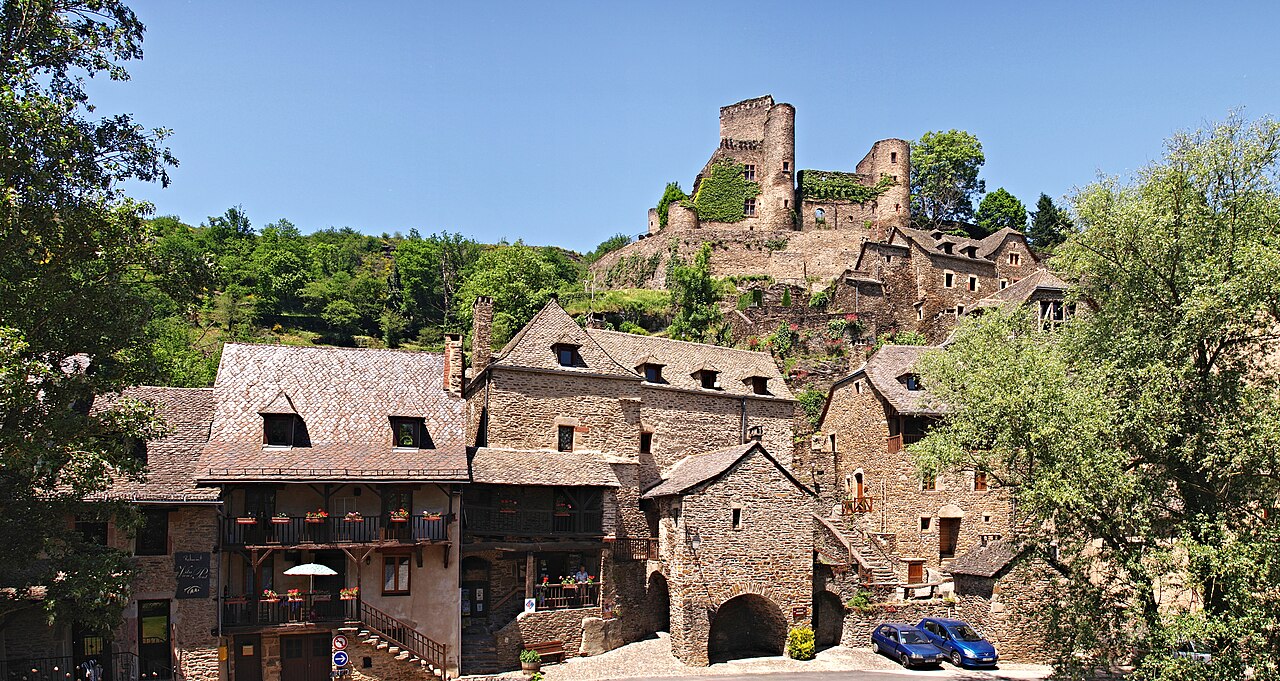
Photo by Pierre Bona • CC BY-SA 3.0
Decline and ruin from the 16th century to the 20th century
By the end of the 16th century, the last heir of the Saunhac family abandoned the castle, initiating a long phase of neglect. The fortress gradually fell into disrepair, exacerbated in the 17th and 18th centuries as it was no longer maintained or inhabited.
In the 19th century, the castle suffered further degradation when a local villager purchased the property and sold off the stone facings of the openings, hastening its collapse. The west façade eventually crumbled in the early 20th century, and the castle became overgrown with vegetation, its ruins a shadow of its former grandeur.
Recognizing its cultural and historical importance, the French Ministry of Culture designated the ruins as a protected historic monument in 1928, preserving what remained of the castle for future generations.
Restoration by fernand pouillon: a monumental achievement
The castle’s fortunes changed dramatically in 1973 when the renowned French architect Fernand Pouillon discovered the dilapidated fortress. Captivated by its potential and historical significance, Pouillon embarked on an ambitious restoration project that lasted eight years.
Working without cranes or modern machinery, Pouillon and a team of ten Algerian stonemasons quarried stone from a nearby hill and painstakingly rebuilt the castle’s walls, towers, and roofs using traditional medieval techniques. The restoration also involved master glassmakers who installed 87 stained-glass windows from the 16th century, originally painted by hand and sourced from Orléans Cathedral, adding a refined artistic dimension to the fortress interiors.
Pouillon’s dedication transformed the ruin into a fully restored, well-preserved medieval castle that served as his private residence until his death in 1986. His work not only revived the castle’s architectural grandeur but also inspired the village of Belcastel to restore its roads and houses, enhancing the entire community’s heritage value.
Modern use and cultural significance
After Pouillon’s death, the castle remained in his family’s possession until 2005, when it was purchased by the owners of the AFA Gallery from New York. They opened the castle to the public, integrating it as both a historic monument and a contemporary art gallery. The castle now hosts exhibitions of medieval armor and contemporary artworks, creating a unique dialogue between past and present.
Further renovations have adapted parts of the castle for hospitality, including hotel accommodations and a swimming pool set within the former moat (douves), while maintaining the fortress’s medieval architectural integrity. The castle is a key site on the Route des Seigneurs du Rouergue, a network of 23 castles that showcase the rich medieval heritage of the Aveyron region.
Belcastel itself was recognized as one of Les Plus Beaux Villages de France in 1992, a testament to the village’s picturesque character and the castle’s central role in its history and tourism appeal.
Architectural features and layout
The castle’s layout reflects its long history of construction and adaptation. Its stone ramparts and towers encircle multiple courtyards, with five distinct courtyards providing space for various functions including defense, residence, and storage. The castle’s moats and gatehouses illustrate typical medieval defensive design, while the presence of large fireplaces and arched doorways indicate its residential comfort.
The chapel, originally dedicated to Saint Mary Magdalene, remains a significant architectural and historical feature, symbolizing the castle’s religious origins. The inclusion of the restored stained-glass windows enhances the interior ambiance with colorful light and artistic detail.
The castle’s position on a hilltop without carriage road access meant that all materials had to be transported by hand during restoration, highlighting the monumental effort involved in its revival. The use of locally quarried stone and traditional construction methods ensures the castle’s authenticity and historical accuracy.
Visiting belcastel castle today
Today, visitors to Belcastel Castle can explore its extensive grounds, including its moats, numerous rooms, and the five courtyards that showcase the castle’s medieval design and restoration craftsmanship. The castle offers breathtaking views of the Aveyron River and the surrounding valley, enhancing the visitor experience.
The castle’s collection of 16th-century armor and contemporary art galleries provide a diverse cultural offering, appealing to history enthusiasts and art lovers alike. The site’s integration of medieval architecture with modern art exhibitions creates a unique cultural destination in the heart of Occitanie.
Belcastel Castle remains a testament to the enduring legacy of medieval architecture, the vision of Fernand Pouillon, and the ongoing commitment to preserving and celebrating France’s rich historical heritage.
Frequently asked questions (FAQ)
- What are the opening hours of Belcastel Castle?
- Belcastel Castle is typically open to visitors from 10 AM to 6 PM during the peak season, which runs from April to October. In the off-season, hours may vary, so it’s advisable to check the official website or contact the castle directly before your visit.
- How do I get to Belcastel Castle?
- Belcastel Castle is located in the picturesque village of Belcastel in France. You can easily reach the castle by car, and there is parking available nearby. If you are using public transportation, the nearest train station is in Rodez, followed by a short bus or taxi ride to the village.
- Is it possible to take guided tours of Belcastel Castle?
- Yes, guided tours are available at Belcastel Castle, providing visitors with in-depth information about its rich history and architectural features. These tours are typically offered in multiple languages and can enhance your understanding of the castle's significance.
- When was Belcastel Castle built?
- Belcastel Castle was originally constructed in the 15th century and has undergone several renovations since its inception. Its strategic location and impressive architecture reflect the historical importance of the castle during various periods.
- What is the historical significance of Belcastel Castle?
- Belcastel Castle is an important example of medieval fortification and architecture in the region. It has served various purposes throughout its history, including as a defensive stronghold and a noble residence, which adds to its cultural heritage.
- Can I bring my children to Belcastel Castle?
- Absolutely! Belcastel Castle is family-friendly, and children can enjoy exploring the castle grounds and learning about its history. The castle also offers educational materials that are suitable for younger visitors.
- What are the ticket prices for visiting Belcastel Castle?
- Ticket prices for Belcastel Castle are generally affordable, with discounts available for students and seniors. Children under a certain age may enter for free, and family packages are often offered to encourage group visits.
- When is the best time to visit Belcastel Castle?
- The best time to visit Belcastel Castle is during the spring and fall months when the weather is mild, and the surrounding scenery is particularly beautiful. Visiting during the peak tourist season in summer can be enjoyable, but it may also be more crowded.
- Are there any nearby attractions to visit along with Belcastel Castle?
- Yes, the area surrounding Belcastel Castle is rich in attractions, including charming villages, hiking trails, and the scenic Aveyron River. Visitors often enjoy exploring the local markets and other historical sites, making it a perfect day trip destination.
Photo gallery

Information
Website
Visit websiteSources & official resources
Verify the information above using these authoritative references.
Loading map...
Visitor reviews
No reviews yet. Been here? Write the first review and help other travelers!
Write the first reviewVisited this castle? Share your experience
Your review helps other travelers and adds first-hand knowledge to our encyclopedia.