Beckov Castle
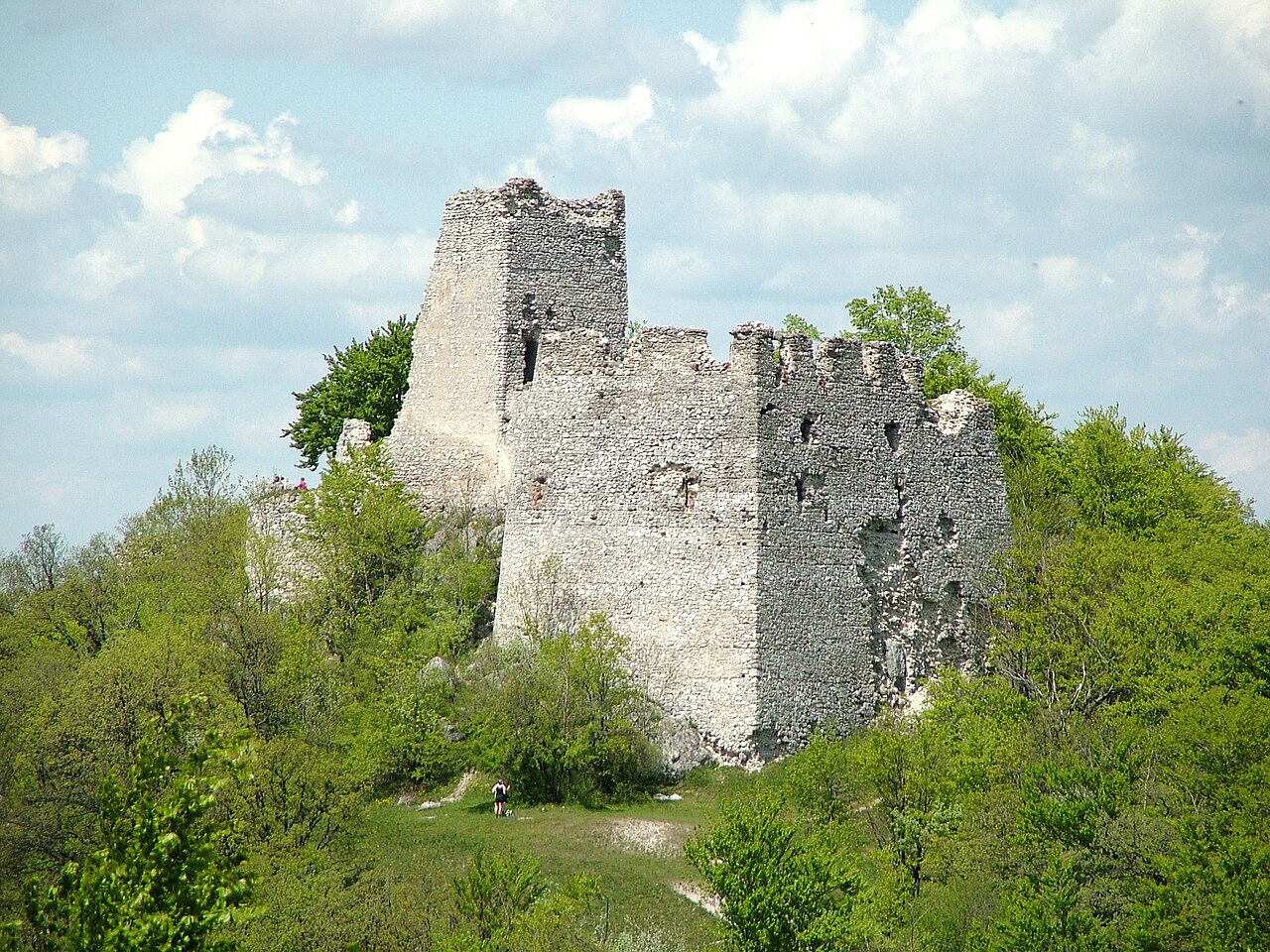
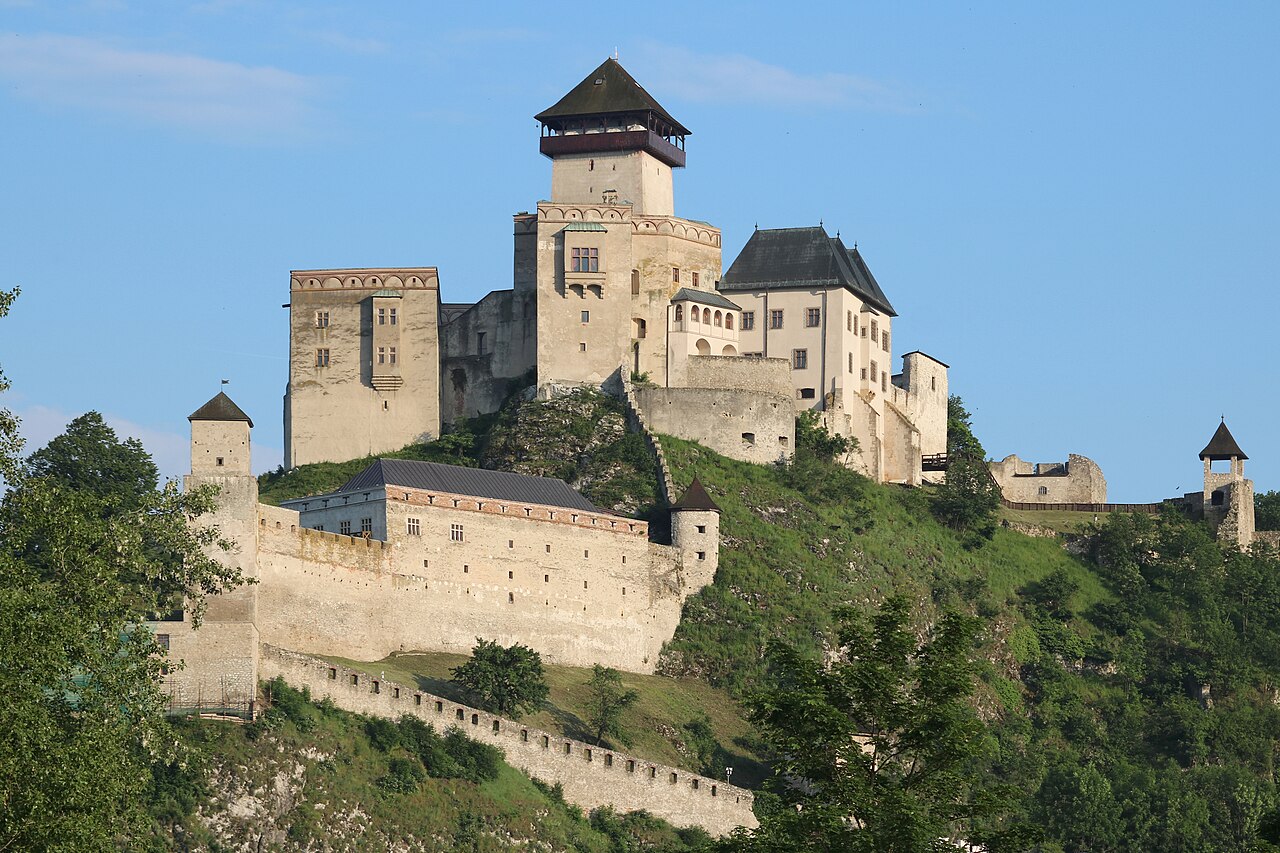
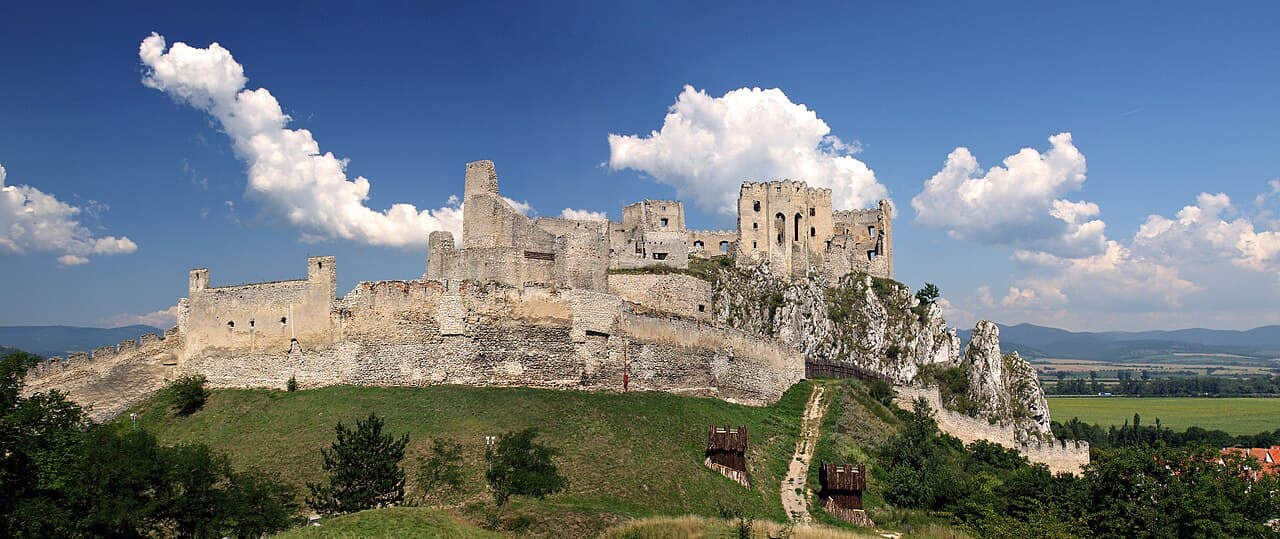
Beckov Castle is a prominent medieval fortress perched atop a steep limestone cliff in the Trenčín Region of Slovakia. Its commanding position on a 60-meter-high rock has made it a natural defensive stronghold since ancient times. The site has been continuously inhabited since the Great Moravian era, with early Slavic settlements and fortifications laying the groundwork for the later stone castle that dominates the landscape today.
The castle's history is deeply intertwined with the region's turbulent medieval past. First documented during the reign of King Béla III of Hungary around the year 1200, Beckov was originally a royal stronghold. Over the centuries, it passed through the hands of powerful nobles and underwent extensive architectural transformations reflecting the evolving military and residential needs of its occupants.
Early history and medieval origins
The strategic location of Beckov Castle on the limestone rock known as Bečov has attracted settlement since prehistoric times. During the Great Moravian period, a Slavic fortified settlement was established here, taking advantage of the natural defenses provided by the rock's height and steep cliffs. This early fortification formed the basis for the later stone castle constructed in the high medieval period.
The earliest written records mention the castle under the name Blundus or Blondóc, reflecting its historical significance during the invasion of Great Moravia by Old Hungarian tribes. The castle's stone reconstruction began around the late 11th or early 12th century, marked by the construction of the upper castle and the northern palace. By the end of the 13th century, a bergfried tower was added to the southeastern part of the upper castle, enhancing its defensive capabilities.
Matúš čák and the castle's fortification
In the 14th century, Beckov Castle came under the control of the powerful Hungarian magnate Matúš Čák Trenčínsky, known as the "Lord of the Váh and Tatras." During his tenure, the castle underwent significant fortifications, including the construction of parkan walls on the vulnerable eastern side and the addition of a castle well within the defensive perimeter. These improvements reflected the need to strengthen the castle against increasing regional conflicts.
After Matúš Čák's death in 1321, the castle reverted to royal ownership. The appointed castellans managed the estate, maintaining its defenses and administrative functions as part of the Kingdom of Hungary's border fortifications.
Stibor of stiborice and the golden era
In 1388, Beckov Castle was granted to Stibor of Stiborice, a nobleman of Polish origin and a close advisor to King Sigismund of Hungary. Stibor transformed the fortress into a magnificent Gothic residence, reflecting his wealth and status. He commissioned artists from Venice, Poland, Germany, and Bohemia to embellish the castle interiors, including the creation of a richly decorated chapel.
The chapel, located in the eastern part of the palace, featured high tracery windows and a unique straddling mesh ribbed vault. Its frescoes depicted religious figures such as St. George, Archangel Michael, and John the Baptist. The chapel's centerpiece was a statue of the Madonna carved from precious limewood. Stibor also converted the castle's bergfried tower into a donjon, a permanent residential tower, symbolizing the castle's dual role as a fortress and noble residence.
Stibor's family held Beckov until 1434, when his son died without male heirs, returning the castle to royal possession.
The bánffy family and renaissance modernization
Shortly after, in 1437, King Sigismund granted Beckov Castle to Pál Bánffy, who married Stibor's daughter, uniting the estates. The Bánffy family managed the castle for over two centuries, adapting it to the changing times. They renovated the castle in the Renaissance style, modernizing its defenses to withstand new military threats, including the Ottoman incursions.
The Bánffys added a barbacan and a pre-gate with a cradle bridge, enhancing the castle's defensive perimeter. These upgrades proved effective during the 1599 Turkish invasion, when the castle resisted siege despite the nearby town being burned. The family's tenure ended violently, as they died out in conflict.
Decline, ruin, and restoration efforts
After the Bánffys, the castle passed through several noble families but suffered from neglect and reduced strategic importance. In 1729, a devastating fire originating from the town below engulfed the castle, destroying its roofs and interiors and marking the end of its use as a noble residence.
Amateur restoration efforts began in 1935, focusing on preserving the chapel's remnants. More extensive archaeological and conservation work took place in the 1970s, leading to the castle's designation as a national cultural monument. Today, Beckov Castle's well-preserved ruins attract tourists and history enthusiasts, especially during the annual castle festival held in July.
Architectural features and castle layout
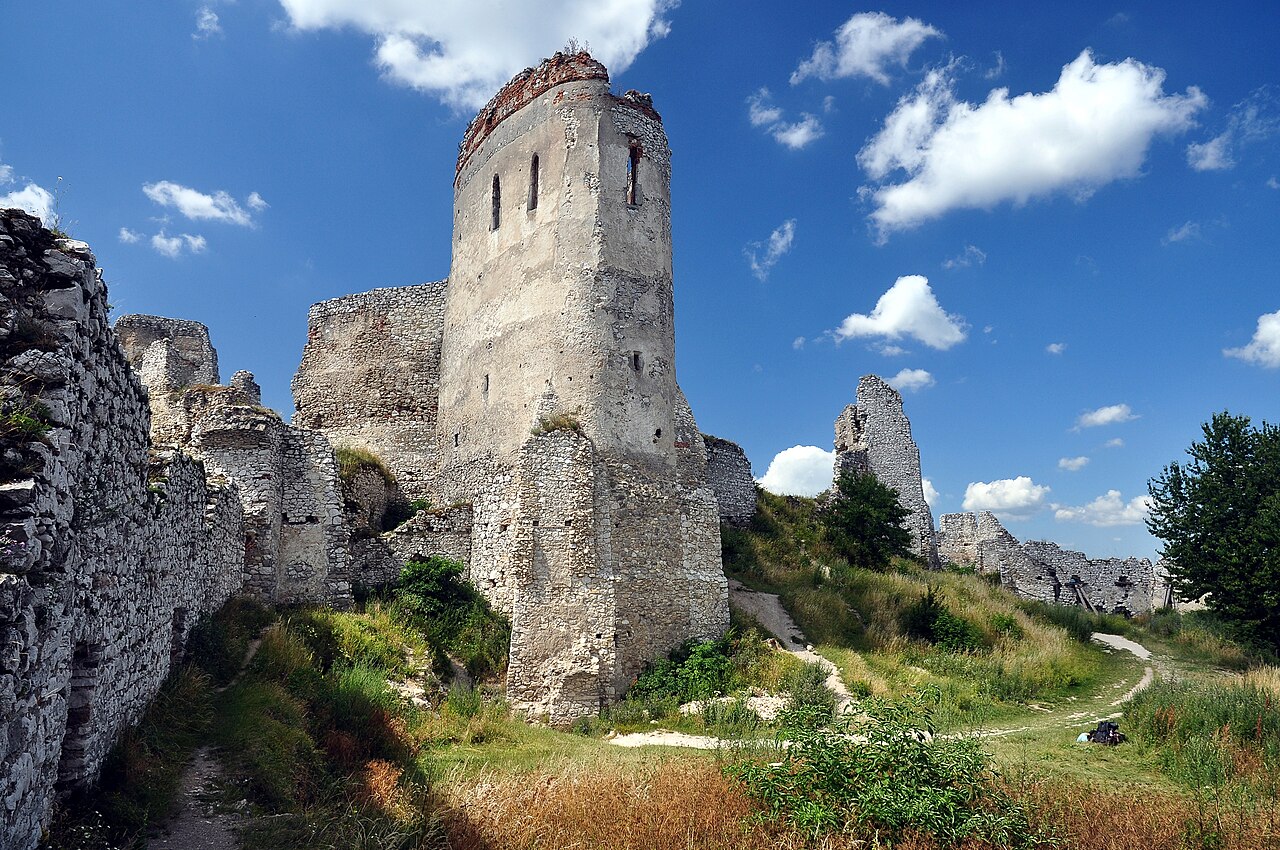
The castle is a remarkable example of a hill castle that harmonizes with its natural limestone setting. Its layout includes two main courtyards: the lower courtyard housed essential service buildings such as workshops, stables, and a well protected by defensive walls, while the upper castle contained the lord's residential quarters and reception halls.
The entrance to the castle, dating from the 16th century, originally featured a drawbridge and barbican guarding the gate. Although the moat and barbican no longer survive, the 14th-century guard tower near the entrance remains intact and now serves as the ticket office.
The upper castle's noble quarters were distinguished by colorful painted walls, including green decorative motifs and brick-pink defensive walls. Notable surviving structures include the Renaissance Western Palace, restored and now functioning as a café, and the ruins of the Northern Palace, which housed the Knights' Hall and the richly decorated chapel.
The castle chapel is particularly significant for its Gothic architecture and artistic decoration, including the famous Black Madonna statue, now preserved in Moravia. The chapel portal with the Stibor family coat of arms is exhibited in the local museum.
Cultural significance and surrounding heritage
Beckov Castle is not only a symbol of medieval military architecture but also a cultural landmark reflecting the region's complex history. The castle inspired numerous legends, such as the tale of the jester Becko and a curse linked to a servant's tragic fate.
Nearby, a Jewish cemetery established in 1734 stands as a cultural monument, with gravestones dating back to the 18th and 19th centuries. This site testifies to the long-standing Jewish community's presence in the area surrounding Beckov Castle.
Today, Beckov Castle is a protected ruin offering visitors a glimpse into the architectural and historical richness of Slovakia's medieval heritage. Its combination of natural setting, architectural evolution, and storied past makes it a key destination for cultural tourism and historical studies.
Frequently asked questions (FAQ)
- How do I get to Beckov Castle?
- Beckov Castle is located in the village of Beckov, Slovakia, easily accessible by car or public transport. The nearest major city is Trenčín, from where you can take a bus or drive to the castle. Parking is available nearby for those arriving by car.
- What is the historical significance of Beckov Castle?
- Beckov Castle dates back to the 13th century and played a crucial role in the defense of the region against invasions. It has witnessed numerous historical events and changes in ownership, reflecting the turbulent history of Slovakia. Today, it stands as a symbol of the medieval heritage of the country.
- When was Beckov Castle built?
- Construction of Beckov Castle began in the early 13th century, with significant expansions and renovations occurring in subsequent centuries. The castle's architecture showcases various styles, including Romanesque and Gothic influences, which evolved over time. Its storied past is evident in its well-preserved ruins and structures.
- Can I visit Beckov Castle with children?
- Yes, Beckov Castle is family-friendly and offers a great educational experience for children. The castle grounds allow for exploration, and there are often events and activities designed for younger visitors. It's a perfect opportunity to teach kids about history and architecture in an engaging setting.
- Why is Beckov Castle a popular tourist destination?
- Beckov Castle is popular due to its stunning views of the surrounding countryside and its rich historical background. Visitors are drawn to its impressive architecture and the chance to explore the ruins, which tell stories of the past. Additionally, the castle often hosts cultural events, making it a vibrant spot for tourists.
- Is it possible to take guided tours of Beckov Castle?
- Yes, guided tours are available at Beckov Castle, providing visitors with in-depth knowledge about its history and architecture. These tours are conducted by knowledgeable guides who can answer questions and share fascinating stories. It's recommended to check the schedule in advance, especially during peak tourist seasons.
- What are the opening hours of Beckov Castle?
- Beckov Castle is typically open to visitors from April to October, with varying hours depending on the season. During peak months, the castle may have extended hours to accommodate more tourists. Always check the official website for the latest updates on opening times.
- What are the ticket prices for Beckov Castle?
- Ticket prices for Beckov Castle are generally affordable, with discounts available for children, students, and seniors. Admission fees help maintain the castle and support its preservation efforts. It's advisable to purchase tickets in advance during busy seasons to ensure entry.
- When is the best time to visit Beckov Castle?
- The best time to visit Beckov Castle is during the spring and early autumn when the weather is pleasant and the surrounding scenery is beautiful. These seasons offer ideal conditions for exploring the castle grounds and enjoying the panoramic views. Additionally, you may find fewer crowds compared to the peak summer months.
- Are there any nearby attractions to Beckov Castle?
- Yes, there are several nearby attractions, including the town of Trenčín, known for its own castle and charming historic center. The surrounding region also features picturesque landscapes perfect for hiking and exploring. Visitors can easily spend a full day enjoying both Beckov Castle and its nearby attractions.
Photo gallery

Information
Website
Visit websiteSources & official resources
Verify the information above using these authoritative references.
Loading map...
Visitor reviews
No reviews yet. Been here? Write the first review and help other travelers!
Write the first reviewVisited this castle? Share your experience
Your review helps other travelers and adds first-hand knowledge to our encyclopedia.