Cachtice Castle
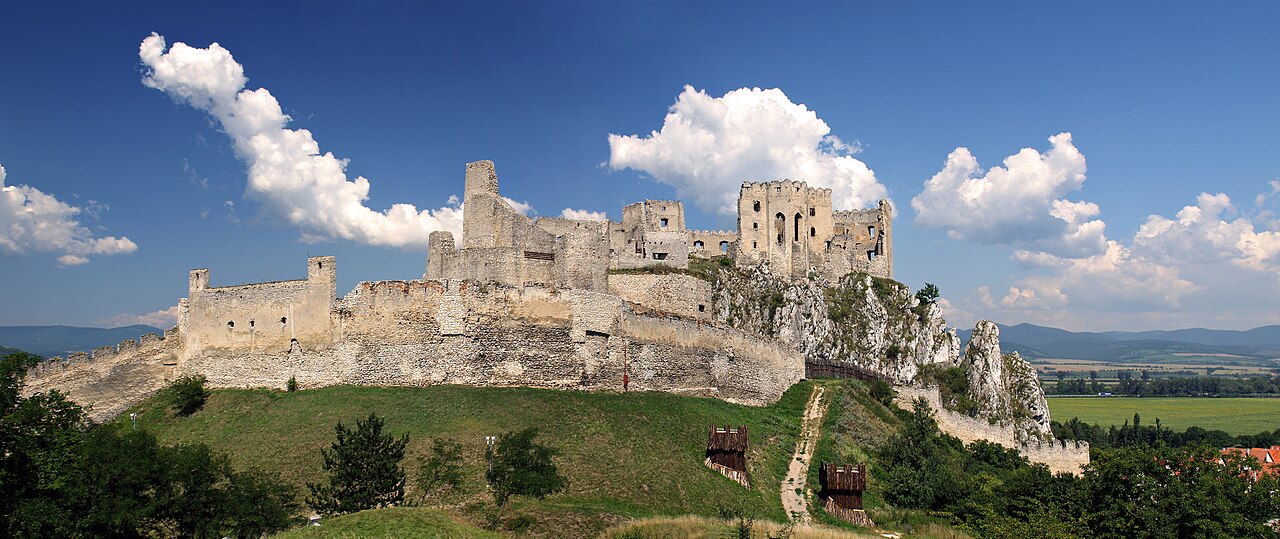
Čachtice Castle is a prominent high medieval hill castle located in the Trencín Region of Slovakia. Perched atop a strategic hill, it overlooks a landscape that has been declared a national nature reserve due to its rare and protected plant species. The castle is best known as the former residence and prison of Countess Elizabeth Bathory, often cited as one of history's most notorious female serial killers.
The origins of Čachtice Castle trace back to around 1250, when it was constructed by Casimir of the Hont-Pázmány clan to serve as a sentry fortress guarding the vital road to Moravia. Its initial architectural style was Romanesque, characterized by robust walls and a distinctive horseshoe-shaped residential tower. Over the centuries, the castle underwent significant expansions and stylistic transformations, notably in the 15th and 16th centuries when it adopted a predominantly Gothic architectural style. This included the enlargement of its defensive walls, the addition of towers, and the refinement of living quarters.
Architectural evolution and features
Roman and gothic phases
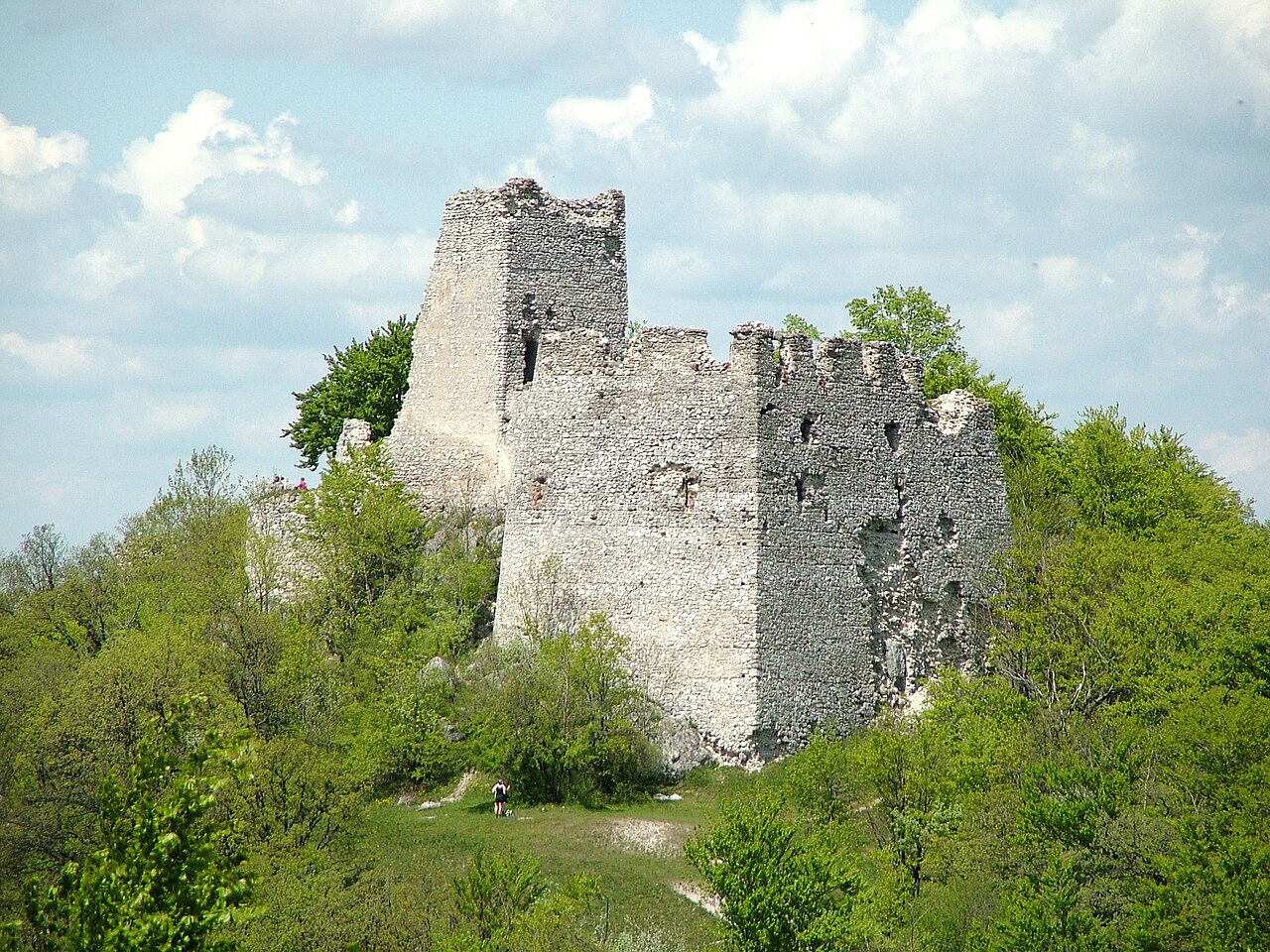
The castle's earliest construction phase reflects typical Romanesque military architecture with thick stone walls and limited fenestration designed for defense. The horseshoe-shaped tower was a unique residential feature that combined living space with defensive capability.
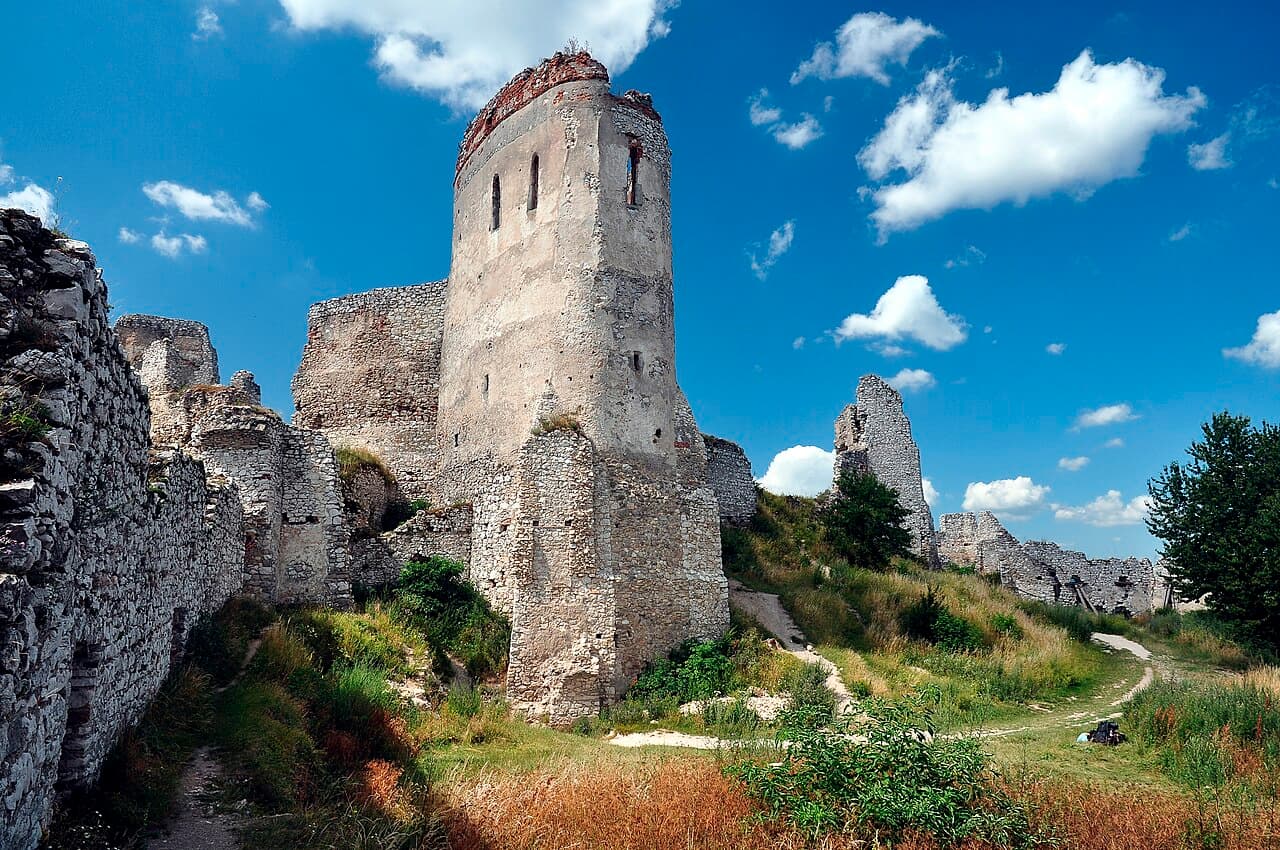
During the late medieval period, Čachtice Castle was extensively rebuilt and expanded in the Gothic style. This included the construction of new curtain walls, battlements, and fortified gates. The castle's layout was adapted to improve defense against evolving siege technologies, with the addition of arrow slits, machicolations, and reinforced towers.
Renaissance renovations and decline
In the 17th century, the castle underwent Renaissance-style renovations that softened some of its medieval defensive features, reflecting changes in military technology and residential preferences. However, these modifications were insufficient to prevent its eventual downfall.
In 1708, the castle was captured and plundered by the forces of Ferenc II Rákóczi during his rebellion against Habsburg rule. After this event, Čachtice Castle was abandoned and gradually fell into ruin, with its structures succumbing to the ravages of time and neglect.
Historical significance and the legend of elizabeth bathory
Ownership and political context
Čachtice Castle passed through the hands of several notable families, including the powerful Máté Csák and the Stibor family, before becoming the property of the Nádasdy family. The castle and its surrounding lands were gifted to Elizabeth Báthory upon her marriage to Ferenc I Nádasdy in 1575.
The blood countess and her dark legacy
Elizabeth Bathory's association with Čachtice Castle has cast a long shadow over its history. Accused in 1611 of torturing and murdering hundreds of young women, she became known as the "Blood Countess." While many of the grisly details surrounding her crimes have been sensationalized and mythologized over the centuries, it is undisputed that she was confined within the castle until her death.
Legend holds that Elizabeth was sentenced to be immured in her own bedroom, with the door and windows sealed except for a small opening through which food was passed. She reportedly accepted this fate without resistance. This grim episode has contributed to the castle's reputation as a site of horror and intrigue.
Conservation and tourism
Today, Čachtice Castle stands as a well-known ruin, attracting visitors interested in medieval history, architecture, and the dark folklore surrounding Elizabeth Bathory. The castle's location within a national nature reserve adds ecological significance to its cultural heritage.
Restoration efforts have been undertaken to stabilize the ruins and preserve the site for future generations. Notably, from 2012 to 2014, extensive conservation work was carried out, during which the castle was closed to the public. These efforts have helped maintain the structural integrity of the remaining walls and towers.
Visitors today can explore the castle ruins, enjoy panoramic views of the surrounding Slovak countryside, and learn about the complex history that intertwines noble power, architectural evolution, and dark legend.
The castle in historical and cultural context
Čachtice Castle exemplifies the evolution of Central European medieval fortifications from the Romanesque through the Gothic and into the Renaissance period. Its strategic location and architectural features reflect the shifting political and military landscape of the region during the High Medieval and Early Modern eras.
The castle's association with Elizabeth Bathory has inspired numerous works of literature, film, and folklore, embedding it deeply in popular culture as a symbol of aristocratic cruelty and mystery. Despite the myths, the historical Čachtice Castle remains a testament to medieval defensive architecture and the complex history of the Hungarian nobility in what is now Slovakia.
Frequently asked questions (FAQ)
- When was Čachtice Castle built and by whom?
- Čachtice Castle was built around 1250 by Casimir of the Hont-Pázmány clan as a sentry fortress to guard the road to Moravia.
- What architectural styles are represented in Čachtice Castle?
- The castle originally featured Romanesque architecture and was later expanded and remodeled in the Gothic style, with Renaissance renovations in the 17th century.
- Why is Čachtice Castle historically significant?
- It is historically significant as the residence and prison of Countess Elizabeth Bathory, infamous for alleged serial murders in the early 1600s.
- Is Čachtice Castle open to visitors today?
- Yes, the castle ruins are open to visitors, offering panoramic views and insight into medieval architecture and Elizabeth Bathory's legend.
- What happened to Čachtice Castle in 1708?
- In 1708, the castle was captured and plundered by rebels led by Ferenc II Rákóczi and subsequently abandoned, leading to its ruin.
Photo gallery

Information
Loading map...
Visitor reviews
No reviews yet. Been here? Write the first review and help other travelers!
Write the first reviewVisited this castle? Share your experience
Your review helps other travelers and adds first-hand knowledge to our encyclopedia.