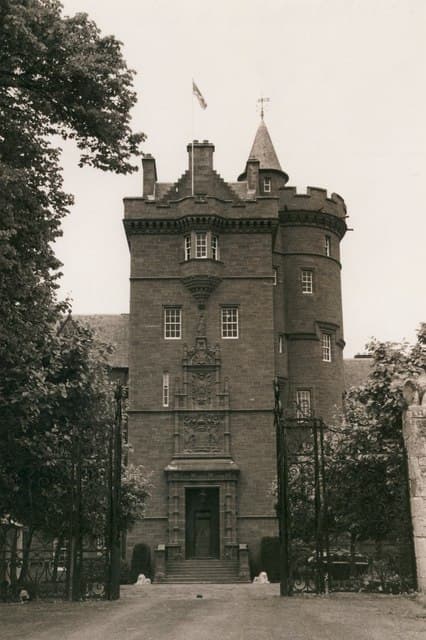
Beaufort Castle
Beaufort Castle, also known historically as Castle Dounie (Scottish Gaelic: Caisteal Dhùnaidh), is a striking example of a baronial style mansion built in 1880 that incorporates significant elements of earlier structures. Located on the right bank of the River Beauly, near the town of Beauly in Inverness-shire, Scotland, the castle lies approximately one mile north of Kiltarlity and 13 miles west of Inverness. This site has been a focal point of Scottish history since the 12th century, serving as the traditional seat of the Lords Lovat, the chiefs of Clan Fraser of Lovat.
Early history and origins
The earliest recorded mention of the castle site dates back to the reign of King Alexander I of Scotland (1106–1124), when it was referred to as Downie or Dounie Castle. The original fortress was constructed by the Byset family, an influential noble house in medieval Scotland. The castle's strategic location on a hill overlooking the river made it an important defensive stronghold in the region.
During the late 13th century, the castle passed into the hands of the Fraser family, who would become one of Scotland's most prominent clans. The castle's military significance was underscored by a siege conducted by English forces in 1303 amid the Wars of Scottish Independence.
Destruction and rebuilding through conflict
Dounie Castle endured multiple attacks and destructions over the centuries. In the 1650s, during the English Civil War and the subsequent invasion of Scotland by Oliver Cromwell's forces, the castle was attacked and burned. This event marked a significant blow to the estate and its occupants.
The castle faced further devastation during the Jacobite Rising of 1745, when it was razed by the troops of the Duke of Cumberland. Following this, the estate was declared forfeit, reflecting the political upheavals of the time and the clan's involvement in Jacobite causes.
19th-century restoration and architectural transformation
In 1815, the estate was inherited by Thomas Fraser of Strichen (1802–1875), who was reinstated to the Lordship of Lovat in 1854, restoring the family's noble status. Thomas Fraser undertook significant improvements to the estate, including commissioning the renowned architect William Burn in 1839 to extend the existing house and enhance the surrounding grounds.
Thomas Fraser's son, Simon Fraser, 13th Lord Lovat (1828–1887), further transformed the property by constructing the present-day Beaufort Castle. Designed by architect James Maitland Wardrop, this Baronial mansion was built in 1880, incorporating parts of the 18th-century house. The design reflects the Scottish Baronial architectural style, characterized by turrets, battlements, and intricate stonework, evoking the romanticized medieval heritage of Scotland.
The mansion also includes a private Roman Catholic chapel, signifying the religious affiliation of the Fraser family and adding to the estate's cultural significance.
Architectural features and surviving remnants
The current Beaufort Castle combines 19th-century Baronial architecture with remnants of earlier structures. The castle's prominent features include turrets, crow-stepped gables, and battlemented parapets typical of the Scottish Baronial style. The use of local stone and detailed masonry work contribute to its imposing and picturesque appearance.
Adjacent to the mansion are the remains of the original Dounie Castle, consisting primarily of a single surviving wall measuring approximately 11 metres in length and 1.5 metres in height. These ruins serve as a tangible link to the castle's medieval past and its turbulent history.
Historical significance and clan heritage
Beaufort Castle holds a central place in the history of the Fraser clan and the Scottish Highlands. As the traditional seat of the Lords Lovat, it has been a symbol of clan leadership and Scottish nobility for centuries. The castle's history reflects the broader political and military struggles of Scotland, including the Wars of Scottish Independence, the English Civil War, and the Jacobite uprisings.
The Fraser family's resilience in reclaiming and restoring their ancestral home after periods of forfeiture and destruction illustrates the enduring legacy of Scottish clans and their estates.
Location and surroundings
Situated near Beauly in the Scottish Highlands, Beaufort Castle is set in a scenic landscape along the River Beauly. Its position on a hill provides commanding views of the surrounding countryside, emphasizing its historical role as a defensive stronghold. The estate's grounds have been carefully maintained and landscaped, reflecting 19th-century tastes and the status of its owners.
Visiting information and current status
While Beaufort Castle remains a private residence, its historical and architectural significance makes it a subject of interest for historians and enthusiasts of Scottish heritage. The castle's well-preserved Baronial architecture and surviving medieval remnants offer valuable insights into Scotland's feudal past and aristocratic traditions.
Frequently asked questions (FAQ)
- When was Beaufort Castle originally built?
- The original castle on the site, known as Downie or Dounie Castle, dates back to the 12th century during the reign of King Alexander I of Scotland.
- What architectural style characterizes the current Beaufort Castle?
- The current Beaufort Castle is designed in the Scottish Baronial style, a form of Romantic Neo-Gothic architecture featuring turrets, battlements, and crow-stepped gables.
- Who were the original builders of the castle?
- The original castle was built by the Byset family in the 12th century before passing to the Fraser family in the late 13th century.
- Can visitors tour Beaufort Castle?
- Beaufort Castle is a private residence and is not generally open to the public for tours, but its exterior and surrounding grounds can be viewed from nearby public areas.
- What significant historical events affected Beaufort Castle?
- The castle was besieged by English forces in 1303, burned by Oliver Cromwell's troops in the 1650s, and razed during the Jacobite Rising of 1745 by the Duke of Cumberland's forces.
- Are there any medieval remnants at Beaufort Castle?
- Yes, the remains of the original Dounie Castle survive as a single wall approximately 11 metres long and 1.5 metres high adjacent to the current mansion.
Photo gallery

Information
Loading map...
Visitor reviews
No reviews yet. Been here? Write the first review and help other travelers!
Write the first reviewVisited this castle? Share your experience
Your review helps other travelers and adds first-hand knowledge to our encyclopedia.


