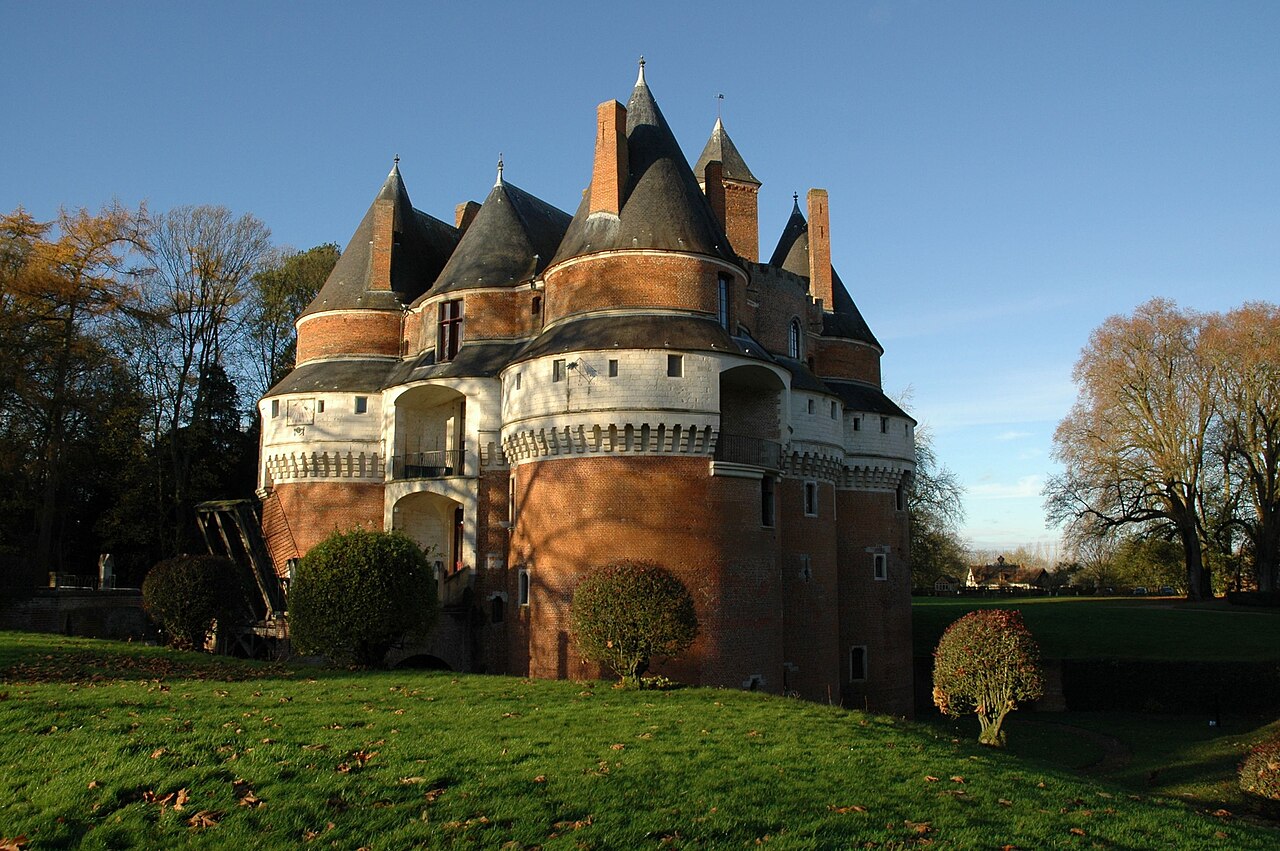
Beaucamps-le-Jeune Castle
Beaucamps-le-Jeune Castle, also known locally as Château de Beaucamps-le-Jeune, is a historic château situated in the village of Beaucamps-le-Jeune in the Somme department of northern France. This castle has its origins in the late medieval period, with the earliest records dating back to the 14th century. Its history reflects the turbulent political and social changes of France from the Middle Ages through the Renaissance and into the modern era.
Medieval origins and early history
The castle was first documented during the 14th century, a time marked by feudal conflicts and the Hundred Years' War between England and France. As a late medieval fortress, Beaucamps-le-Jeune would have originally served defensive and residential purposes, typical of castles in the Somme region. Its location in northern France placed it within a contested zone, influencing its strategic importance.
Renaissance rebuilding and notable owners
In the mid-16th century, the castle entered a new phase of construction and ownership. Around 1550, the noble Pisseleu family began extensive rebuilding efforts, transitioning the castle's architecture toward Renaissance influences. This period coincides with the rise of Anne de Pisseleu d'Heilly, daughter of Guillaume de Pisseleu, Lord of Heilly, who became the chief mistress of King Francis I of France. Anne's influence at the royal court likely contributed to the castle's enhancements and prestige.
Following Anne de Pisseleu's fall from favor, the castle was confiscated in 1553 by King Henry II. It was subsequently sold to Charles de Runes, who continued the rebuilding campaign. The de Runes family maintained ownership for over two centuries, until 1778, when the property changed hands to the Sanson family through purchase from Pauline Gabrielle de Baschi du Cayla, Countess of Turenne d'Aynac.
Architectural features and style
While detailed architectural records of Beaucamps-le-Jeune Castle are limited, the rebuilding efforts in the 16th century suggest a blend of late medieval defensive elements with emerging Renaissance architectural features. The castle's design likely incorporated fortified walls and towers typical of medieval castles, alongside more refined residential quarters reflecting Renaissance tastes. This combination illustrates the transitional nature of French castle architecture during this era.
Modern history and preservation
In the 20th century, the castle's function shifted significantly. By 1935, it was owned by the Congregation of the Mission, a religious institution. Later, in the 1960s, it came under the ownership of the Bishopric of Amiens, which established a summer camp on the grounds. Subsequent private ownerships led to gradual deterioration, reflecting the challenges of maintaining historic properties.
Since 2005, the current private owners have undertaken slow restoration efforts to preserve the castle's structure and heritage. Despite these efforts, Beaucamps-le-Jeune Castle remains private property and is not open to public visitation.
Cultural significance and legacy
Beaucamps-le-Jeune Castle holds historical significance due to its connection with prominent figures such as Anne de Pisseleu d'Heilly and its embodiment of architectural transitions from the late medieval period to the Renaissance. Its story reflects broader themes in French history, including noble patronage, royal politics, and the evolving function of castles from military fortresses to noble residences and later institutional uses.
Though not widely accessible, the castle remains an important heritage site within the Somme region, illustrating the layered history of French aristocratic estates and architectural evolution.
Frequently asked questions (FAQ)
- Can I visit Beaucamps-le-Jeune Castle?
- Beaucamps-le-Jeune Castle is private property and is not open to the public for visits. Access is restricted to the owners and authorized personnel only.
- What is the historical significance of Beaucamps-le-Jeune Castle?
- The castle is historically significant due to its origins in the 14th century and its association with Anne de Pisseleu d'Heilly, the chief mistress of King Francis I of France, reflecting important political and architectural developments.
- When was Beaucamps-le-Jeune Castle rebuilt?
- The castle underwent significant rebuilding around 1550 under the Pisseleu family and later continued by Charles de Runes after 1553, incorporating Renaissance architectural elements.
- What architectural styles are present in Beaucamps-le-Jeune Castle?
- The castle features a mix of late medieval defensive architecture and Renaissance style elements, reflecting its transitional rebuilding phases during the 16th century.
- Who currently owns Beaucamps-le-Jeune Castle?
- As of the latest information, Beaucamps-le-Jeune Castle is privately owned and undergoing gradual restoration by its owners.
Information
Current owner
Private owner
Address
Rue Chantereine, Beaucamps-le-Jeune, Somme, France
Loading map...
Visitor reviews
No reviews yet. Been here? Write the first review and help other travelers!
Write the first reviewVisited this castle? Share your experience
Your review helps other travelers and adds first-hand knowledge to our encyclopedia.