Baturyn Fortress
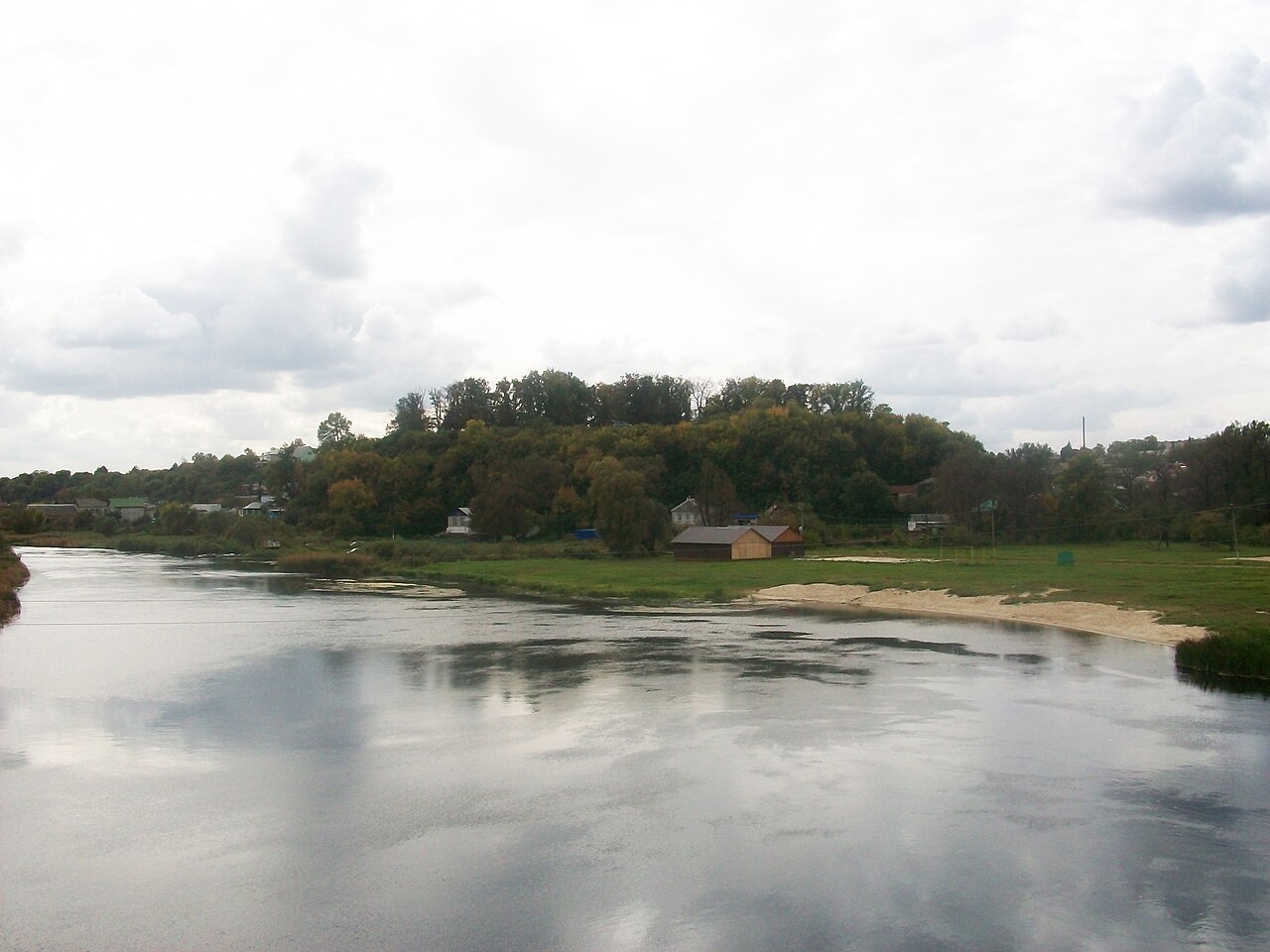
Baturyn Fortress stands as a significant historical and architectural monument in the town of Baturyn, Ukraine. Constructed in the early 17th century, this hill castle was originally established by the Polish–Lithuanian Commonwealth in 1625 as a strategic defensive stronghold on the elevated left bank of the Seim River. Founded by Matej Stakhorsky, the fortress was designed to protect the eastern borders of the Commonwealth, reflecting the military and geopolitical tensions of the period.
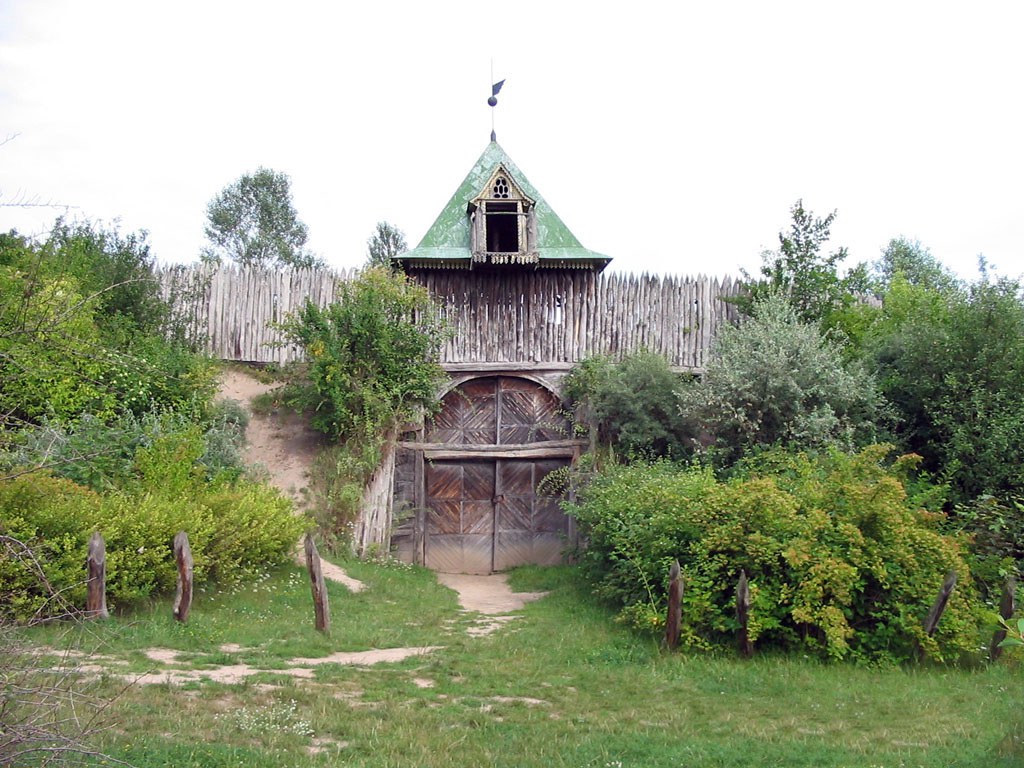
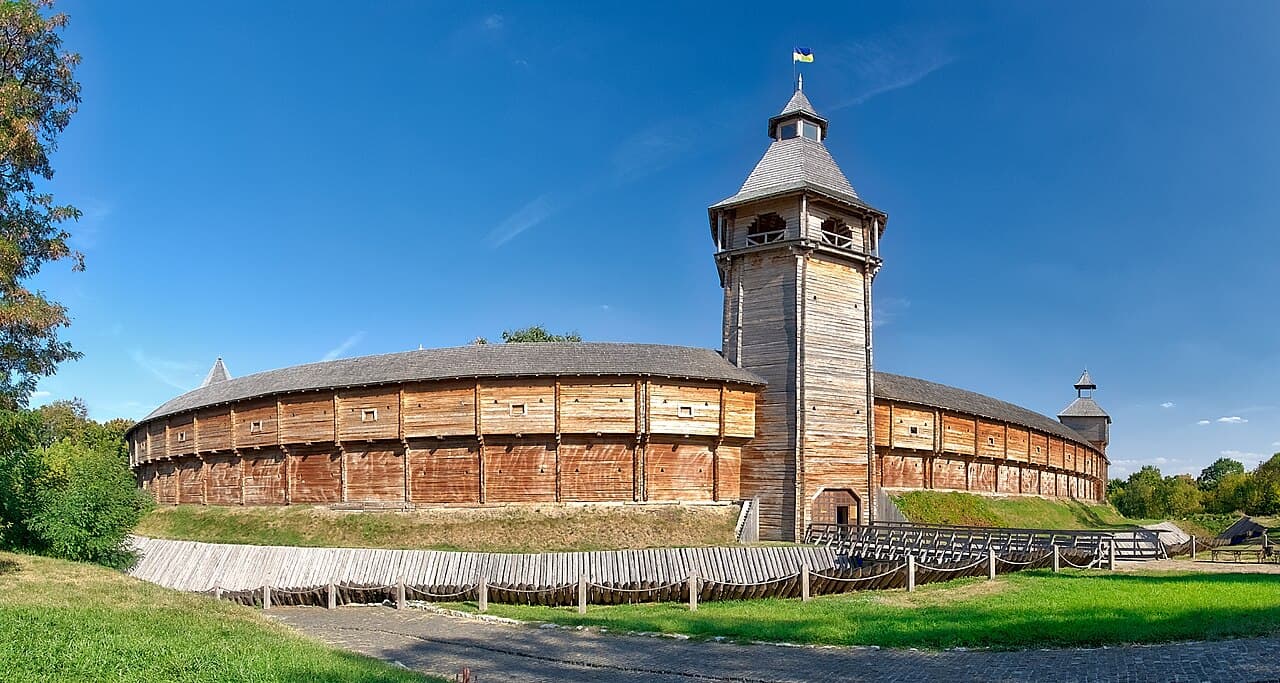
The fortress's location on a natural promontory known as the Citadel provided formidable natural defenses with steep ravines on three sides, necessitating fortifications primarily on the southwestern approach. The defensive system featured two dry moats—inner and outer—paired with earthen ramparts reinforced with wooden logs. The exterior walls, constructed from tightly packed oak logs and clay, exemplify the robust building techniques typical of central Ukrainian Cossack fortifications, offering resilience against artillery fire.
Early construction and strategic importance
During its early years under the Polish–Lithuanian Commonwealth, Baturyn Fortress was a key element in the Putivl Line, a chain of fortifications securing the eastern frontier. The fortress was captured by Russian forces during the Smolensk War in November 1632, underscoring its military significance. Following the war, local governor Oleksandr Pisochynsky enhanced the defenses by adding a second line of fortifications in the mid-1630s, reflecting the evolving military architecture of the period.
Cossack era and political prominence
In 1648, control of Baturyn shifted to the Zaporizhian Host, an autonomous Cossack military community. It became the center of the Baturyn sotnia and later the Nizhyn regiment. From 1669 to 1708, the fortress served as the main residence of several prominent Ukrainian hetmans, including Demian Ihnatovych, Ivan Samoylovych, and Ivan Mazepa. This period marked the fortress’s zenith as a political and military hub, with its fortifications and structures reflecting its elevated status.
The great northern war and destruction
The fortress's prominence ended abruptly during the Great Northern War when Russian forces led by Alexander Menshikov stormed Baturyn on 2 (13) November 1708. The assault resulted in the complete destruction of the fortress and a massacre of its inhabitants, a tragic event that has deeply marked Ukrainian history and ended Baturyn’s military importance.
Architectural features and fortifications
The fortress complex consisted of two main parts: the Citadel and the larger surrounding Fortress. The Citadel was fortified with four wooden towers, including one gate tower and three blind towers without upper galleries. The outer oval-shaped Fortress, measuring approximately 600 by 450 meters, featured earth ramparts, defensive ditches, and regularly spaced towers along the western and southern curves. The entire defensive perimeter covered about 24.5 hectares, with fortifications spanning over 45,000 square meters.
Three main gate towers—Kyiv (Nizhyn) Gate, Sosnytsia Gate, and Konotop (Mytchenko) Gate—controlled access along key roads. Additional six blind corner towers enhanced defense but lacked upper fortifications. Excavations have revealed a network of secret underground passages beneath both the Citadel and Fortress, likely used for movement or escape during sieges. These tunnels, measuring between 1.2 to 2.5 meters wide and about 2 meters high, demonstrate advanced defensive planning.
Influence of early modern military design
The fortress's polygonal earthworks incorporated elements influenced by early modern European military architecture, including flanking bulwarks known as bolvarks or proto-bastions. These earthworks were designed to improve defense against artillery, reflecting the adaptation of traditional fortifications to the evolving nature of warfare in the 17th century.
Post-destruction history and preservation
After its destruction in 1708, the fortress fell into decline. In the mid-18th century, Hetman Kyrylo Rozumovsky considered revitalizing Baturyn as his residence but chose not to restore the fortress’s defensive structures. Over time, the remains deteriorated, but the fortress’s footprint remained visible in the town’s layout, with modern streets such as Kooperatyvna and Samoylovych tracing the esplanade.
Renewed archaeological interest in the 21st century led to extensive excavations that uncovered significant remains of the fortifications and underground passages. In 2008, an architectural-memorial complex was established on the Citadel site, combining archaeological findings with architectural reconstructions. This complex serves both as a commemoration of the fortress’s historical role and a memorial to those who perished during the 1708 siege.
Current condition and cultural significance
Today, Baturyn Fortress is classified as a hill castle in a partially preserved state, with visible earthworks, moats, and foundations. It stands as a symbol of Ukrainian resilience and Cossack heritage, attracting visitors interested in military architecture, early modern history, and the cultural legacy of the Zaporizhian Host. The site’s memorial complex and archaeological remains provide valuable insights into 17th-century fortification techniques and the turbulent history of the region.
Visiting information and educational value
Visitors to Baturyn can explore the memorial complex and archaeological site, which offer interpretive displays and guided tours explaining the fortress’s historical context and architectural features. The site is accessible year-round, with specific opening hours and ticket prices managed by local cultural authorities. Educational programs often highlight the fortress’s role in Cossack military organization and Ukrainian national history, making it a significant destination for scholars and tourists alike.
Frequently asked questions (FAQ)
- When was Baturyn Fortress originally built?
- Baturyn Fortress was originally constructed in 1625 by the Polish–Lithuanian Commonwealth as a defensive stronghold on the eastern border.
- What architectural features characterize Baturyn Fortress?
- The fortress features wooden walls reinforced with clay, polygonal earthworks, dry moats, multiple gate towers, and secret underground passages.
- What happened during the 1708 siege of Baturyn?
- In 1708, Russian forces led by Alexander Menshikov stormed and destroyed Baturyn Fortress, massacring its inhabitants and ending its military significance.
- Is Baturyn Fortress open to visitors today?
- Yes, Baturyn Fortress is open to visitors, featuring an architectural-memorial complex and archaeological site that commemorate its history.
- How does the fortress reflect Cossack military architecture?
- Baturyn Fortress exemplifies central Ukrainian Cossack fortification techniques, including wooden log walls packed with clay and earthworks adapted for artillery defense.
Photo gallery

Information
Sources & official resources
Verify the information above using these authoritative references.
Loading map...
Visitor reviews
No reviews yet. Been here? Write the first review and help other travelers!
Write the first reviewVisited this castle? Share your experience
Your review helps other travelers and adds first-hand knowledge to our encyclopedia.