Batestein Castle
Batestein Castle, also known locally as Kasteel Batestein, is a historic fortress situated in the town of Vianen within the Utrecht province of the Netherlands. This castle holds significant historical importance due to its strategic location within the town's defensive walls and its association with prominent noble families during the late medieval period.
Origins and medieval construction
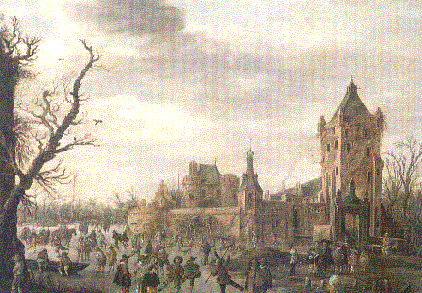
Constructed in the 14th century by Gijsbrecht van Beusichem, the Lord of Vianen, Batestein Castle was originally established in a corner of the walled town of Vianen. Its most notable medieval feature was the large square keep, erected around 1370. This keep was financed by the ransom paid for the French Count de Saint-Pol, a hostage held at Batestein. The keep was initially named St. Pol in his honor, a name that later evolved to the Simple Tower.
The Brederode family era and political significance
In 1414, the castle passed into the possession of the influential Van Brederode family through the marriage of Walraven I van Brederode. The castle reached its zenith under Hendrick van Brederode (1531–1568), during which time it was not only a noble residence but also a center of economic activity, including the minting of coins on-site.
The beggars' political gathering
Batestein Castle played a notable role in the political upheavals of the 16th century. In 1566, the castle was the meeting place for the Beggars (Geuzen), a group of nobles and rebels opposing Spanish rule. They drafted a political document at Batestein that was later presented to Margaretha of Parma, the Spanish-appointed governess of the Netherlands. However, the following year, in 1567, the castle and town were captured by the Spanish army, marking a turbulent period in its history.
17th-century transformation and decline
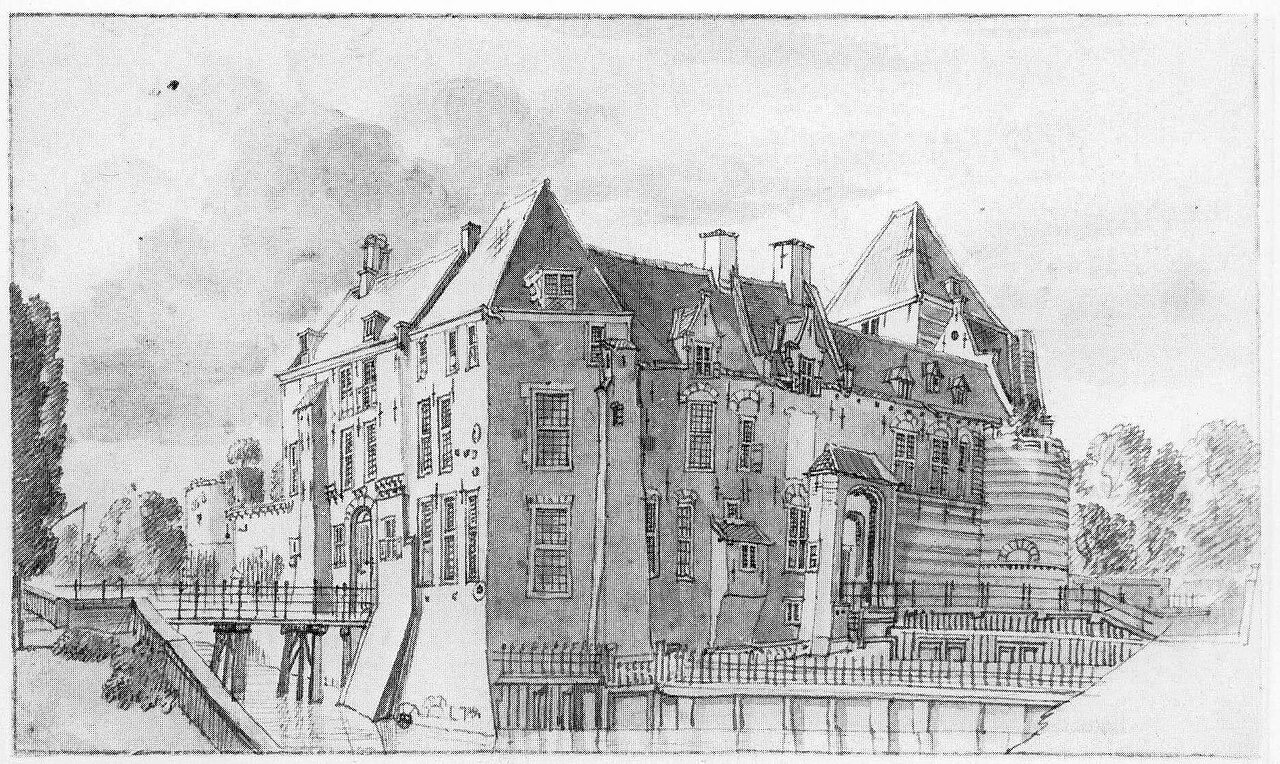
During the 17th century, Batestein Castle returned to the Van Brederode family. Around 1650, the castle underwent significant renovations to transform it from a medieval fortress into a more comfortable and modern residence. These modifications reflected changing architectural tastes and the reduced military necessity of castles in this period. The surviving remains visible today date primarily from this era.
The devastating fire and aftermath
In 1696, a catastrophic fire broke out at Batestein Castle, reportedly ignited by fireworks. This blaze destroyed a large portion of the structure. Due to financial difficulties, the castle was never fully rebuilt. In 1725, the remains were sold to the States of Holland and West-Friesland by Lord Simon Hendrik Adolf von der Lippe.
Demolition and present condition
The large medieval keep, once the castle's dominant feature, was demolished in 1771. Further demolition occurred between 1828 and 1829, removing most of the remaining castle structures. Today, only fragments survive, including parts of the decorative Hof or Bosch Gate and some connecting wall sections. The original castle grounds have since been developed for residential housing, erasing much of the castle's physical footprint.
Architectural features and legacy
Batestein Castle was originally a late medieval fortress characterized by its square keep, defensive walls, and integration within the town's fortifications. The transition in the 17th century to a more comfortable residence included architectural adaptations typical of the period, likely involving enlarged windows and interior refurbishments to suit noble living standards rather than military defense.
Despite its partial demolition, Batestein Castle remains an important historical site illustrating the evolution of Dutch castles from medieval fortresses to noble residences. Its association with the Van Brederode family and its role in the political conflicts of the 16th century contribute to its cultural significance.
Frequently asked questions (FAQ)
- When was Batestein Castle originally built?
- Batestein Castle was originally constructed in the 14th century by Gijsbrecht van Beusichem, Lord of Vianen.
- What is the historical significance of Batestein Castle?
- The castle was a key medieval fortress and noble residence, notably linked to the Van Brederode family and political events like the 1566 Beggars' gathering.
- What remains of Batestein Castle can be seen today?
- Today, only parts of the decorative Hof or Bosch Gate and some connecting walls remain, with the rest of the castle demolished and the site built over.
- Why was Batestein Castle never fully rebuilt after the fire?
- A large fire in 1696 caused extensive damage, and financial difficulties prevented its reconstruction.
- Is Batestein Castle open to visitors?
- There is no public visiting information available as the original castle site is now covered by residential buildings, with only limited ruins visible.
Information
Address
Hofplein, Vianen, Netherlands
Loading map...
Visitor reviews
No reviews yet. Been here? Write the first review and help other travelers!
Write the first reviewVisited this castle? Share your experience
Your review helps other travelers and adds first-hand knowledge to our encyclopedia.