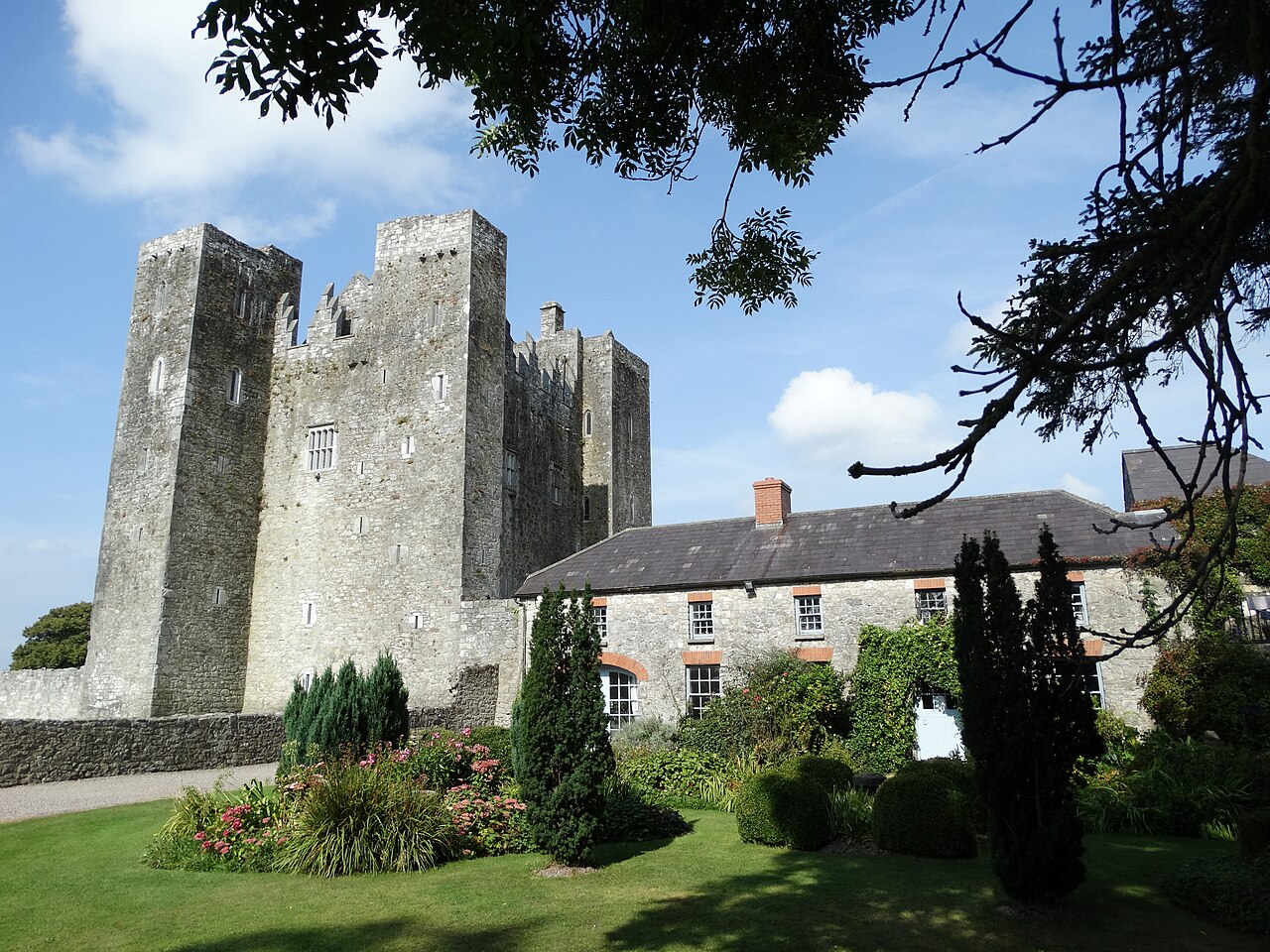
Barryscourt Castle
Barryscourt Castle stands as a remarkable example of a late medieval Irish tower house fortified with a bawn and corner towers, located south of Carrigtwohill in County Cork, Ireland. Its history stretches back to the 12th century when the Anglo-Norman de Barry family acquired the site following the invasion of Ireland. The castle as it is seen today was primarily constructed in the 15th century, built upon earlier fortifications and foundations that may date to the 12th century. This makes Barryscourt a significant monument illustrating the evolution of Anglo-Norman defensive architecture in Ireland during the late medieval period.
The de Barry family, particularly the senior branch known as the Barrymores, established Barryscourt Castle as their principal seat. The castle's strategic location and robust construction underscored the family's power in the region. Ownership transferred in 1556 to a distant relative from the Barryroes line, James de Barry, 4th Viscount Buttevant, marking a continuation of the castle's importance within the extended family network.
Historical context and significance
The site of Barryscourt Castle has a long history of occupation, with archaeological evidence indicating activity as early as the 7th century, including a wooden watermill that predated stone fortifications. The castle's location was granted to the de Barry family after the Anglo-Norman invasion of Ireland in 1171, marking the beginning of their influence in the area.
During the desmond rebellions of 1569 and 1579, the de Barrys supported the Irish resistance against English rule. In 1581, facing an advancing army led by Sir Walter Raleigh, the family deliberately damaged Barryscourt and other castles to prevent their capture. Following their pardon by Queen Elizabeth I, the castle was repaired and strengthened with the addition of a bawn featuring three corner towers, enhancing its defensive capabilities.
Barryscourt ceased to be the primary residence of the de Barry family by 1617 but remained a strategic stronghold. During the Irish Confederate Wars in 1645, the castle was besieged and successfully taken by forces under Lord Inchiquin. The castle's walls still bear the scars of cannonball impacts from this siege, providing a vivid testament to its turbulent past.
Architectural features and layout
Tower house and bawn
The castle's main structure is a three-storey stone tower house positioned at the southwest corner of the enclosure. This tower served as the residence and defensive keep for the de Barry family. Surrounding the tower is a roughly rectangular bawn, a defensive curtain wall enclosing a central courtyard. The bawn is fortified by three corner towers located at the northeast, southeast, and southwest corners, which rise up to five storeys, serving as lookout points and defensive positions.
Entrances and internal structures
Access to the courtyard is controlled through a main gate in the south curtain wall adjacent to the tower house, with a secondary gate in the north wall providing additional entry. Within the courtyard, the foundations of a large building believed to have been a banquet or dining hall remain visible, offering insight into the castle's domestic arrangements.
Defensive and prison features
An intriguing aspect of Barryscourt Castle is its system of underground dungeons designed as drop-prisons. These allowed captives to be lowered into secure holding cells from openings above, reflecting medieval defensive and punitive practices. The castle's strong stone construction has preserved these features remarkably well.
Later history and restoration
After the de Barrys moved their main residence to Castlelyons in 1617, Barryscourt remained important but gradually fell into disuse. Ownership passed to the Coppinger family in the early 18th century, who built a new house nearby in 1716. This house no longer survives, and the castle itself deteriorated into ruins over time.
In the late 20th century, concerted restoration efforts began, led by the Barryscourt Trust and later supported by the Irish heritage authority Dúchas. These efforts included reroofing the tower house and reconstructing interior elements to reflect the castle's 16th-century appearance. Today, Barryscourt Castle stands as a well-preserved example of late medieval Irish fortification, attracting visitors interested in Ireland's rich history and architectural heritage.
Visitor information and cultural importance
Barryscourt Castle has been accessible to the public as a heritage site, although it has experienced periods of closure for restoration work. Its preservation offers valuable insights into the Anglo-Norman legacy in Ireland and the military and domestic architecture of the period. The visible cannonball scars and surviving defensive features provide a tangible connection to Ireland's complex history of conflict and resilience.
The castle's location in County Cork situates it within a region rich in medieval castles and historical sites, making it a significant destination for cultural tourism. Its combination of architectural integrity and historical depth ensures Barryscourt Castle remains a prominent landmark in Ireland's medieval heritage.
Frequently asked questions (FAQ)
- How do I get to Barryscourt Castle?
- Barryscourt Castle is located in Carrigtwohill, just a short drive from Cork City. You can reach it by car via the N25 road, and there is ample parking available on-site. Public transportation options include local bus services that connect to Carrigtwohill.
- What is the historical significance of Barryscourt Castle?
- Barryscourt Castle dates back to the 15th century and is known for its well-preserved tower house and its role as a stronghold for the Barry family. The castle showcases the architectural style and defensive features typical of medieval Irish castles, making it an important site for understanding Ireland's feudal history.
- When was Barryscourt Castle built?
- Construction of Barryscourt Castle began in the late 15th century and was completed in the early 16th century. The castle has undergone several renovations over the centuries, preserving its structure and historical features for visitors to appreciate today.
- Can I take guided tours of Barryscourt Castle?
- Yes, guided tours are available at Barryscourt Castle, providing visitors with insights into its history and architecture. Tours typically last around an hour and allow you to explore various areas of the castle while learning about its significance in Irish history.
- Why is Barryscourt Castle a popular tourist destination?
- Barryscourt Castle attracts visitors due to its rich history, stunning architecture, and beautiful surrounding gardens. It offers a unique glimpse into medieval life and is a favorite among history enthusiasts and families looking for an educational outing.
- Is it possible to host events at Barryscourt Castle?
- Yes, Barryscourt Castle is available for private events, including weddings and corporate functions. The picturesque setting and historical ambiance make it a memorable location for special occasions.
- What are the opening hours for Barryscourt Castle?
- Barryscourt Castle typically opens to the public from 9:30 AM to 5:30 PM, with extended hours during the summer months. It is advisable to check the official website or contact the site directly for any seasonal changes to the opening hours.
- What are the ticket prices for visiting Barryscourt Castle?
- Ticket prices for Barryscourt Castle are generally affordable, with discounts available for children, students, and seniors. Family passes are also offered, making it an accessible option for visitors of all ages. Check the official site for the latest pricing information and any special promotions.
- What is the best time to visit Barryscourt Castle?
- The best time to visit Barryscourt Castle is during the spring and early autumn when the weather is mild, and the gardens are in full bloom. These seasons also tend to have fewer crowds, allowing for a more enjoyable experience while exploring the grounds and taking part in tours.
- Are there any nearby attractions to visit along with Barryscourt Castle?
- Yes, there are several nearby attractions, including the scenic Fota Island and the historic town of Cobh, known for its maritime heritage. Additionally, the beautiful Cork City is just a short drive away, offering a variety of cultural and dining experiences for visitors to enjoy.
Information
Website
Visit websiteSources & official resources
Verify the information above using these authoritative references.
Loading map...
Visitor reviews
No reviews yet. Been here? Write the first review and help other travelers!
Write the first reviewVisited this castle? Share your experience
Your review helps other travelers and adds first-hand knowledge to our encyclopedia.