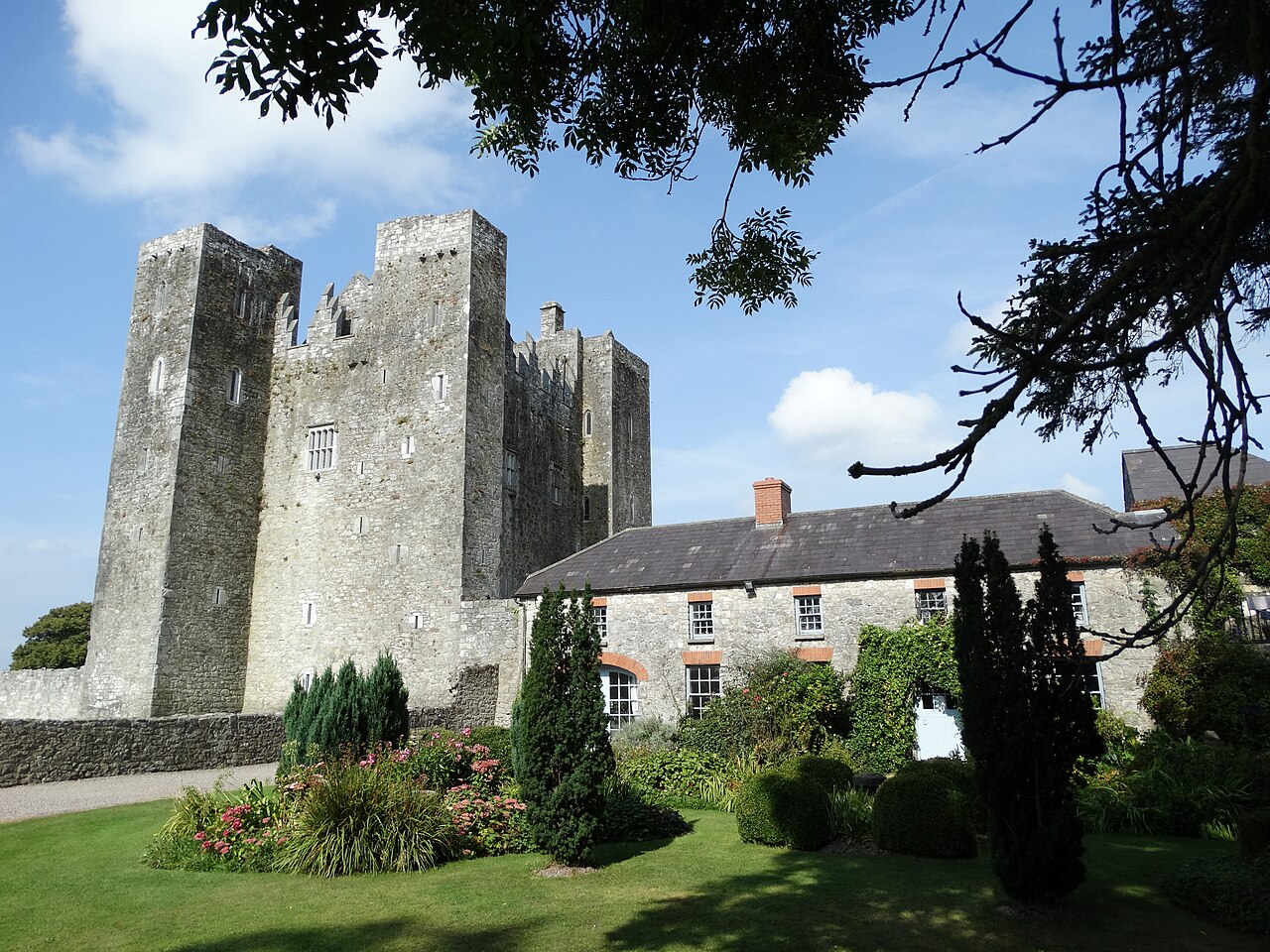
Ballymacshanroe Castle
Ballymacshanroe Castle is a historic tower house located on Great Island in County Cork, Ireland. This castle dates back to the 12th century and is associated with the Barry family, a Welsh lineage that settled in Ireland during the High Medieval period. The Barrys played a significant role in the region's history, and their name remains common in Cork today.
Historical background and ownership
The castle was likely constructed by the Barrys as a fortified residence during the turbulent medieval era. It was documented to have been raided in 1599 by forces loyal to Hugh O’Neill, the Earl of Tyrone, during the Nine Years' War, a major conflict between Gaelic Irish chieftains and English rule. This raid was recorded in the Cork Historical and Archaeological Society journal of 1915. At that time, an adjoining mansion house known as Ashgrove existed near the castle but has since vanished.
Following the Stuart Restoration in 1660, the castle came into the possession of Sir George Hamilton, 1st Baronet, of Donalong, in 1668. Hamilton, however, sold the property soon after acquiring it, marking a transition in ownership away from the original Barry lineage.
Architectural features and current condition
The surviving structure of Ballymacshanroe Castle is a small two-story tower house, characteristic of medieval Irish defensive residences. The tower is now partially covered in ivy, which adds to its picturesque, though somewhat neglected, appearance. While the original height of the tower might have been greater, the current crenellations seen today are modern additions rather than original medieval features.
The castle is situated behind a private residence named The Old Coach House, which dates from the 19th century. This proximity to a private home means that Ballymacshanroe Castle is not open to public access, but it remains visible from the nearby public road, allowing visitors to appreciate its historic silhouette and setting.
Context within Irish medieval castles
Ballymacshanroe Castle is an example of a High Medieval tower house, a common type of fortified dwelling built by Anglo-Norman families in Ireland from the 12th century onwards. These structures served both as residences and defensive strongholds amidst the frequent conflicts of the era.
The castle's connection to the Barry family places it within the broader narrative of Norman settlement and influence in southern Ireland. The Barrys were among the prominent families who established themselves in the region, building castles and manors to secure their holdings.
Visiting information and accessibility
While Ballymacshanroe Castle itself is not accessible to visitors due to its location on private property, its exterior can be easily viewed from the adjacent public road. The castle's remote and quiet setting on Great Island offers a glimpse into Ireland's medieval past for those interested in historic architecture and Norman heritage.
Frequently asked questions (FAQ)
- What is the historical significance of Ballymacshanroe Castle?
- Ballymacshanroe Castle is significant as a 12th-century tower house built by the Barry family, reflecting Norman influence in Ireland and medieval defensive architecture.
- Can I visit Ballymacshanroe Castle?
- The castle is on private property and cannot be entered, but it is visible from the nearby public road for external viewing.
- When was Ballymacshanroe Castle built?
- The castle dates back to the 12th century, placing it in the High Medieval period of Irish history.
- Who owned Ballymacshanroe Castle after the Stuart Restoration?
- Sir George Hamilton, 1st Baronet, acquired the castle in 1668 following the Stuart Restoration but sold it shortly afterward.
- What remains of Ballymacshanroe Castle today?
- Today, the castle remains as a two-story tower house, partially covered in ivy, with modern crenellations added to the structure.
Information
Loading map...
Visitor reviews
No reviews yet. Been here? Write the first review and help other travelers!
Write the first reviewVisited this castle? Share your experience
Your review helps other travelers and adds first-hand knowledge to our encyclopedia.