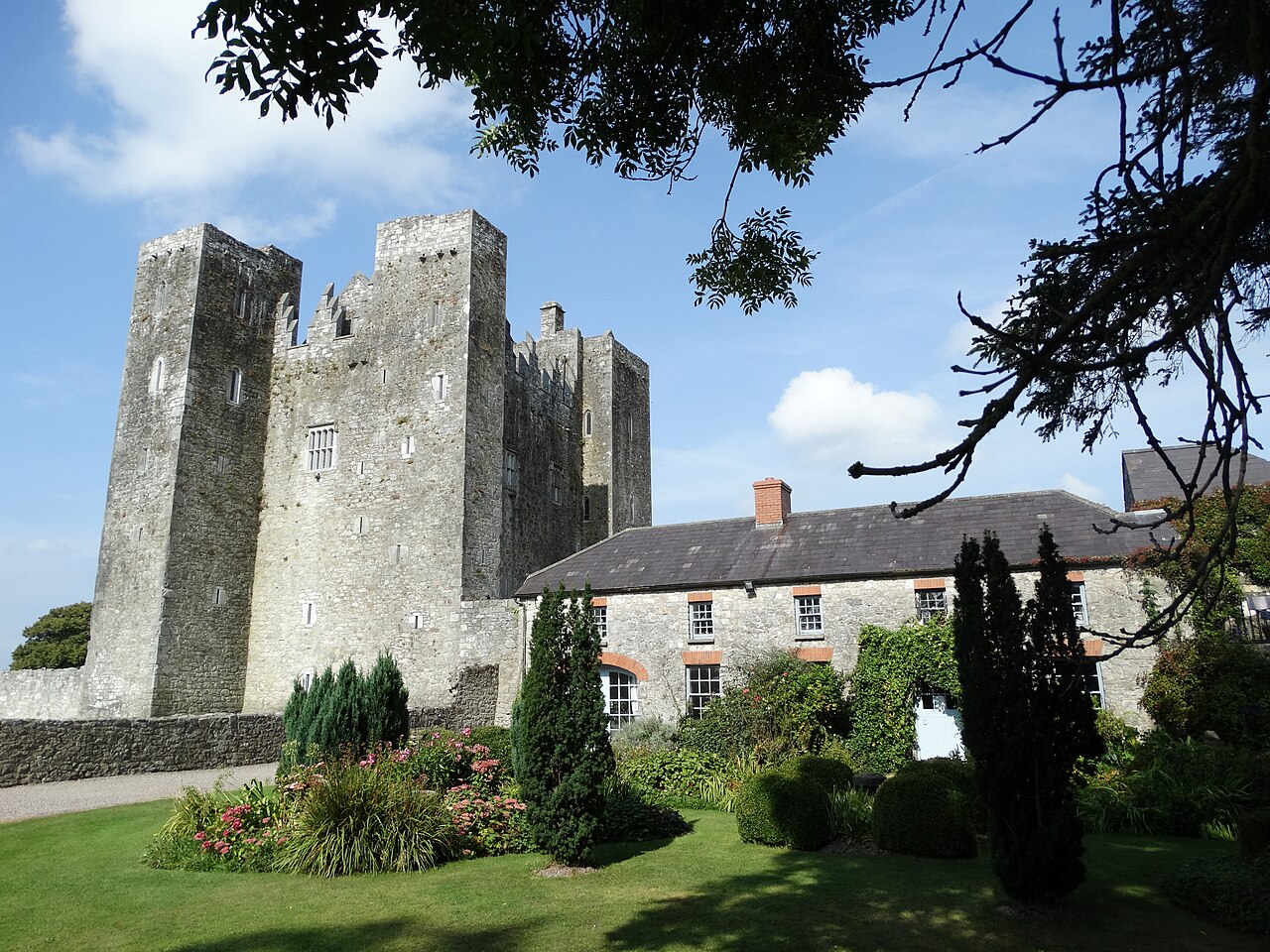
Belvelly Martello Tower
Belvelly Martello Tower stands prominently in the village of Belvelly on Great Island in Cork Harbour, County Cork, Ireland. This tower is one of the five Martello towers constructed in the harbor during the early 19th century, specifically between 1813 and 1815, as part of a coastal defense system against potential French invasion during the Napoleonic Wars. Martello towers are distinctive small, round forts characterized by their thick masonry walls and compact, circular design, which provided resilience against cannon fire and allowed for a single heavy artillery piece to be mounted on the flat roof.
These towers typically rise to about 12 meters in height and contain two floors, housing a garrison of one officer and 15 to 25 men. The design of the Belvelly Martello Tower deviates from the more common oval shape seen in other local towers such as Rossleague and Haulbowline; instead, it features vertical walls, emphasizing its unique architectural adaptation. Strategically located, it overlooks the Belvelly Channel and the only road bridge connecting Great Island to the mainland, underscoring its role in controlling access to the island and protecting the vital maritime approaches to Cork Harbour.
Although these towers were state-of-the-art defensive structures when built, their military relevance declined rapidly with the advent of more powerful rifled artillery in the mid-19th century, rendering them obsolete. The Belvelly Martello Tower, like many others, never saw combat action and today appears to be used as a private residence, thus it is not open to public visitation. Nearby, approximately 100 meters to the east, lies the historic Belvelly Castle, a separate but historically connected fortification.
Belvelly Castle is situated on the shoreline of Great Island, adjacent to the village of Belvelly in County Cork. This castle is a classic example of a medieval tower house built during the Anglo-Norman period, likely in the 13th century, by the Hodnett family, who were Anglo-Norman settlers originating from Shropshire, England. The castle's primary purpose was to guard the ford linking Great Island to the mainland, a critical strategic point controlling movement and trade.
In 1329, the castle was seized by the more powerful De Barry family, although it was later leased back to the Hodnetts, illustrating the complex feudal relationships of the time. The castle passed into the hands of Sir Walter Raleigh in 1581, who described it as "broken down" and undertook restoration efforts to make it habitable again. By 1636, it reverted to the De Barry family, and during the Irish Confederate Wars in 1647, it served as a garrison for troops under Roger Boyle, Earl of Broghill. The last known occupant was Sir Peter Courthorpe, who lived there until around 1650.
By the mid-19th century, Belvelly Castle had fallen into ruin, with much of its stonework scavenged for local construction. However, during the Emergency period (1939-1945), the Irish army occupied the castle and added defensive features such as horizontal gun slits in the eastern and western walls. In recent years, the castle underwent significant restoration after being sold as a ruin, transforming it into a private residence while preserving its historic character.
Architectural features of belvelly martello tower
The Belvelly Martello Tower exemplifies the typical 19th-century coastal defense architecture designed to protect key maritime locations. Its cylindrical shape with thick stone walls, often exceeding 2 meters in thickness, provided formidable resistance to artillery bombardment. The tower's roof was flat and equipped to mount a single heavy cannon, which could rotate 360 degrees, allowing for comprehensive coverage of the surrounding waters and land approaches.
The interior was arranged over two floors, with the lower floor typically used for storage and accommodation for the garrison, while the upper floor housed the gun platform. The entrance was elevated and accessed via removable ladders or steps to enhance defensibility. The tower's vertical walls distinguished it from the oval-shaped towers nearby, reflecting a variation in design adapted to the specific terrain and strategic needs of the site.
Strategic location and defense role
Positioned to oversee the Belvelly Channel, the tower guarded the narrow waterway behind Cobh and protected the vital road bridge to Great Island. This placement allowed the tower to control naval traffic entering Cork Harbour and prevent enemy forces from landing or advancing inland. The network of five Martello towers in Cork Harbour created overlapping fields of fire, enhancing the defensive perimeter around one of Ireland's most important ports.
Historical significance of belvelly castle
Belvelly Castle represents the enduring legacy of Anglo-Norman military architecture in Ireland. As a tower house, it was part fortress and part residence, reflecting the dual needs for defense and habitation during the medieval period. Its history of ownership by prominent families such as the Hodnetts, De Barrys, and its association with Sir Walter Raleigh highlight its importance in regional power dynamics.
The castle's role during the Irish Confederate Wars underscores its continued military relevance well into the 17th century. The use of the castle as a garrison by Roger Boyle during this turbulent period illustrates its strategic value in controlling access to Great Island and Cork Harbour. The later decline into ruin and eventual restoration in the 21st century demonstrate the changing fortunes and renewed appreciation for Ireland's medieval heritage.
Restoration and modern use
After centuries of neglect, Belvelly Castle was restored in the 2010s, preserving its stone structure and battlements while adapting it for modern residential use. The restoration included the addition of a new slate roof, reconstruction of defensive battlements, and the installation of modern amenities such as a garage, boiler room, and sewage treatment system. Artistic elements were also added to the roof, blending contemporary design with historic architecture.
Today, the castle stands as a private residence, a testament to the successful integration of historic preservation with modern living. Its proximity to the Belvelly Martello Tower links the two structures in a shared narrative of coastal defense and regional history.
Visitor information and accessibility
Currently, Belvelly Martello Tower is privately owned and not open to public visits. Similarly, Belvelly Castle is also a private residence following its restoration. Visitors interested in the history and architecture of these sites can view them from public roads and nearby areas but should respect the privacy of the owners.
The surrounding region of Cork Harbour offers numerous historical and cultural attractions, including the nearby town of Cobh, known for its maritime heritage and connections to the Titanic. Exploring the area provides context to the strategic importance of Belvelly's fortifications in Ireland's coastal defense history.
Frequently asked questions (FAQ)
- What is the historical purpose of Belvelly Martello Tower?
- Belvelly Martello Tower was built in the early 19th century as a coastal defense fortification to protect Cork Harbour against potential French invasions during the Napoleonic Wars.
- Can visitors access Belvelly Martello Tower?
- Belvelly Martello Tower is currently a private residence and is not open to the public, so visitors can only view it from the outside.
- What distinguishes Belvelly Martello Tower from other Martello towers in Cork Harbour?
- Unlike the oval-shaped Rossleague and Haulbowline towers, Belvelly Martello Tower features vertical walls, making its design unique among the five towers in Cork Harbour.
- What is the historical significance of Belvelly Castle?
- Belvelly Castle is a medieval tower house built by the Anglo-Norman Hodnett family in the 13th century, later owned by the De Barry family and Sir Walter Raleigh, and played a strategic role during the Irish Confederate Wars.
- Is Belvelly Castle accessible to visitors?
- Belvelly Castle is a private residence following recent restoration and is not open for public tours, but it can be viewed from nearby public areas.
Information
Sources & official resources
Verify the information above using these authoritative references.
Loading map...
Visitor reviews
No reviews yet. Been here? Write the first review and help other travelers!
Write the first reviewVisited this castle? Share your experience
Your review helps other travelers and adds first-hand knowledge to our encyclopedia.