Baqerabad Castle
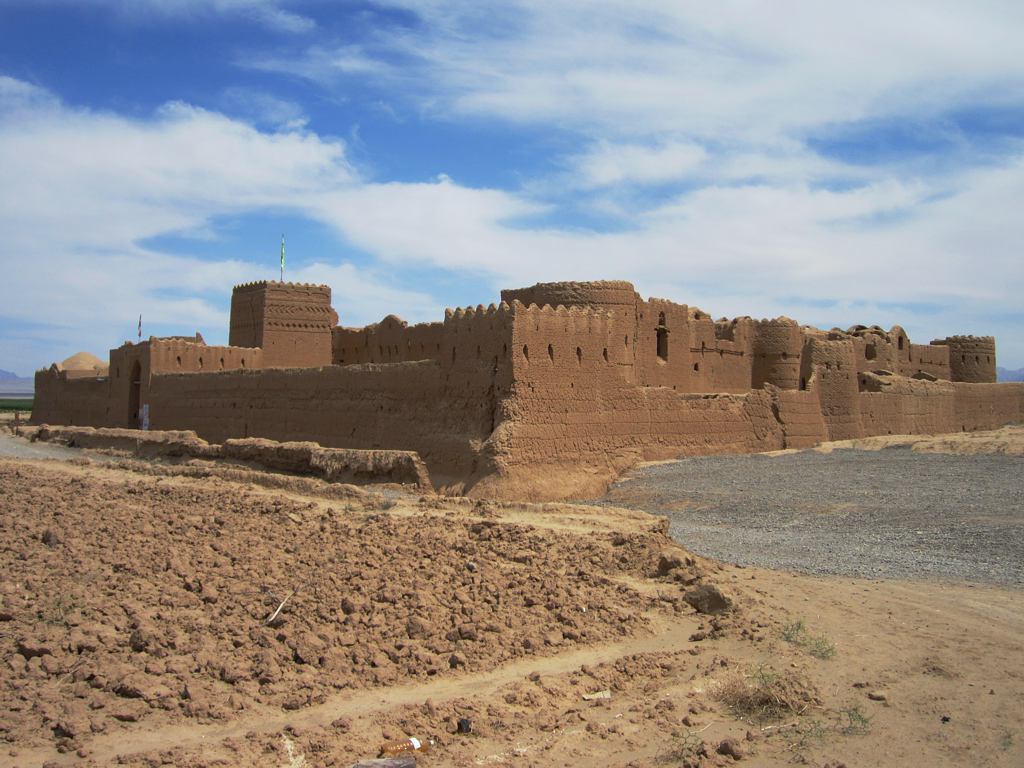
Baqerabad Castle (Persian: قلعه باقرآباد) is a notable example of a Qajar era hill castle located in Bafq county, Yazd province, Iran. This historic fortress was constructed primarily as a defensive refuge for the local villagers against bandit attacks, reflecting the turbulent social conditions of the time. The castle also served practical purposes such as storing grain, highlighting its role in safeguarding both people and resources.
Historical context and construction
The castle was commissioned by Abdorrahim Khan Bafqi, son of Mohammad Taqi Khan Bafqi, a prominent local figure during the Qajar period. Its construction took place in three distinct stages, demonstrating a phased approach to fortification and expansion. The precise dates of these phases are not well documented, but the castle's design and materials clearly place it within the 19th century Qajar dynasty, a period marked by regional instability and the need for local defensive structures.
Architectural features
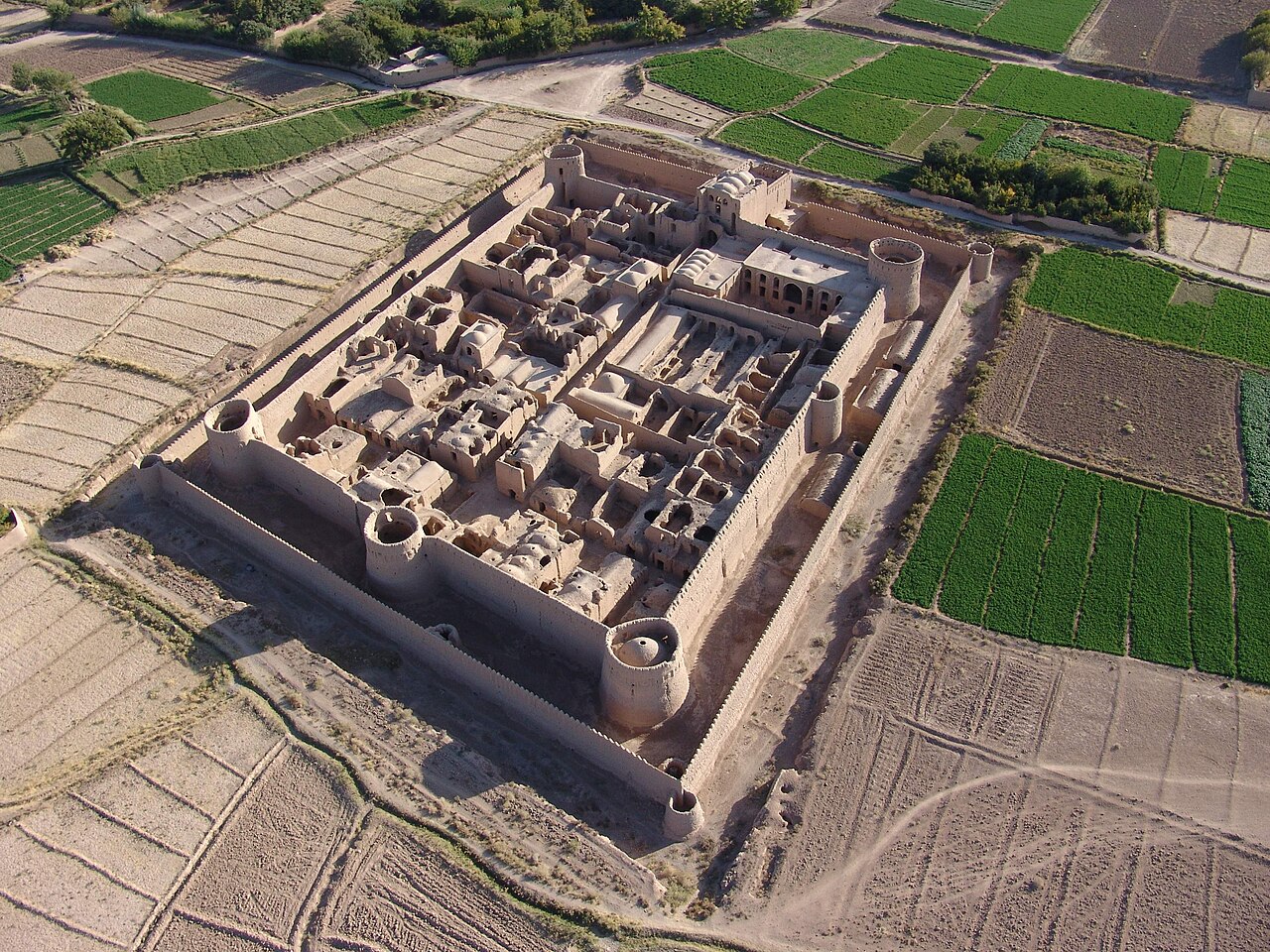
Baqerabad Castle encompasses approximately 45 rooms arranged to accommodate various functions, including living quarters, storage areas, and defensive positions. The castle's layout is typical of hill castles, strategically positioned to maximize natural elevation for surveillance and defense.
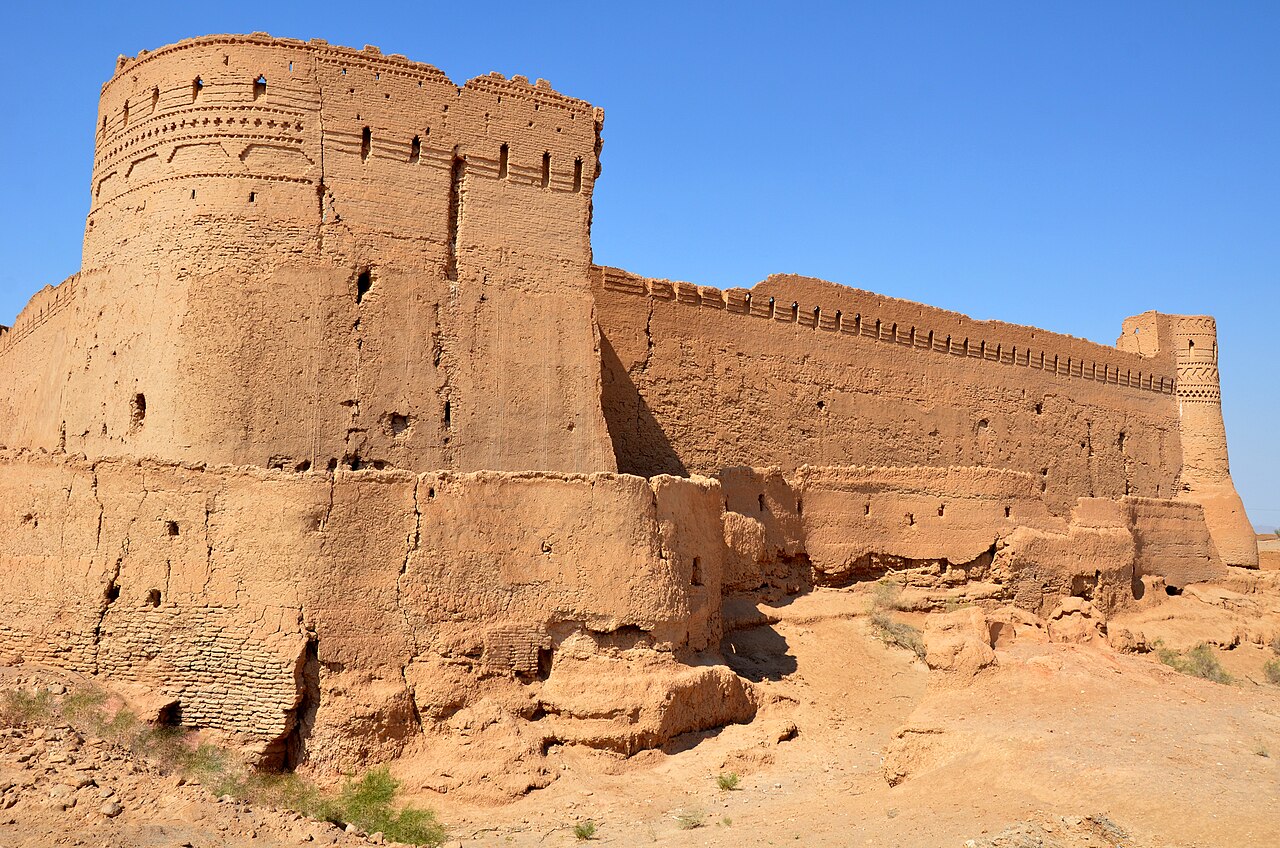
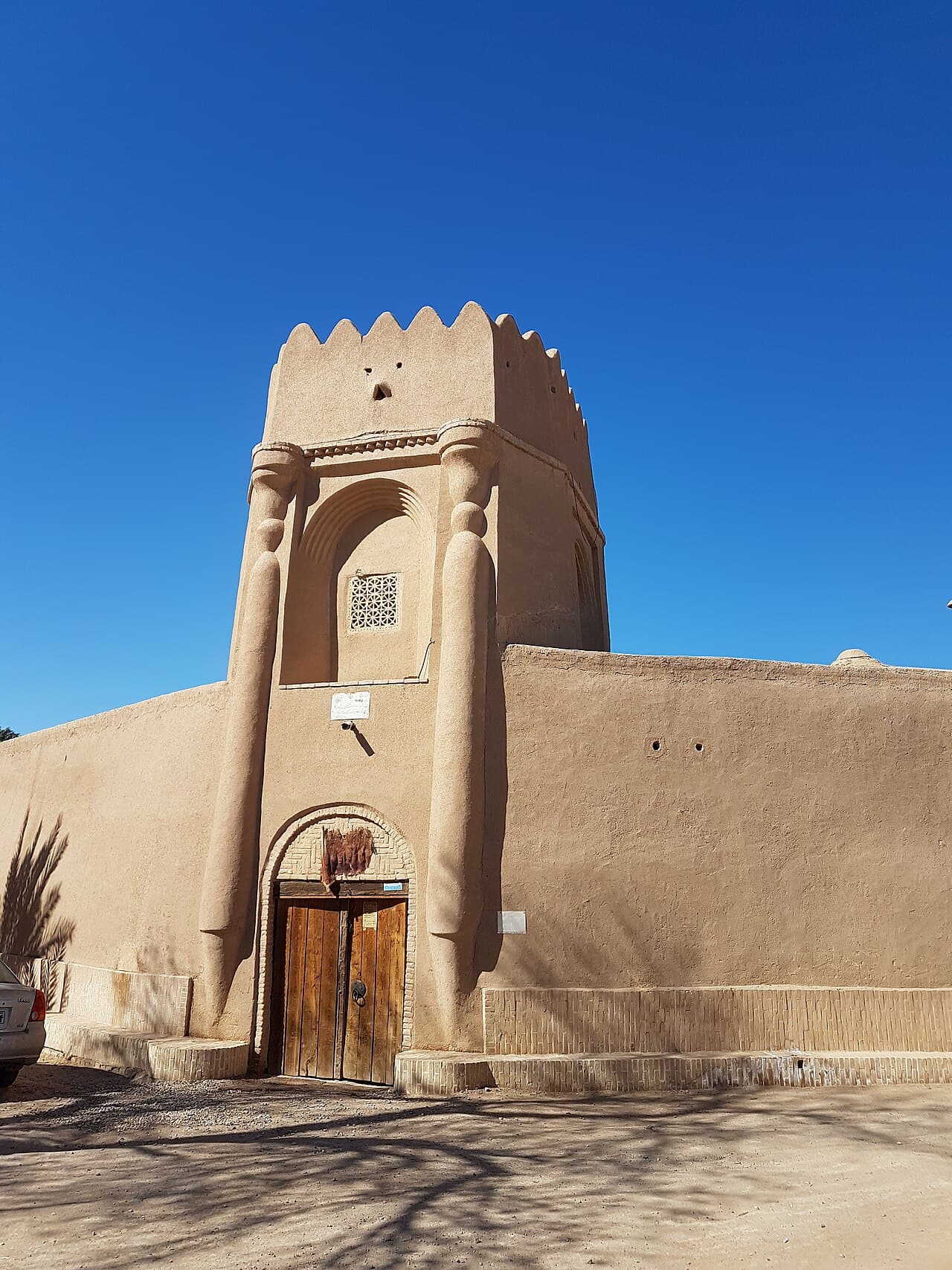
Two prominent watchtowers rise from the structure, providing vantage points for monitoring the surrounding landscape. These towers would have been essential for early warning against approaching threats. The walls and towers are constructed from local materials, likely mudbrick and stone, common in the arid climate of Yazd province, which also contributed to the castle's insulation and durability.
Strategic importance and use
The primary function of Baqerabad Castle was to serve as a shelter for villagers during times of conflict or raids by bandits, a frequent threat in the region during the 19th century. Its robust construction and elevated position made it a formidable refuge.
Additionally, the castle was used as a grain stockpile, ensuring food security for the local population during sieges or periods of scarcity. This dual-purpose use underscores the castle's role not only as a military stronghold but also as a critical element of community survival.
Preservation and cultural significance
On 13 August 2005, Baqerabad Castle was officially listed among the national heritage sites of Iran with the registration number 13000. This recognition highlights the castle's importance as a cultural and historical monument within Iran's architectural heritage.
Today, the castle stands as a partially preserved example of Qajar military architecture, attracting interest from historians, architects, and tourists interested in Iran's regional fortifications and traditional construction methods.
Current condition and accessibility
While the castle's overall structure remains recognizable, it is categorized as partially preserved. Efforts to maintain and restore parts of the castle have been limited, reflecting challenges in heritage conservation in remote areas.
Visitors to Bafq county can explore the castle ruins to gain insight into the defensive strategies and daily life of the Qajar period inhabitants. The site offers a tangible connection to the region's past and the socio-political dynamics of 19th-century Iran.
Frequently asked questions (FAQ)
- What is the historical significance of Baqerabad Castle?
- Baqerabad Castle was built during the Qajar era as a defensive refuge for villagers against bandits and also served as a grain storage site, reflecting the social and security needs of 19th-century Iran.
- How many rooms and watchtowers does Baqerabad Castle have?
- The castle contains 45 rooms and 2 watchtowers, designed to accommodate defense, storage, and shelter functions.
- Where is Baqerabad Castle located?
- Baqerabad Castle is located in Bafq county, within Yazd province, Iran, positioned strategically on a hill for defensive advantage.
- Is Baqerabad Castle open to visitors?
- While specific visiting hours are not widely published, Baqerabad Castle is accessible to tourists interested in Iran's historical fortifications, particularly in the Yazd region.
- What materials were used in the construction of Baqerabad Castle?
- The castle was primarily constructed using local materials such as mudbrick and stone, which are well-suited to the arid climate of Yazd province and contribute to the castle's durability.
Photo gallery

Information
Loading map...
Visitor reviews
No reviews yet. Been here? Write the first review and help other travelers!
Write the first reviewVisited this castle? Share your experience
Your review helps other travelers and adds first-hand knowledge to our encyclopedia.