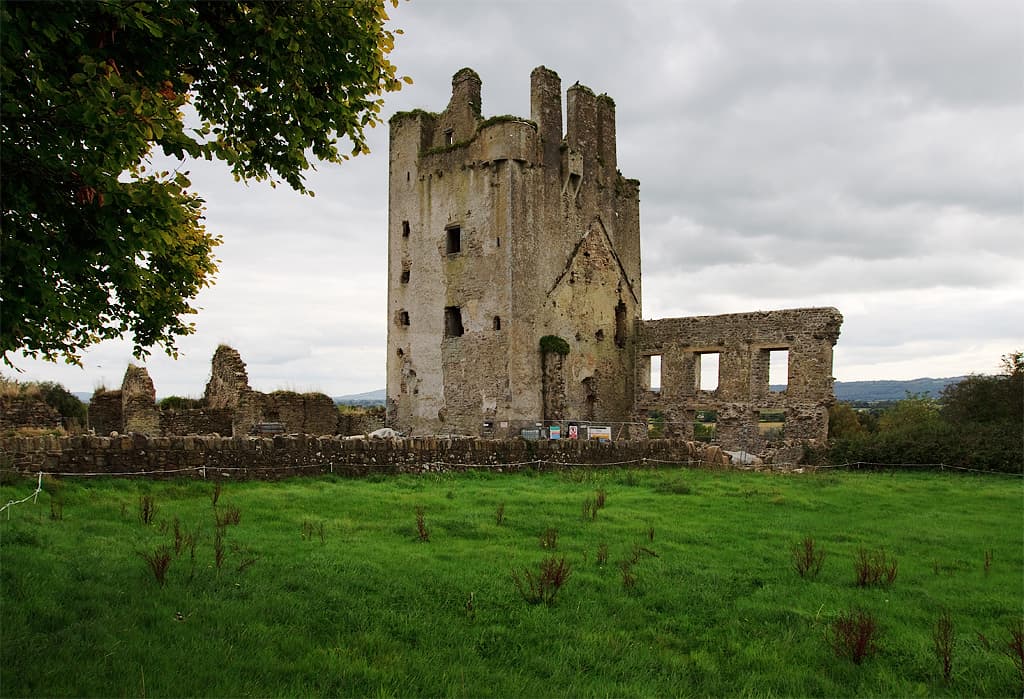
Kilcash Castle — Ireland castle

Kilcash Castle

Kilcash castle, county tipperary, ireland
Ruins

Kilcash Castle is a notable medieval ruin located just off the N24 road, west of Ballydine and near the village of Kilcash in County Tipperary, Ireland. This castle, now in a state of ruins, stands as a significant historical monument under the care of the Irish State. It is closely associated with the influential Butler dynasty, a powerful noble family in Irish history.

Historical background and significance

The origins of Kilcash Castle date back to the late medieval period, with construction likely in the 16th century. It served as a fortified residence for the Butlers, who were prominent Anglo-Norman lords in Ireland. The castle's strategic location near the village of Kilcash allowed it to control local lands and routes, reflecting the political and military importance of the Butlers in County Tipperary.

The Butler family played a crucial role in Irish history, particularly during the Tudor conquest of Ireland and subsequent centuries. Kilcash Castle was one of their many strongholds, symbolizing their power and influence in the region.

Architectural features and layout

Though now in ruins, Kilcash Castle originally featured typical elements of a tower house, a common type of fortified residence in Ireland during the medieval period. The structure was built primarily of stone, designed for defense as well as domestic living.

The castle included a rectangular tower with thick walls, narrow windows for archers, and battlements on the roof. Surrounding the tower, there would have been a bawn or defensive courtyard enclosed by a stone wall. The remains suggest a multi-storey building with living quarters, storage areas, and possibly a great hall.

Defensive aspects

Strategically positioned, Kilcash Castle utilized natural terrain features to enhance its defense. The thick stone walls and limited access points were designed to withstand attacks and sieges common in the turbulent history of Ireland during the 16th and 17th centuries.

The butler dynasty connection

The Butler family, Earls and later Dukes of Ormond, were among the most powerful noble families in Ireland. Kilcash Castle was part of their extensive network of estates. The castle was a residence for members of the family and served as a local administrative center.

Historical records associate Kilcash Castle with various members of the Butler family, reflecting their political and social dominance in the area. The Butlers were involved in numerous historical events, including rebellions and conflicts during the English Civil War and Irish Confederate Wars.

Present condition and visitor information

Today, Kilcash Castle stands as a ruined archaeological site. The castle's remains include portions of the tower and some surrounding walls, offering a glimpse into its former grandeur. Visitors can explore the site, which is accessible from the nearby road and is under the protection of the Irish State.

The site is open to the public, though facilities are limited due to its ruined state. It is a point of interest for those fascinated by medieval Irish history, castle architecture, and the legacy of the Butler family.

Nearby attractions and context

The castle's location in County Tipperary places it within a rich cultural landscape featuring other historic sites, natural scenery, and traditional Irish villages. Visitors often combine a trip to Kilcash Castle with excursions to nearby castles, churches, and heritage sites.

The surrounding countryside offers opportunities for hiking and exploring Ireland's rural heritage, enhancing the experience of visiting Kilcash Castle.

Frequently asked questions (FAQ)

How do I get to Kilcash Castle?
Kilcash Castle is located in County Tipperary, Ireland. You can reach it by car from Clonmel, which is about 10 kilometers away. Public transport options are limited, so driving or taking a taxi is the most convenient way to visit the castle.
What is the historical significance of Kilcash Castle?
Kilcash Castle dates back to the 15th century and is a notable example of medieval architecture in Ireland. It was once the stronghold of the O'Keeffe family and played an essential role in the region's history. The castle offers insights into the life and times of its former inhabitants and reflects the tumultuous history of Ireland.
When was Kilcash Castle built?
Kilcash Castle was constructed in the late 15th century, specifically around 1460. It showcases the defensive architecture of its time, with thick stone walls and a tower house design. The castle has undergone various modifications over the centuries but retains much of its historical charm.
Can I enter Kilcash Castle?
Access to Kilcash Castle is typically limited to the exterior, as it is a private property. Visitors are welcome to explore the grounds and take photographs, but interior access may not be permitted. It's advisable to check for any special events or open days that might allow for inside tours.
Why is Kilcash Castle a popular tourist destination?
Kilcash Castle is popular due to its picturesque setting and rich history. The castle's architectural features and scenic views of the surrounding countryside attract history enthusiasts and photographers alike. Its proximity to other historical sites makes it a convenient stop for travelers exploring the area.
Is it possible to visit Kilcash Castle year-round?
Kilcash Castle is accessible to visitors throughout the year, although opening hours may vary depending on the season. It's best to check local resources or tourism websites for specific visiting information and any potential restrictions. Early spring and late autumn are particularly lovely times to experience the castle's surroundings.
What are the nearby attractions to Kilcash Castle?
Nearby attractions include the historic town of Clonmel, known for its charming streets and vibrant culture. The scenic Slievenamon Mountain offers hiking opportunities and stunning views of the region. Additionally, the picturesque village of Kilsheelan is just a short drive away, providing a glimpse of traditional Irish life.
What are the ticket prices for Kilcash Castle?
As Kilcash Castle is primarily a private property, there are no formal ticket prices for general access. However, if special tours or events are held, prices may be set for those occasions. It's advisable to check with local tourism offices for any current events that may require tickets.
What are the opening hours for Kilcash Castle?
Kilcash Castle does not have regular opening hours due to its status as a private residence. Visitors are encouraged to view the castle from the outside at any time, but interior visits may be limited to specific events. Always check local resources before planning your visit to confirm any changes.

Photo gallery

Kilcash Castle
Click to view

Photo by Mike Searle•CC BY-SA 2.0

1 photo • Click any image to view in full screen

Information

Archaeological Site / Ruins

Loading map...

Visitor reviews

No reviews yet. Been here? Write the first review and help other travelers!

Write the first review

Visited this castle? Share your experience

Your review helps other travelers and adds first-hand knowledge to our encyclopedia.

Write a review

(5/5)

0/2000 characters

Your review will be visible after admin approval

Nearby castles

0 km

Kilcash Castle

Kilcash, United Kingdom

Kilcash Castle is a historic tower house located in the townland of Kilcash, County Tipperary, Ireland. This 16th-century Renaissance castle was originally constructed as a defensive tower, likely by the prominent Butler family, who were the Earls of Ormond. The castle's initial structure consisted solely of the tower, a common feature of Irish tower houses built during this period for both residence and defense. Architectural features and construction The castle's tower is a typical example of a Renaissance-era Irish tower house, characterized by its vertical emphasis, thick stone walls, and narrow windows designed for defense. The tower was built primarily for protection and status, reflecting the turbulent political climate of 16th-century Ireland. In the 17th century, a house was documented at Kilcash, likely an extension or adjoining structure to the original tower. This house was probably rebuilt in the 18th century, and the remains visible today are part of that later construction, now attached to the original tower. Historical context and ownership The castle was built during a period when the Butler family held significant power in the region. As Earls of Ormond, the Butlers were influential Anglo-Irish nobles who maintained several strongholds across Ireland. Kilcash Castle served as one of their residences before they moved their main seat to Kilkenny Castle. By the late 18th century, ownership remained with the Butler family, with Walter Butler, Marquess of Ormond, recorded as the owner in 1797. Decline and ruin Facing severe financial difficulties, Walter Butler began stripping Kilcash Castle of valuable building materials between 1797 and 1801. This dismantling led to the castle's rapid decline, and by the mid-19th century, it had fallen into ruin. The removal of stone and timber weakened the structure, leaving it vulnerable to further decay. Role during the Irish Civil War In the 1920s, Kilcash Castle's ruins were militarily significant once again. During the Irish Civil War, Anti-Treaty forces occupied the site to delay the advance of Pro-Treaty troops toward Clonmel. The castle's defensive position was utilized despite its dilapidated state. However, the Pro-Treaty forces eventually dislodged the occupants using artillery fire, which caused additional damage to the already fragile ruins. Preservation and current status The castle became state property in 1997, marking a new phase in its preservation. During the 2010s, efforts were made to consolidate the ruins and prevent further collapse. A structural frame was installed inside the tower to stabilize it, ensuring the survival of this important heritage site. Despite these conservation efforts, the castle grounds remain fenced off to protect the fragile structure, allowing visitors to admire the castle only from outside the enclosure. Visitor information Today, Kilcash Castle stands as a well-preserved ruin and an evocative reminder of Ireland's turbulent past. Visitors can view the castle from the perimeter, appreciating its historical significance and architectural features. The site offers insight into the lifestyle and defensive needs of the Anglo-Irish nobility during the Renaissance period.

Renaissance (15th–17th c.)
Details
4.9 km

Poulakerry Castle

Kilsheelan, United Kingdom

Poulakerry Castle, also known as Kilsheelan Tower, is a notable example of a 16th-century Irish tower house located east of the village of Kilsheelan in County Tipperary, Ireland. Built in the Renaissance period, this castle was constructed by the Butler Fitzwilliams family, prominent landowners in the region, likely in the early 16th century. It is part of a series of fortified tower houses that line the northern banks of the River Suir, designed for both defense and control of river traffic. Architectural features and strategic location The castle is a tall square tower house typical of the period, characterized by its vertical emphasis and defensive design. Originally, it featured double-stepped merlons atop its battlements, a distinctive element that provided enhanced protection for defenders. Its position approximately 100 meters from a sharp bend in the River Suir suggests a strategic role in guarding a river crossing or collecting tolls from passing boats, a common practice in medieval Ireland to control trade routes and generate income. Design elements The construction of Poulakerry Castle reflects the transitional architectural style of the Renaissance period in Ireland, combining medieval defensive features with emerging Renaissance influences. The thick stone walls, narrow windows, and battlements were designed to withstand sieges and attacks, while the interior would have included living quarters, storage spaces, and possibly a great hall for the family and their retainers. Historical significance and ownership The castle remained under the control of the Butler Fitzwilliams family until the mid-17th century. During the Cromwellian conquest of Ireland in the 1640s, Poulakerry Castle was seized by Thomas Sadleir (also spelled Sadler), an adjutant general in Oliver Cromwell's forces. The castle sustained significant damage during this conflict but was subsequently repaired and garrisoned, reflecting its continued military and strategic importance. Following the Cromwellian period, the castle passed into the hands of John Rathborne, indicating a shift in ownership common during the redistribution of lands after the conquest. The castle's endurance through these turbulent times highlights its robust construction and significance in the region. Restoration and modern use In the 1970s, Poulakerry Castle underwent a significant restoration, which preserved much of its original character while adapting it for modern living. Since then, it has served as a private family residence. This restoration has ensured the castle's survival into the present day, allowing it to remain a tangible link to Ireland's Renaissance architectural heritage and turbulent history. As a private home, Poulakerry Castle is not open to the public, but its preservation contributes to the cultural landscape of County Tipperary. Its continued use as a residence is a testament to the adaptability and enduring appeal of these historic tower houses. Context among Irish tower houses Poulakerry Castle is one of several tower houses built along the River Suir during the 15th and 16th centuries. These structures, including the nearby Ballynoran Castle, formed a network of fortified residences that combined defensive features with domestic needs. They played a crucial role in controlling local territories and waterways, reflecting the social and political dynamics of late medieval Ireland. The castle's robust design and strategic siting are representative of the broader trend of tower house construction during the Renaissance period in Ireland, which saw the adaptation of medieval fortifications to meet changing military and residential requirements.

Renaissance (15th–17th c.)
Details
5 km

Ballynoran Castle

Ballynoran, United Kingdom

Ballynoran Castle, also known by its alternate names Ardcollum, Dove Hill, and Duffhill Castle, is a historic tower house located in the townland of Ballynoran in County Tipperary, Ireland. This castle is part of a series of similar structures built along the northern banks of the River Suir during the 15th and 16th centuries, a period marked by the construction of many fortified residences known as tower houses. These castles served both defensive and residential purposes during a time of frequent local conflicts and shifting power dynamics. Historical background and ownership Ballynoran Castle is believed to have been constructed by the Mandeville family, who held lands in the region that were previously controlled by the O’More family. There is some historical ambiguity regarding its original ownership, as another source suggests the possibility that the Wall family may have originally held the property. The castle's strategic importance is underscored by its military use; in 1542, it was garrisoned by Sir Thomas Butler of Cahir Castle, a prominent figure of the time. Subsequently, the castle was reclaimed by the Earl of Ormond, a powerful noble family influential in Irish affairs. By the mid-17th century, Ballynoran Castle was recorded in the Civil Survey as "a small castle wanting repaire," indicating that it had fallen into a state of disrepair by that time. This reflects the broader decline of many tower houses as military and residential needs evolved. Architectural features and structure The castle is a typical example of an Irish tower house with a square plan and rises to four stories in height. Tower houses were a common form of fortified dwelling in Ireland during the late medieval period, designed to provide both defense and domestic accommodation. The vertical emphasis of the structure allowed for a small footprint with multiple floors for living quarters, storage, and defense. Although the castle retains its basic form, it is currently almost entirely covered in ivy, which obscures many of its architectural details. The tower's walls would originally have included narrow windows or arrow slits for defense, thick stone masonry, and possibly features such as battlements or machicolations, typical of the period's military architecture. Location and current condition Ballynoran Castle is situated on private farmland in the Ballynoran townland, making direct public access restricted. However, the castle can be viewed from a nearby public road located just to the north of the site. Its location along the River Suir places it within a historically strategic landscape where control of river crossings and fertile lands was crucial. The castle's current condition is that of a partially preserved tower house, with significant ivy growth contributing to its weathering. While the structure remains standing, it lacks restoration and is not open for interior visits, reflecting the challenges of preserving many such privately owned medieval structures in Ireland. Context within Irish tower houses Ballynoran Castle is one of several tower houses in the region, including Poulakerry Castle, which similarly line the northern banks of the River Suir. These castles collectively represent the typical defensive and residential architecture of the late medieval period in Ireland. Tower houses were often built by local lords and gentry to assert control over their lands and provide protection during times of unrest. The construction of these castles in the 15th and 16th centuries corresponds with a period of increasing fortification in Ireland, as families sought to defend their holdings against rival clans and external threats. Ballynoran Castle's association with notable families such as the Mandevilles, Butlers, and the Earl of Ormond links it to the broader political and social history of the region. Visiting information and accessibility Although Ballynoran Castle is not open to the public due to its location on private farmland, visitors can appreciate its exterior and setting from the adjacent public road. The castle's ivy-covered walls and historic silhouette make it a point of interest for those exploring County Tipperary's medieval heritage. Visitors interested in Irish tower houses and medieval architecture may also explore nearby castles along the River Suir to gain a fuller understanding of the region's fortified landscape. Ballynoran Castle remains a visible reminder of Ireland's turbulent past and the architectural responses to it during the late medieval era.

Late Medieval (14th–15th c.)
Details

