Ballyheigue Castle
Ballyheigue Castle is a notable historic site located in the town of Ballyheigue, County Kerry, Ireland, renowned for its distinctive Tudor-Gothic Revival architectural style and its rich history spanning from the mid-18th century through the 20th century. Originally erected on the site of an earlier residence dating back to 1758, the castle's origins are closely tied to the Mac an Chrosáin family, a prominent bardic lineage from Leinster, before transitioning to the influential Crosbie family in the early 1700s. This lineage underscores the castle's deep connections to Irish cultural and social history.
Architectural evolution and design features
The castle was significantly expanded and transformed around 1809 by the renowned architect Richard Morrison, who was commissioned by the Crosbie family to create a castellated mansion that combined the grandeur of a stately home with the imposing features of a medieval fortress. Morrison's design introduced a crenellated parapet and two distinctive circular turrets at the corners of the main facade, each turret rising three stories high but only one bay wide, which contributed to the castle's fortress-like silhouette. The building was originally roofed with thatch, a traditional material that contrasted with the castle's otherwise robust stone construction.
The main facade faced south and comprised six bays, emphasizing symmetry and balance in the design. The castle was arranged around an enclosed courtyard, a feature typical of grand residences of the period, providing both privacy and an aesthetic focal point. The integration of parts of the original 1758 house into the early 19th-century expansion demonstrates a layering of architectural history, blending Georgian elements with the later Tudor-Gothic Revival style, which was popular in the Romantic period for evoking medieval grandeur.
Historical significance and ownership
The Crosbie family played a key role in the local political and social landscape, with family members serving as Members of Parliament for Kerry and as High Sheriffs of the county. Their stewardship of Ballyheigue Castle extended well into the early 20th century, during which time the estate functioned primarily as a private residence and symbol of local influence.
In the late 19th century, the castle's role shifted towards a more strategic function. From 1890, it housed a station for the Royal Irish Constabulary (RIC), reflecting the increasing tensions and administrative needs in Ireland under British rule. This change in use marked the beginning of the castle's association with law enforcement and military presence, which would culminate in its involvement in the Irish War of Independence.
The castle during the irish war of independence
During the turbulent years of the Irish War of Independence, Ballyheigue Castle was occupied by British forces in 1921 and used as a detention center for hundreds of men. This militarization made the castle a significant target for the Irish Volunteers, who sought to disrupt British control. On 27 May 1921, the castle was attacked and deliberately set ablaze by members of the Irish Republican Army (IRA), with the fire being ignited using petrol by an IRA officer. This act of defiance resulted in extensive damage to the structure, marking one of the most dramatic episodes in the castle's history.
The castle had previously suffered fire damage in 1840, indicating a history of vulnerability to such destructive events. Following the 1921 burning, legal disputes arose concerning compensation and insurance claims related to the damage incurred during the British occupation and subsequent attack. These proceedings highlight the complex interplay between political conflict and property rights during this period in Irish history.
Post-war transformation and current status
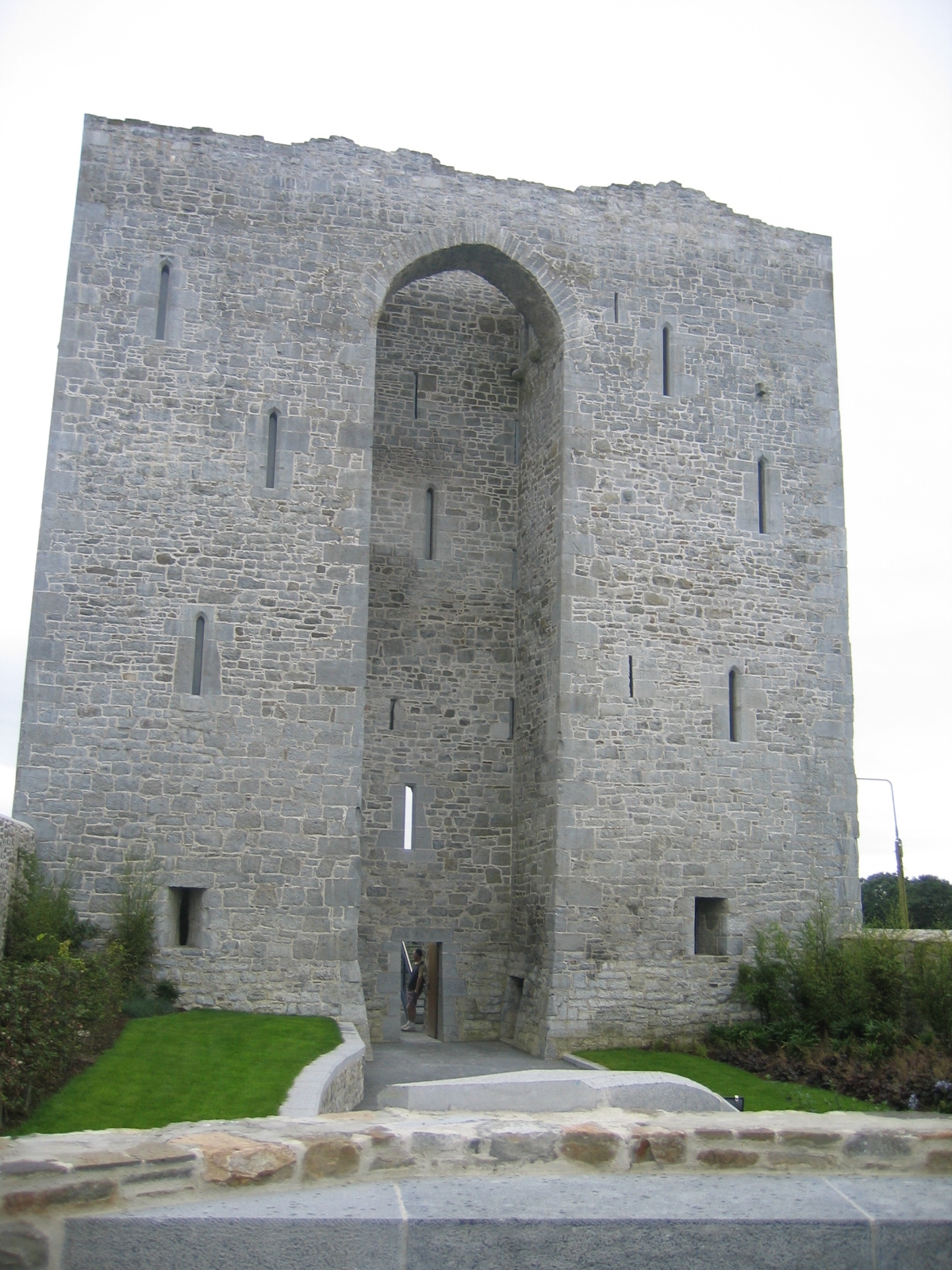
After the devastating fire, Ballyheigue Castle remained largely in ruins for several decades. Only a low section on the left side of the front elevation survived the destruction, which was eventually rebuilt and remodeled into residential apartments in 1975. This partial reconstruction preserved a fragment of the castle's historic facade and allowed for adaptive reuse of the site.
Since 1998, the castle grounds have been integrated into the Ballyheigue Castle Golf Course, linking the historic estate with contemporary recreational use. This transformation reflects a broader trend of repurposing historic properties to ensure their preservation and continued relevance in modern times.
Architectural remnants and heritage value
Today, the remains of Ballyheigue Castle offer a glimpse into its layered architectural history. The surviving elements, including the crenellated parapet and circular turrets, continue to evoke the castle's original Tudor-Gothic Revival character. The castle's design, blending a grand mansion with the appearance of a medieval fortress, exemplifies the Romantic era's fascination with medievalism and the revival of historic architectural styles.
The castle's historical significance is multifaceted, encompassing its role as a family seat for the Crosbies, a strategic law enforcement station, and a site of conflict during Ireland's struggle for independence. Its preservation as part of a golf course ensures that the site remains accessible and appreciated, maintaining a tangible connection to Ireland's cultural and architectural heritage.
Architectural details
- The main facade featured six bays with symmetrical arrangement.
- Two circular turrets at the corners, three stories high and one bay wide, flanked the entrance.
- Crenellated parapet crowned the structure, enhancing the castle-like appearance.
- Original roofing was thatch, typical of the mid-18th century construction.
- Enclosed courtyard layout added privacy and aesthetic appeal.
- Integration of 1758 house fabric within the early 19th-century expansion.
Historical timeline highlights
- Mid-18th century: Original house built on site, owned by Mac an Chrosáin family.
- Early 1700s: Land transferred to the Crosbie family.
- Circa 1809: Expansion and castellated transformation by Richard Morrison.
- 1840: First major fire damage recorded.
- 1890: Part of the castle repurposed as Royal Irish Constabulary station.
- 1921: Castle occupied by British forces and burned by IRA during Irish War of Independence.
- 1975: Partial reconstruction of front elevation into apartments.
- 1998: Grounds incorporated into Ballyheigue Castle Golf Course.
Frequently asked questions (FAQ)
- What is the historical significance of Ballyheigue Castle?
- Ballyheigue Castle, built in the 19th century, is a fine example of Gothic Revival architecture and holds great historical importance in the region. It was originally constructed as a residence for the local gentry and has witnessed many significant events in Irish history, making it a fascinating site for visitors interested in heritage.
- When was Ballyheigue Castle built?
- Ballyheigue Castle was constructed in the early 1800s, specifically around 1820. The castle was designed by the architect Daniel O'Connell and reflects the architectural styles of its time, showcasing intricate details and a rich history.
- What are the opening hours for Ballyheigue Castle?
- Ballyheigue Castle is open to visitors from 10 AM to 5 PM daily, with extended hours during the summer months. It is advisable to check the official website for any seasonal changes or special closures before planning your visit.
- Can I visit Ballyheigue Castle year-round?
- Yes, Ballyheigue Castle is accessible to visitors year-round, although certain areas may be restricted during winter months for preservation purposes. Always check ahead for the latest visitor information and any potential closures due to weather.
- Is it possible to take guided tours at Ballyheigue Castle?
- Yes, guided tours of Ballyheigue Castle are available, providing in-depth insights into its architecture and history. These tours are a great way to enhance your visit and learn more about the fascinating stories behind the castle.
- What are the ticket prices for visiting Ballyheigue Castle?
- Ticket prices for Ballyheigue Castle are typically £10 for adults, £5 for children, and discounts are available for families and groups. It is recommended to purchase tickets online in advance to ensure availability.
- When is the best time to visit Ballyheigue Castle?
- The best time to visit Ballyheigue Castle is during the spring and summer months, from April to September, when the weather is generally mild and the gardens are in full bloom. This period also offers a variety of events and activities that enhance the visitor experience.
- What nearby attractions can I explore while visiting Ballyheigue Castle?
- While visiting Ballyheigue Castle, you can explore the beautiful Ballyheigue Beach and the scenic Kerry Head, which offer stunning coastal views and outdoor activities. Additionally, the charming village of Ballyheigue itself is worth a stroll, with local shops and cafes to enjoy.
- How do I get to Ballyheigue Castle?
- Ballyheigue Castle is easily accessible by car, located just off the main road connecting Tralee and the coastal areas. Public transport options are limited, so it is recommended to check local bus services or consider renting a vehicle for convenience.
Information
Website
Visit websiteSources & official resources
Verify the information above using these authoritative references.
Loading map...
Visitor reviews
No reviews yet. Been here? Write the first review and help other travelers!
Write the first reviewVisited this castle? Share your experience
Your review helps other travelers and adds first-hand knowledge to our encyclopedia.