Ballinskelligs Castle
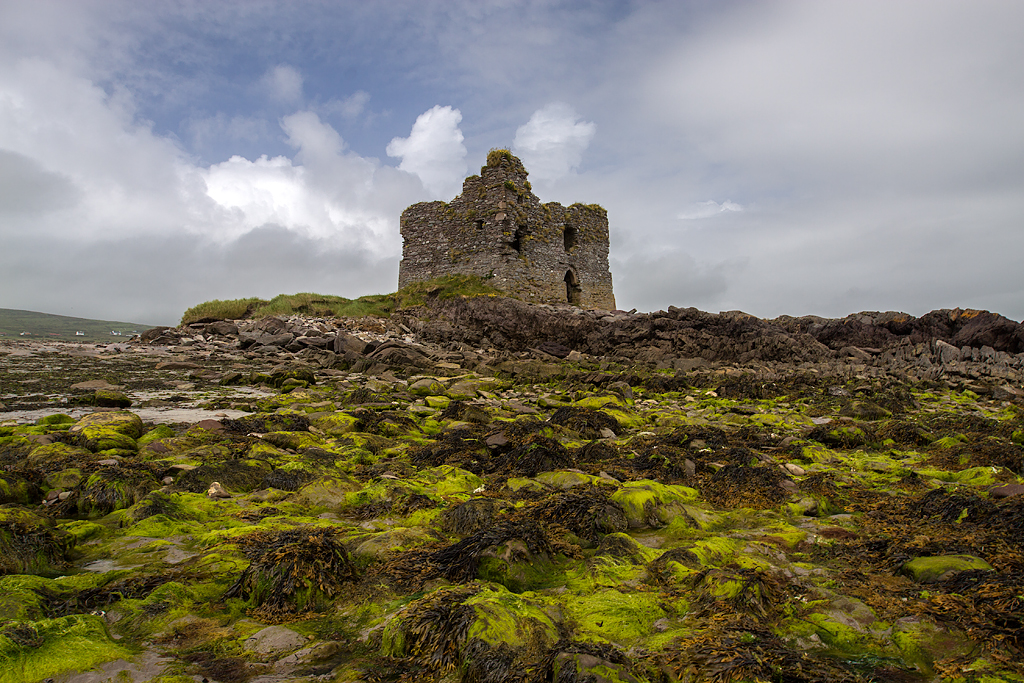
Ballinskelligs Castle stands prominently on a rocky outcrop overlooking the beach of Baile na Sceilge (Ballinskelligs) in County Kerry, Ireland. This 16th-century tower house was constructed by the MacCarthy Mór clan during the tumultuous post-medieval period, serving a vital role in coastal defense and maritime control.
Historical context and strategic significance
Built in the 16th century, Ballinskelligs Castle was primarily designed to protect the Ballinskelligs Bay from frequent pirate raids that threatened local trade and settlements along Ireland's southwest coast. The castle's location on a narrow rocky promontory provided a commanding view of the bay and the surrounding Atlantic seascape, enabling early detection of incoming vessels. It is also believed to have functioned as a toll station, where fees could be levied on ships entering the bay, reflecting the economic as well as military importance of the site.
The castle was initially under the control of the MacCarthy Mór family, a powerful Gaelic Irish dynasty that dominated much of southwest Ireland during the late medieval and early modern periods. In the early 17th century, ownership passed to the Sigerson family, with Christopher Sigerson recorded as residing there circa 1620. This transition likely marked a shift in the castle's role from purely defensive to also serving as a manorial residence, overseeing local lands and maritime activities.
The castle's decline is linked to the Cromwellian conquest of Ireland in the mid-17th century. Around 1651, it is believed that the castle was attacked and possibly destroyed by forces of the New Model Army, as part of their campaign to subdue Catholic-held territories. This fate was similar to that of nearby fortifications such as Fermoyle Castle, reflecting the widespread military upheaval of the era.
Architectural features and construction details
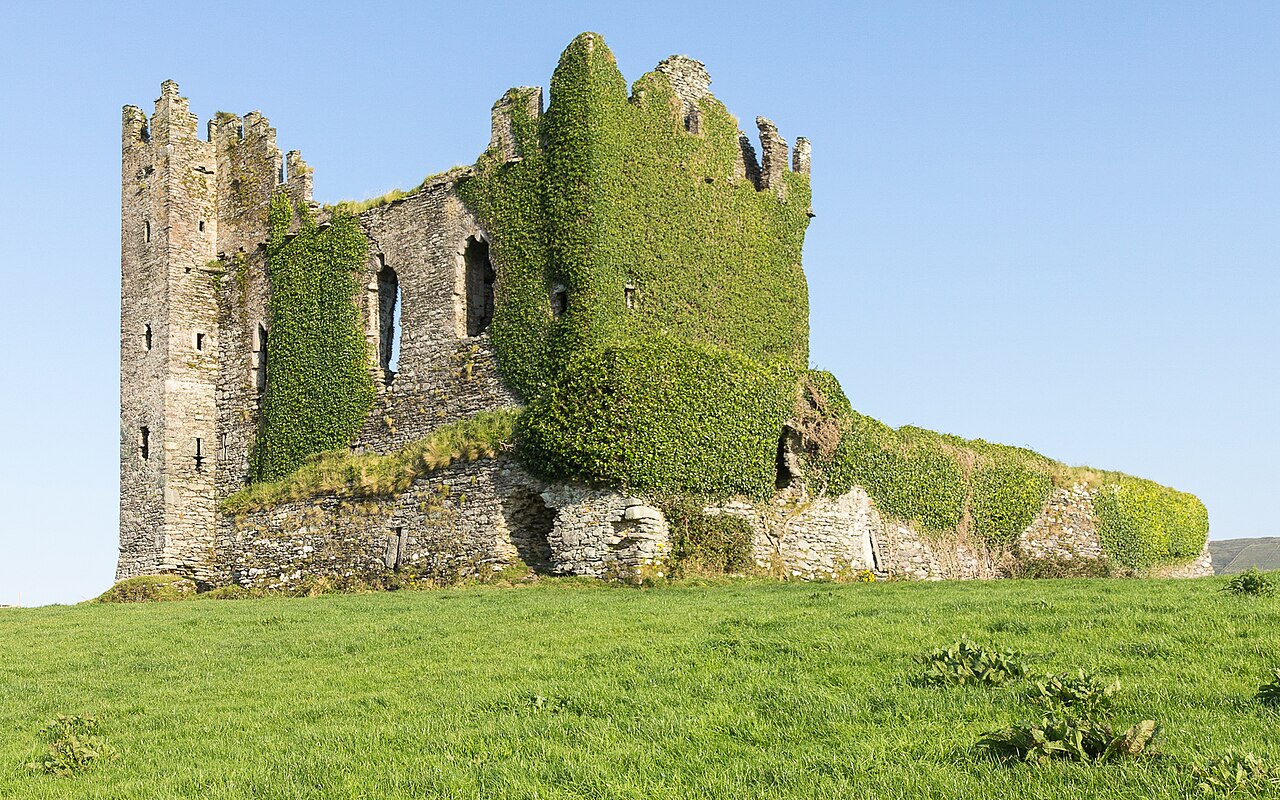
Ballinskelligs Castle is a classic example of a post-medieval tower house, a common type of fortified residence built in Ireland during the 15th and 16th centuries. The castle has a rectangular plan measuring approximately 10 meters by 7.85 meters, with walls that were originally about 2 meters thick at ground level. These thick walls were constructed from local bedrock and large rounded stones collected from the nearby coastline, providing substantial resistance to both attack and harsh maritime weather.
The corners of the castle are reinforced with finely cut sandstone blocks, a technique that enhanced structural stability and durability. The tower originally rose to three stories, although today it survives as a ruin with only partial remains of these upper levels.
The main entrance is located on the southeast side of the tower and is notable for an adjacent chamber built within the thickness of the wall to the right of the doorway. This chamber may have served a defensive purpose, such as a guardroom or a space to control access to the castle. Along the seaward face, a series of beam holes between the ground and first floors suggest the presence of a wooden platform or stairway, which would have provided defenders with a vantage point to monitor and repel attackers approaching from the bay.
Enclosure and surrounding fortifications
Archaeological excavations have revealed the foundations of an enclosure surrounding the tower house. This enclosure rests directly on the bedrock without deep trenches, indicating a relatively simple defensive perimeter compared to more elaborate medieval castles. The castle's position on a narrow rocky promontory at the southern edge of Ballinskelligs Bay means it was naturally protected on several sides by steep drops and the sea, reducing the need for extensive artificial fortifications.
Archaeological investigations and preservation
Excavations conducted in the late 20th century confirmed that Ballinskelligs Castle was constructed as a standalone structure in the post-medieval period, with no evidence of earlier buildings beneath it. Artifacts recovered from these digs date exclusively to the 16th and early 17th centuries, reinforcing the established timeline of the castle's foundation and use.
Today, the castle stands as a ruined tower house with significant portions of its walls and architectural features still visible. Coastal erosion has dramatically shaped the promontory on which the castle sits, but it remains a striking landmark that vividly illustrates the defensive needs and architectural methods of its time.
Visiting Ballinskelligs Castle
Ballinskelligs Castle is freely accessible to the public, making it a popular site for visitors interested in Ireland's rich medieval and post-medieval heritage. Its scenic location on the coast offers visitors dramatic views of Ballinskelligs Bay and the Atlantic Ocean beyond.
The castle's relatively small size and well-preserved ruins provide an intimate glimpse into the life of a coastal stronghold built to withstand pirate attacks and assert control over maritime trade routes. Visitors can explore the remains of the tower house and its surrounding enclosure, appreciating the craftsmanship of the masonry and the strategic importance of the site.
Nearby attractions and cultural significance
The castle is situated near the village of Ballinskelligs, which is also home to the historic Ballinskelligs Abbey. This proximity highlights the intertwined nature of religious and military architecture in the region during the early modern period. The castle and abbey together offer a rich cultural experience for those exploring County Kerry's coastal heritage.
Ballinskelligs Castle embodies the resilience and strategic ingenuity of Gaelic Ireland during a period of significant political and military change. Its ruins continue to draw historians, archaeologists, and tourists alike, serving as a tangible connection to Ireland's maritime past and the legacy of the MacCarthy Mór clan.
Frequently asked questions (FAQ)
- What is the historical significance of Ballinskelligs Castle?
- Ballinskelligs Castle, built in the 16th century, served as a stronghold for the O'Sullivan family, who were significant figures in the region's history. The castle played a crucial role in defending against English invasions and is a testament to the turbulent times of Ireland’s past.
- When was Ballinskelligs Castle constructed?
- Ballinskelligs Castle was constructed in the late 16th century, specifically around 1580. This period marked a time of significant conflict and change in Ireland, making the castle an important landmark for understanding the era.
- Can I visit Ballinskelligs Castle?
- Yes, visitors are welcome to explore Ballinskelligs Castle. However, it is recommended to check ahead for any specific visiting times or events that may affect access.
- What are the opening hours for Ballinskelligs Castle?
- Ballinskelligs Castle is typically open to visitors from 10 AM to 5 PM during the summer months. Hours may vary in the winter, so it's best to verify the current schedule before planning your visit.
- Is it possible to access Ballinskelligs Castle with mobility challenges?
- While Ballinskelligs Castle has some areas that can be accessed, the terrain surrounding the castle may present challenges for those with mobility issues. Visitors are encouraged to contact local tourism offices for more detailed accessibility information.
- What is the best time to visit Ballinskelligs Castle?
- The best time to visit Ballinskelligs Castle is during the late spring and summer months when the weather is milder and more conducive to outdoor exploration. This period also offers longer daylight hours, allowing for a more enjoyable visit.
- Are there any nearby attractions to Ballinskelligs Castle?
- Yes, nearby attractions include the stunning Ballinskelligs Bay and the scenic Skellig Michael, a UNESCO World Heritage Site. These locations offer breathtaking views and further insight into the rich history of the region.
- What are the ticket prices for visiting Ballinskelligs Castle?
- Ticket prices for Ballinskelligs Castle are generally affordable, with discounts available for children and seniors. It is advisable to check the castle's official website or contact visitor services for the most up-to-date pricing information.
Information
Loading map...
Visitor reviews
No reviews yet. Been here? Write the first review and help other travelers!
Write the first reviewVisited this castle? Share your experience
Your review helps other travelers and adds first-hand knowledge to our encyclopedia.