Ballinskelligs Castle
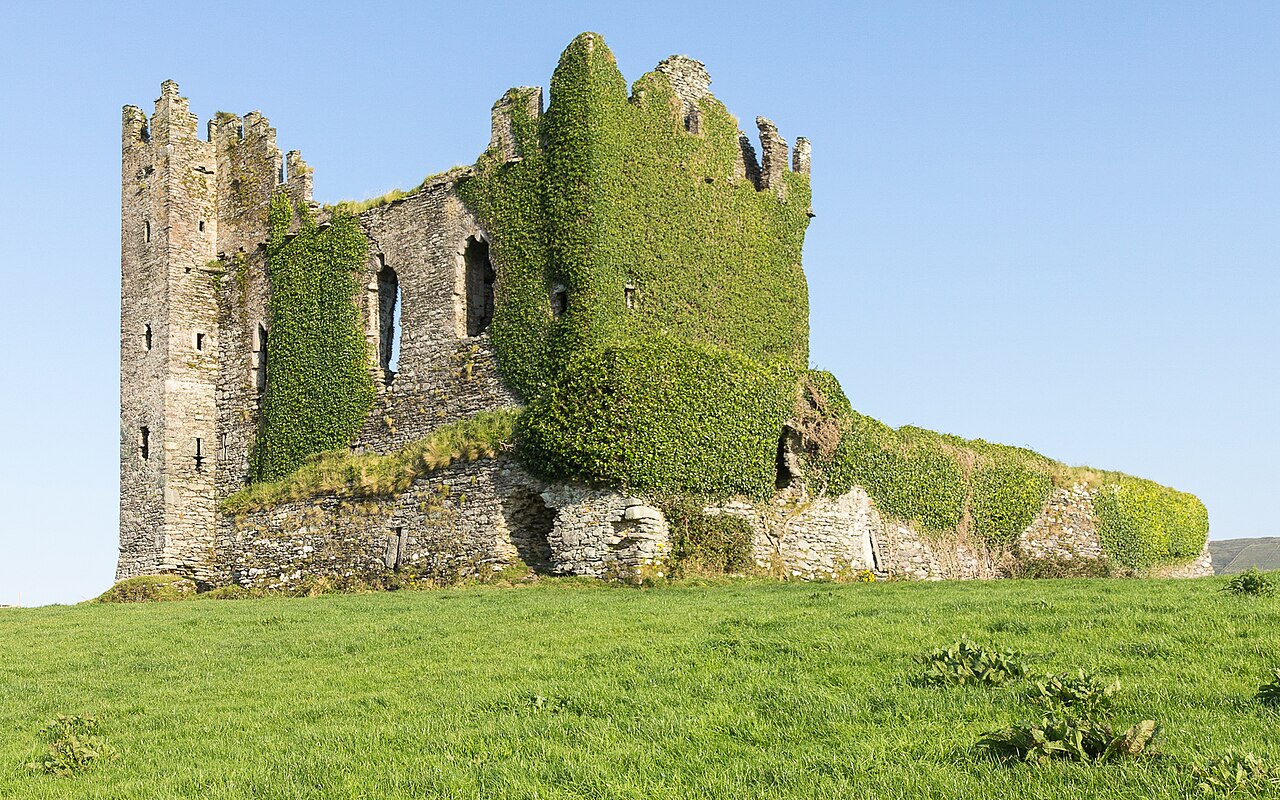
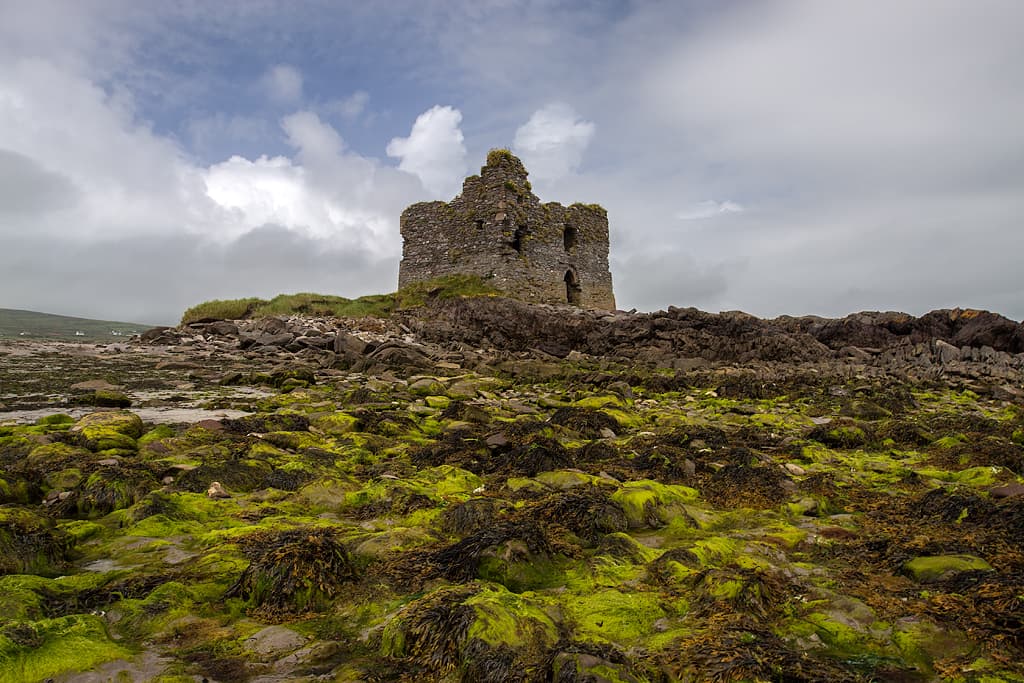
Ballinskelligs Castle is a notable 16th-century Renaissance hill castle located near Ballinskelligs on the Iveragh Peninsula in County Kerry, Ireland. Positioned strategically on the western shore of Ballinskelligs Bay, this castle occupies a narrow promontory that extends into the sea, making it vulnerable to ongoing coastal erosion. Its commanding location allowed it to oversee and control maritime traffic entering the bay, an important function during a period when piracy and maritime raids were common threats along the Irish coast.
Historical context and purpose
The castle was constructed by the MacCarthy Mór dynasty in the 16th century, a time marked by regional power struggles and the increasing need for coastal defense. The MacCarthy Mórs were a prominent Gaelic Irish family who ruled much of southwestern Ireland, including County Kerry. Ballinskelligs Castle served as a defensive stronghold to protect the bay from pirate incursions and to assert control over local maritime trade routes. It is believed that the castle also functioned as a customs post, where tariffs could be levied on incoming trade vessels, providing economic benefit to its owners.
Architectural features and construction
As a hill castle, Ballinskelligs Castle was built on elevated ground to maximize visibility and defensibility. The castle's design reflects typical Renaissance military architecture adapted to the Irish coastal environment. It features thick stone walls constructed from locally sourced materials, designed to withstand cannon fire and other artillery common in the period. The castle's layout includes a central tower or keep, surrounded by defensive walls and possibly a courtyard, although much of the detailed internal structure has been lost due to erosion and time.
The castle's position on a narrow promontory made it naturally defensible on three sides by steep cliffs and the sea, reducing the need for extensive fortifications on those fronts. The entrance would have been fortified with a gatehouse and possibly a drawbridge to control access. Battlements and arrow slits allowed defenders to repel attackers effectively.
Environmental challenges and preservation
Ballinskelligs Castle faces significant challenges from coastal erosion. The promontory on which it stands is subject to the relentless forces of the Atlantic Ocean, leading to gradual loss of land and structural damage. This erosion has resulted in the partial collapse of some sections of the castle, leaving it in a partially preserved state today. Conservation efforts focus on stabilizing the remaining structures and preventing further loss where possible.
Significance and visitor experience
Despite its ruined condition, Ballinskelligs Castle remains an important cultural and historical landmark in County Kerry. It offers visitors a glimpse into 16th-century Renaissance coastal fortifications and the maritime history of southwestern Ireland. The castle's dramatic location provides stunning views of Ballinskelligs Bay and the surrounding coastline, making it a popular destination for history enthusiasts and photographers alike.
Access to the castle involves a walk along coastal paths, which adds to the experience of exploring this remote and evocative site. Interpretive signage and local guides help visitors understand the castle's historical context and architectural features.
Frequently asked questions (FAQ)
- How do I get to Ballinskelligs Castle?
- Ballinskelligs Castle is accessible via coastal walking paths near Ballinskelligs village on the Iveragh Peninsula. Visitors should prepare for uneven terrain and check local maps for the best route.
- What is the historical significance of Ballinskelligs Castle?
- Built in the 16th century by the MacCarthy Mórs, Ballinskelligs Castle served to protect Ballinskelligs Bay from pirates and to control maritime trade, reflecting the turbulent coastal history of southwestern Ireland.
- Can I explore the interior of Ballinskelligs Castle?
- The castle is partially preserved and largely in ruins due to coastal erosion. While visitors can explore the exterior and some remaining structures, interior access is limited and should be approached with caution.
- When is the best time to visit Ballinskelligs Castle?
- The best time to visit is during late spring to early autumn when weather conditions are milder and coastal paths are safer for walking.
- Is there an entry fee to visit Ballinskelligs Castle?
- There is no entry fee to visit Ballinskelligs Castle, making it freely accessible to the public.
Photo gallery

Information
Loading map...
Visitor reviews
No reviews yet. Been here? Write the first review and help other travelers!
Write the first reviewVisited this castle? Share your experience
Your review helps other travelers and adds first-hand knowledge to our encyclopedia.