Ballincollig Castle
Ballincollig Castle is a significant Norman castle located to the south of the town of Ballincollig in County Cork, Ireland. Constructed in the aftermath of the Norman invasion of Ireland during the late 12th or early 13th century, the castle served as a strategic stronghold controlling the surrounding lands. Its position on a natural rise classifies it as a hill castle, which provided defensive advantages over the adjacent terrain.
Historical context and ownership
The castle was primarily associated with the Barrett family, a Norman lineage who held sway over the local area for several centuries. The Barretts were among the many Norman families who established fortified residences throughout Ireland following the conquest, consolidating their power through castles like Ballincollig. The castle's role was both military and administrative, overseeing the local population and protecting the region from rival clans and invaders.
Architectural features and layout
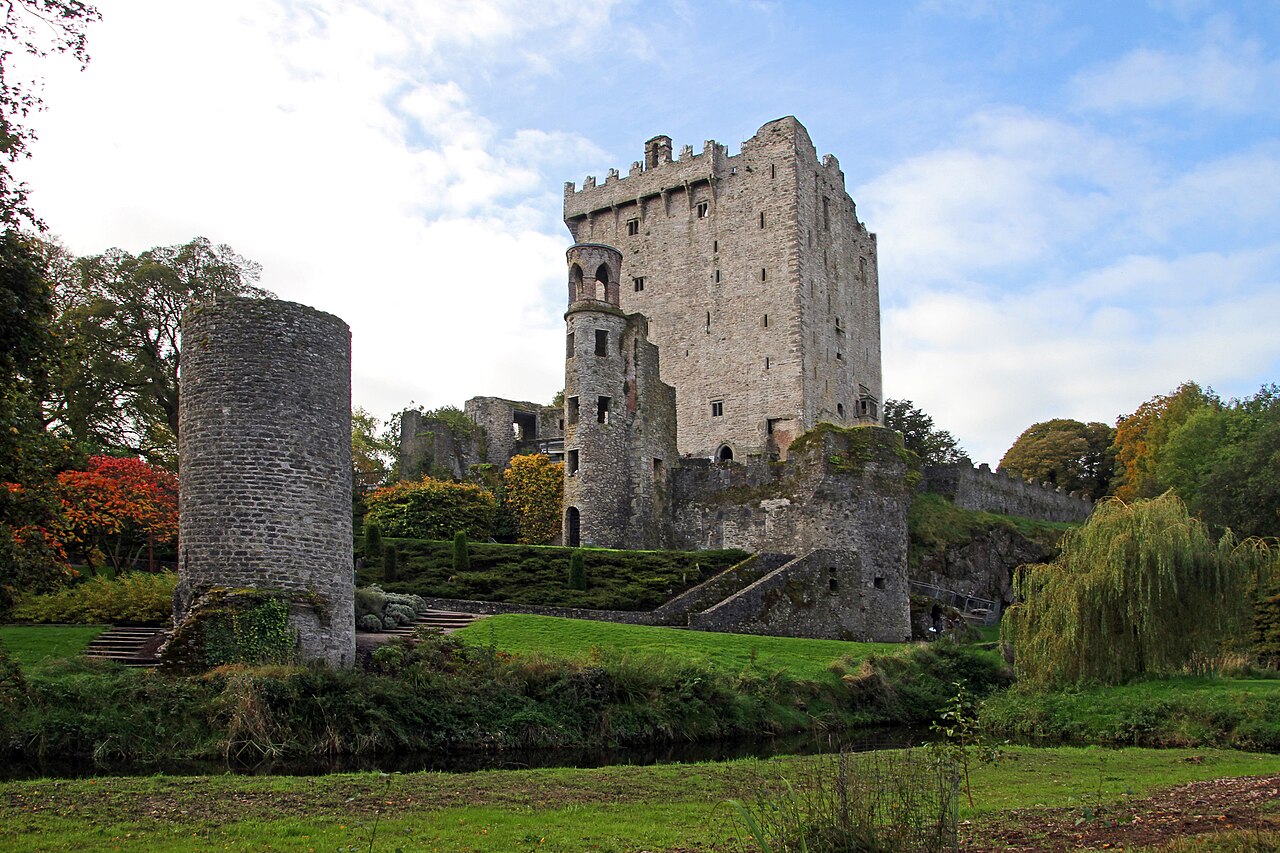
Ballincollig Castle retains several key elements typical of Norman military architecture. The original keep, a central fortified tower, still stands, demonstrating the castle's primary defensive structure. Keeps were designed as the last refuge during sieges and symbolized the lord's authority. Surrounding the keep is the curtain wall, which enclosed the castle's inner ward. This defensive wall is largely intact and includes two surviving towers that would have served as lookout points and positions for archers or artillery.
The castle's construction utilized local stone, and the masonry work reflects the Norman style characterized by thick walls and narrow windows for defense. The presence of multiple towers along the curtain wall allowed defenders to cover all approaches, creating overlapping fields of fire.
The keep and defensive structures
The keep at Ballincollig Castle is a multi-storey stone tower with remnants of arrow slits and battlements. Its design emphasizes verticality and strength, typical of Norman keeps. Although partially ruined, the keep's footprint and surviving walls provide valuable insight into the castle's original form and scale.
Curtain walls and towers
The curtain walls form a roughly rectangular enclosure around the keep and courtyard. The surviving towers are positioned at strategic points along the walls, enhancing the castle's defense. These towers likely had multiple floors and were equipped for archers and lookouts to monitor the surrounding countryside.
The castle in later periods
Over time, Ballincollig Castle fell into disuse and was partially dismantled, a fate common to many Norman castles in Ireland as military technology and political power shifted. Despite this, the castle remains a prominent ruin and a visible reminder of the Norman presence in County Cork.
Today, the castle is a protected site, attracting visitors interested in medieval history and Norman architecture. Its ruins offer a tangible connection to Ireland's complex medieval past and the era of castle-building that shaped much of the country's landscape.
Visiting Ballincollig Castle
While the castle is largely in ruins, visitors can explore the site to appreciate the scale and design of Norman fortifications. The location provides scenic views of the surrounding area, highlighting why the site was chosen for defense. Interpretive signage and local guides often provide historical context to enhance the visitor experience.
Accessibility may be limited due to the castle's condition, so visitors should exercise caution when exploring the ruins. The site is an important cultural landmark within County Cork, contributing to the region's heritage tourism.
Frequently asked questions (FAQ)
- What is the historical significance of Ballincollig Castle?
- Ballincollig Castle, built in the 16th century, served as a strategic fortification during the Irish Rebellion and has a rich history linked to the local community. The castle's design reflects the military architecture of its time, making it a significant site for understanding Ireland's past.
- When was Ballincollig Castle built?
- Ballincollig Castle was constructed in the early 1600s, with its origins dating back to around 1620. It was initially built as a stronghold for the local Anglo-Irish nobility and has endured various historical events throughout the centuries.
- Can I visit Ballincollig Castle?
- Yes, Ballincollig Castle is open to the public, and visitors are encouraged to explore its grounds and learn about its history. While the castle itself is in ruins, the surrounding parkland offers beautiful views and a peaceful atmosphere.
- What are the opening hours for Ballincollig Castle?
- Ballincollig Castle is open year-round, with visiting hours typically from dawn until dusk. However, it's a good idea to check local resources or visitor information for any seasonal changes or special events that may affect access.
- Is it possible to access Ballincollig Castle by public transport?
- Yes, Ballincollig Castle is accessible via public transport, with several bus services operating in the area. Visitors can take a bus from Cork city center that will drop them off within walking distance of the castle.
- What is the best time to visit Ballincollig Castle?
- The best time to visit Ballincollig Castle is during the spring and summer months when the weather is milder and the surrounding gardens are in full bloom. This time of year also offers a variety of local events and activities that can enhance your visit.
- Are there any nearby attractions to Ballincollig Castle?
- Yes, nearby attractions include the scenic Lee Valley and the historic village of Ballincollig itself, which offers shops and dining options. Visitors can also explore the nearby Cork City, which is home to a wealth of cultural and historical sights.
- What are the ticket prices for Ballincollig Castle?
- Entry to Ballincollig Castle is free, allowing everyone to enjoy its historical significance without any cost. However, donations are appreciated to help with the maintenance and preservation of the site.
- Is there parking available near Ballincollig Castle?
- Yes, there is parking available near Ballincollig Castle, including dedicated spaces for visitors. It's advisable to arrive early, especially during peak visiting times, to secure a parking spot.
Photo gallery

Information
Loading map...
Visitor reviews
No reviews yet. Been here? Write the first review and help other travelers!
Write the first reviewVisited this castle? Share your experience
Your review helps other travelers and adds first-hand knowledge to our encyclopedia.