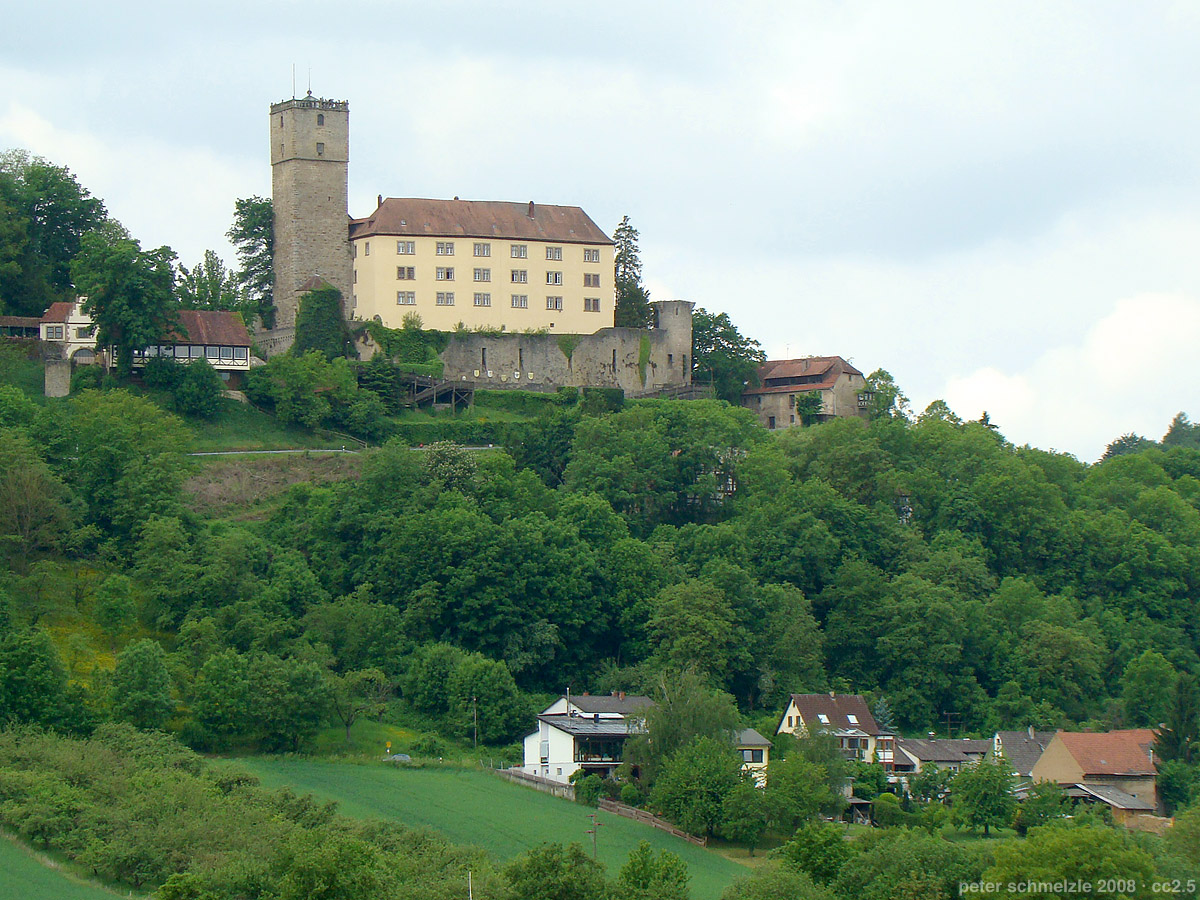
Bad Rappenau Wasserschloss
Bad Rappenau Wasserschloss is a remarkable example of a Renaissance water castle located in the town of Bad Rappenau, Germany. Constructed in 1601 by the noble von Gemmingen family, the castle stands on the site of an older manor, embodying centuries of regional history and architectural evolution. Its moated design, typical of water castles, offers both defensive advantages and aesthetic appeal, making it a significant cultural landmark in the region.
The castle’s strategic placement in the Unterdorf area of Bad Rappenau reflects the importance of water defenses during the Renaissance period. The surrounding moat and natural watercourses such as the Mühlbach stream played a crucial role in the castle’s protection and landscape integration. Today, the Wasserschloss serves as a vibrant cultural venue, hosting exhibitions and events that celebrate its rich heritage.
Historical background and significance
The history of Wasserschloss Bad Rappenau is deeply intertwined with the fortunes of the von Gemmingen family, a noble lineage that shaped much of the castle’s legacy. The current structure replaced an earlier fortified manor mentioned in documents from 1578, signaling a continuity of noble presence and regional authority in the Unterdorf of Bad Rappenau.
During the turbulent years of the Thirty Years’ War (1618–1648), the castle remarkably survived intact despite widespread destruction in the surrounding village. Unlike the Oberdorf castle, which was destroyed in 1645, the Wasserschloss was protected by guards under the command of General Tilly. The castle’s endurance through this conflict highlights its robust construction and strategic importance.
Following the war, the estate experienced political and religious upheavals. In 1630, the von Gemmingen family’s Protestant faith led to the confiscation of the property by imperial authorities. However, the estate was restored to the family after the Peace of Westphalia in 1648, underscoring the castle’s resilience and the shifting political landscape of the Holy Roman Empire.
Structural challenges emerged in 1682 when subsidence threatened the castle’s stability, prompting significant repairs to preserve its integrity. The von Gemmingen family retained ownership well into the 20th century, with Franz Maria Hans Weiprecht von Gemmingen being the last family lord to reside there until 1945.
Architectural features and layout
Wasserschloss Bad Rappenau exhibits a distinctive rectangular plan typical of Renaissance water castles, enhanced by the presence of two prominent corner towers at the northwest and northeast corners. These towers provided vantage points for defense and surveillance, blending functionality with architectural elegance.
The castle’s south facade is particularly notable for its stair tower housing an open-spindle spiral staircase crafted around 1601. This staircase is a technical marvel of its time, featuring five of the eight known stonemasons’ marks found throughout the castle. These marks link the craftsmanship to regional artisans who contributed to other significant buildings such as the Greckenschloss in Kochendorf and the chapel of Schloss Liebenstein.
The main entrance of the stair tower is richly adorned with Renaissance decorative elements. Above the doorway, visitors find a sculpted bust of Eberhard von Gemmingen, the castle’s builder, positioned over the combined coat of arms of the von Gemmingen and von Rodenstein families. Below this heraldic display, an inscription block records the construction date and commemorates Eberhard and his wife Anna Katharina von Rodenstein, surrounded by intricate ornamental carvings.
Additional architectural details include stone bands and window frames that articulate the facade, while Renaissance motifs are concentrated near the top of the northeast tower. Inside the castle, a carved stone featuring a hand motif above a gate adds to the artistic richness of the interior spaces.
Water defenses and landscape integration
The castle’s defensive design is enhanced by its integration with the natural landscape, particularly the Mühlbach stream which flows alongside the western park area. Although much of the stream is now covered near the castle, its historical role as part of the moat system and natural defense remains evident. The stream carves deeply into the nearby Fünfmühlental valley, creating a scenic setting that complements the castle’s water-based fortifications.
Associated buildings and estate features
The castle complex includes several ancillary structures that reflect its historical function as a noble estate. A former defensive tower located northeast along Babstadter Straße marks the boundary of the original forecourt, emphasizing the castle’s layered defensive system.
Nearby residential buildings preserve historic timber-framed gables, remnants of the estate’s servants’ quarters and sheep house, illustrating the social hierarchy and economic activities of the castle grounds. Some of these buildings have been adaptively reused, such as a former distillery now functioning as a kindergarten, demonstrating the estate’s evolving role in the community.
Memorials and boundary markers
The castle grounds feature important historical markers that preserve the memory of the estate’s past. Two boundary stones stand near the property: one dating from 1700 marking the lordship boundaries of the von Gemmingen family, and another from the 19th century delineating the border between the Grand Duchy of Baden and the Hessian enclave of Wimpfen.
A poignant memorial stone in the garden commemorates four forced laborers who died while defusing a bomb near the adjacent saltworks during the final months of World War II. This memorial underscores the castle’s connection to broader historical events beyond its noble origins.
Modern uses and cultural significance
After serving as a noble residence for several centuries, Wasserschloss Bad Rappenau transitioned to new functions in the 20th century. It operated as a sanatorium from 1965 to 1977, reflecting changing societal needs. Subsequently, from 1980 to 2001, the castle housed municipal administrative offices, integrating it into the civic life of Bad Rappenau.
Currently, the castle is dedicated to cultural activities, hosting exhibitions and serving as the home of a local art association. This adaptive reuse preserves the castle’s architectural heritage while promoting community engagement and tourism.
Overall, Bad Rappenau Wasserschloss stands as a testament to Renaissance castle architecture in Germany, combining historical resilience, architectural beauty, and cultural vitality. Its preservation and continued use ensure that this water castle remains a cherished landmark for future generations.
Frequently asked questions (FAQ)
- How do I get to Bad Rappenau Wasserschloss?
- Bad Rappenau Wasserschloss is easily accessible by car and public transport. If you are traveling by train, the nearest station is Bad Rappenau, from which you can take a short bus or taxi ride to the castle.
- What is the historical significance of Bad Rappenau Wasserschloss?
- Bad Rappenau Wasserschloss dates back to the 16th century and served as a noble residence. Its architecture reflects the Renaissance style, and it has played an important role in the local history of the region.
- When was Bad Rappenau Wasserschloss built?
- The construction of Bad Rappenau Wasserschloss began in the early 1500s. Over the years, it has undergone various renovations, preserving its historical charm while adapting to modern needs.
- Can I visit Bad Rappenau Wasserschloss year-round?
- Yes, Bad Rappenau Wasserschloss is open for visitors throughout the year, although specific tours or exhibitions may be seasonal. It's advisable to check the official website for the most current visiting hours and special events.
- Why is the architecture of Bad Rappenau Wasserschloss unique?
- The architecture of Bad Rappenau Wasserschloss is unique due to its blend of Renaissance and Baroque styles. The castle features ornate details, picturesque towers, and a stunning moat, making it an architectural gem in the region.
- Is it possible to take guided tours of the castle?
- Yes, guided tours of Bad Rappenau Wasserschloss are available and offer an in-depth look at its history and architecture. These tours are typically conducted in multiple languages, making them accessible to a wide audience.
- What are the ticket prices for visiting Bad Rappenau Wasserschloss?
- Ticket prices for Bad Rappenau Wasserschloss vary based on age and group size, with discounts often available for students and seniors. It is best to check the castle's official website for the latest pricing information.
- What are the opening hours for Bad Rappenau Wasserschloss?
- Bad Rappenau Wasserschloss typically opens at 10 AM and closes at 6 PM, but hours may vary depending on the season. Always check the castle's official website for the most accurate and up-to-date information on opening hours.
- What nearby attractions can I visit while at Bad Rappenau?
- In addition to Bad Rappenau Wasserschloss, visitors can explore the beautiful gardens and parks surrounding the castle. Nearby attractions include local museums and the picturesque town center, which offers shops and dining options.
Information
Loading map...
Visitor reviews
No reviews yet. Been here? Write the first review and help other travelers!
Write the first reviewVisited this castle? Share your experience
Your review helps other travelers and adds first-hand knowledge to our encyclopedia.