Avantas Castle

Avantas Castle in Evros, Greece
Evros, Greece
High Medieval (11th–13th c.)
Partially Preserved

Avantas Castle is a medieval fortress located on the outskirts of Alexandroupoli near the village of Avantas in the Evros region of Greece. This hill castle dates back to the high medieval period, specifically the 13th century, and played a strategic role in controlling the passages towards the plains of Komotini and the inland areas of the Rodopi mountain range.

Historical context and strategic importance

The castle's location atop a steep hill near a stream provided natural defensive advantages. Together with the nearby Potamos Castle, Avantas formed part of a network of fortifications overseeing critical routes in northeastern Greece. These castles were essential for monitoring and controlling movement across the region during the turbulent medieval period, when territorial control was contested among various powers including the Byzantine Empire and later Latin and Ottoman influences.

The site of Avantas Castle is notable for the coexistence of multiple historic layers, with evidence of Mycenaean, Classical, and Byzantine eras visible in the surrounding area. However, the castle itself primarily reflects medieval military architecture from the late 13th to early 14th centuries.

Architectural features and layout

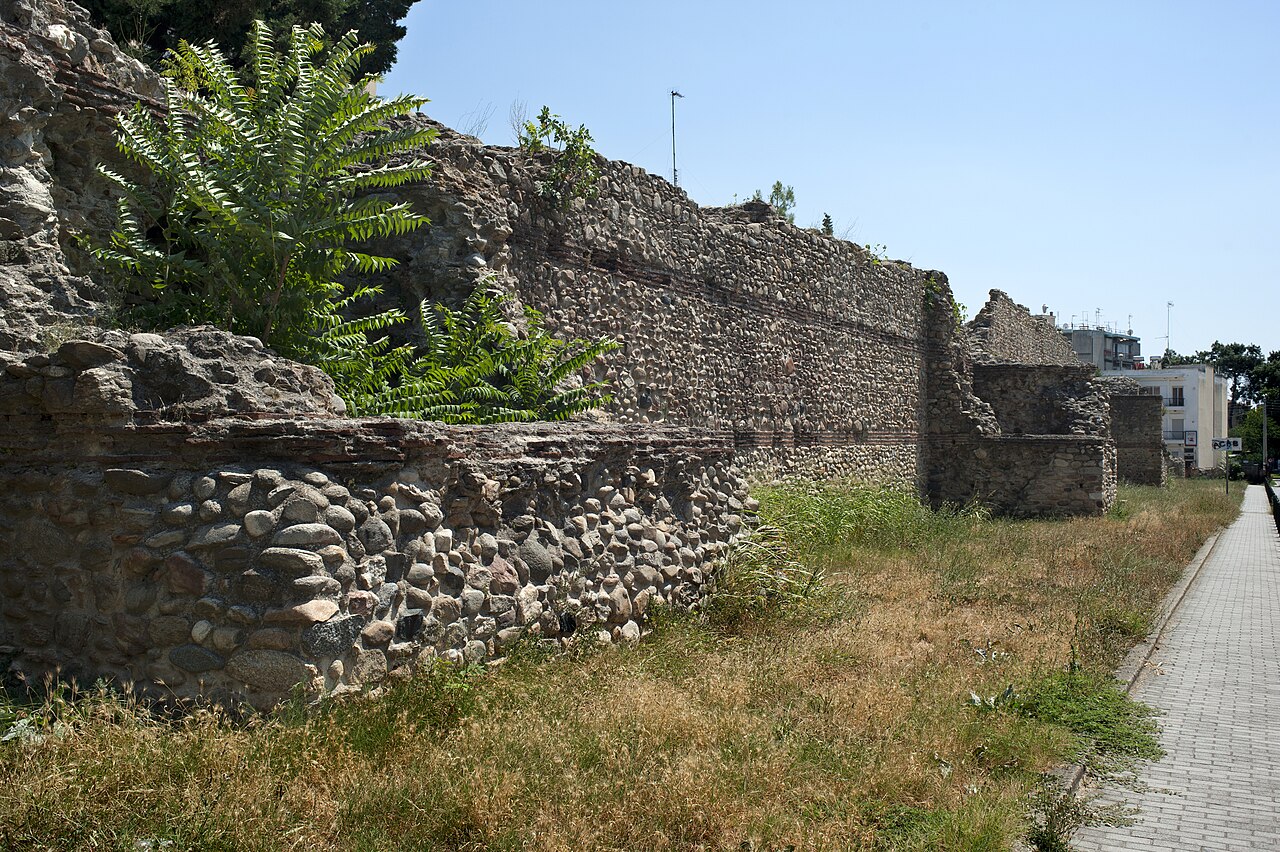
The castle is characterized by a simple but effective defensive design. It consists of a transverse wall approximately 140 meters long, running parallel to the contours of the hill, and a second wall about 40 meters long, nearly perpendicular to the first. This configuration creates an oblique rectangular fortified area covering just under one hectare.

The fortification takes advantage of the steep slope on one side, which serves as a natural barrier, while the other sides are protected by the constructed walls. The rough terrain around the hill reduces the need for continuous walls, a common medieval strategy to minimize construction while maximizing defense.

Four rectangular towers reinforce the walls, providing vantage points for surveillance and defense. There are two gates: one located at the end of the main wall, protected by a tower, and another gate in the middle section, situated between two towers. This gate arrangement allowed controlled access and exit points, vital for the castle's defensive function.

Unlike some contemporaneous castles, Avantas Castle does not show evidence of extensive residential buildings within its walls. The absence of architectural remains related to habitation suggests its primary use was military and strategic rather than as a noble residence or administrative center.

Older construction elements

Some massive domes incorporated into various parts of the fortification hint at the reuse of earlier building materials or the existence of an older fortification on the site. These architectural fragments may date back to previous Byzantine or even earlier periods, indicating the site's long-standing military significance.

Relationship with Potamos Castle

Avantas Castle is often mentioned alongside Potamos Castle, located nearby. While Avantas has a relatively straightforward wall and tower configuration, Potamos Castle features a more complex design with three towers forming an internal enclosure and an additional external enclosure. Both castles share the strategic goal of overseeing the surrounding plains and mountain passes.

Current condition and preservation

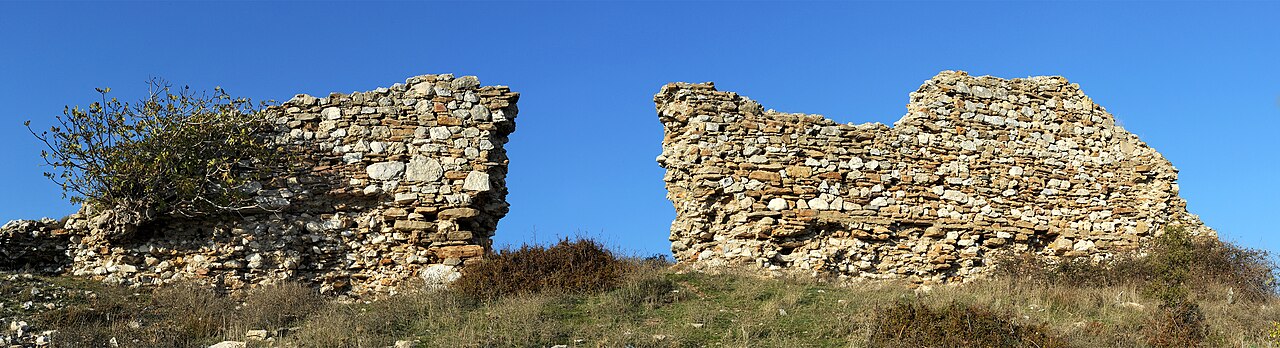
Today, Avantas Castle remains partially preserved. Although much of the structure is in ruins, the walls and towers still outline the original fortification's shape and defensive layout. The site offers valuable insights into medieval military architecture in the region and is a point of interest for visitors and scholars studying Byzantine and medieval fortifications in Greece.

Visiting Avantas Castle

Located near Alexandroupoli, Avantas Castle is accessible to visitors interested in exploring medieval fortifications. The castle's hilltop position provides panoramic views of the surrounding landscape, including the plains of Komotini and the Rodopi mountains. Visitors can observe the remains of the walls and towers while appreciating the strategic significance of this medieval stronghold.

Frequently asked questions (FAQ)

When was Avantas Castle built?
Avantas Castle was constructed in the 13th century during the high medieval period, serving as a strategic fortification.
What type of castle is Avantas Castle?
Avantas Castle is a hill castle, built on a steep hill to take advantage of natural defensive terrain.
What is the current condition of Avantas Castle?
The castle is partially preserved, with visible walls and towers outlining the original fortification.
Can I visit Avantas Castle?
Yes, Avantas Castle is accessible to visitors. It is located near Alexandroupoli and offers panoramic views of the surrounding region.
What architectural features does Avantas Castle have?
The castle features a transverse wall approximately 140 meters long, four rectangular towers, and two gates, designed for military defense.

Information

Hill Castle

Loading map...

Visitor reviews

No reviews yet. Been here? Write the first review and help other travelers!

Write the first review

Visited this castle? Share your experience

Your review helps other travelers and adds first-hand knowledge to our encyclopedia.

Write a review

(5/5)

0/2000 characters

Your review will be visible after admin approval

Nearby castles

27.8 km

Enez Castle

Enez, Turkey

Enez Castle, locally known as Enez Kalesi, is a significant historical fortress located in the center of the town of Enez, in the province of Edirne, Turkey. This castle stands on a rocky outcrop that once formed the acropolis of the ancient Greek city of Aenus. The strategic position of the castle at the estuary of the Meriç/Evros river, which currently marks the border between Turkey and Greece, highlights its historical importance as a defensive stronghold controlling access to the region. The castle's origins trace back to the Early Medieval period, specifically the 6th century, when it was most likely constructed under the orders of the Byzantine Emperor Justinian I. During his reign, significant fortification efforts were undertaken, including the heightening of city walls and the protection of previously vulnerable shorelines. Contemporary Byzantine historian Procopius documented that these fortifications, including Enez Castle, were built to repel invasions from barbarian groups advancing from the Balkans. Historical context and strategic significance Enez Castle was built on the site of the ancient city of Aenus, which was known as Ainos during Byzantine times. The city was naturally defended by broad marshes surrounding the estuary, adding to its defensive advantage. Throughout its history, the castle and the city endured numerous attacks and changes of control, reflecting the turbulent political landscape of the region. Medieval conflicts and changes of rule In 1189, during the Third Crusade, the city was plundered by soldiers under Duke Frederick of Swabia, forcing the inhabitants to flee by ship. Later, in the early 13th century, under Latin rule, the city suffered a raid by the Cumans in 1237. By 1263, the Byzantines had regained control, only to face a siege by the Bulgarians in 1294. The mid-14th century saw internal Byzantine conflict between John VI Kantakouzenos and John V Palaiologos, with the city contested during the 1350s. The gradual Ottoman conquest of Thrace in the following decades made Enez a refuge for Greek populations. From approximately 1384, the city was governed by the Genoese until the Ottoman Sultan Mehmed the Conqueror captured it in 1456 after a combined land and sea assault. Ottoman period and architectural transformations Following the Ottoman conquest, Mehmed II granted the city as an appanage to Demetrios Palaiologos in 1463, though it was reclaimed by the Sultan in 1467 after Demetrios fell from favor. The city briefly fell to the Venetians in 1469 before returning to Ottoman control. The Ottomans undertook restoration efforts on Enez Castle, including the conversion of the 6th-century Hagia Sophia Basilica within the castle walls into a mosque. This transformation illustrates the adaptive reuse of religious and defensive structures typical of Ottoman architectural practice in conquered territories. Architectural features and current condition The castle's fortifications include well-preserved walls and a line of towers that formed part of the outer defenses along the shore. While most interior buildings have vanished over time, the remains of the basilica-turned-mosque survive, though in a state of ruin. Archaeological excavations are ongoing, with restoration efforts visible, particularly around the basilica. Visitors today can freely access the castle grounds, experiencing the quiet atmosphere of the town and the historical ambiance of this Early Medieval fortress. The castle offers insight into Byzantine military architecture and the layered history of Thrace, from ancient Greek origins through Byzantine, Latin, Genoese, Venetian, and Ottoman periods. Geographical and cultural context The location of Enez Castle at the mouth of the Meriç/Evros river provided a natural defensive advantage and control over important waterways. The surrounding marshlands further enhanced its security, making it a key site for controlling access between Europe and Asia Minor. Today, the castle stands as a cultural monument reflecting the complex history of the region. Its ruins evoke the succession of empires and peoples that have shaped the area's identity over more than a millennium and a half. Visiting Enez Castle The castle is open to the public without charge, allowing visitors to explore its extensive walls and towers. The ongoing archaeological work enriches the site's historical narrative, and efforts to restore the basilica/mosque aim to preserve this unique heritage. The peaceful setting of Enez town complements the experience, offering a glimpse into a less frequented but historically rich corner of Turkey.

Early Medieval (5th–10th c.)
Details
47.3 km
Frourio Komotini — Greece castle

Frourio Komotini

, Greece

Frourio Komotini is a notable hill castle located in the region of northeastern Greece. This castle is historically significant for its role in the defense and administration of the area, particularly during the medieval period. Its elevated position on a hill provided strategic advantages for surveillance and protection against invaders.Historical background and significanceThe castle's origins trace back to the Byzantine era, with subsequent modifications and fortifications added during the Ottoman period. It served as a military stronghold and administrative center, overseeing the surrounding region and controlling key routes. The castle's presence reflects the turbulent history of the area, marked by frequent conflicts and changing rulers.Architectural features and layoutThe castle is characterized by its stone curtain walls that enclose the inner courtyard, with remnants of defensive towers strategically placed along the perimeter. The walls incorporate arrow slits and battlements designed for archers and artillery defense. Although some sections have deteriorated over time, the structural layout reveals a typical hill castle design optimized for defense and visibility.Defensive structuresThe castle's fortifications include a main gatehouse fortified with a portcullis and guard chambers. The towers, positioned at key points, allowed defenders to monitor and repel attacks effectively. The elevated location also enabled defenders to observe approaching enemies from a distance.Internal buildingsWithin the castle walls, there are remains of residential quarters, storage facilities, and a small chapel. These structures indicate the castle's dual function as both a military installation and a place of habitation for soldiers and administrators.Strategic location and landscapeSituated on a prominent hill, Frourio Komotini overlooks the surrounding plains and roadways. This vantage point was crucial for controlling movement through the region and providing early warning of potential threats. The natural topography enhanced the castle's defensive capabilities, making it difficult for attackers to mount a successful siege.Current condition and preservationToday, Frourio Komotini is partially preserved, with significant portions of its walls and towers still standing. The site is accessible to visitors interested in exploring its historical and architectural heritage. Preservation efforts focus on maintaining the existing structures and preventing further deterioration.Visiting information and cultural importanceThe castle is a cultural landmark in the region, attracting historians, archaeologists, and tourists. It offers insight into the medieval military architecture of Greece and the historical dynamics of the area. Visitors can explore the ruins, enjoy panoramic views, and learn about the castle's role in regional history.

Details
48.9 km
Frourio Nymfaia — Greece castle

Frourio Nymfaia

, Greece

Frourio Nymfaia represents a significant example of a medieval fortress located in Greece, now preserved as archaeological ruins. Though the exact city of its location remains uncertain, this site offers valuable insights into the defensive architecture and historical military strategies of the region during the medieval period. Historical context and significance The fortress known as Frourio Nymfaia was likely constructed during the Middle Ages, a time when fortifications played a crucial role in protecting settlements and controlling strategic routes. Castles and fortified sites such as this one were essential for defense against invasions and local conflicts. The remains of Frourio Nymfaia contribute to understanding the broader historical landscape of medieval Greece, where various powers including Byzantine, Frankish, and Ottoman influences intersected. Architectural features and layout As an archaeological ruin, Frourio Nymfaia preserves remnants of its original stone walls and defensive structures. The fortress likely included typical medieval features such as thick curtain walls, towers for surveillance and defense, and possibly a gatehouse controlling access. The layout would have been designed to maximize defense, with elevated positions and limited entry points. Defensive walls and towers The surviving walls of Frourio Nymfaia show evidence of robust construction techniques characteristic of medieval fortifications. These walls would have been constructed to withstand sieges and attacks, incorporating battlements and arrow slits for archers. Towers, positioned at strategic intervals, provided vantage points for defenders to monitor the surrounding area and repel attackers. Interior structures and courtyards Within the fortress, there may have been courtyards serving as gathering and operational spaces for troops. Although much of the internal buildings have not survived intact, archaeological studies suggest the presence of living quarters, storage rooms, and possibly a chapel or small church, which were common in medieval castles. Current condition and archaeological importance Today, Frourio Nymfaia exists primarily as ruins, with many of its original structures reduced to foundations and partial walls. These remains are valuable for archaeological research, providing material evidence of medieval military architecture and settlement patterns in Greece. Preservation efforts focus on stabilizing the ruins and facilitating study and public access. Visiting Frourio Nymfaia As an archaeological site, Frourio Nymfaia may be accessible to visitors interested in medieval history and architecture. Visitors can explore the ruins to observe the layout and construction techniques of a medieval fortress firsthand. Information panels or guided tours, if available, would enhance understanding of the site's historical context and architectural significance. Frourio Nymfaia in the broader context of Greek medieval fortifications This fortress is part of a network of medieval castles and fortifications across Greece that illustrate the region's turbulent history. These sites reflect the strategic importance of controlling trade routes, defending against invasions, and asserting political power during the medieval period. Frourio Nymfaia adds to this narrative by offering a glimpse into local defensive architecture and historical military presence.

Late Medieval (14th–15th c.)
Details