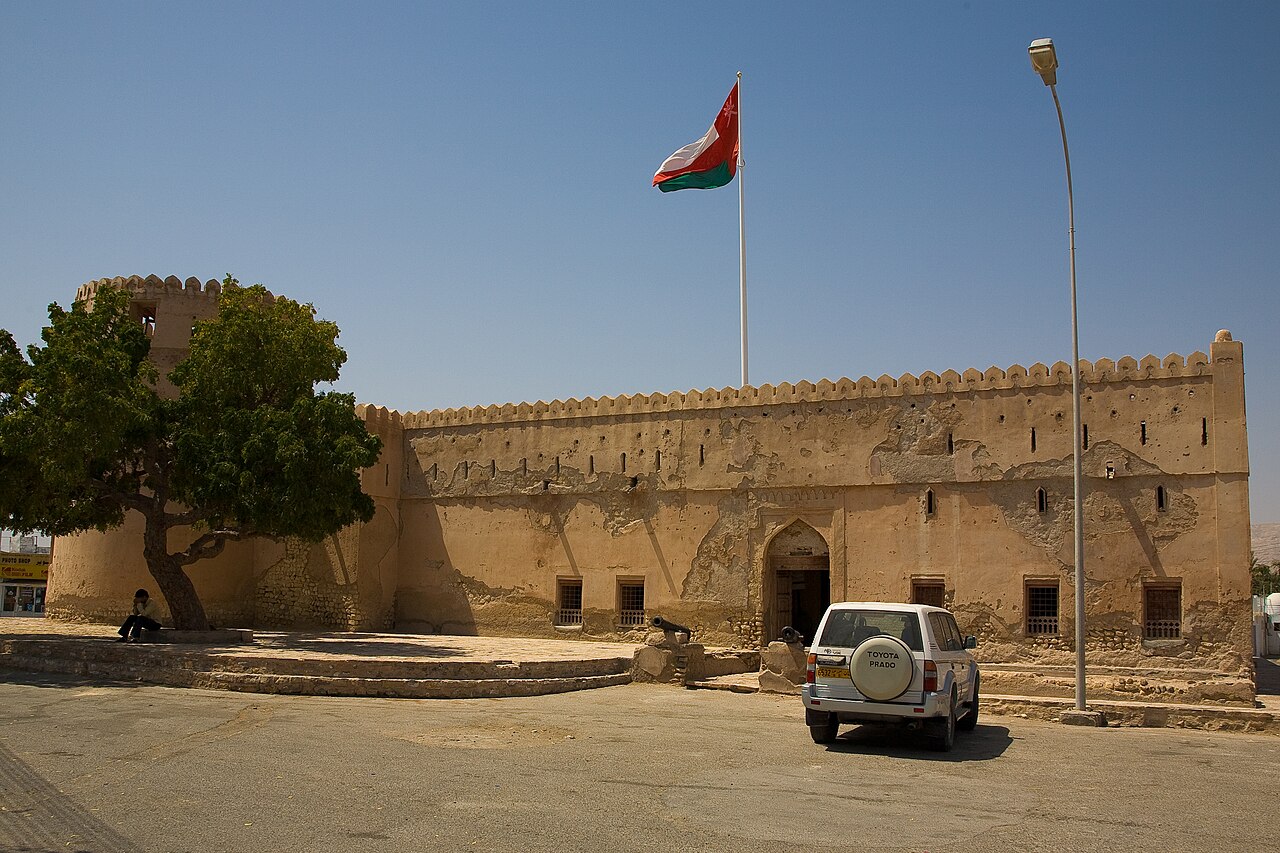
As Sifah Tower
As Sifah Tower is a historic coastal watchtower located in the village of As Sifah within the Muscat Governorate of Oman. Positioned approximately 200 meters from the shoreline on a strategic hilltop, this tower served as a military lookout point designed to monitor maritime activity and provide early warnings of approaching threats during the 16th and 17th centuries.
The tower's square ground plan and probable two-floor structure reflect typical defensive architecture of the period. Its walls are punctuated by numerous gun slits, emphasizing its primary function as a fortification equipped for armed defense. These narrow openings allowed defenders to fire upon enemies while remaining protected, a common feature in watchtowers guarding coastal regions vulnerable to raids or invasions.
Architectural features and military function
Constructed using local stone materials, As Sifah Tower exhibits the simplicity and robustness characteristic of military architecture in Oman during the late Renaissance period. The tower's elevated position on a hill provided extensive views over the seashore and surrounding landscape, enabling sentries to observe approaching ships from a distance.
The tower likely contained two floors, with the lower level serving as storage or shelter and the upper floor used for surveillance and defense. The presence of gun slits on multiple sides allowed defenders to cover a wide range of angles, enhancing the tower's defensive capabilities against potential attackers.
Historical context and strategic importance
During the 16th and 17th centuries, Oman faced threats from regional powers and European colonial forces vying for control over maritime trade routes. Coastal watchtowers like As Sifah were integral components of the defensive network protecting Oman's shores. They enabled early detection of hostile vessels, giving local forces time to prepare or signal nearby fortifications.
While specific historical records about As Sifah Tower are scarce, its architectural features and location suggest it played a role in safeguarding the Muscat coastline and nearby settlements. The tower's endurance as a ruin today offers insight into the military strategies employed in Oman's coastal defense systems centuries ago.
Current condition and visitor experience
Today, As Sifah Tower stands as a partially preserved ruin, accessible to visitors who appreciate its remote and tranquil setting. The tower's elevated position affords wide panoramic views of the Arabian Sea and the surrounding coastal landscape, making it a point of interest for history enthusiasts and photographers alike.
Visitors can explore the remains of the tower freely, experiencing firsthand the scale and defensive design of this military structure. Its solitude and scenic location contribute to a unique atmosphere, contrasting with more heavily restored or tourist-oriented castles and forts in the region.
Architectural significance within Oman's heritage
As Sifah Tower exemplifies the functional and strategic design of Renaissance-era military architecture in Oman. Its simple yet effective construction highlights the emphasis on surveillance and defense along the coast during a period of heightened maritime conflict.
The tower is part of a broader network of similar watchtowers and forts that collectively narrate the story of Oman's efforts to protect its shores and maintain control over vital sea routes. Preserving such structures provides valuable insight into the region's historical military infrastructure and architectural practices.
Frequently asked questions (FAQ)
- What is the historical significance of As Sifah Tower?
- As Sifah Tower is a remarkable example of Omani architecture and a symbol of the region's rich maritime heritage. Built in the 17th century, it served as a watchtower to protect the coastal area from invasions and pirates, reflecting the strategic importance of As Sifah in Oman's history.
- When was As Sifah Tower constructed?
- As Sifah Tower was constructed in the late 17th century, around the year 1680. This period marked a time of significant development in Oman's coastal defenses, and the tower played a crucial role in safeguarding the local population and trade routes.
- How do I get to As Sifah Tower?
- To reach As Sifah Tower, you can drive from Muscat, which is approximately 45 kilometers away. There are also local taxis and tours available that can take you directly to the site, making it accessible for visitors.
- Is it possible to enter As Sifah Tower?
- Currently, visitors can explore the exterior of As Sifah Tower, but entry into the tower itself may be restricted. It's advisable to check local guidelines before your visit for any updates on accessibility and tours.
- What are the opening hours for As Sifah Tower?
- As Sifah Tower is typically open to visitors from dawn until dusk. However, it is recommended to check in advance for any seasonal variations or special events that may affect these hours.
- Can I take photographs at As Sifah Tower?
- Yes, photography is allowed at As Sifah Tower, and it is encouraged to capture the stunning views and architectural details. Just be mindful of other visitors and respect any signage regarding photography restrictions.
- What is the best time to visit As Sifah Tower?
- The best time to visit As Sifah Tower is during the cooler months, from October to April, when temperatures are more pleasant for outdoor exploration. Early mornings or late afternoons can also provide stunning lighting for photography.
- Are there any nearby attractions to visit after As Sifah Tower?
- Yes, after visiting As Sifah Tower, you can explore the nearby beaches and enjoy water sports or relax by the sea. Additionally, the charming village of As Sifah offers local dining options and cultural experiences to enhance your visit.
- What are the ticket prices for As Sifah Tower?
- There is no entrance fee to visit As Sifah Tower, making it an accessible attraction for all visitors. However, be aware that some guided tours in the area may have associated costs.
Loading map...
Visitor reviews
No reviews yet. Been here? Write the first review and help other travelers!
Write the first reviewVisited this castle? Share your experience
Your review helps other travelers and adds first-hand knowledge to our encyclopedia.