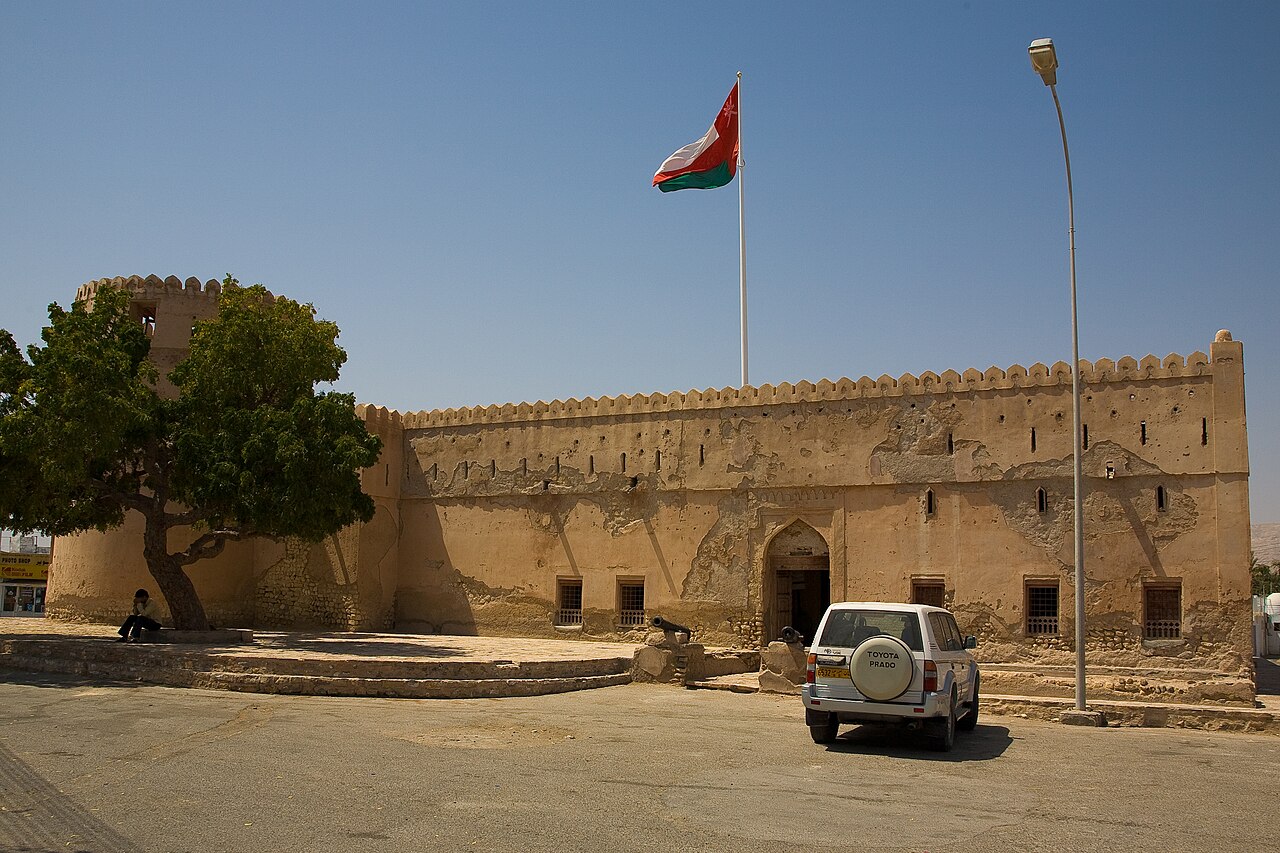
Al Sirah Tower, also spelled as Serah, is a notable historical fortification located in the coastal town of Quriyat in the Muscat Governorate of Oman. This tower stands prominently on a rocky islet at the entrance to Quriyat harbor, providing a strategic vantage point over the surrounding waters. Its position marks it as a critical element in the town's historic defensive network.
Historical background and significance
The tower is also known as the Imam Nasir bin Murshid Fort, named after the influential imam who ruled Oman from 1624 to 1649. Imam Nasir bin Murshid is credited with uniting Oman and expelling the Portuguese from several coastal strongholds during the early to mid-17th century. The capture of the Fort of Curiate (modern-day Quriyat) from Portuguese control in the 1640s was a significant event in this campaign, and the tower is closely associated with these military efforts.
Although the tower's exact construction date is not precisely documented, its association with Imam Nasir bin Murshid and the historical context strongly suggest it was built or significantly reinforced in the 17th century. This period corresponds with the broader resurgence of Omani fortifications as part of the struggle to reclaim sovereignty from European colonial powers.
Architectural features and design
Al Sirah Tower is characterized by its distinctive D-shaped design, a form commonly used in coastal watchtowers and small forts throughout Oman and the Arabian Peninsula. This shape provided a solid defensive front facing the sea while allowing defenders to monitor and control maritime approaches effectively.
The tower's construction utilizes local stone and traditional masonry techniques, adapted to withstand the harsh coastal climate and potential sieges. Its walls are thick and robust, designed to resist cannon fire and other artillery that were increasingly common in the 17th century.
Serving primarily as a watchtower, Al Sirah was part of a triad of fortifications protecting Quriyat. Alongside the tower, the town also features the Quriyat Castle centrally located within the town and Al Kharmooh Tower at the southern end. Together, these structures formed an integrated defensive system to safeguard the harbor and local population from naval threats.
Location and accessibility
The tower's placement on a rocky islet at the harbor mouth made it a natural sentinel point, overseeing all incoming vessels. This strategic location enhanced its role in early warning and defense against potential invaders or pirates.
Currently, Al Sirah Tower is not easily accessible year-round. It can be reached on foot only during low tide when the water recedes enough to expose a natural pathway. At other times, the tower remains surrounded by water, limiting access and preserving its isolated defensive position.
Preservation and current condition
While detailed information about the current condition of Al Sirah Tower is limited, it remains an important cultural and historical landmark within Quriyat. Its preservation contributes to understanding Oman's coastal defense strategies during the Renaissance period and the era of Portuguese-Omani conflicts.
The tower's remote location and tidal accessibility have helped protect it from extensive modern alterations, although this also means it is less frequently visited and studied compared to other fortifications in the region.
Related fortifications in Quriyat
Quriyat's defensive network includes the centrally located Quriyat Castle, which served as the main stronghold, and Al Kharmooh Tower, positioned at the southern edge of the town. These fortifications complemented Al Sirah Tower's maritime surveillance role, creating a layered defense system against seaborne threats.
Quriyat Castle
Located in the heart of the town, Quriyat Castle was the administrative and military center, overseeing local governance and defense coordination.
Al Kharmooh Tower
Situated at the southern end of Quriyat, this tower functioned similarly to Al Sirah, monitoring approaches from the sea and supporting the town's overall security.
Visiting information
Visitors interested in exploring Al Sirah Tower should plan their visit around the tidal schedule, as access on foot is only possible during low tide. The tower's remote location and limited accessibility mean it is less frequented by tourists, offering a more secluded historical experience.
Due to its condition and location, there are no established visitor facilities or guided tours specifically for Al Sirah Tower, so visitors should prepare accordingly and exercise caution when approaching the site.
Frequently asked questions (FAQ)
- What is the historical significance of Al Sirah Tower?
- Al Sirah Tower is a prominent historical landmark in Quriyat, Oman, dating back to the 17th century. It served as a defensive structure during the Omani-Portuguese conflicts and is a testament to the architectural and military ingenuity of the period. Today, it symbolizes Oman's rich heritage and cultural history.
- When was Al Sirah Tower built?
- Al Sirah Tower was constructed in the late 1600s, specifically during the reign of Sultan Saif bin Sultan. Its strategic location was chosen to protect the coastal area of Quriyat from potential invasions. The tower has stood the test of time, showcasing the traditional Omani architectural style.
- Can I visit Al Sirah Tower?
- Yes, Al Sirah Tower is open to visitors who wish to explore its historical and architectural significance. Visitors can enjoy guided tours that provide insights into the tower's history and its role in Oman's past. It is advisable to check local guidelines for any visitor restrictions or requirements.
- What are the opening hours for Al Sirah Tower?
- Al Sirah Tower is typically open to the public from 9 AM to 5 PM, Saturday through Thursday. It is closed on Fridays, allowing for maintenance and preservation efforts. Visitors are encouraged to arrive early to fully appreciate the site.
- Is it possible to access Al Sirah Tower with a wheelchair?
- Access to Al Sirah Tower may be challenging due to its historical structure and surrounding terrain. While efforts have been made to improve accessibility, visitors with mobility issues should check in advance or consider contacting local tourism services for assistance. The site preserves its historical integrity, which may limit some accessibility features.
- What is the best time to visit Al Sirah Tower?
- The best time to visit Al Sirah Tower is during the cooler months, from October to March, when temperatures are more comfortable for outdoor exploration. Early mornings or late afternoons are ideal for avoiding the midday heat and enjoying the scenic views. This timing also allows for a more pleasant experience while learning about the tower's history.
- Are there any nearby attractions to visit after Al Sirah Tower?
- Yes, after visiting Al Sirah Tower, you can explore the nearby Quriyat Beach, which offers stunning coastal views and a relaxing atmosphere. Additionally, the historic town of Quriyat has other cultural sites and local markets that provide a glimpse into Omani life. These attractions enhance your visit by offering diverse experiences.
- What are the ticket prices for visiting Al Sirah Tower?
- Admission to Al Sirah Tower is generally free, making it an accessible destination for all visitors. Some guided tours or special events may have a nominal fee, but the basic entry allows everyone to appreciate this historical landmark. It’s always good to confirm any changes in pricing before your visit.
Loading map...
Visitor reviews
No reviews yet. Been here? Write the first review and help other travelers!
Write the first reviewVisited this castle? Share your experience
Your review helps other travelers and adds first-hand knowledge to our encyclopedia.