Arundel Castle
Arundel Castle stands as a monumental example of medieval fortification and aristocratic residence in England, with nearly a millennium of history. Founded on Christmas Day 1067 by Roger de Montgomery, a close relative of William the Conqueror, the castle was established as a strategic defensive fortress and noble seat overlooking the navigable River Arun in West Sussex. The castle's location on a natural hill provided commanding views and strong defensive advantages, characteristic of a hill castle.
The earliest surviving feature of Arundel Castle is its motte, an artificial mound rising over 100 feet above the surrounding dry moat, constructed in 1068. This earthwork formed the base for the original wooden fortifications. By 1070, a gatehouse was added, marking the beginning of the castle's transformation from timber to stone defenses. Following Roger de Montgomery's death, the castle reverted to royal ownership under King Henry I, who settled it as dower on his second wife, Adeliza of Louvain. Her subsequent marriage to William d'Albini II brought significant architectural advancements, including the construction of the stone shell keep atop the motte, replacing earlier wooden structures.
Medieval expansion and noble lineage
During the high medieval period, particularly under King Henry II (reigned 1154–1189), substantial stone fortifications were added, solidifying the castle's defensive capabilities. William d'Albini II was confirmed as Earl of Arundel and given the Honour and Castle of Arundel, cementing the castle's role as a noble seat. The castle remained in the hands of the d'Albini family and, through female heiresses, passed to the Fitzalan family in the 13th century. The Fitzalans expanded and enhanced the castle, adding towers and curtain walls, adapting it to the evolving military technologies and domestic needs of the era.
The castle's strategic importance was highlighted during the turbulent periods of English history, including the civil war known as the Anarchy in the 12th century. Later, the Fitzalans maintained the castle until the late 16th century when it passed by marriage to the Howard family, who became the Dukes of Norfolk. The Howards were prominent figures in Tudor England, involved deeply in politics and military affairs. Notable family members include the 2nd Duke of Norfolk, victor of the Battle of Flodden, and Lord Howard of Effingham, who played a key role in defeating the Spanish Armada in 1588 alongside Sir Francis Drake.
Tudor era and political intrigue
The Tudor period was marked by significant political and religious upheaval, reflected in the castle's history. The 3rd Duke of Norfolk was uncle to two of King Henry VIII's wives, Anne Boleyn and Catherine Howard. The family experienced both prominence and peril, with executions and imprisonments due to the volatile political climate. St Philip Howard, the 13th Earl of Arundel, was imprisoned and died in the Tower of London for his Catholic faith, later canonized as a saint. The 14th Earl, known as the 'Collector', amassed many treasures that remain part of the castle's rich collection today.
Damage and restoration through the centuries
Arundel Castle suffered significant damage during the English Civil War (1642–1651). It was besieged twice, initially by Royalist forces and later by Parliamentarian troops led by William Waller. The castle endured an 18-day siege defended by approximately 10,000 Royalist soldiers before surrendering. Following the war, Parliament ordered partial demolition in 1653 to prevent its future military use, resulting in the destruction of some residential quarters and fortifications.
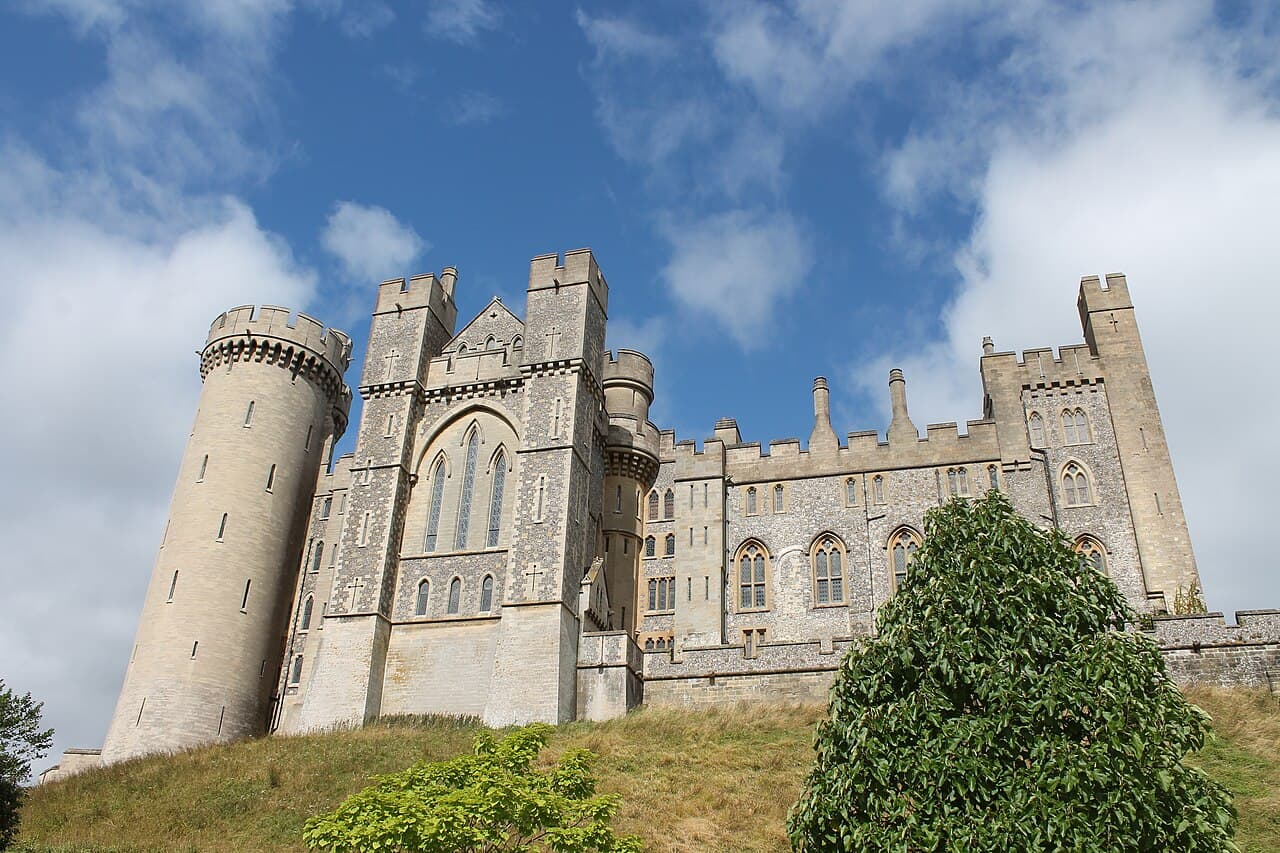
Restoration efforts began in the early 18th century under Thomas Howard, the 8th Duke of Norfolk, who repaired structural damage. Further renovations were undertaken by Charles Howard, the 11th Duke, known as the 'Drunken Duke', who modernized parts of the castle and was a friend of the Prince Regent. The 19th century saw significant Gothic Revival remodeling under the 13th Duke of Norfolk and architect Charles Buckler, giving the castle much of its current appearance.
Royal visits and modernization
In 1846, Queen Victoria and Prince Albert visited Arundel Castle, prompting the commissioning of new bedroom and library furniture by leading London designers to accommodate royal standards. Queen Victoria's portrait by William Fowler was also commissioned during this period. The castle was among the first English country houses to incorporate modern conveniences such as electric lighting, fire-fighting equipment, service lifts, and central heating, largely due to the efforts of Henry Howard, the 15th Duke of Norfolk.
Architectural features and collections
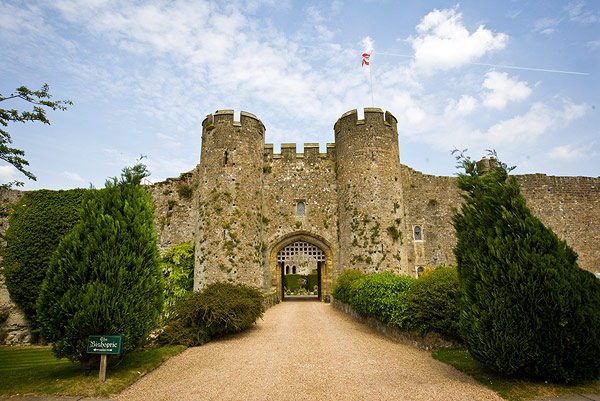
The castle showcases a blend of medieval defensive architecture and later Gothic Revival elements. The original motte-and-bailey design evolved into a complex of stone curtain walls, towers including the Brabican and Beaumont towers, and a rebuilt main gatehouse. Residential buildings occupy the southern courtyard, replacing earlier family lodgings on the motte.
The FitzAlan Chapel, commissioned by the 10th Earl of Arundel, is a significant religious and architectural feature, completed posthumously and containing important funerary monuments. The castle's interiors house an extensive collection of fine furniture, tapestries, clocks, and portraits by renowned artists such as Van Dyck, Gainsborough, Mytens, Lawrence, Reynolds, and Canaletto. Personal possessions of Mary, Queen of Scots and various historical, religious, and heraldic artifacts from the Duke of Norfolk's collection are also exhibited.
The grounds include extensive gardens, recently enhanced with a wild water garden around Swanbourne Lake, opened to visitors by 2020. A folly tower overlooking the lake, designed by architect Francis Hiorne, demonstrates the artistic ambitions of the castle's owners in the 18th century.
Current status and public access
Today, Arundel Castle remains the principal seat of the Dukes of Norfolk and is a Grade I listed building, recognized for its architectural and historic significance. While still a private residence, much of the castle and its grounds are open to the public, offering visitors a rich experience of England's medieval heritage, aristocratic history, and fine art collections.
The castle's long history, architectural evolution, and association with prominent historical figures make it a key cultural landmark in England. Its preservation and continued use as a noble residence contribute to its unique status among English castles.
Frequently asked questions (FAQ)
- How do I get to Arundel Castle?
- Arundel Castle is located in the town of Arundel, easily accessible by car or public transport. If traveling by train, the nearest station is Arundel Station, which is about a 15-minute walk from the castle. There is also parking available nearby for those driving.
- What is the historical significance of Arundel Castle?
- Arundel Castle has a rich history dating back to the 11th century and has been the ancestral home of the Dukes of Norfolk. It has played a significant role in English history, including during the Wars of the Roses and the English Civil War. The castle is also recognized for its stunning architecture and well-preserved interiors.
- When was Arundel Castle built?
- Construction of Arundel Castle began in 1067, shortly after the Norman Conquest of England. The castle has undergone numerous renovations and expansions over the centuries, reflecting various architectural styles. Today, it stands as a prime example of both medieval and Victorian architecture.
- Can I take guided tours of Arundel Castle?
- Yes, guided tours are available at Arundel Castle, providing visitors with in-depth knowledge of its history and architecture. These tours typically run throughout the day, and it's recommended to check the castle's official website for specific times and availability. Self-guided tours are also an option for those who prefer to explore at their own pace.
- Why is Arundel Castle a popular tourist destination?
- Arundel Castle attracts visitors for its stunning views, beautiful gardens, and fascinating history. The castle offers a unique glimpse into England's past, combined with a rich collection of art and artifacts. Its picturesque setting and well-maintained grounds make it a favorite spot for both history enthusiasts and casual visitors.
- Is it possible to visit Arundel Castle with a disability?
- Yes, Arundel Castle is committed to accessibility for all visitors. There are facilities and services in place to assist those with disabilities, including wheelchair access to certain areas of the castle and gardens. It is advisable to contact the castle in advance to ensure that your specific needs can be accommodated.
- What are the opening hours for Arundel Castle?
- Arundel Castle is typically open to visitors from March through October, with varying hours depending on the season. During peak months, the castle tends to have extended hours, while shorter hours apply during the off-peak season. Always check the official website for the most current opening times before planning your visit.
- What are the ticket prices for Arundel Castle?
- Ticket prices for Arundel Castle vary based on age and whether you're purchasing a standard or family ticket. Discounts are often available for students, seniors, and groups. It's best to purchase tickets in advance online for convenience and potential savings.
- What nearby attractions can I visit while at Arundel Castle?
- While visiting Arundel Castle, you can also explore the charming town of Arundel, which offers quaint shops and cafes. Nearby attractions include the Arundel Cathedral and the Wildfowl and Wetlands Trust, perfect for nature lovers. The picturesque South Downs National Park is also a short drive away, offering stunning landscapes and walking trails.
Photo gallery

Information
Website
Visit websiteSources & official resources
Verify the information above using these authoritative references.
Loading map...
Visitor reviews
No reviews yet. Been here? Write the first review and help other travelers!
Write the first reviewVisited this castle? Share your experience
Your review helps other travelers and adds first-hand knowledge to our encyclopedia.