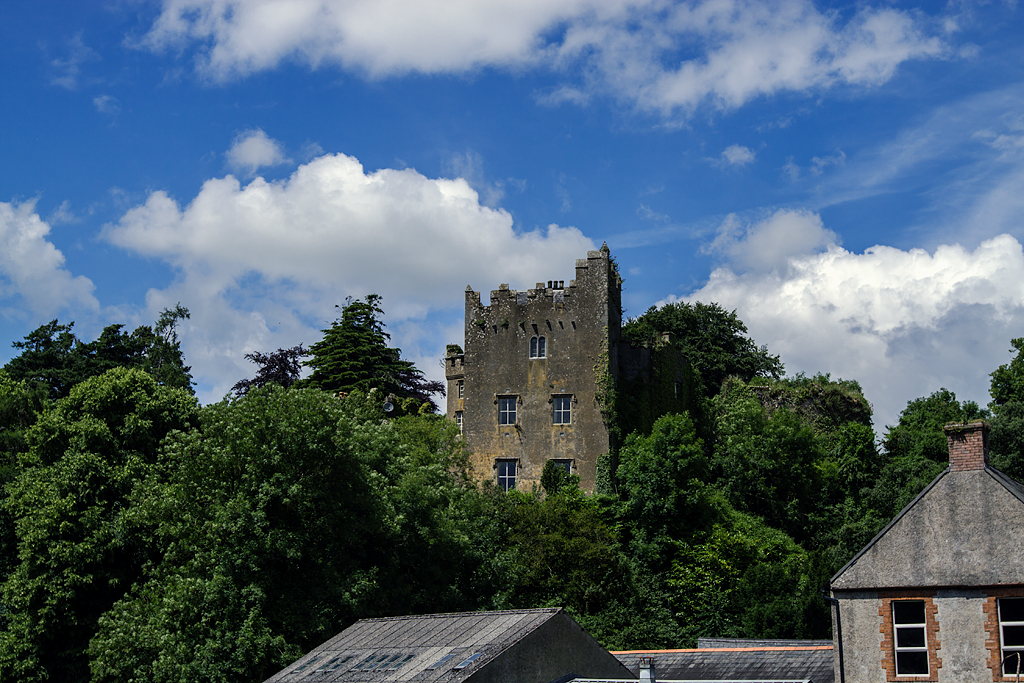
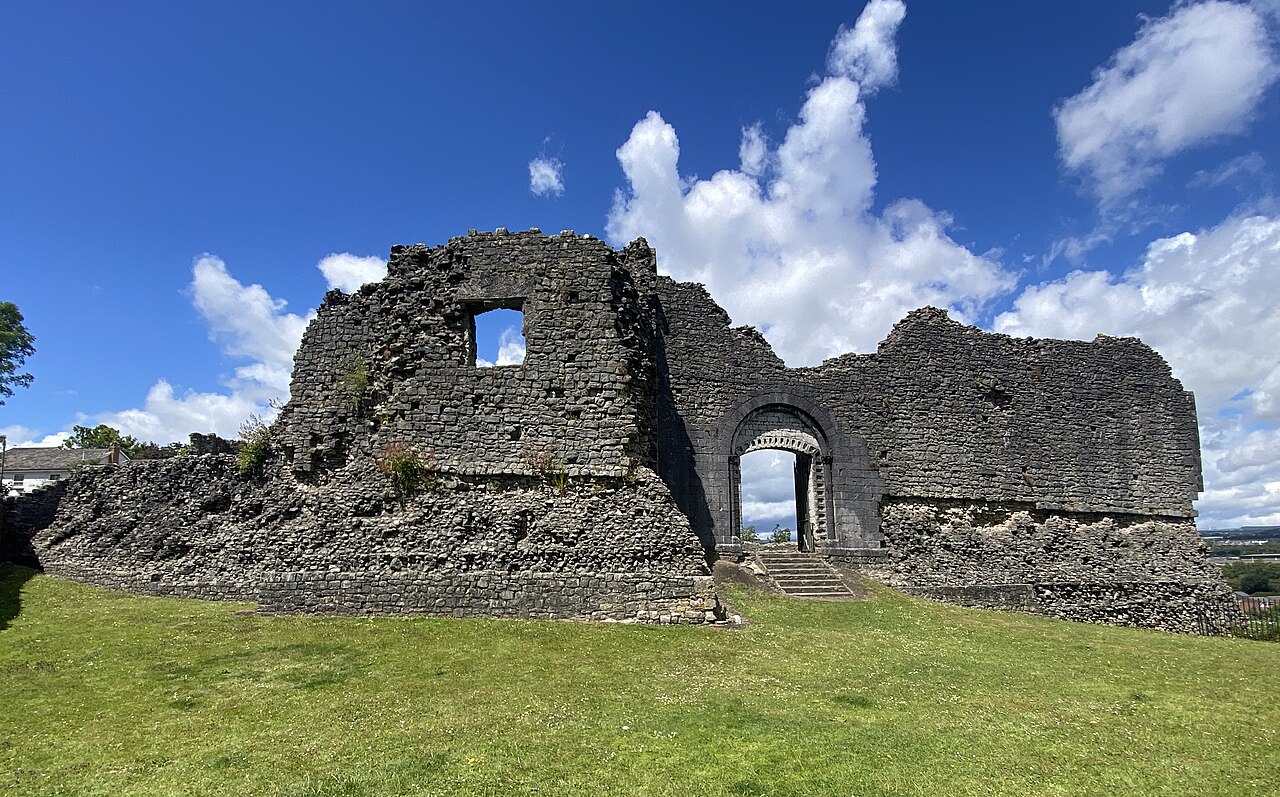
Ardfinnan Castle
Ardfinnan Castle is a medieval fortress located in the village of Ardfinnan, County Tipperary, Ireland. Founded around 1185 by order of John of England, then Lord of Ireland, the castle was strategically positioned to guard the northern border of Waterford at a critical crossing over the River Suir. Alongside the castles of Tybroughney and Lismore Castle, Ardfinnan formed part of a defensive network securing the region's waterways and trade routes during the turbulent period of Anglo-Norman expansion in Ireland.
Foundation and early history
The castle's construction was entrusted to the Cambro-Norman knight Maurice de Prendergast, who was tasked with erecting and garrisoning the fortress. Initially built as a motte-and-bailey style fortification, Ardfinnan Castle was soon developed into a stone structure to better withstand attacks. The Irish resistance was fierce; they captured Lismore Castle by surprise and then targeted Ardfinnan, successfully seizing it through a ruse. However, the Anglo-Norman forces quickly recaptured the castle, underscoring its strategic importance.
Architectural evolution and military significance
Knights templar and hospitaller period
Following its early years, Ardfinnan Castle changed hands multiple times among Anglo-Norman lords. Eventually, it was handed over to the Knights Templar and later granted to the Knights Hospitaller. The Hospitallers contributed significantly to the castle's architecture, constructing the now-ruined round keep in the early 13th century. This keep was a prominent defensive feature, characteristic of military architecture of the period, designed to provide a stronghold within the castle walls.
Later additions and modifications
In the mid-15th century, a square tower house was added to Ardfinnan Castle, reflecting evolving defensive needs and residential requirements. This addition represents the transition from purely military fortifications to more comfortable noble residences while maintaining defensive capabilities.
Sieges and decline
During the Cromwellian conquest of Ireland in 1650, Ardfinnan Castle was besieged by Parliamentarian forces under Major General Henry Ireton. The attackers placed cannons on a hill opposite the castle, bombarding it until it fell. Following its capture, the castle was deliberately slighted—partially demolished—to prevent its further military use, leaving it in a state of partial ruin.
Post-medieval use and ownership
Despite its damaged condition, the castle retained strategic value. In 1795, British soldiers reoccupied Ardfinnan Castle due to fears of a French invasion. It served as a military training camp until 1802, illustrating its continued, albeit limited, military relevance.
In the early 19th century, the castle was restored to the descendants of Maurice de Prendergast, maintaining its connection to its original Norman founders. The family held the property until 1920.
Current status and accessibility
Today, Ardfinnan Castle is private property and is not open to public visitation. Its condition suggests it may be abandoned or only sporadically inhabited, with much of the structure in ruins. The castle remains an important historical site reflecting the complex military and social history of medieval Ireland.
Architectural features and significance
Ardfinnan Castle's architecture reflects the typical evolution of medieval Irish fortifications. The initial motte-and-bailey design was replaced by stone structures, including the round keep built by the Knights Hospitaller, which served as a last line of defense and residence. The later square tower house addition illustrates changing defensive strategies and domestic needs during the late medieval period.
The castle's location at a river crossing was crucial for controlling movement and trade along the River Suir, making it a focal point in regional conflicts. Its repeated sieges and changes of ownership highlight its military and strategic importance throughout the High Medieval and early modern periods.
Historical context and regional importance
Ardfinnan Castle was part of the Anglo-Norman effort to consolidate control over Ireland following the initial invasions in the late 12th century. Its establishment by John of England during his first expedition to Ireland underscores its role in asserting English authority in the region. The castle's history of conflict with Irish forces and later involvement in the Cromwellian wars reflects the broader struggles for power in Ireland across several centuries.
The castle's association with the Knights Templar and Knights Hospitaller links it to the wider network of medieval military orders, which played significant roles in both military and religious spheres during the Middle Ages.
Frequently asked questions (FAQ)
- How do I get to Ardfinnan Castle?
- Ardfinnan Castle is located in the village of Ardfinnan, easily accessible by car or public transport. If you're traveling by car, it’s situated off the main roads leading to the village, with parking available nearby. Public transport options include local buses that connect to the surrounding towns.
- What is the historical significance of Ardfinnan Castle?
- Ardfinnan Castle dates back to the 12th century and is a significant example of medieval architecture in Ireland. It was originally built as a defensive stronghold and played a crucial role during various historical conflicts. Today, it stands as a monument to the rich history of the region.
- When was Ardfinnan Castle built?
- Ardfinnan Castle was constructed in the 12th century, around the year 1180. It was built by the Anglo-Norman invaders as they expanded their influence in Ireland. The castle has undergone various renovations and restorations throughout the centuries, reflecting its enduring legacy.
- Can I take guided tours of Ardfinnan Castle?
- Yes, guided tours are available at Ardfinnan Castle, offering visitors a deeper insight into its history and architecture. These tours are conducted by knowledgeable guides who share fascinating stories and details about the castle's past. It’s advisable to check the schedule in advance, as tour times may vary.
- Why is Ardfinnan Castle a popular tourist attraction?
- Ardfinnan Castle is popular among tourists for its stunning medieval architecture and historical significance. Visitors are drawn to its picturesque setting and the opportunity to explore a well-preserved site that tells the story of Ireland's past. The castle also serves as a great backdrop for photography enthusiasts.
- Is it possible to host events at Ardfinnan Castle?
- Yes, Ardfinnan Castle offers the possibility of hosting private events, such as weddings, parties, and corporate gatherings. The breathtaking scenery and historical ambiance make it a unique venue. It’s recommended to contact the castle management for specific details on availability and services.
- What are the opening hours for Ardfinnan Castle?
- Ardfinnan Castle is typically open to visitors from 10 AM to 5 PM, though these hours may vary seasonally. It’s best to check the castle’s official website or contact them directly for the most current information on opening hours. Plan your visit accordingly to make the most of your experience.
- What are the ticket prices for visiting Ardfinnan Castle?
- Ticket prices for Ardfinnan Castle are generally affordable, with discounts available for children, students, and seniors. Admission fees help maintain the castle and support ongoing restoration efforts. Check the castle’s website for specific pricing and any special offers that may be available during your visit.
- What is the best time to visit Ardfinnan Castle?
- The best time to visit Ardfinnan Castle is during the spring and summer months when the weather is milder and the gardens are in full bloom. This period also coincides with various local festivals and events that enhance the visitor experience. However, autumn can also be lovely, offering stunning foliage and fewer crowds.
- Are there any nearby attractions to visit along with Ardfinnan Castle?
- Yes, there are several nearby attractions worth exploring, including the scenic River Suir and the quaint village of Ardfinnan itself. The surrounding area offers beautiful walking trails and historical sites, enhancing your visit to the castle. Be sure to take some time to explore the local culture and landscape.
Information
Address
Barrack St, Ardfinnan, County Tipperary, Ireland
Loading map...
Visitor reviews
No reviews yet. Been here? Write the first review and help other travelers!
Write the first reviewVisited this castle? Share your experience
Your review helps other travelers and adds first-hand knowledge to our encyclopedia.