Arad Fort
Arad Fort, also known locally as Qal'at Arad, is a significant historical fortress situated in the town of Arad on Muharraq Island, Bahrain. Constructed in the late 15th or early 16th century, this fort exemplifies Islamic military architecture of the pre-Portuguese period in the Arabian Gulf. Its strategic location controlled a vital maritime passage between Muharraq Island and the former Arad Island, guarding against naval incursions and serving as a key defensive stronghold throughout several centuries.
Historical context and strategic importance
The fort's origins date back to the late medieval period, specifically the late 15th or early 16th century, reflecting architectural styles prevalent in Islamic fortifications before European colonial influence. Arad Fort was constructed to oversee a narrow sea channel, which was once a natural barrier separating Arad Island from Muharraq Island. This channel was crucial for controlling maritime traffic and protecting the surrounding coastline from hostile forces.
Throughout its history, Arad Fort witnessed several transitions of power. In the 16th century, it came under the control of the Portuguese Empire, who had established a colonial presence in Bahrain. The Portuguese enhanced the fort's defenses and used it as a military base until their expulsion by the Safavid Persians in 1602. Subsequently, the fort was utilized by the Safavids, and later by the Utub tribe in the late 18th century after they conquered Bahrain.
In the early 19th century, the fort gained renewed significance when it was rebuilt and fortified by the Omanis during their brief occupation of Bahrain. The Omani ruler Imam Sultan bin Ahmed Al Busaidi stationed troops there and appointed his son Salim as the governor, marking the fort as an administrative and military center. Despite these efforts, control soon shifted to the Al Khalifa tribe, who continued to use the fort for defensive purposes, particularly guarding Muharraq Bay alongside the newer Abu Mahir Fort.
Architectural features and construction
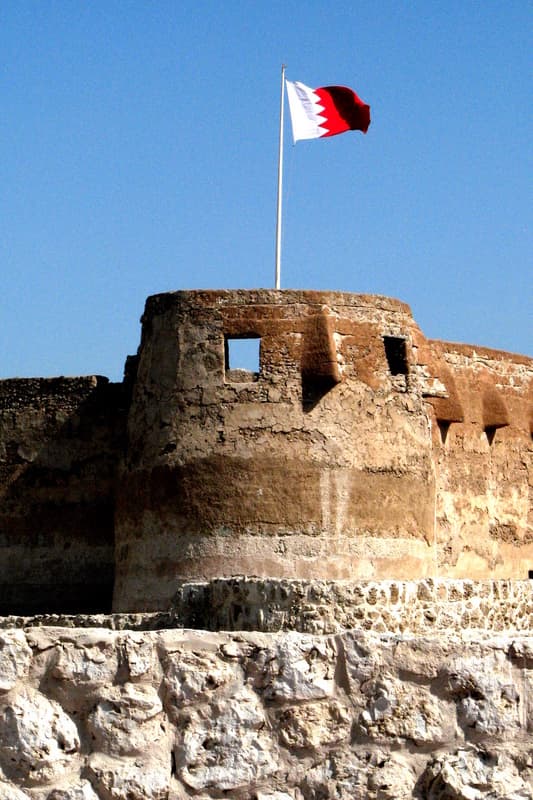
Arad Fort is designed on a compact square plan with a cylindrical tower at each corner, a typical feature of Islamic military architecture in the region during the 15th and 16th centuries. These towers provided overlapping fields of fire along the walls, enhancing the fort's defensive capabilities. The walls are constructed primarily from coral stone, bonded with lime mortar and reinforced with palm trunks, materials traditional to Bahrain's coastal architecture.
One of the fort's distinctive architectural elements is the presence of nose-shaped machicolations—protruding openings used by defenders to fire upon attackers while remaining protected. Unlike the narrow vertical loopholes common in European castles, these machicolations allowed a wider angle of defense and are a unique adaptation to the local military needs.
Surrounding the fort is a shallow, water-filled trench supplied by wells dug specifically for this purpose. While not a full moat, this trench served as a deterrent to enemy forces attempting to approach or undermine the walls. Inside the fort, visitors can find a well and an ancient Arabic date press known as a madbasa or mudabissa, highlighting the fort's role not only as a military installation but also as a site of local economic activity.
The fort also houses a notable 19th-century cannon positioned on the southern bastion, aimed strategically at the narrow entrance channel to Muharraq Bay. This artillery piece symbolizes the fort's continued military relevance into the modern era.
Restoration and current condition
Arad Fort underwent significant restoration between 1984 and 1987, with a focus on preserving its historical authenticity. Restoration efforts used traditional materials such as coral stone and lime mortar, deliberately avoiding modern cement to maintain the fort's original character. These efforts have resulted in a well-preserved condition, allowing the fort to serve as an educational and cultural landmark.
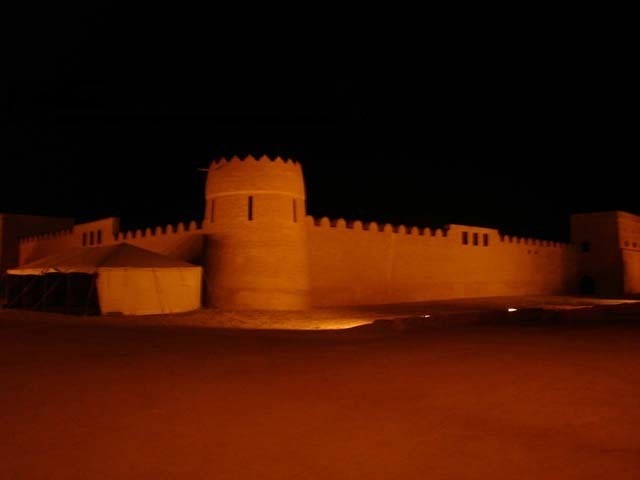
Today, Arad Fort is a popular tourist attraction and is illuminated at night, enhancing its visual appeal. It hosts seasonal festivals that celebrate Bahrain's heritage and history, drawing visitors interested in the region's rich past. While the interior spaces are relatively sparse, the fort's architectural features and strategic location offer valuable insights into the military and cultural history of Bahrain and the Arabian Gulf.
Cultural significance and visitor experience
Arad Fort stands as a testament to Bahrain's complex history of regional power struggles and cultural exchanges. Its layered history—from Islamic builders through Portuguese and Persian occupations to Omani and Al Khalifa control—reflects the geopolitical importance of the Gulf region. The fort's architecture embodies traditional Islamic defensive design adapted to local environmental and military conditions.
Visitors to Arad Fort can explore its towers, walls, and moat-like trench while enjoying panoramic views of the surrounding sea passages. The site provides a tangible connection to Bahrain's maritime heritage and its role as a crossroads of civilizations. Informational displays and guided tours help contextualize the fort's history, enhancing the educational value for tourists.
Access to the fort requires an entrance fee, and it is open to the public during designated hours. Its location on Muharraq Island makes it easily reachable from Bahrain's main urban centers, offering a convenient cultural excursion for residents and visitors alike.
Frequently asked questions (FAQ)
- What are the opening hours of Arad Fort?
- Arad Fort is typically open to visitors during daytime hours, often from morning until late afternoon. It is advisable to check locally for exact visiting times as they may vary seasonally or for special events.
- How much is the entrance fee to visit Arad Fort?
- Visitors to Arad Fort usually pay a modest entrance fee. Prices can vary, so checking the current rates at the site or official tourism websites before visiting is recommended.
- What is the historical significance of Arad Fort?
- Arad Fort played a crucial role in controlling maritime passages and defending Bahrain against various regional powers, including the Portuguese, Persians, Omanis, and local tribes. Its layered history reflects the strategic importance of Bahrain in Gulf geopolitics.
- Can I explore the interior of Arad Fort?
- Yes, visitors can explore the fort's interior, including its towers, walls, and inner courtyard. While the interior is relatively sparse, it offers a clear view of the fort's military architecture and defensive features.
- Is Arad Fort accessible for people with mobility issues?
- Due to the fort's historic structure and uneven surfaces, accessibility may be limited for visitors with mobility challenges. It is recommended to inquire in advance about available accommodations or assistance.
- When is the best time to visit Arad Fort?
- The best time to visit Arad Fort is during the cooler months, typically from October to April, when Bahrain's weather is more comfortable for outdoor exploration. Evening visits are also popular due to the fort's illumination.
Photo gallery

Information
Sources & official resources
Verify the information above using these authoritative references.
Loading map...
Visitor reviews
No reviews yet. Been here? Write the first review and help other travelers!
Write the first reviewVisited this castle? Share your experience
Your review helps other travelers and adds first-hand knowledge to our encyclopedia.