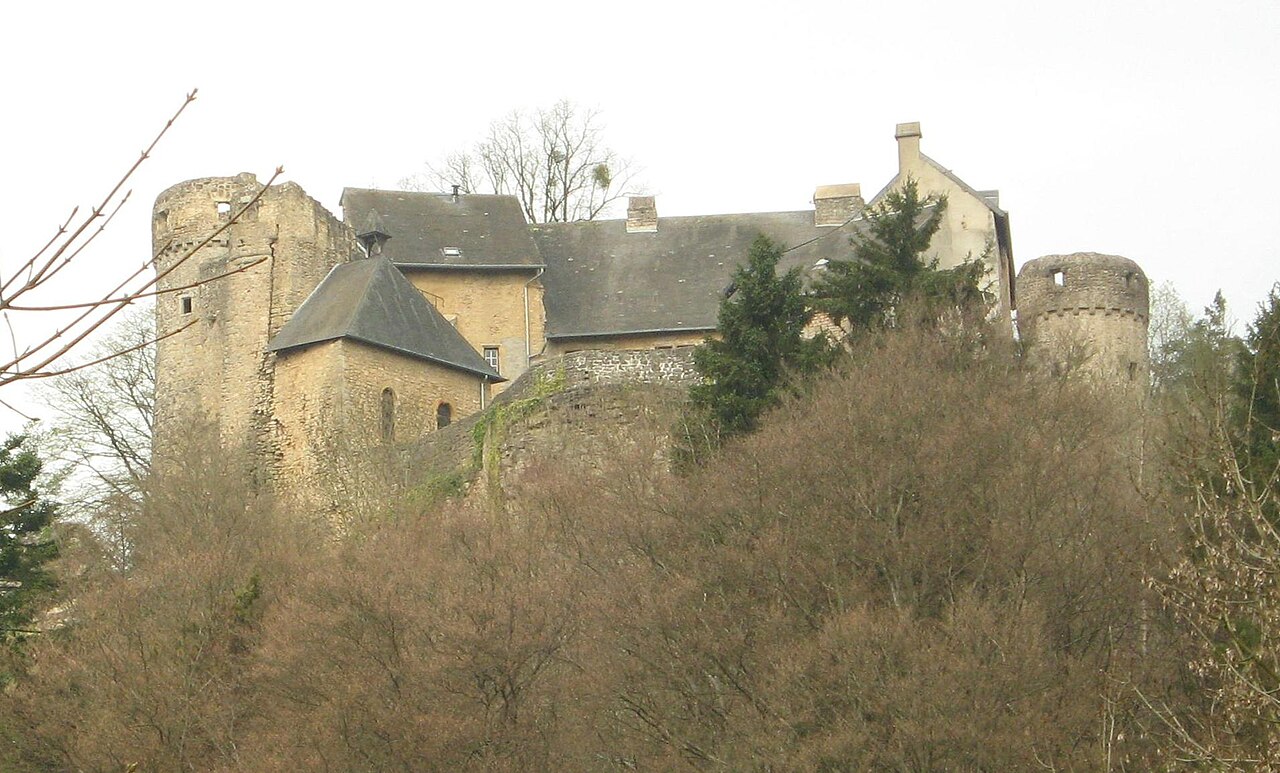
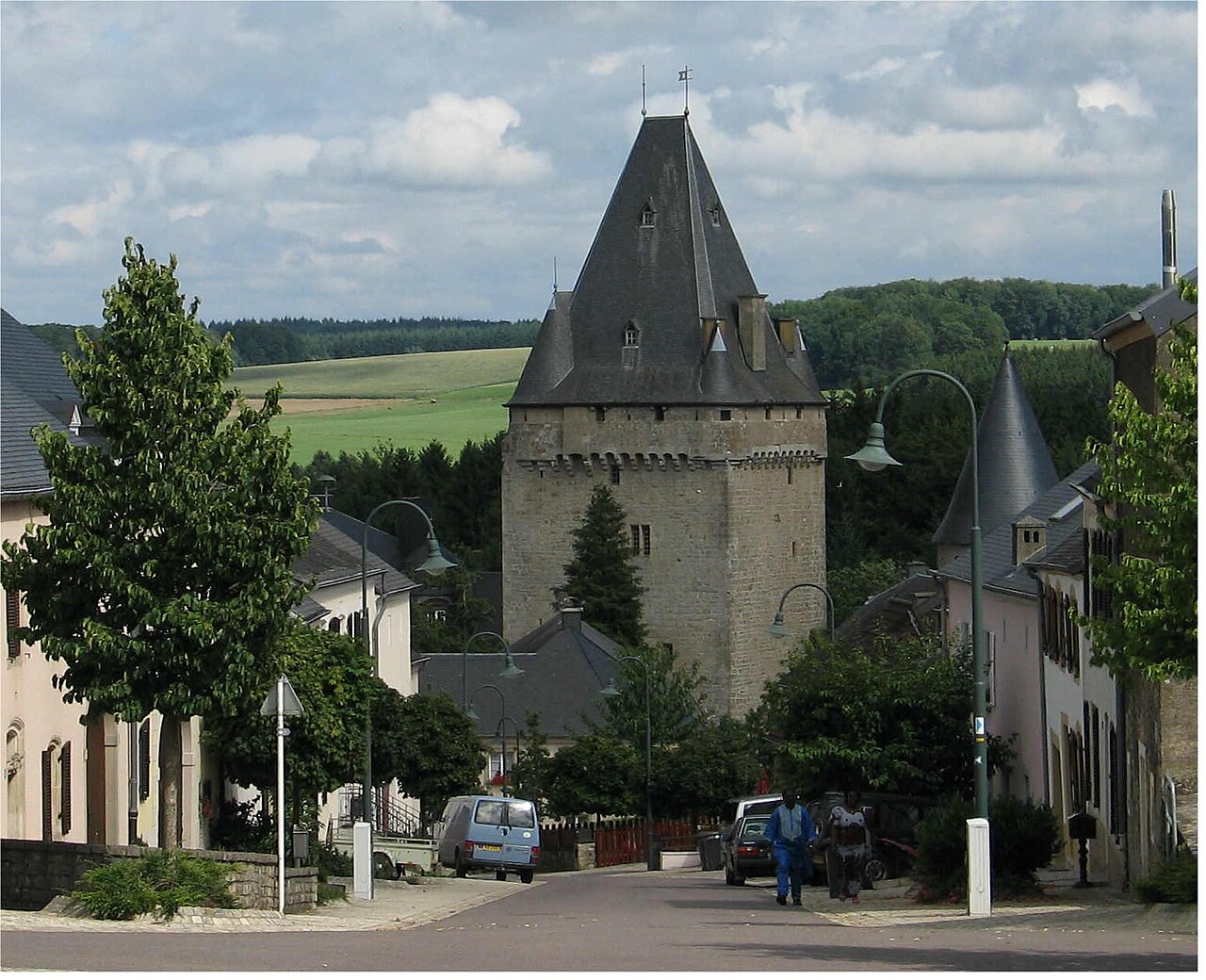
Ansembourg New Castle

Ansembourg new castle in luxembourg
Ansembourg, Luxembourg, Luxembourg
Renaissance (15th–17th c.)
Partially Restored

The New Castle of Ansembourg stands as a prominent Renaissance castle in the Valley of the Seven Castles in Luxembourg. Constructed initially in 1639 by Thomas Bidart, a pioneering industrialist from Liège, Belgium, the castle began as a fortified residence known as the Maison des Forges (House of the Ironworks). Bidart was instrumental in developing Luxembourg's early iron and steel industry, utilizing the region's abundant water sources and timber to operate a foundry near the older Ansembourg Castle. This foundry produced arms during the Thirty Years' War, contributing to the family's wealth and their eventual acquisition of the title Lords of Amsembourg in 1671.

Architectural evolution and baroque enhancements

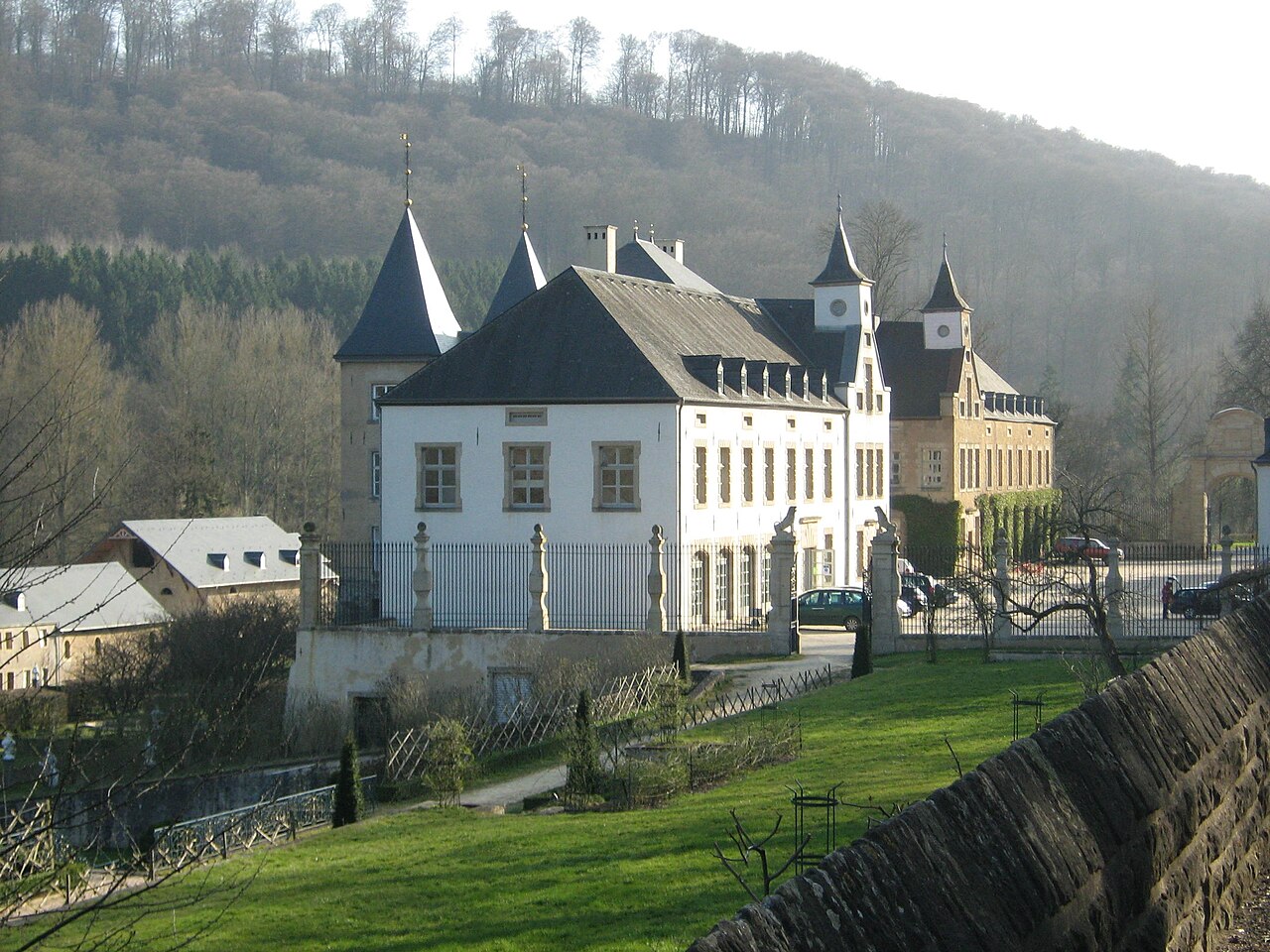
Following the Bidart family's tenure, the castle passed to the de Marchant family through marriage, who initiated a significant transformation of the property. In 1719, the original structure was expanded with the addition of two wings flanking the central building, creating an extended courtyard. The southern gable was adorned with a grand arch featuring four statues symbolizing the four continents, a testament to the era's global awareness and artistic expression. This new facade was complemented by two small towers and faced the elaborately designed gardens, which were accessible via an arcade connecting the castle and grounds. A balcony above the main porch provided commanding views over the gardens, which included ornamental flowerbeds and a central fountain.

Garden and structural expansions in the mid-18th century

Between 1740 and 1750, Lambert Joseph de Marchant et d'Ansembourg further enhanced the estate by improving the gardens and extending the northern buildings around the courtyard. These additions served practical purposes, providing stables and lodgings for the castle's staff. The castle's grandeur was further emphasized in 1759 with the construction of an impressive Baroque gateway, emblazoned with the coats of arms of the de Marchant of Ansembourg and Velbruck families, marking the entrance with heraldic significance.

Restoration and modern use

Since 1987, the castle has been owned by Sûkyô Mahikari, who has overseen extensive restoration efforts in collaboration with Luxembourg's Service des Sites et Monuments nationaux. Initial work focused on stabilizing the castle's foundations and walls, alongside restoring the staircase of honour located on the upper terrace of the gardens. From 1999 onwards, restoration efforts expanded to repairing the garden's statues and fountains, as well as rebuilding the roofs over the two wings and the central section of the castle. Currently, attention is directed toward preserving the oldest 17th-century sections of the building to maintain its historical integrity.

Cultural significance and visitor experience

The castle gardens are open daily from 9 am, welcoming visitors to explore the beautifully maintained grounds. The castle itself serves as a venue for various cultural events throughout the year, enhancing its role as a living heritage site. The combination of Renaissance architecture with Baroque artistic elements and the castle's industrial origins make Ansembourg New Castle a unique example of Luxembourg's historical and architectural development.

Architectural features and layout

The castle's original 17th-century core is characterized by its fortified walls and surviving towers, reflecting its initial function as a protected residence amidst a turbulent period in European history. The later 18th-century additions introduced a more refined aesthetic, with symmetrical wings and decorative elements that align with Baroque architectural principles. The arcade linking the castle to the gardens exemplifies the integration of indoor and outdoor spaces typical of the period. The staircase of honour is a notable feature, providing a grand approach to the upper terrace and garden areas.

Historical context of the valley of the seven castles

Located within the Valley of the Seven Castles, Ansembourg New Castle forms part of a remarkable cluster of fortifications that illustrate the region's strategic and feudal history. The valley's castles collectively represent various periods and architectural styles, offering insights into the evolution of defensive and residential construction in Luxembourg. Ansembourg's development from an industrial hub to a noble residence mirrors broader socio-economic changes in the area during the 17th and 18th centuries.

Frequently asked questions (FAQ)

How do I get to Ansembourg New Castle?
Ansembourg New Castle is easily accessible by car and public transport. If traveling by train, the nearest station is in Mersch, from where you can take a short bus ride to the castle. Parking is available nearby for those arriving by car.
What is the historical significance of Ansembourg New Castle?
Ansembourg New Castle, built in the 18th century, is a prime example of Luxembourg's rich architectural heritage. It served as a residence for the noble family of Ansembourg and reflects the grandeur of the Baroque style. The castle is also linked to various historical events that shaped the region.
When was Ansembourg New Castle constructed?
Construction of Ansembourg New Castle began in 1730 and was completed in 1738. The castle has undergone several renovations over the years, preserving its historical charm while adapting to modern needs. Today, it stands as a testament to the architectural evolution of the time.
Can I visit Ansembourg New Castle?
Yes, Ansembourg New Castle is open to visitors, offering guided tours that provide insights into its history and architecture. However, it is advisable to check the official website for any updates on visiting hours and tour availability. Group visits and private tours can also be arranged in advance.
Why is Ansembourg New Castle a popular tourist attraction?
Ansembourg New Castle is popular due to its stunning architecture and picturesque gardens, making it a perfect spot for photography and leisurely walks. Additionally, its rich history and connection to Luxembourg's nobility draw history enthusiasts and cultural travelers alike. The serene surroundings add to its charm, making it a must-visit location.
Is it possible to host events at Ansembourg New Castle?
Yes, Ansembourg New Castle offers facilities for hosting various events, including weddings and corporate gatherings. The beautiful setting and elegant interiors provide a unique backdrop for special occasions. It is recommended to contact the castle management for more information on availability and services.
What are the opening hours for Ansembourg New Castle?
Ansembourg New Castle typically opens to visitors from Tuesday to Sunday, with specific hours varying by season. During peak tourist season, extended hours may be available to accommodate more visitors. Always check the official website for the most accurate and current opening hours.
What are the ticket prices for visiting Ansembourg New Castle?
Ticket prices for Ansembourg New Castle vary depending on the type of tour selected. Generally, adult tickets are reasonably priced, with discounts available for children, seniors, and groups. It's advisable to purchase tickets in advance during peak seasons to ensure entry.
What are some nearby attractions to visit along with Ansembourg New Castle?
Visitors to Ansembourg New Castle can also explore the beautiful surrounding gardens and parks, as well as the charming village of Ansembourg itself. Nearby attractions include the Mersch Castle and the recreational areas along the Alzette River. The region is rich in hiking trails and historical sites, making it perfect for a day of exploration.

Information

Lowland Castle

Loading map...

Visitor reviews

No reviews yet. Been here? Write the first review and help other travelers!

Write the first review

Visited this castle? Share your experience

Your review helps other travelers and adds first-hand knowledge to our encyclopedia.
Write a review

(5/5)

0/2000 characters

Your review will be visible after admin approval

Nearby castles

0.3 km
New Castle of Ansembourg — Luxembourg castle

New Castle of Ansembourg

Ansembourg, Luxembourg

The New Castle of Ansembourg stands as a remarkable example of 17th-century Renaissance architecture in Luxembourg. Situated approximately one kilometre downstream from the Old Castle of Ansembourg, this castle was originally constructed in 1639 by Thomas Bidart, an industrialist who sought to create a comfortable and fortified residence. The castle's location in the picturesque valley of the Eisch river adds to its scenic and strategic significance. Historical origins and early construction The initial construction phase of the New Castle was focused on building a central residential structure surrounded by defensive elements typical of the period. Thomas Bidart established the core of the castle as a comfortable house enclosed by walls and towers, designed both for residence and protection. Of the original fortifications, two towers remain intact, providing insight into the castle's defensive architecture during the early modern period. Transformation under the de Marchant family Following the inheritance of the property through marriage, the de Marchant family undertook a significant transformation of the castle. Their renovations modernized the structure, enhancing both its aesthetic appeal and functional design. This refurbishment reflected the evolving tastes and social aspirations of the European nobility during the Renaissance, emphasizing elegant living spaces while retaining some defensive features. Architectural style and features The castle exemplifies Renaissance architectural style with its balanced proportions, symmetry, and the integration of classical elements. The presence of surviving towers and fortified walls juxtaposes the residential comfort with the need for security in a period marked by political and social upheaval. The castle's layout includes spacious halls, private chambers, and well-planned gardens, which together create a harmonious environment. Castle gardens and cultural significance The gardens of the New Castle of Ansembourg are a notable feature open to the public daily from 9 am. These gardens offer visitors a chance to experience the serene landscape design that complements the castle's architecture. Throughout the year, the castle serves as a venue for various cultural events, including concerts, exhibitions, and community gatherings, reinforcing its role as a cultural landmark in the region. Visitor experience and accessibility Visitors to the New Castle of Ansembourg can explore the castle grounds and gardens, enjoying the blend of historical ambiance and natural beauty. The site is accessible and provides an enriching experience for those interested in Renaissance architecture, Luxembourg's heritage, and cultural activities. The castle's proximity to the Old Castle of Ansembourg makes it a key destination for tourists exploring the area's historical sites. Preservation and current status Today, the New Castle of Ansembourg is well preserved, maintaining much of its original 17th-century character alongside later modifications. Its upkeep ensures that the castle remains a vital part of Luxembourg's architectural heritage and a testament to the region's historical development during the Renaissance period.

Renaissance (15th–17th c.)
Details
0.7 km
Ansembourg Castle — Luxembourg castle

Ansembourg Castle

Vieux Château, Luxembourg

Ansembourg Castle, also known as the Old Castle of Ansembourg, is a prominent medieval fortress perched high above the village of Ansembourg in Luxembourg. Nestled in the picturesque Valley of the Seven Castles, it stands as a remarkable example of high medieval fortification architecture and noble residence development. The castle's strategic location on a sandstone spur overlooking the Eisch stream provided natural defensive advantages and commanding views of the surrounding valley. The castle's origins trace back to the early 12th century, with the first documented mention of a lord, Hubert d'Ansembourg, in 1135. This situates the castle firmly within the high medieval period, a time when feudal lords constructed fortified strongholds to assert territorial control and defend against regional conflicts. The initial fortifications were likely modest but robust, built to withstand siege warfare typical of the era. Architectural evolution and medieval fortifications During the early 14th century, significant enhancements were made under Jofroit d'Ansembourg, who expanded the castle's defenses by adding the distinctive south-western tower gate and the northern main keep. These structures exemplify the transition from simple fortresses to more complex castles with multiple defensive layers. The shield wall, approximately 6 meters thick, was constructed to protect the core residential tower and gatehouse from artillery and battering attacks. The castle's core features a square residential tower measuring about 10 by 10 meters, which served both as a defensive stronghold and a noble dwelling. The gate tower to the southwest, with a diameter near 5 meters, controlled access to the inner bailey and was a critical defensive element. The outer bailey, measuring roughly 40 by 80 meters, enclosed the main living quarters and ancillary buildings, forming a self-contained fortified complex. 16th-century renovations and adaptations In 1565, the castle underwent major renovations to improve residential comfort and update its defenses in line with evolving military technology. The medieval keep was demolished during this period, replaced by a more modern gate tower in the bailey. This remodeling reflects Renaissance influences and the shifting function of castles from pure fortresses to stately homes. The main entrance bears the date 1565, marking the completion of these significant modifications. These changes illustrate how the castle adapted to the needs of noble families seeking both security and domestic luxury during the late medieval to early modern transition. Historical ownership and significance The castle remained in the hands of the d'Ansembourg family for centuries, a noble lineage well-known in the Low Countries. Ownership passed through various branches and alliances, including the Rollingen and Bidart families, who contributed to the castle's history and upkeep. The Bidart family notably established an ironworks nearby in the early 17th century, reflecting the region's industrial development. In 1683, the castle suffered partial destruction during military conflicts involving French troops under Marshal de Boufflers. This event was part of the broader clashes between French and Spanish forces in the region. Subsequent repairs were carried out by the Bidart and Marchant et d'Ansembourg families, who also built the New Castle of Ansembourg in the valley below. Following the construction of the New Castle, the Old Castle was largely unoccupied for approximately three centuries. Restoration efforts began in the 20th century under Gaston Amaury de Marchant, the father of the current owner, Count Gaston-Gaëtan de Marchant d'Ansembourg. Cultural heritage and private ownership The castle remains private property and is the residence of the current Count and Countess of Ansembourg. It is not open to the public, preserving its exclusive character and the privacy of its inhabitants. Surrounding lands and access roads are also private, and visitors are urged to respect this privacy. In 2008, the Luxembourg government acquired the family's extensive library of around 6,000 books and was offered the family archives. This collection includes the notable Codex Mariendalensis, a manuscript dating from the late 14th or early 15th century written in the Moselle Franconian dialect, closely related to modern Luxembourgish. The manuscript narrates the story of Yolanda of Vianden and is a significant cultural artifact linking the castle to Luxembourg's linguistic and literary heritage. Recently, the Count of Ansembourg opened an exclusive boutique hotel in one of the buildings surrounding the castle, blending heritage tourism with luxury accommodation while maintaining the castle's private status. Architectural features and landscape setting Perched approximately 80 meters above the valley floor, the castle's location on a rocky sandstone spur provided natural defenses and strategic oversight of the Eisch valley. The irregular shape of the surviving walls reflects adaptations to the terrain and the evolving defensive needs over centuries. The castle complex includes remnants of several towers, curtain walls, and the former chapel, first mentioned in 1217, though the chapel no longer exists in its original form. The fortified site is a testament to medieval military architecture, combining residential and defensive functions in a compact, elevated footprint. Today, the castle stands as a well-preserved fragment of Luxembourg's medieval heritage, embodying the architectural and historical layers accumulated over nearly a millennium. Its connection to the Valley of the Seven Castles situates it within a broader cultural landscape rich in feudal history and noble estates.

High Medieval (11th–13th c.)
Details
1.3 km
Hollenfels Castle — Luxembourg castle

Hollenfels Castle

Rue du Château 2, Luxembourg

Hollenfels Castle stands as a prominent medieval fortress located on the south side of the village of Hollenfels in Luxembourg. Nestled within the scenic Valley of the Seven Castles, the castle overlooks the valley of the Eisch stream, sharing this historic region with six other notable castles: Koerich, Septfontaines, Ansembourg, New Ansembourg, Schoenfels, and Mersch. The castle's name, meaning "hollow cliff," derives from the natural caves and tunnels carved into the rocky foundation beneath the fortress, a unique geological feature that has influenced its defensive design and local lore. The earliest documentary mention of Hollenfels Castle dates back to 1129, marking its importance during the High Medieval period. Originally established by the von Holfels family, the castle was a key noble seat in the region. The site itself may have been occupied since the 10th or 11th century, with records from 1041 citing Isenbald von Holfels as an early lord. Over the centuries, the castle evolved both architecturally and functionally, reflecting the shifting political and military landscape of Luxembourg and the surrounding territories. Architectural evolution and key features The imposing donjon The most striking feature of Hollenfels Castle is its massive square donjon, constructed around 1380 by the von Holfels lineage. This five-story fortified tower rises to approximately 39 meters in height, with a base measuring roughly 14 by 12.5 meters. The donjon's robust stone walls, reaching 23 meters before being topped by a steep pitched roof, exemplify medieval military architecture designed for both defense and residence. Internally, the donjon is vertically arranged with vaulted chambers serving distinct purposes. The lowest level housed the kitchen and oven room, essential for sustaining the castle's inhabitants during sieges. Above this was the servants' dining hall, followed by the Gothic great hall used by the lords, which also incorporated a chapel that occasionally functioned as a private bedroom. The topmost floor served as an armory, safeguarding weapons and armor. Architectural details include large open fireplaces, windows recessed deep within thick walls for protection, and intricately carved sculptures that adorn the interiors. A spiral staircase connects all floors, providing secure and efficient movement within the tower. Defensive structures and layout The castle is perched atop a rocky ledge approximately 315 meters above sea level, commanding a steep rise of nearly 80 meters above the Eisch river valley. This elevated position afforded strategic control over the surrounding landscape. The fortress is encircled by a curtain wall and includes a corner tower that enhanced its defensive capabilities. Access to the castle is gained via a stone bridge crossing a defensive moat or ditch, a feature recently confirmed by archaeological excavations in 2024. These excavations also uncovered two previously unknown medieval watchtowers, shedding new light on the castle's comprehensive fortification system. One of the castle's most remarkable features is a secret underground passage carved into the rock beneath the fortress. This tunnel, linked to a well or fountain, was historically used during sieges to supply food and water or to facilitate covert escape, underscoring the castle's sophisticated defensive planning. Historical significance and ownership Throughout its history, Hollenfels Castle changed hands among several noble families, reflecting the complex feudal allegiances and regional power struggles. After the von Holfels family, the castle was successively owned by the lords of Elter (also known as Autel), de Raville of Ansembourg, Greifenklau, von Ippenborn, von Thynner, and de Brouckhoven families. In the early 17th century, Sebastian von Thynner acquired the castle and expanded its role beyond military defense by establishing an iron furnace nearby around 1600, fostering local industry. He also founded a school in Hollenfels after 1629, demonstrating the castle's integration into the social and educational fabric of the community. The late 17th century was marked by military conflict as the fortress was occupied by French troops in 1681 during the wars of King Louis XIV. Spanish forces briefly retook the castle in 1683 before the French regained control. Despite bombardments and damage, the castle was repaired and remained a significant stronghold. In 1729, the de Brias family, then owners, commissioned the construction of a mansion adjoining the north-eastern side of the donjon. This addition was later enhanced with a Baroque-style finish in 1921, reflecting evolving architectural tastes and the transition from purely military to residential functions. Ownership in the 19th century included JB Thorn-Suttor, governor of Luxembourg during the Belgian period (1831–1839), who also owned Schoenfels Castle. In 1840, both castles were sold to J. Engler, a Brussels senator, and later passed to Baron A. Goethals through familial ties. 20th-century restoration and modern use By the early 20th century, Hollenfels Castle had fallen into disrepair after being largely unoccupied for about a century. Restoration efforts began in the 1920s under architect J. Schoenberg, commissioned by Charles van den Poll, successfully reviving much of the castle's historic character and structural integrity. During World War II, the castle served as a training center for the Nazi Bund Deutscher Mädel, the female branch of the Hitler Youth from 1940 to 1945. Following the war, from 1945 to 1948, the castle was repurposed as a camp for Russian prisoners of war and forced laborers. In 1948, the Luxembourg State acquired the castle, transforming it into a youth hostel and educational facility focused on youth development. The adjacent 18th-century bailey now houses the hostel, providing accommodation that allows visitors to experience the historic site intimately while enjoying the natural surroundings. The castle is open year-round and hosts exhibitions on local ecology and history, blending cultural heritage with environmental education. The youth hostel and state facilities enhance the castle's role as a living monument, connecting past and present. Archaeological discoveries and ongoing preservation Recent archaeological excavations in 2024 revealed significant medieval defensive structures previously unknown, including the stone bridge at the castle's entrance and two watchtowers. These findings have enriched understanding of the castle's fortifications and its strategic importance in regional defense. Preservation efforts continue to maintain the castle's structural soundness and historical authenticity. The installation of a new roof on the donjon in 1973 and ongoing maintenance ensure that Hollenfels Castle remains a well-preserved example of High Medieval hill castle architecture. Visitors today can explore parts of the castle's underground tunnels and enjoy the impressive views from the donjon and surrounding walls. Though the interior of the main keep is not generally open to the public, the youth hostel and educational programs provide meaningful access to the castle's legacy.

High Medieval (11th–13th c.)
Details