Angerburg Castle
Angerburg Castle, located in Węgorzewo, Poland, is a significant example of a late medieval hill castle with a rich history tied to the Teutonic Knights and the region's complex past. The castle's origins trace back to a wooden stronghold established by the ancient Galindian tribe on an island in the Węgorapa River, near Lake Mamry. This early fortification, known as Angetete, was replaced in 1312 by the Teutonic Knights with a wooden fortress called Angerburg, situated about two kilometers from the current castle location.
Early history and teutonic origins
The original wooden fortress served as a strategic outpost for the Teutonic Order in the region. However, it was destroyed in 1365 during a military campaign led by Kęstutis, the Grand Duke of Lithuania. Following this, the current stone castle was constructed in 1398 under the leadership of Werner von Tettingen, the Komtur of Königsberg. This new fortress was built on an island in the Węgorapa River, approximately two kilometers from the original site, marking a significant development in the castle's defensive capabilities and regional importance.
Architectural features and layout
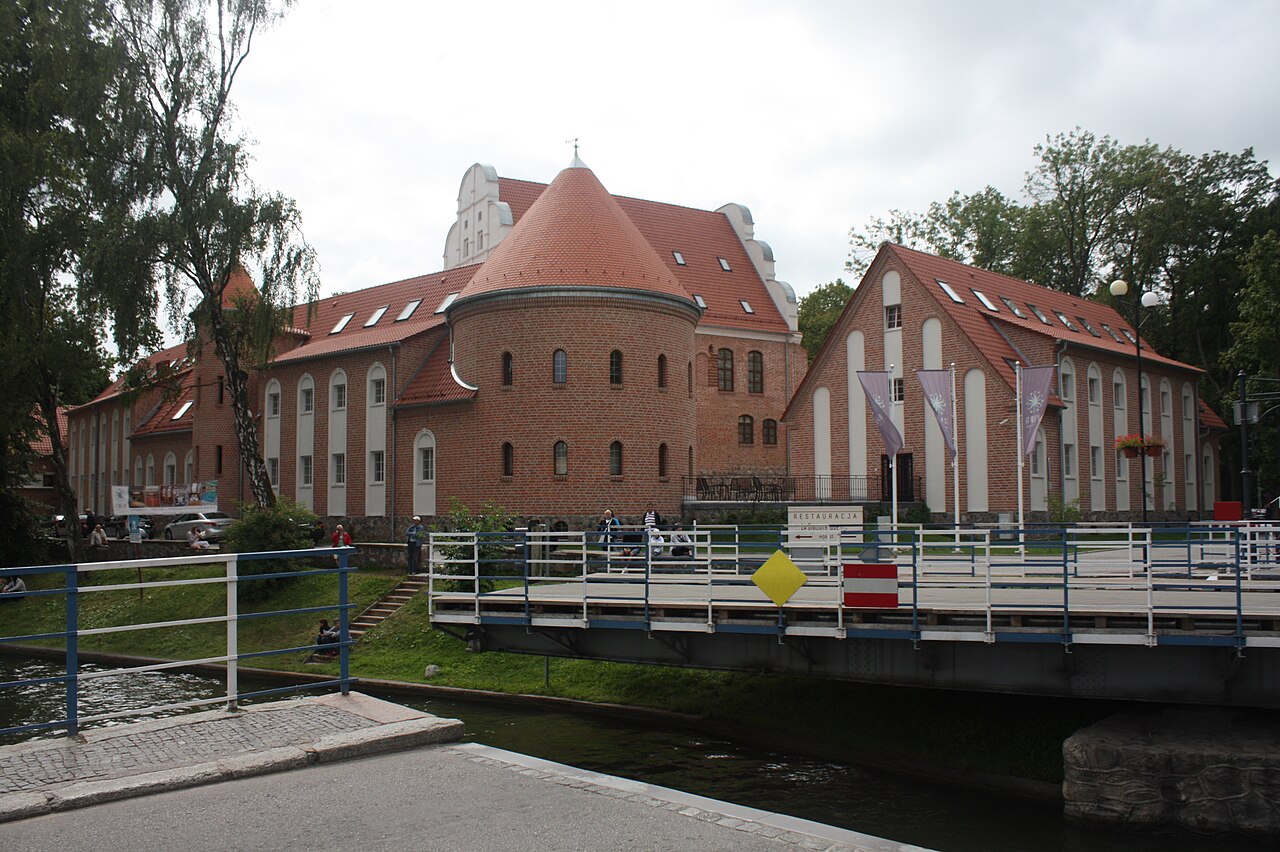
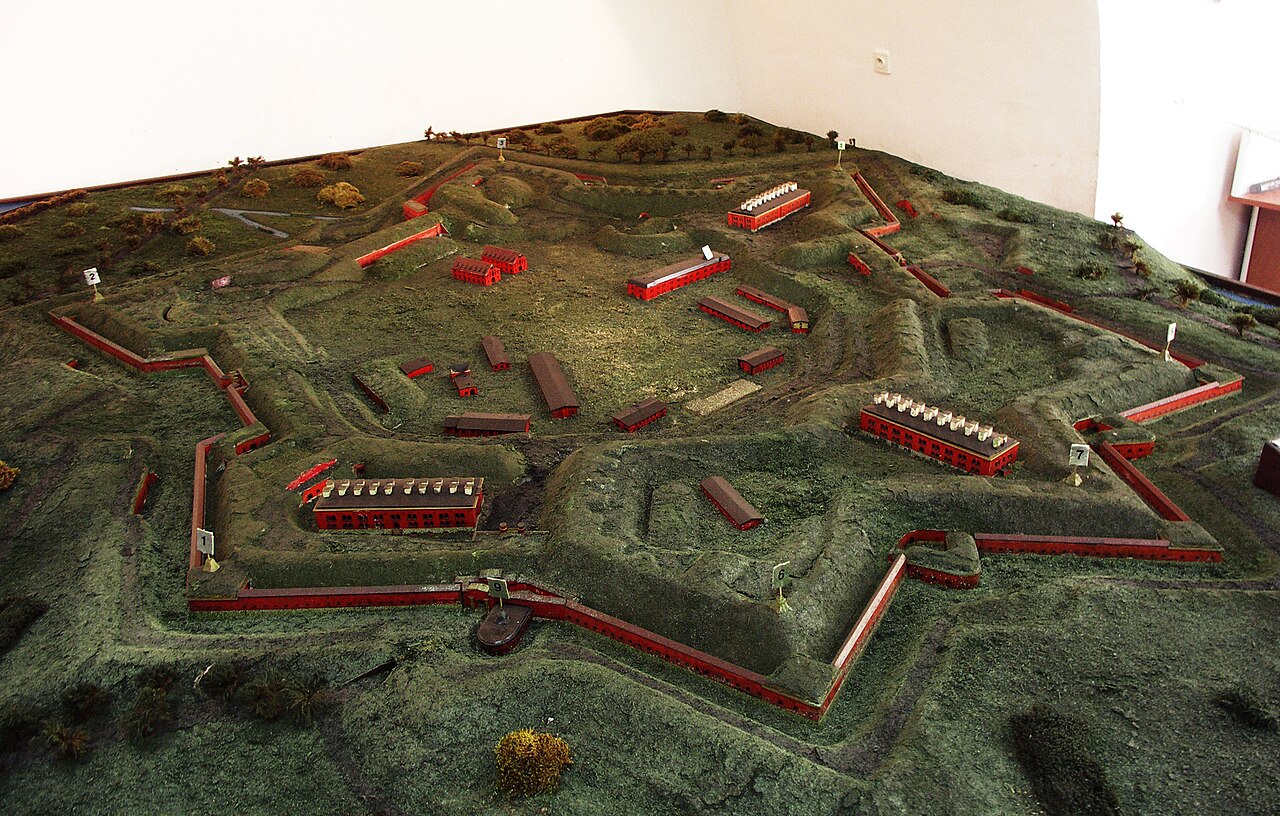
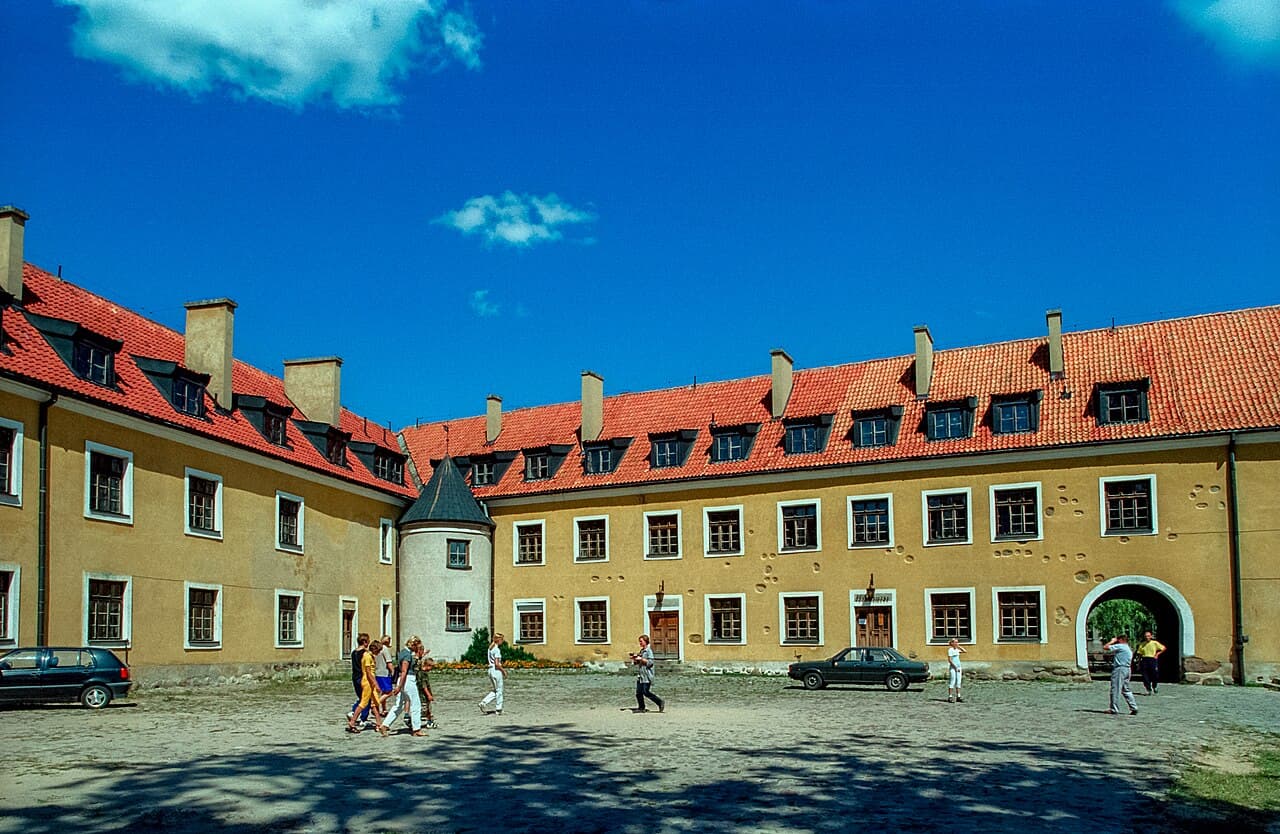
Angerburg Castle is notable for its irregular pentagonal layout, a distinctive feature among Teutonic castles. The main structure consisted of two or three stone wings arranged around a central courtyard. Defensive strength was provided by three cylindrical towers positioned at the corners of the castle, complemented by a smaller tower within the courtyard that served as a communication point between the wings. The eastern side included a small outer bailey, which historically contained a mill until its removal in the 18th century to make way for a canal.
Defensive and residential adaptations
Initially designed for military defense, the castle's function evolved over time. After suffering destruction by Tatar troops in 1656, it was rebuilt with a Baroque style, reflecting a shift towards a more residential and administrative role. This transformation included the addition of larger windows and the replacement of the mill with a canal, signaling a reduced emphasis on fortification and an increased focus on comfort and governance.
Historical significance and usage
Throughout its history, Angerburg Castle served various roles. After the secularization of the Teutonic Order in 1525, it became the residence of a ducal starost, an administrative official. The castle housed several functional spaces, including a chapel dedicated to St. Catherine, a brewery, pantry, bakery, kitchen, and armory. It also played a role during the Napoleonic Wars when it was converted into a hospital for soldiers in 1807 and briefly occupied by Polish forces under Generals Jan Henryk Dąbrowski and Józef Zajączek.
Notable events and visitors
The castle hosted King Stanisław Leszczyński twice in the 1730s before his exile to France. In the mid-18th century, it was repurposed for municipal and judicial functions, including serving as a prison. A fire in 1835 led to significant reconstruction, transforming the castle into a courthouse and erasing much of its medieval character. The advancing Red Army caused further destruction in 1945, but the sturdy 14th-century walls survived.
Modern restoration and current status
Restoration efforts in the early 1980s repurposed the castle for civic use, including a public library, city council offices, and a civil registry. Ownership transferred to private hands in 2000, and the castle is currently undergoing transformation into a hotel. This renovation includes raising the roof and adding dormer windows, altering the castle's historic silhouette while preserving the core medieval stone structure. Despite these changes, Angerburg Castle retains its historical significance as a symbol of the region's layered past and architectural evolution.
Preservation of medieval elements
Despite multiple fires and reconstructions, the foundational masonry walls from the 14th century remain largely intact. These walls provide a tangible link to the castle's original construction and the Teutonic Order's architectural legacy. The castle's evolution from a military fortress to a residential and administrative center is evident in its architectural modifications and changing functions over the centuries.
Frequently asked questions (FAQ)
- What is the historical significance of Angerburg Castle?
- Angerburg Castle was originally built by the Teutonic Knights in 1398 and has served as a military fortress, administrative center, and residence throughout its history, reflecting the region's complex medieval and early modern past.
- Can I visit Angerburg Castle today?
- Yes, Angerburg Castle is currently undergoing transformation into a hotel and retains many of its original medieval stone walls, though access may be limited during renovations.
- When was Angerburg Castle originally built?
- The current stone castle was constructed in 1398 by the Teutonic Knights, replacing an earlier wooden fortress destroyed in 1365.
- What architectural features distinguish Angerburg Castle?
- The castle is known for its irregular pentagonal layout, three cylindrical corner towers, a smaller communication tower in the courtyard, and a transition from medieval fortress to Baroque residence.
- Why was the castle rebuilt in the Baroque style?
- After destruction by Tatar troops in 1656, the castle was rebuilt in the Baroque style to reflect its changing role from military defense to residential and administrative functions.
Photo gallery

Information
Sources & official resources
Verify the information above using these authoritative references.
Loading map...
Visitor reviews
No reviews yet. Been here? Write the first review and help other travelers!
Write the first reviewVisited this castle? Share your experience
Your review helps other travelers and adds first-hand knowledge to our encyclopedia.