Andraz Castle
Andraz Castle stands as a remarkable example of medieval fortification perched high above the municipality of Livinallongo del Col di Lana in northern Italy. Constructed in the early 11th century by a noble family originating from South Germany, the castle was strategically positioned to guard the vital trade artery known as the Iron Road. This route was essential for transporting high-quality iron ore mined from Monte Pore, underscoring the castle's early importance in regional trade and defense.
The castle's location on a rocky outcrop at an elevation exceeding 1700 meters above sea level makes it the highest castle in Italy. This commanding position provided extensive views and control over several crucial mountain passes linking Belluno, Agordo, Bressanone, Val Badia, and Ampezzo. Its placement on a steep spur allowed the builders to exploit natural defensive advantages, integrating the rugged terrain into the fortress's design.
Historical context and ownership transitions
By 1091, the territorial lordship of Buchenstein, including Andraz Castle, was transferred by Emperor Henry IV to the Bishopric of Brixen. Over the subsequent century, the bishops distributed large portions of these lands to noble vassals such as the Rodenegg and Schöneck families. Through inheritance and purchase, the Schönecks gradually consolidated control over Buchenstein and the castle itself.
Around the year 1200, the lords of Buchenstein sold the castle back to the bishops, who then granted it to various noble families including the Schönecks, Avoscano, and Stuck. Throughout this period, the castle remained under the authority of the prince-bishops of Brixen, reflecting the intertwining of ecclesiastical power and feudal lordship common in the region.
From 1416 until the secularization in 1803, Andraz Castle was directly governed by the prince-bishops, functioning primarily as a modest military garrison commanded by a captain. The castle's military significance was renewed during the 16th century due to the expansionist ambitions of the Republic of Venice. The surrounding Dolomite region's wealth in timber and mineral resources heightened the need to protect these economic assets, making the castle a strategic defensive site.
Architectural features and defensive structures
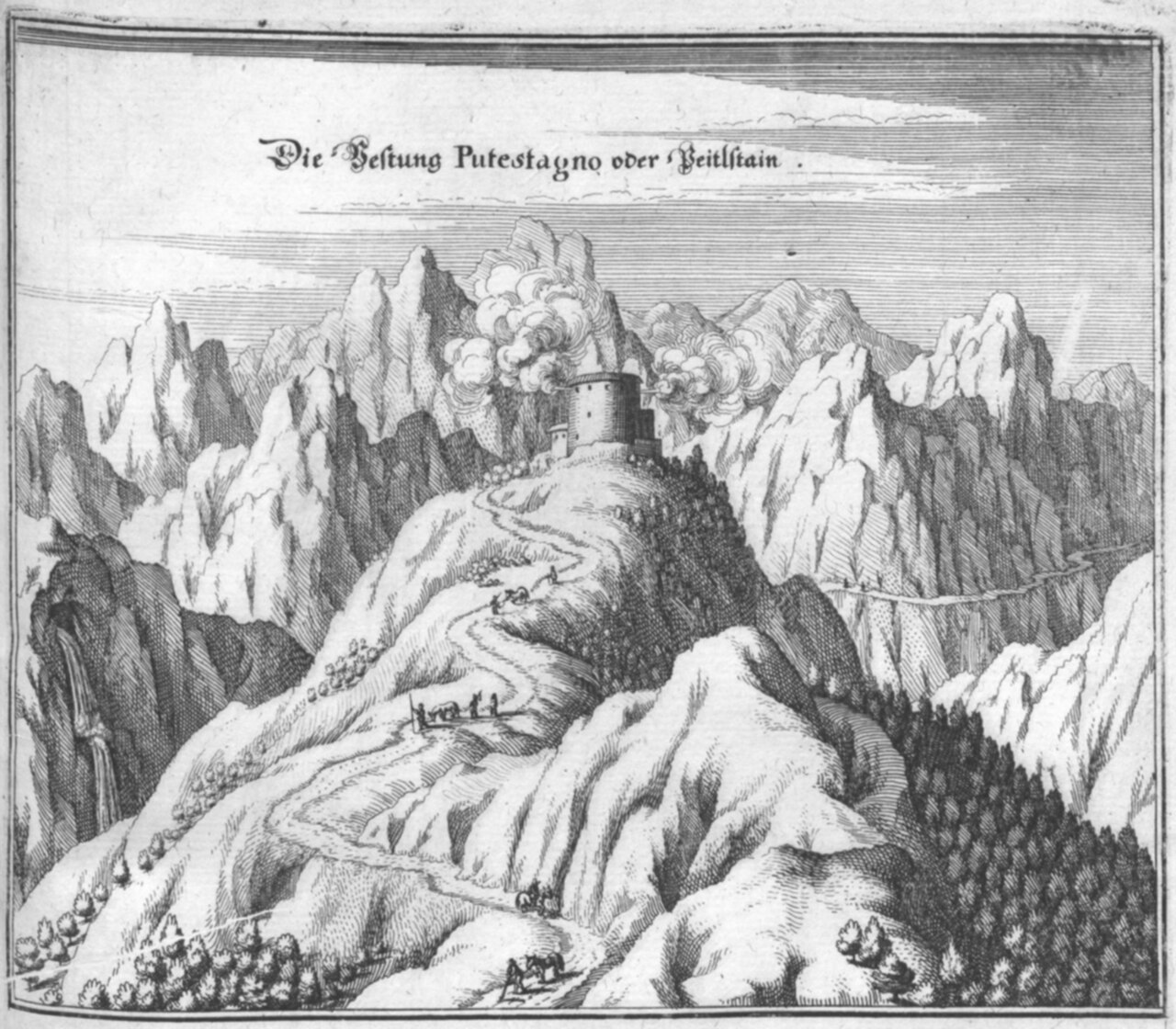
Andraz Castle was built predominantly of stone, utilizing the natural steepness of the rocky spur to enhance its defenses. Access to the fortress was originally via a single stone ramp, parts of which have been partially restored. This ramp connected multiple stacked floors within the castle, facilitating movement between different levels in a challenging mountainous environment.
A notable feature was the use of a winch system to raise supplies and goods into the castle, an ingenious solution given the difficult terrain. The castle's defensive perimeter was marked by a curtain wall encircling the main rocky promontory, enclosing space sufficient for stables and auxiliary buildings.
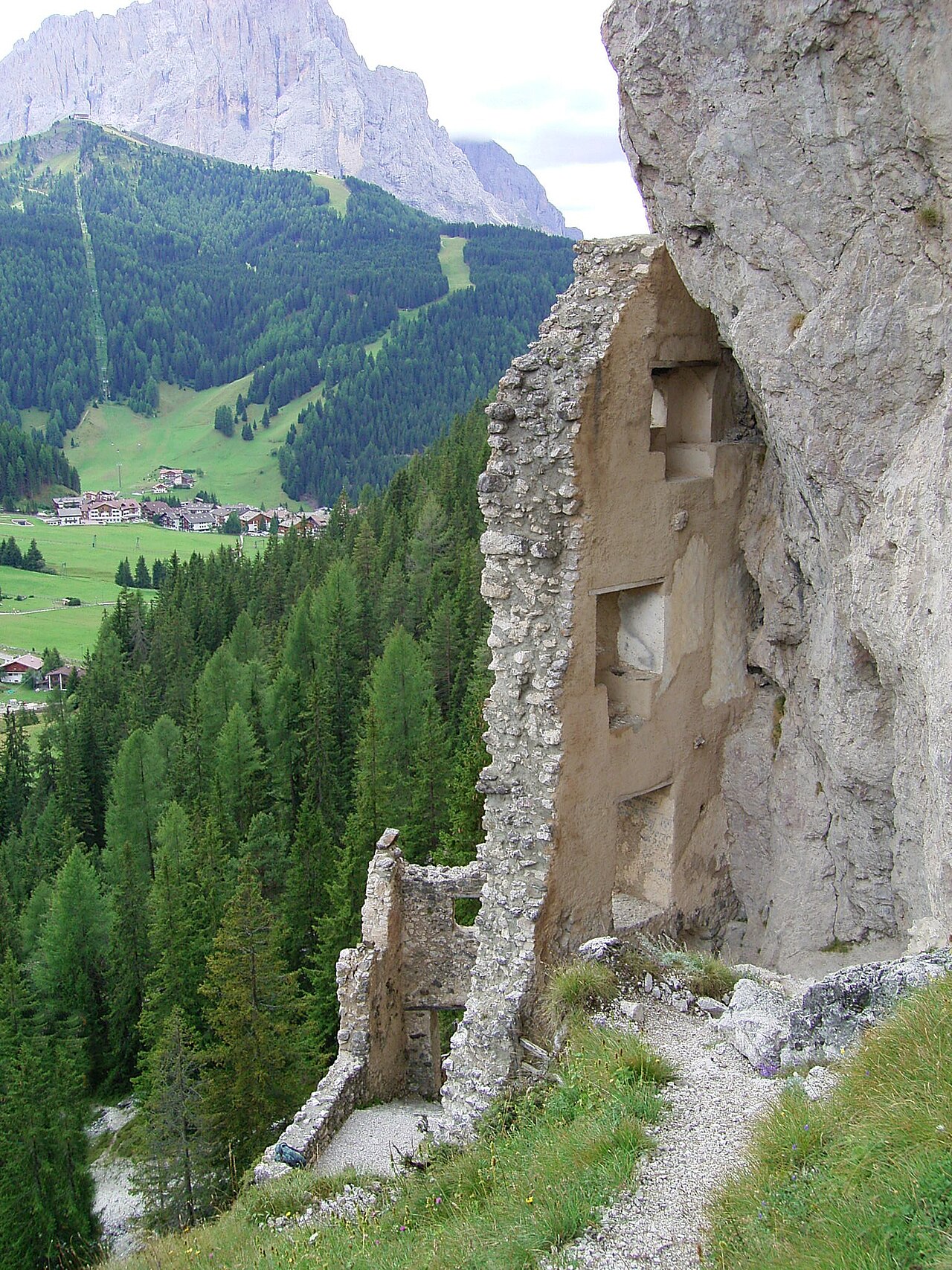
Some sections of the curtain wall retain stone corbels, which supported a wooden gallery that served as a patrol walkway for guards. This architectural element provided both surveillance capability and defensive advantage, allowing defenders to monitor the surrounding landscape effectively.
Near the main entrance stood a chapel dedicated to Saint Raphael, dating from the 16th century. This chapel was distinguished by a finely crafted wooden altar, which has been preserved and relocated to the nearby village church of Andraz, highlighting the castle's religious as well as military significance.
Restorations and changes through the centuries
The castle endured several destructive fires during the late 15th and 16th centuries. Restoration efforts between 1484 and 1488 not only repaired damage but also adapted the fortress for expanded residential and administrative functions, reducing its purely military role. Further repairs followed fires in 1516 and 1599, reflecting ongoing maintenance and adaptation.
Mining activities near the castle ceased in the mid-18th century, diminishing the strategic economic importance of the site. After the dissolution of ecclesiastical principalities in 1803, the castle lost its military and administrative functions. The last garrison commander, Giovanni Lindner, departed at this time, marking the end of its active defense role.
In 1808, Andraz Castle passed into private ownership under Andrea Faber. However, by the mid-19th century, neglect led to significant deterioration, including the removal of the roof for firewood. During the First World War, the castle was repurposed as a field hospital, suffering considerable damage from wartime use.
Current condition and conservation efforts
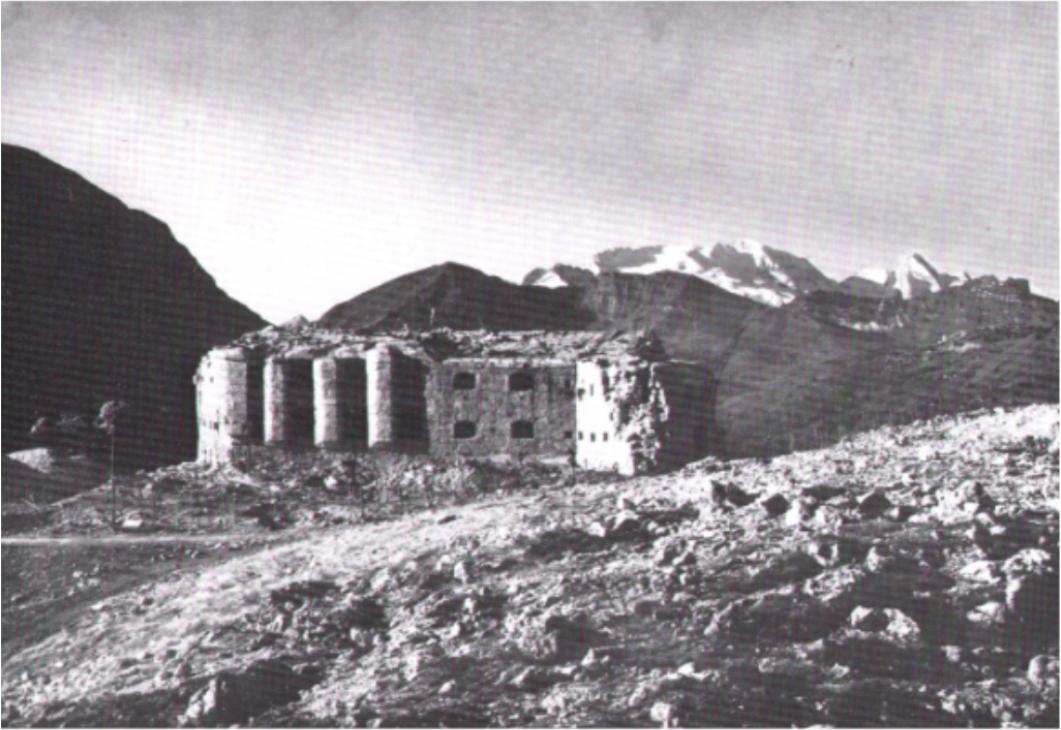
Today, Andraz Castle remains in a state of ruin, bearing the marks of centuries of abandonment and the impacts of war. Conservation and restoration efforts initiated in the late 20th century by regional heritage authorities have focused on stabilizing the surviving structures to preserve the castle's historical fabric.
These initiatives aim to maintain Andraz Castle as a significant cultural monument, offering visitors insight into medieval defensive architecture and the complex history of the Dolomite region. The castle's unique position as Italy's highest fortress and its rich historical legacy make it a valuable site for both heritage tourism and scholarly study.
The castle's role in regional trade and defense
Andraz Castle's strategic location was crucial for controlling the Iron Road, facilitating the movement of iron ore and other valuable commodities through the Dolomites. This trade route linked important economic centers and enabled the exploitation of the region's natural resources.
The castle's military garrison, though modest, played a vital role in safeguarding these assets from external threats, especially during periods of regional conflict and expansionist pressures from powers like the Republic of Venice. Its architecture reflects a balance between defensive capability and administrative function, adapting over centuries to meet evolving needs.
The philosopher nicolaus cusanus and the castle
In the mid-15th century, the renowned philosopher and churchman Nicolaus Cusanus sought refuge within Andraz Castle. During a time of regional turmoil, the castle provided a place for contemplation and safety. This association adds a layer of cultural and intellectual significance to the castle's history, linking it to broader European intellectual currents of the late medieval period.
Architectural style and classification
Andraz Castle is classified as a hill castle, characterized by its elevated position and integration with natural rocky terrain. Its architectural style is predominantly medieval stone fortification, with later modifications reflecting the evolving needs of its occupants. The castle does not conform strictly to a single architectural style such as Gothic or Renaissance but embodies functional military architecture typical of the High to Late Medieval periods.
Frequently asked questions (FAQ)
- How do I get to Andraz Castle?
- Andraz Castle is located in Livinallongo del Col di Lana, Italy, easily accessible by car or public transport. The nearest major city is Bolzano, which is about an hour's drive away. It's recommended to check local transport schedules for the best routes before your visit.
- What is the historical significance of Andraz Castle?
- Andraz Castle dates back to the 12th century and played a crucial role in the defense of the region during various conflicts. It has witnessed numerous historical events, particularly during the Middle Ages. Today, it stands as a testament to the rich history and cultural heritage of the Dolomite area.
- When was Andraz Castle built?
- Construction of Andraz Castle began in the early 12th century and was completed over the following decades. It was strategically built on a rocky outcrop to oversee the surrounding valleys. The castle's architecture reflects the defensive needs of its time.
- Can I visit Andraz Castle year-round?
- Yes, Andraz Castle is open to visitors year-round, although access may vary depending on weather conditions, especially in winter. It’s advisable to check the official website or contact local tourist information for any seasonal closures. Guided tours are often available to enhance your experience.
- Why is Andraz Castle a popular tourist destination?
- Andraz Castle attracts visitors due to its stunning architecture, breathtaking views of the Dolomites, and its rich history. The castle also serves as a cultural venue, hosting various events throughout the year. Its picturesque setting makes it a favorite spot for photography and hiking enthusiasts.
- Is it possible to explore the interior of Andraz Castle?
- Yes, visitors can explore the interior of Andraz Castle, where you can learn more about its history and architecture through informative displays. Guided tours often provide insights that enhance the experience. However, some areas may have restricted access for preservation purposes.
- What are the opening hours for Andraz Castle?
- Andraz Castle typically opens to visitors from 9 AM to 6 PM during the peak season, but hours may vary in the off-season. It's best to check the castle's official website for the most accurate and updated information regarding opening times. Guided tours may have specific schedules, so plan accordingly.
- What are the ticket prices for Andraz Castle?
- Ticket prices for Andraz Castle are generally affordable, with discounts available for children, seniors, and groups. Prices may vary for guided tours, so it's advisable to check in advance. Purchasing tickets online can often save time upon arrival.
- What nearby attractions can I visit while at Andraz Castle?
- While visiting Andraz Castle, you can explore the stunning Dolomites, which offer excellent hiking and outdoor activities. The nearby village of Livinallongo del Col di Lana also features local shops and restaurants. Additionally, the region is rich in other historical sites and natural parks worth visiting.
Information
Website
Visit websiteSources & official resources
Verify the information above using these authoritative references.
Loading map...
Visitor reviews
No reviews yet. Been here? Write the first review and help other travelers!
Write the first reviewVisited this castle? Share your experience
Your review helps other travelers and adds first-hand knowledge to our encyclopedia.