Castello di Botestagno
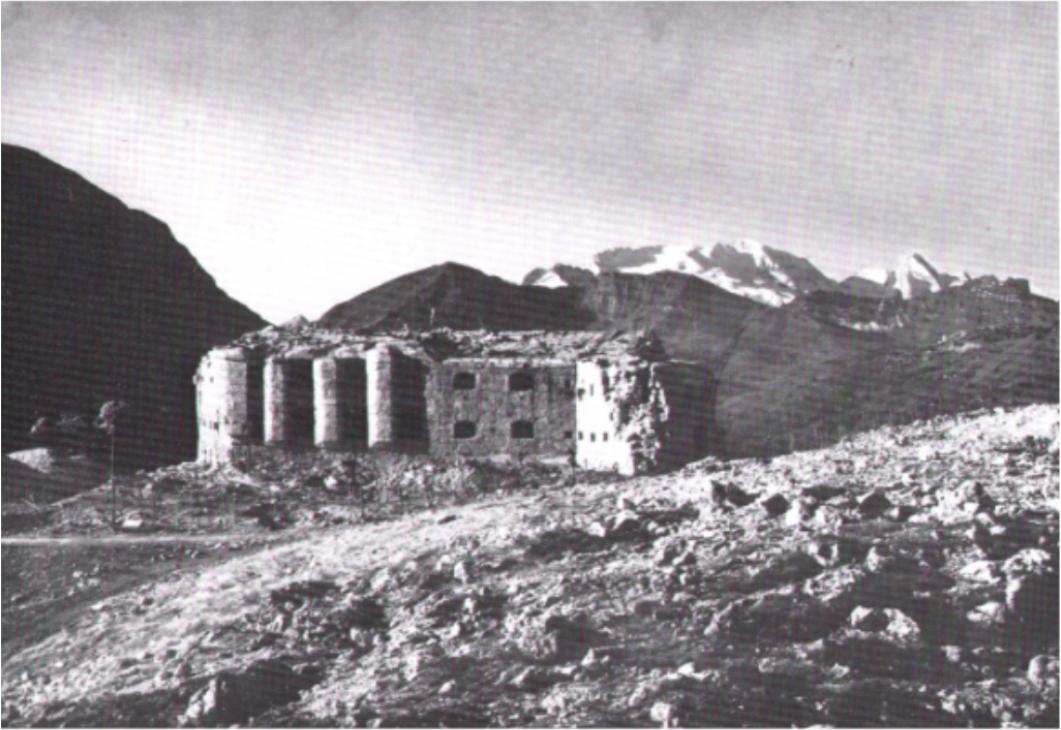
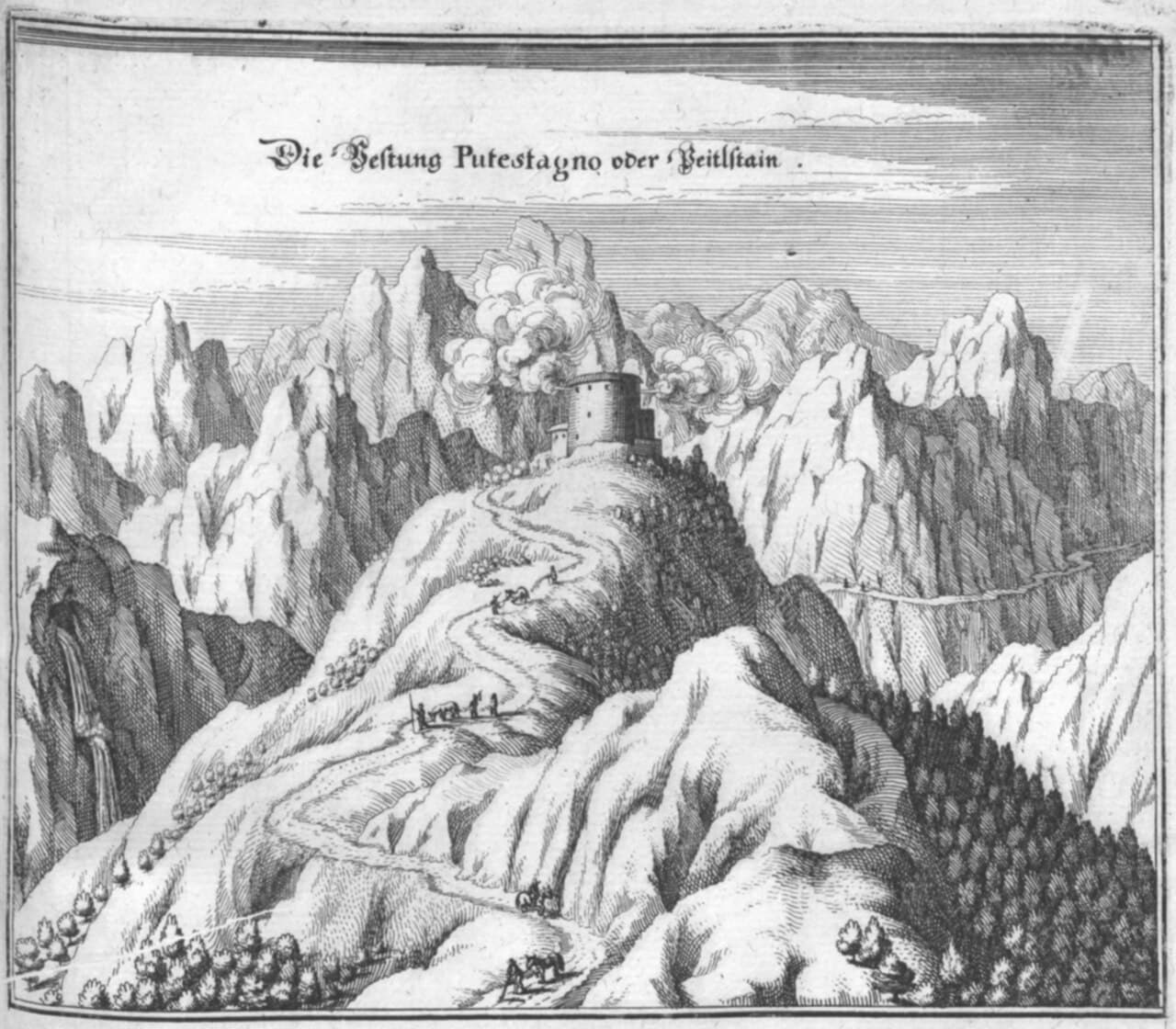
Castello di Botestagno, also known by its German name Peutelstein and Italian variant Podestagno, is a ruined medieval fortress located in the comune of Cortina d'Ampezzo within the Dolomitic Alps of the Veneto region in Northern Italy. This high medieval castle, dating back to the 11th century, occupies a strategic position atop a rocky outcrop overlooking the Boite River valley, near the small locality of Prà del Caštel, just north of the town of Cortina d'Ampezzo. Its elevated placement provided natural defensive advantages and control over the surrounding alpine routes.
Historical background and strategic significance
The origins of Castello di Botestagno trace to the early medieval period, with its main construction phase in the 11th century. It was established as a fortified site to oversee and protect the vital mountain passes through the Dolomites, which were important for trade and military movements between the Italian peninsula and northern Europe. The castle's location allowed its occupants to monitor the Boite valley and control access to the surrounding alpine region.
Throughout the high medieval era, the castle played a role in regional power struggles involving local lords and larger political entities such as the Patriarchate of Aquileia and the Republic of Venice. Its German name, Peutelstein, reflects the influence of German-speaking populations and the Holy Roman Empire in this border area.
Architectural features and layout
The castle is classified as archaeological ruins today, with only partial remnants of its original fortifications surviving. It was constructed primarily using local stone, adapted to the rugged alpine terrain. The fortress occupied a naturally defensible rock spur, with steep cliffs on several sides enhancing its protection.
While much of the structure has collapsed over the centuries, archaeological studies have identified the remains of defensive walls, watchtowers, and foundations of residential buildings within the castle precinct. The layout likely included a keep or donjon serving as the last line of defense and a stronghold for the lord or commander.
The castle's design reflects typical high medieval military architecture adapted to alpine conditions, emphasizing strong vertical elements and compact defensive structures to maximize the natural advantages of the site.
The decline and current status
By the late medieval period, advances in military technology and changing political dynamics reduced the strategic importance of Castello di Botestagno. It gradually fell into disuse and ruin. Today, the site remains an archaeological ruin, attracting historians and visitors interested in medieval alpine fortifications.
Its remains provide valuable insights into the medieval defensive strategies employed in mountainous terrain and the historical interactions between Italian and Germanic cultures in this border region.
Visiting Castello di Botestagno
Located near Cortina d'Ampezzo, the castle ruins can be accessed by hiking trails that offer scenic views of the Dolomitic landscape. While there are no extensive visitor facilities on-site, the area is popular for its natural beauty and historical significance. Visitors should be prepared for rugged terrain and limited infrastructure.
The site is an important cultural heritage landmark within the Veneto region, contributing to the understanding of medieval alpine fortifications and the historical geography of Northern Italy.
Frequently asked questions (FAQ)
- How do I reach Castello di Botestagno from Cortina d'Ampezzo?
- Castello di Botestagno is accessible by hiking trails from Cortina d'Ampezzo, with paths leading north towards Prà del Caštel. The hike offers scenic views but requires good physical condition due to rugged terrain.
- What is the historical significance of Castello di Botestagno?
- The castle was a strategic fortification controlling alpine routes in the Dolomites during the 11th century and played a role in regional power struggles between Italian and Germanic influences.
- Can visitors explore the ruins of Castello di Botestagno?
- Yes, visitors can explore the archaeological ruins, though only partial remains of walls and towers survive. There are no extensive visitor facilities, so caution is advised when navigating the site.
- When is the best time to visit Castello di Botestagno?
- The best time to visit is during the warmer months from late spring to early autumn, when hiking conditions are favorable and the alpine scenery is most accessible.
- Is there an entrance fee to visit Castello di Botestagno?
- There is no entrance fee to visit the ruins of Castello di Botestagno, as it is an open archaeological site.
Photo gallery

Photo by Martin Zeiller•Public domain
Information
Loading map...
Visitor reviews
No reviews yet. Been here? Write the first review and help other travelers!
Write the first reviewVisited this castle? Share your experience
Your review helps other travelers and adds first-hand knowledge to our encyclopedia.