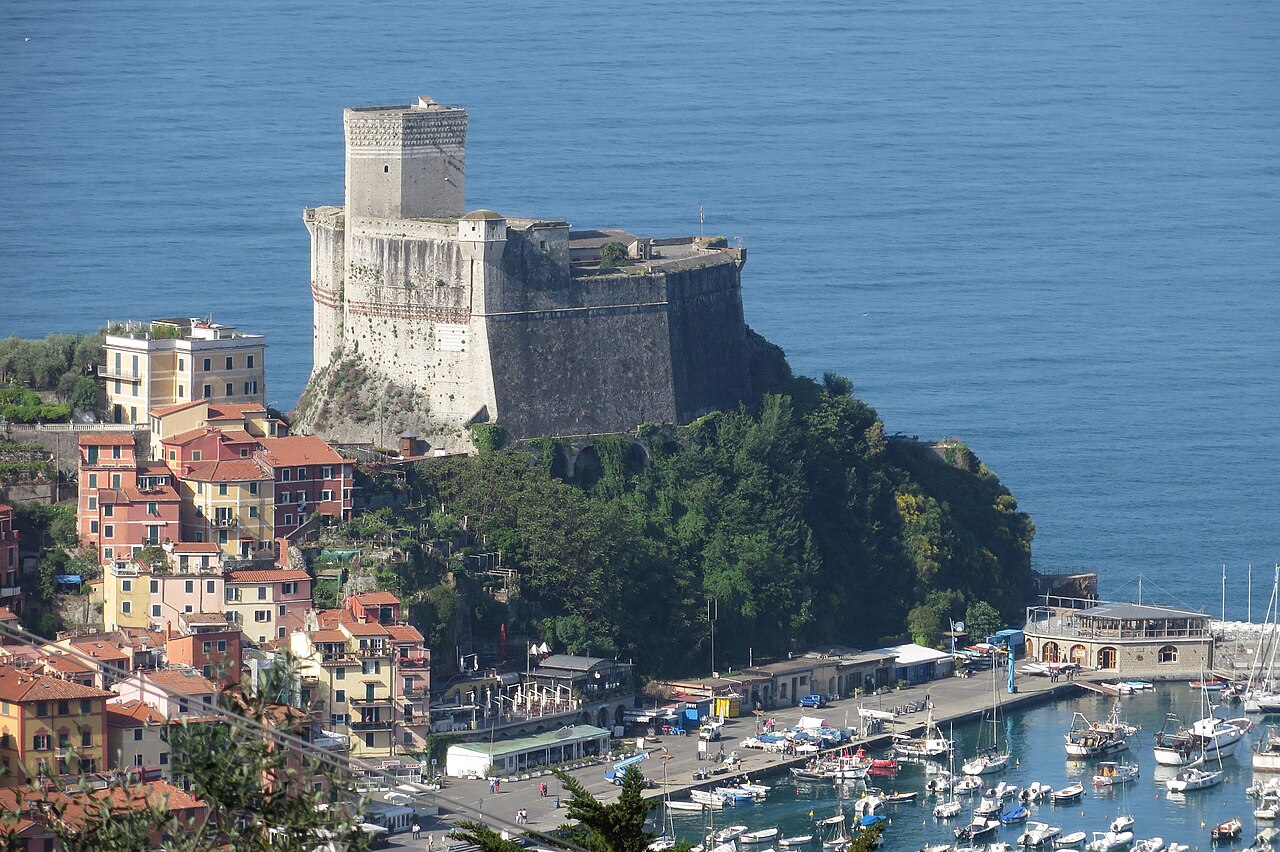
Ameglia Castle
Ameglia Castle is a historic medieval fortress located in the town of Ameglia, in the Liguria region of Italy. Its origins date back to the 10th century, making it a significant example of early medieval fortification in this coastal area. The castle's strategic position atop a hill overlooking the valley allowed it to control important trade routes and local settlements, including the nearby mouth of the Marinasco River and the monastery of Santa Croce in Punta Corvo.
The castle was first documented in 963 AD in an imperial charter by Otto I, which listed Ameglia among the properties belonging to the Bishops of Luni. This ecclesiastical connection shaped much of the castle's early history, as it served as a residence and administrative center for the bishop-counts through the 12th and 13th centuries. The presence of a court, fish market, and port in Ameglia during this period indicates the castle's role in the economic development of the region.
Medieval history and political significance
Throughout the 12th century, Ameglia Castle played a pivotal role in regional conflicts and power shifts. In 1174, following the destruction of the nearby village of Pietracoperta by the Republic of Genoa, displaced inhabitants sought refuge within the castle walls. This event reflects the castle's defensive importance amid the struggles between the Malaspina family, Genoese forces, and other local powers vying for control.
By the 14th century, the castle came under the control of notable figures such as Castruccio Castracani, lord of Lucca, known for his military campaigns in Tuscany and Liguria. Later, in 1470, the fortress and village were sold to the Banco di San Giorgio, a powerful Genoese financial institution, marking the beginning of Genoa's direct influence over the area. This transition linked Ameglia's fate to the Republic of Genoa, which maintained control for several centuries.
Despite changes in ownership, the castle remained a central administrative hub, serving as the seat of the municipality of Ameglia until 2008. Its sustained civic function highlights the castle's enduring importance to the town's social and political life from the medieval period through modern times.
Architectural features and layout
Ameglia Castle is classified as a hill castle, situated prominently on a hilltop that provides commanding views of the surrounding landscape. The fortress has a rectangular footprint, comprising a two-story main building that has undergone several reconstructions over the centuries. This main structure is enclosed within trapezoidal defensive walls that form a protective curtain around the core of the castle.
A distinctive feature of the castle is its circular tower, which contrasts with the rectangular shape of the main building and walls. The tower likely served as a lookout and last line of defense, reflecting adaptations in medieval military architecture to improve surveillance and protection. The combination of straight walls and a rounded tower illustrates a blend of defensive strategies.
Over time, the castle became the nucleus for a fortified village. Houses and other buildings were constructed concentrically around the fortress, creating a layered defensive settlement. This layout is typical of medieval fortified villages, where the castle served both as a military stronghold and a center of community life.
Construction materials and techniques
The castle's masonry features well-preserved stonework, demonstrating the robust construction techniques typical of medieval fortifications in Liguria. The use of local stone not only provided durability but also integrated the castle aesthetically into its natural surroundings. The walls' thickness and the tower's solidity attest to the castle's primary function as a defensive structure designed to withstand sieges and attacks.
The castle's role in the local economy and society
Ameglia's location near a port and fish market contributed to its economic significance during the medieval period. The castle's protection enabled the growth of trade and commerce, fostering a thriving community within its walls and the surrounding village. The castle's administration by the bishops of Luni further emphasized its role in managing local resources and maintaining order.
As political control shifted to Genoese authorities and later to the Banco di San Giorgio, Ameglia's economic ties to the Republic of Genoa strengthened. This connection facilitated the integration of the town into broader maritime trade networks, enhancing its prosperity and strategic value along the Ligurian coast.
Preservation and current status
Today, Ameglia Castle remains a prominent landmark in the historic center of Ameglia, occupying a central position in Piazza Sforza. The castle is largely well preserved, with its main structural elements, including the rectangular building, trapezoidal walls, and circular tower, still intact. The site offers visitors a tangible connection to the medieval past and the various historical phases the castle has witnessed.
The castle no longer serves a defensive purpose but has been integrated into the civic fabric of Ameglia. Until 2008, it housed the municipal offices, demonstrating adaptive reuse of historic architecture in contemporary community life. Its preservation provides valuable insight into medieval fortification design and the social history of Liguria.
Visitor information and accessibility
The castle's location within the town makes it easily accessible to visitors interested in exploring medieval architecture and Ligurian history. While specific visiting hours and ticket prices are not widely published, the castle's exterior and surrounding village can be appreciated through guided tours and local heritage trails. The site is an important cultural asset for Ameglia and contributes to the region's tourism appeal.
Historical context and regional influence
Ameglia Castle's history is intertwined with the shifting political landscape of medieval Liguria and Tuscany. Its control by ecclesiastical authorities, military leaders, and financial institutions reflects broader patterns of power in northern Italy during the Middle Ages. The castle's strategic location near key waterways and trade routes made it a valuable asset for controlling regional commerce and military movements.
The castle's endurance through centuries of conflict, ownership changes, and social transformation illustrates the adaptability of medieval fortifications. Its role evolved from a military bastion to an administrative center and finally to a symbol of local heritage. This trajectory mirrors the experiences of many similar castles in Italy and Europe.
Frequently asked questions (FAQ)
- When was Ameglia Castle built?
- Ameglia Castle was built in the 10th century AD, with the first recorded mention in 963 AD in an imperial charter by Otto I.
- What architectural style characterizes Ameglia Castle?
- The castle features medieval architectural elements typical of early fortifications, including a rectangular main building, trapezoidal defensive walls, and a distinctive circular tower.
- Can visitors tour Ameglia Castle?
- While the castle no longer serves a defensive function, visitors can explore its exterior and the surrounding historic village. Guided tours may be available through local heritage organizations.
- What was the castle's role in the local economy?
- Ameglia Castle protected a port, fish market, and court, facilitating economic growth and trade in the region during the medieval period.
- Who controlled Ameglia Castle historically?
- The castle was initially controlled by the Bishops of Luni, later by Castruccio Castracani, the Visconti family, and the Banco di San Giorgio, reflecting its strategic importance.
Information
Current owner
Municipality of Ameglia
Loading map...
Visitor reviews
No reviews yet. Been here? Write the first review and help other travelers!
Write the first reviewVisited this castle? Share your experience
Your review helps other travelers and adds first-hand knowledge to our encyclopedia.