Altes Schloss
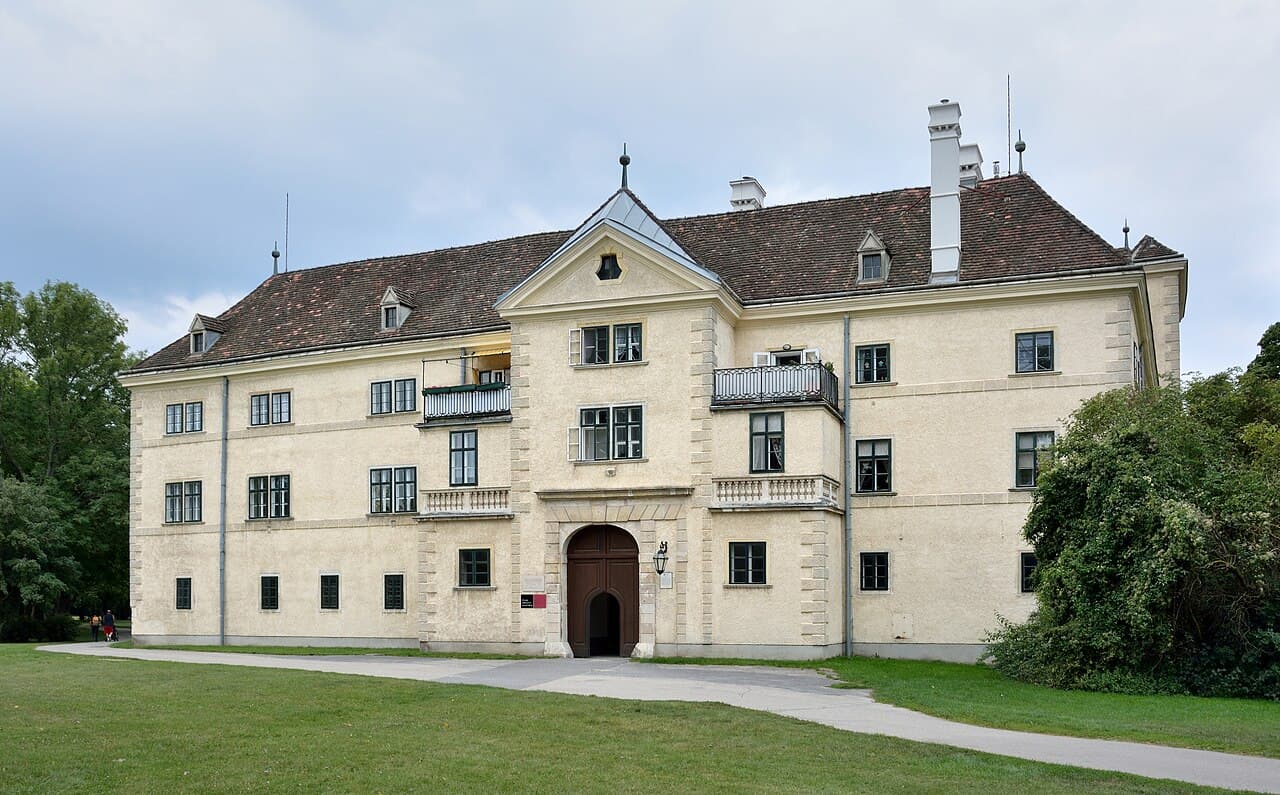
Altes Schloss, located in Laxenburg, Austria, is a remarkable hill castle with origins dating back to the 13th century. Originally established as the heart of an extensive hunting ground, the castle was surrounded by moats and numerous ancillary buildings that supported its function as a noble retreat. The castle's long history is deeply intertwined with the Habsburg dynasty, who acquired it in 1333 and developed it into an important imperial residence over the centuries.
The castle complex is a fine example of layered architectural evolution, showcasing medieval foundations, Baroque renovations by the renowned architect Lodovico Burnacini in the late 17th century, and 19th-century neo-medieval additions. After suffering damage during the Second Turkish Siege of Vienna in 1683, the castle was rebuilt and expanded, including the addition of an upper floor in 1693. The moats that once encircled the castle were filled in during the 18th century, reflecting changing tastes and defensive needs.
Medieval origins and early history
The Altes Schloss originated as a hunting lodge in the 13th century under the Lords of Lachsenburg. Its strategic location on a hill provided a commanding view of the surrounding lands, ideal for overseeing hunting grounds and protecting the estate. The castle passed into Habsburg possession in the early 14th century, marking the beginning of its close association with one of Europe's most powerful dynasties.
The castle's early function as a hunting retreat was complemented by the construction of a chapel in one of its towers, which dates back to the 14th century. This chapel was rebuilt in 1389, incorporating statues from the Leopoldsberg chapel, and later received Baroque furnishings in 1755 sourced from St. Anna’s Church in Vienna. This blend of medieval and Baroque religious architecture adds to the castle's cultural significance.
Baroque transformation and imperial residence
Following the Turkish siege of 1683, the castle underwent significant reconstruction under the direction of Lodovico Burnacini, who was instrumental in shaping its Baroque character. The addition of a new upper floor and the remodeling of interiors reflected contemporary tastes and the castle's elevated status as a Habsburg residence.
During the 18th century, the castle served as a favored spring residence for the Habsburgs, alongside the nearby Blauer Hof (Blue Court), which was built in the 18th century. The castle was part of a broader imperial landscape that included the transformation of the surrounding gardens into an English-style landscape park with winding paths, ponds, and romantic garden features such as the Rittergau and neo-medieval structures.
Connections to vienna and imperial court life
Empress Maria Theresa enhanced the castle's accessibility by creating a continuous avenue from Schönbrunn Palace and establishing a dedicated railway line connecting to the Southern Railway at Mödling. This facilitated easier travel for court members and reinforced Laxenburg's role as an imperial retreat.
In the 19th century, the castle remained a significant residence for the imperial family. Emperor Franz Joseph I and Empress Elisabeth spent their honeymoon at Laxenburg in 1854, and the castle was the birthplace of their children Archduchess Gisela and Crown Prince Rudolf. The Blue Court nearby was expanded by architects such as Lucas von Hildebrandt and Nikolaus Pacassi to accommodate the large imperial household.
20th-century history and modern use
During World War I, the Blue Court was converted into a military hospital, and in 1917 Emperor Karl I moved his court to Laxenburg, seeking proximity to the military high command in Baden and a degree of separation from Vienna's political center. After the fall of the Austro-Hungarian monarchy in 1918, the castle properties were managed by the War Victims’ Fund but faced commercial challenges in the 1920s.
Under Nazi rule, Laxenburg was incorporated into Vienna in 1938. During World War II, the Blue Court served as a Wehrmacht warehouse, and many valuable furnishings were relocated to museums in Vienna. The castle and park were later occupied by Soviet forces after 1945, leading to a period of neglect and deterioration.
Restoration efforts began in the 1960s with the formation of a municipal company dedicated to managing the castle and park. These efforts have preserved the castle's historical fabric and adapted it for contemporary use. Today, the Altes Schloss houses part of Austria’s Film Archive, while the chapel serves as a venue for concerts, weddings, and cultural events.
The castle complex and surrounding park
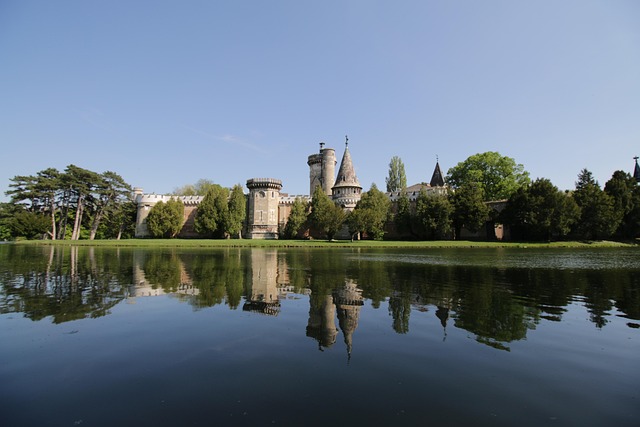
The Laxenburg castle complex includes three main historic structures: the Altes Schloss (Old Castle), the Blauer Hof (Blue Court or New Castle), and the Franzensburg, a neo-medieval castle built on an island in the castle pond between 1801 and 1836. The Franzensburg is named after Emperor Franz II/I and is accessible by an iron bridge and ferry, preserving historic waterway connections.
The extensive English landscape park spans approximately 280 hectares and was transformed from a formal French garden into a naturalistic park during the late 18th century under Emperor Joseph II. The park features winding paths, varied watercourses, and romantic garden elements such as the Rittergau, the Green Lusthaus pavilion dedicated to Diana, and the Corinthian-columned Concordiatempel.
Other notable park features include the ruins of the House of Humor, the Rittergruft (knights’ crypt), the Ritter column, and the Hofeiskeller ice cellar. The park's water system is ingeniously engineered, drawing from the Triesting River and Heidbach stream, and includes the Forstmeisterkanal and Große Kaskade waterfall.
The former imperial railway station, the Kaiserbahnhof of Laxenburg, has been restored to its mid-19th-century appearance and now serves as an event space and restaurant. Nearby, the Palais Kaunitz-Wittgenstein has historical significance as a noble residence and currently houses the International Anti-Corruption Academy.
Frequently asked questions (FAQ)
- How do I get to Altes Schloss?
- Altes Schloss is located in Laxenburg, Austria, approximately 20 kilometers from Vienna. You can reach the castle by taking public transportation, such as the S-Bahn or bus, or by driving, with ample parking available nearby.
- What is the historical significance of Altes Schloss?
- Altes Schloss, or Old Castle, dates back to the 13th century and served as a summer residence for the Habsburgs. It is notable for its role in the development of the surrounding park, which became a popular retreat for the imperial family.
- When was Altes Schloss built?
- The construction of Altes Schloss began in the 13th century, with significant expansions and renovations occurring over the following centuries. Its architecture reflects various styles, showcasing the evolution of design from medieval to Renaissance influences.
- Can I take guided tours of Altes Schloss?
- Yes, guided tours are available at Altes Schloss, providing visitors with insights into its rich history and architectural features. Tours typically run throughout the day, and it is advisable to check the schedule upon arrival.
- Why is Altes Schloss a popular tourist destination?
- Altes Schloss attracts visitors due to its stunning architecture, beautiful gardens, and historical significance as a Habsburg residence. The picturesque setting and serene atmosphere make it an ideal spot for both history enthusiasts and nature lovers.
- Is it possible to host events at Altes Schloss?
- Yes, Altes Schloss offers facilities for hosting various events, including weddings, conferences, and private gatherings. Interested parties should contact the castle administration for more information on availability and services.
- What are the opening hours of Altes Schloss?
- Altes Schloss is typically open to visitors from April to October, with opening hours varying by season. It is best to check the official website or contact the castle for the most current information on hours and any seasonal changes.
- What are the ticket prices for visiting Altes Schloss?
- Ticket prices for Altes Schloss vary depending on the type of tour and age group. Discounts are often available for children, seniors, and groups, so it is recommended to inquire at the ticket office or visit the website for detailed pricing.
- When is the best time to visit Altes Schloss?
- The best time to visit Altes Schloss is during the spring and early autumn when the weather is pleasant, and the gardens are in full bloom. These seasons provide a beautiful backdrop for exploring the castle and its extensive grounds.
- Are there any nearby attractions to explore?
- Yes, Laxenburg offers several nearby attractions, including the expansive Laxenburg Castle Park and the picturesque Franzensburg Castle, which is located within the park. Visitors can enjoy walking trails, boating, and various recreational activities in the area.
Photo gallery

Information
Loading map...
Visitor reviews
No reviews yet. Been here? Write the first review and help other travelers!
Write the first reviewVisited this castle? Share your experience
Your review helps other travelers and adds first-hand knowledge to our encyclopedia.