Schloss Weinfelden
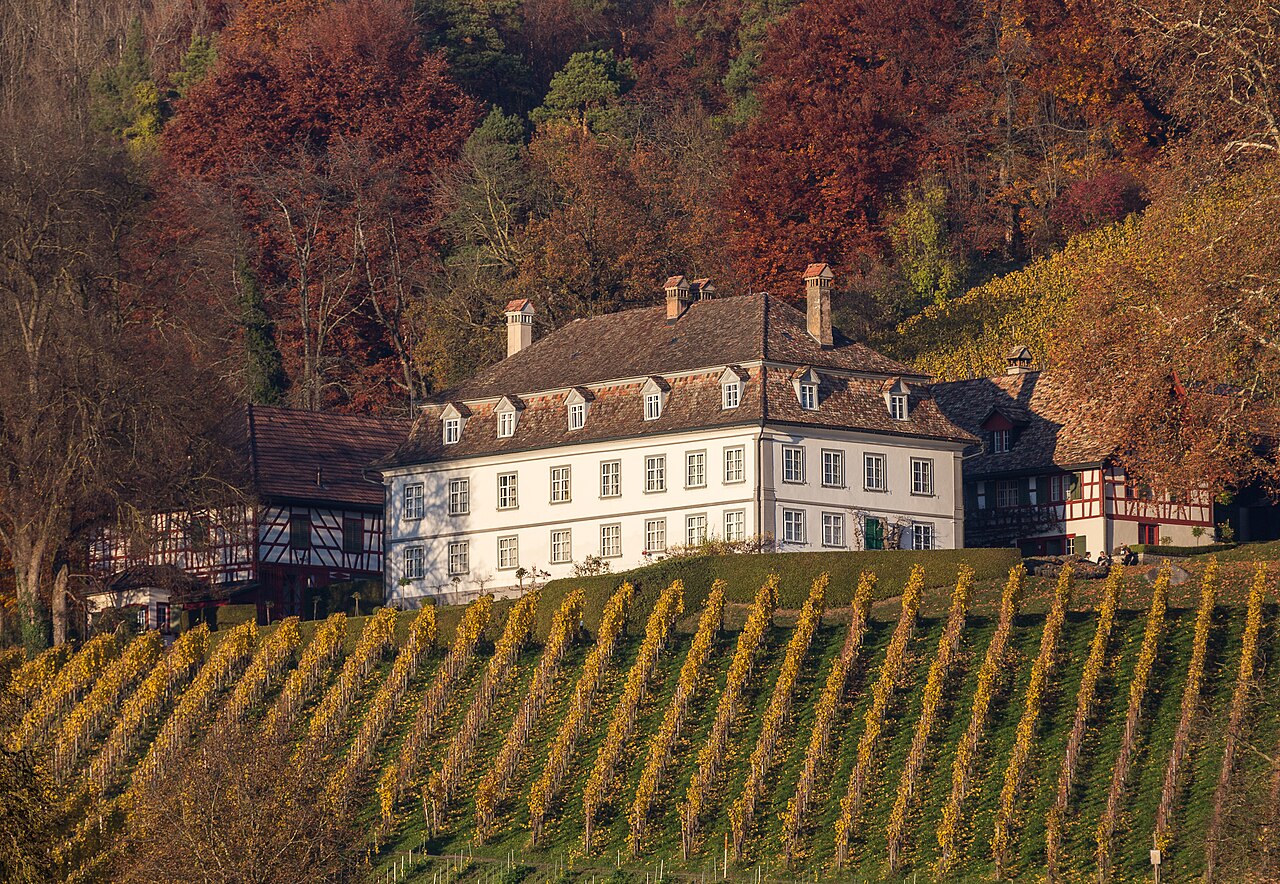
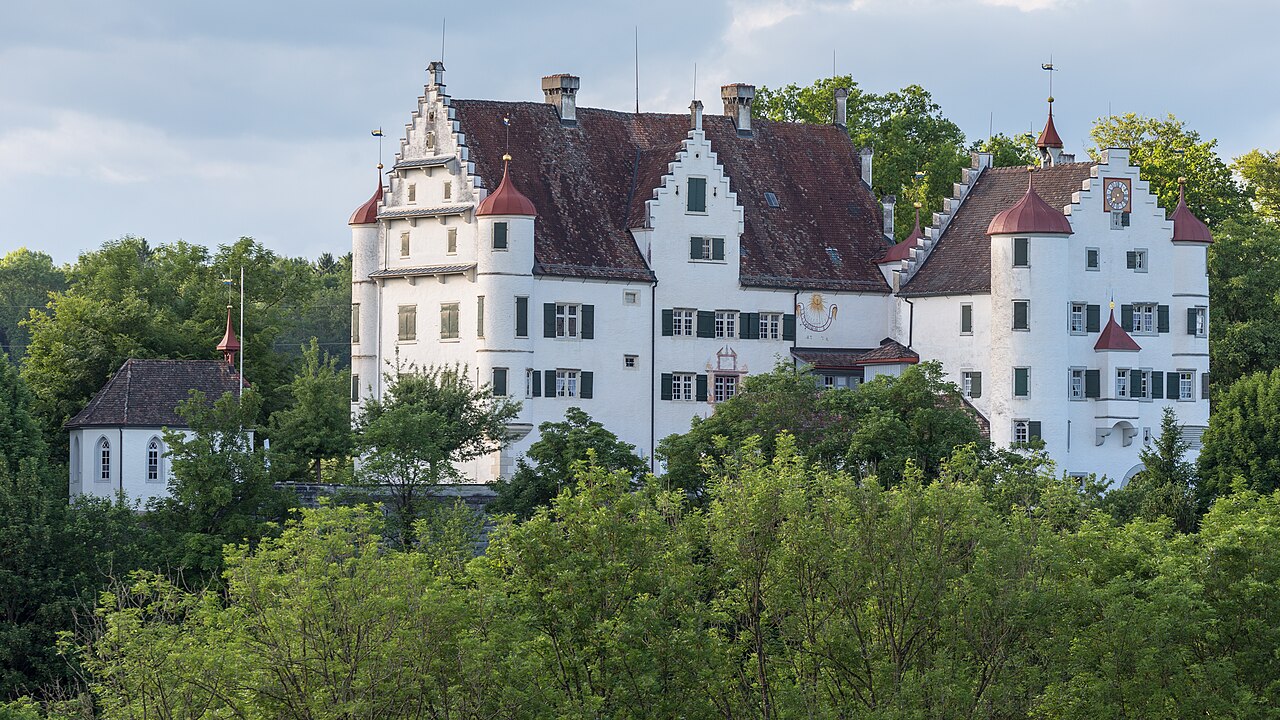
Schloss Weinfelden is a historic hill castle located on the southern slope of Ottenberg hill overlooking the town of Weinfelden in Switzerland. Its origins trace back to at least 1180 when it was known as Castrum Winvelde, marking it as a fortified site of strategic importance during the High Medieval period. Although the exact identity of the original builders remains unclear, the castle's early history is intertwined with notable regional powers, including the Kyburg and Bussnang families.
Early history and medieval ownership
The castle's documented history begins with the transfer of one-third ownership by Hartmann von Kyburg to Bishop Berthold von Bussnang of Konstanz around 1180. This arrangement created a complex shared control that influenced the castle's governance in subsequent centuries. During the 14th century, the castle came under the influence of the Habsburg dynasty when Friedrich von Bussnang held it as a fief. He arranged for the castle to serve as a residence for his widow, Kunigunde, while he resided elsewhere. This period saw significant expansions by the Bussnang family, shaping the castle's medieval form with fortified walls and residential quarters.
Changes in ownership and renovations
Following the destruction of the Bussnang family's primary castles, Hans von Bussnang sold Schloss Weinfelden in 1435 to Berthold Vogt of Konstanz. Vogt invested in local infrastructure, notably constructing a bridge over the nearby Thur River, and played an active role in regional governance. Despite these efforts, regional conflicts led to his financial difficulties.
In the late 15th and 16th centuries, the castle changed hands multiple times. The Muntprat family acquired it in 1498 and granted municipal rights to the town of Weinfelden. They also undertook renovations in 1541 that modernized the castle's facilities. Subsequent owners included Hans Dietrich von Gemmingen (1551), Jakob Fugger (1555), Arbogast von Schellenberg (1572), and the Gemmingen brothers (1577). Each proprietor contributed to the castle's evolving architectural and social status during the Renaissance and early modern periods.
Zürich ownership and decline
In 1614, the city of Zürich purchased Schloss Weinfelden and its lordship, reinstating the castle as the seat of a local bailiff responsible for administration and law enforcement. This period marked the castle's role as a center of regional governance rather than a purely military fortress. The system of serfdom linked to the estate ended in 1798, after which the local community acquired the surrounding forests, reflecting broader social changes in Switzerland.
Throughout the 19th and 20th centuries, Schloss Weinfelden gradually fell into disrepair as its administrative functions diminished and maintenance declined.
20th century restoration and modern status
A major restoration began in 1972 when Munich banker August von Finck senior acquired the property. His purchase sparked debate due to Swiss restrictions on foreign ownership, but it also initiated a careful restoration to return the castle to its early 18th-century appearance. Notably, the castle's tower roof was rebuilt with a pointed helmet-style top, replicating its look circa 1700. This restoration was conducted in collaboration with cantonal monument preservation authorities to ensure historical accuracy.
The main residential building was made habitable again, with further interior renovations completed in 1997. These efforts preserved the castle's historical character while adapting it for modern use. The castle remains part of the von Finck family estate following the death of August von Finck junior in 2021.
Architectural features and site layout
Schloss Weinfelden is characterized by a central main building and a prominent tower, which together reflect its development through the medieval and early modern periods. The castle's hilltop position provided strategic views and control over the surrounding landscape, crucial for defense and administration.
The restored tower is a defining feature, especially after the 1970s renovation that reinstated its original pointed roof. The castle's construction materials and decorative details have not been extensively documented, but the restoration's fidelity to traditional methods suggests the use of period-appropriate stone masonry and timber framing.
Historically, the castle grounds included ancillary infrastructure such as a bridge over the Thur River, built by Berthold Vogt. Today, the site preserves the core elements of the castle itself, with its buildings harmoniously integrated into the hillside terrain, maintaining its commanding presence over Weinfelden.
Cultural significance and heritage
As a site with origins in the High Medieval period and continuous occupation through the Renaissance and early modern eras, Schloss Weinfelden embodies the layered history of Swiss regional power dynamics. Its architectural evolution mirrors shifts from feudal lordship to administrative governance under Zürich's authority.
The castle's restoration and preservation underscore its importance as a cultural heritage monument, reflecting Swiss dedication to maintaining historical sites. It stands as a testament to the region's medieval past and the ongoing narrative of architectural conservation.
Frequently asked questions (FAQ)
- How do I visit Schloss Weinfelden?
- Schloss Weinfelden is privately owned and not regularly open to the public. Visitors should check for special events or guided tours that may be occasionally available.
- What is the historical significance of Schloss Weinfelden?
- Schloss Weinfelden has a rich history dating back to 1180, reflecting medieval fortification, Renaissance renovations, and its role as a local administrative center under Zürich.
- When was Schloss Weinfelden restored?
- The castle underwent major restoration starting in 1972 under August von Finck senior, with interior renovations completed in 1997, restoring its early 18th-century appearance.
- Can I see the restored tower at Schloss Weinfelden?
- Yes, the tower was restored in the 1970s with its original pointed helmet-style roof, a distinctive feature visible from the town and surrounding areas.
- Is Schloss Weinfelden accessible for visitors with limited mobility?
- Due to its hillside location and historic structure, accessibility may be limited. Visitors with mobility concerns should inquire in advance about accommodations.
Information
Sources & official resources
Verify the information above using these authoritative references.
Loading map...
Visitor reviews
No reviews yet. Been here? Write the first review and help other travelers!
Write the first reviewVisited this castle? Share your experience
Your review helps other travelers and adds first-hand knowledge to our encyclopedia.